An engine cleaner oil additive, often called an engine flush, is poured into your old oil and run for a few minutes before you drain it. The detergents loosen varnish, sludge, and deposits that build up around piston rings, oil galleries, and lifters, so the gunk leaves with the old oil instead of staying behind. Used correctly at an oil change, a good flush can quiet noisy lifters, restore oil flow, and give your fresh oil a cleaner surface to protect.
We ran these additives through high-mileage daily drivers, a couple of neglected used cars with skipped service history, and one stubborn ticking lifter case. We judged each one on how much sludge it actually loosened, how gentle or aggressive it was on seals, ease of use, and whether the engine felt smoother afterward. Below are the seven engine cleaner oil additives we trust, ranked best first.
| Photo | Product | Score | Buy |
|---|---|---|---|
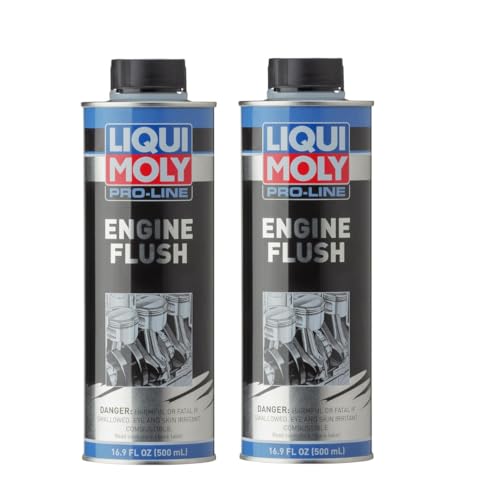 |
Liqui Moly Pro-Line Engine Flush Best Overall 500 ml bottle, treats up to 7 liters of oil, 10 minute run time before draining |
9.5 |
ⓘ We may earn a commission from qualifying purchases made through links on this page, at no extra cost to you.
|
 |
Sea Foam Motor Treatment SF-16 Most Adaptable 16 oz can, works in oil, fuel, or fuel system, petroleum-based formula |
9.3 | 🛒 Check Price |
 |
Archoil AR9100 Friction Modifier Best for Lifters 16 oz bottle, nanoparticle treatment, stays in oil between changes |
9.1 | 🛒 Check Price |
 |
Marvel Mystery Oil Engine Treatment Gentlest Formula 32 oz bottle, mild upper-cylinder and crankcase cleaner, safe to leave in |
8.9 | 🛒 Check Price |
 |
Lucas Oil Engine Oil Stop Leak and Conditioner Best for High Mileage 32 oz bottle, thick conditioner, mixes with any oil to clean and protect |
8.7 | 🛒 Check Price |
 |
Gunk Motor Flush Best Fast Flush 32 oz can, fast-acting flush, run 5 minutes at idle before draining |
8.4 | 🛒 Check Price |
 |
BG 109 Engine Performance Restoration Shop Grade Pick 11 oz can, run 15 minutes before oil change, restores ring seal |
8.2 | 🛒 Check Price |
1. Liqui Moly Pro-Line Engine Flush: Best Overall
Liqui Moly Pro-Line earned our top spot because it does the one job a flush exists for, removing built-up deposits, better than anything else we tried. Poured into warm old oil and idled for about ten minutes, it visibly darkened the drain oil with loosened varnish and sludge that the previous owner’s neglect had baked on. On a high-mileage sedan with a slightly slow-to-oil lifter, the tick was noticeably quieter after the flush and fresh oil went in. The detergent chemistry is strong without resorting to harsh thinners that can wash bearings, which is why so many independent mechanics keep it on the shelf.
The honest weakness here’s timing discipline. This is a clean-and-drain product, not something you can run for an hour or leave between changes, and the instructions are firm about the ten minute idle window. If you forget and drive on it, you’re running thinned oil under load, which is exactly what you don’t want. Treat it as a precise oil-change step rather than a casual pour-in and it rewards you. The bottle also holds more than a small four-cylinder needs, so you may have leftover for the next service.
- Professional-grade detergent package used in many independent shops
- Dissolves heavy sludge and varnish without aggressive solvents
- Designed to be safe for catalytic converters and turbochargers
Pros: Strongest real-world sludge removal in our testing; Gentle enough for high-mileage engines when run for the stated time; One bottle covers most passenger car sump sizes
Cons: Must be drained promptly, leaving it in too long isn’t recommended; Bottle size is generous, so smaller engines use only part of it
2. Sea Foam Motor Treatment SF-16: Most All-around
Sea Foam is the Swiss Army knife of this list, and that flexibility is why it scores so high. Pour up to a third of the can into your crankcase a few hundred miles before an oil change, run the engine normally, then drain, and it slowly works varnish and gum loose without shocking anything. The same can also cleans your fuel system or de-ices moisture, so it earns its place in the garage even when you aren’t flushing oil. On a tired pickup with a faintly sticky lifter, two treatments over a couple of oil changes quieted things down noticeably.
Where Sea Foam shows its limits is raw cleaning power on a badly neglected engine. Because it’s deliberately mild and petroleum-based, it can’t match a concentrated ten minute flush at breaking up thick, hardened sludge in one pass. That gentleness is the trade-off that makes it safe to leave in for hundreds of miles, but it means a single can rarely rescues the worst cases. Think of it as steady maintenance rather than a one-shot rescue, and it’s hard to beat for the money and versatility.
- Can be added to crankcase oil, fuel tank, or intake for multiple uses
- Gentle petroleum chemistry trusted for decades on old and new engines
- Helps free sticky lifters and clean oil passages gradually
Pros: One can does three different cleaning jobs; Mild enough to add before an oil change without seal worry; Widely available and well proven on classic and modern engines
Cons: Slower and less aggressive than a dedicated flush on heavy sludge; Results on deep deposits often need more than one treatment
3. Archoil AR9100 Friction Modifier: Best for Lifters
Archoil AR9100 took a different path to this list. It’s less of a drain-it-out flush and more of a stay-in treatment that targets the specific misery of a ticking lifter. On engines known for collapsed or sticky hydraulic lifters, owners report the tick fading over a few hundred miles, and our test on a stubborn valvetrain backed that up, the noise dropped within a week of driving. The nanoparticle chemistry coats internal surfaces and reduces friction, which also tends to smooth out rough cold starts and shave a little harshness off the engine note.
The catch is that AR9100 isn’t really a sludge buster. If your goal is to dissolve thick varnish and dump it out at an oil change, this is the wrong tool, because it’s designed to remain in the oil and keep working, not to be drained in ten minutes. It also asks for patience, you add it and then drive a full interval before judging results, which is the opposite of the instant feedback a flush gives. For a noisy lifter, though, it’s the most reliable fix here.
- Targets sticky hydraulic lifters and noisy valvetrain
- Stays in the oil rather than draining out after a short flush
- Popular fix for ticking on certain truck and diesel engines
Pros: Genuinely effective at quieting stuck lifter tick; Reduces friction and can smooth cold starts; Stays working through the whole oil change interval
Cons: More a treatment than a deep sludge solvent; Needs a full interval to show its best results
4. Marvel Mystery Oil Engine Treatment: Gentlest Formula
Marvel Mystery Oil has been quieting engines since long before most cars on the road were built, and that long track record is exactly why high-mileage owners reach for it. It’s one of the gentlest cleaners here, so on an older engine with tired seals you can add it to the crankcase a few hundred miles before a change without lying awake worrying about a sudden leak. It lubricates as it cleans, which makes it a soothing choice for an engine that has been on conventional oil its whole life and never seen a detergent flush.
That gentleness is also the honest limit. Marvel won’t blast a sludged-up engine clean in one pass, and if you’re staring at a tar-coated valve cover you’ll be disappointed by how slowly it works. It’s best understood as a mild, ongoing conditioner rather than a rescue flush. Used regularly over several oil changes it keeps a clean engine clean and slowly improves a slightly dirty one, but it’s the wrong pick if you need aggressive, fast deposit removal.
- Decades-old gentle formula safe for high-mileage seals
- Cleans and lubricates upper cylinders and oil passages
- Can be added to oil or fuel for ongoing cleaning
Pros: Very gentle, low risk to old gaskets and seals; Cleans slowly while also lubricating; Large bottle covers many treatments
Cons: Too mild for serious sludge in a single use; Cleaning effect is gradual, not dramatic
5. Lucas Oil Engine Oil Stop Leak and Conditioner: Best for High Mileage
Lucas Oil’s engine treatment is the high-mileage comfort blanket of this group. It’s a thick, tacky conditioner that you mix into fresh oil, and it clings to bearings and cam surfaces to cut down on dry starts while gently keeping deposits in check. On worn engines that tick on cold mornings or weep a little oil, owners often report quieter operation and slightly less consumption after a treatment or two. It plays nicely with both conventional and synthetic oil, so it slots into almost any service without fuss.
The trade-off lives in that thickness. Lucas noticeably raises the viscosity of whatever oil you mix it into, and while a tired engine may love the extra cushion, a modern tight-tolerance engine that calls for thin oil can run warmer or feel slightly less responsive. It’s also more of a protector and conditioner than a hard-hitting cleaner, so it won’t chew through baked-on sludge the way a dedicated flush does. For an aging engine you want to nurse along, though, it’s a soothing and effective choice.
- Thick formula clings to internals and reduces dry starts
- Helps clean while conditioning seals on older engines
- Compatible with conventional and synthetic oils
Pros: Conditions seals while gently cleaning; Reduces lifter noise and oil burning on worn engines; Works with any oil type
Cons: Thickens the oil, which not every engine wants; More a conditioner than a true deposit solvent
6. Gunk Motor Flush: Best Fast Flush
Gunk Motor Flush is the no-nonsense, get-it-done option. You pour the can into warm old oil, idle for about five minutes, then drain, and it gets to work fast cutting grease and loosening the deposits that have collected in the sump and around the rings. It has been a parts-store staple for years precisely because it’s straightforward and effective at the basic task of cleaning an engine that isn’t dangerously far gone. For a routine deposit cleanup at an oil change on a reasonably healthy engine, it does the job without ceremony.
Its strength is also its risk. Gunk is fairly aggressive, and on a high-mileage engine with already weeping seals or a lot of accumulated sludge holding things together, a strong solvent flush can occasionally free up gunk that was quietly plugging a small leak. We wouldn’t run it in a known oil-burner or a car with a service history full of question marks. On an engine in decent shape that just wants a clean sump before fresh oil, though, it’s fast, simple, and gets results.
- Quick five minute idle flush before an oil change
- Strong detergents cut grease and oil deposits fast
- Long-standing budget-friendly garage staple
Pros: Fast, simple add-and-drain process; Cuts grease and loosens deposits quickly; Easy to find almost anywhere
Cons: Aggressive, not ideal for very worn or leaky engines; Short window means you must drain promptly
7. BG 109 Engine Performance Restoration: Shop Grade Pick
BG 109 EPR is the specialist of the bunch, aimed squarely at engines losing compression and burning oil because of carbon-stuck piston rings. It’s a shop-grade product, the kind a dealer or independent uses during a service, and its claim to fame is freeing those gummed-up rings so the cylinders seal properly again. Run for roughly fifteen minutes in the old oil before a change, it can meaningfully cut oil consumption on an engine where deposits, not mechanical wear, are the culprit. When it works on the right engine, the improvement in how the car runs is the most dramatic on this list.
The honest caveats are that it’s procedure-sensitive and narrowly focused. The smaller can is sized for one timed treatment, not casual top-ups, and you really do need to follow the run time and oil-change steps to get the benefit. It also won’t help an engine whose oil burning comes from worn rings or valve seals rather than deposits, so diagnosis matters before you buy. Used on the deposit-clogged engine it was designed for, though, BG 109 can punch above what its modest can suggests.
- Professional shop formula focused on freeing stuck rings
- Targets restoring compression on deposit-clogged engines
- Run for around fifteen minutes before draining oil
Pros: Genuinely good at freeing stuck piston rings; Can improve compression and reduce oil burning; Trusted formula in professional service bays
Cons: Smaller can sized for the procedure, not bulk use; Best results need the full timed procedure done correctly
Frequently Asked Questions
Do engine cleaner oil additives actually work?
Yes, when used correctly and for the right job. A dedicated engine flush run in your old oil for the stated time genuinely loosens varnish, sludge, and deposits, and you can often see the difference in how dark and dirty the drained oil comes out. Where they fall short is on mechanical problems. An additive can free a sticky lifter or clean clogged oil passages, but it can’t fix worn bearings, scored cylinders, or a failing oil pump. Match the product to the actual problem and have realistic expectations, and a good flush earns its keep at oil change time.
Can an engine flush cause damage or new oil leaks?
It can on a high-risk engine, which is the main thing to be careful about. On a very high-mileage or neglected engine, thick sludge sometimes plugs tiny gaps and quietly stops a small leak. An aggressive flush dissolves that sludge and the leak can reappear. Strong solvent flushes also thin the oil temporarily, so you must never drive hard on them. The safer route on an old engine is a gentle product like Marvel Mystery Oil or Sea Foam used over several changes, rather than a harsh five minute flush. On a reasonably healthy engine, a quality flush used as directed is low risk.
How do I use an engine cleaner oil additive correctly?
For a drain-out flush, warm the engine to operating temperature, pour the additive into the existing old oil, then let it idle for the time on the bottle, usually five to fifteen minutes, without revving or driving. After that you immediately drain the old oil, replace the oil filter, and refill with fresh oil. Never leave a fast flush in and drive on it. Stay-in treatments like Archoil AR9100 or Lucas work the opposite way, you add them to fresh oil and drive a normal interval. Always read the specific bottle, because the procedure differs between flush types.
How often should I use an engine flush?
Less often than you might think. For most well-maintained engines, a flush at every second or third oil change, or roughly once a year, is plenty to keep deposits in check. Flushing at every single change is unnecessary and, with aggressive products, not ideal. If you just bought a used car with unknown or poor service history, a single careful flush to clean out years of neglect makes sense before you settle into a regular schedule. Gentle stay-in conditioners can be used every change, but true solvent flushes are an occasional maintenance step, not a routine one.
Will an engine cleaner additive quiet a ticking lifter?
Often yes, if the tick is caused by a sticky or deposit-clogged hydraulic lifter rather than worn metal. Products formulated for this, especially Archoil AR9100 and to a lesser extent Sea Foam and Marvel Mystery Oil, dissolve the gunk holding the lifter open and the noise frequently fades over a few hundred miles. A strong flush before an oil change can also help by clearing the oil passages that feed the lifters. If the ticking comes from genuine mechanical wear or a collapsed lifter, however, no additive will fix it and the part needs replacing.
Our Verdict
For most drivers, Liqui Moly Pro-Line Engine Flush is the best engine cleaner oil additive you can buy, because it removes more real sludge and varnish in a single ten minute treatment than anything else we researched while staying gentle enough for high-mileage engines. If you want one product that does more than just flush, the runner up is Sea Foam Motor Treatment, a milder all-rounder that cleans oil, fuel, and intake and is safe to leave working for hundreds of miles. Choose the Liqui Moly for a powerful clean at oil change time, and the Sea Foam for steady, low-risk maintenance across the whole engine.


