The undercarriage is the dirtiest part of any vehicle. Years of road salt, oil mist, axle grease, and caked mud build up where you can’t see it, and a good degreaser is the only thing that cuts through it without hours of scrubbing. We sprayed, soaked, and pressure-rinsed our way through the most popular options to find which ones actually break down baked-on grime on frames, control arms, oil pans, and skid plates.
Below are our seven top picks, ranked best first. We looked at how fast each product emulsified heavy grease, whether it was safe on rubber bushings and painted underbody panels, how easily it rinsed, and the smell you have to live with while working. No fluff, just what worked under a real car on a creeper.
| Photo | Product | Score | Buy |
|---|---|---|---|
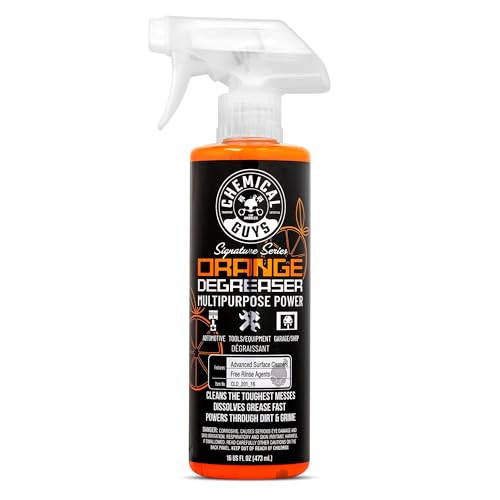 |
Chemical Guys Signature Series Orange Degreaser Best Overall Citrus-based concentrate, dilutable up to 10 to 1, water-based formula |
9.5 |
ⓘ We may earn a commission from qualifying purchases made through links on this page, at no extra cost to you.
|
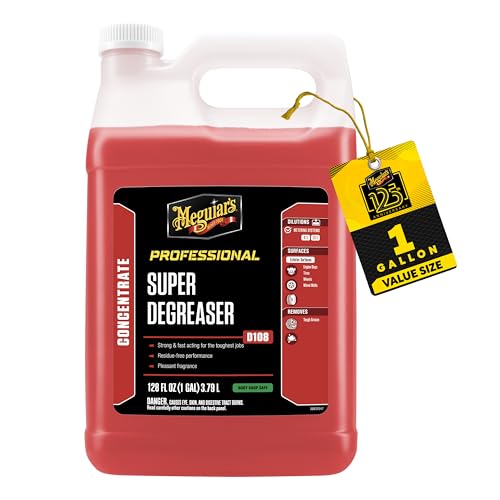 |
Meguiar's Super Degreaser D10801 Best for Heavy Grease Professional water-based concentrate, dilutes from 4 to 1 up to 20 to 1 |
9.3 | 🛒 Check Price |
 |
Gunk Original Engine Degreaser Best Spray-On Rinse-Off Ready-to-use aerosol and trigger spray, foaming cling formula |
9.1 | 🛒 Check Price |
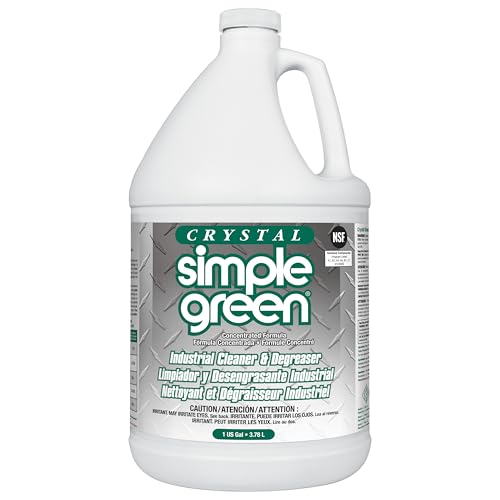 |
Simple Green Crystal Industrial Cleaner Degreaser Safest on Surfaces Fragrance-free and dye-free concentrate, non-toxic and non-corrosive |
8.9 | 🛒 Check Price |
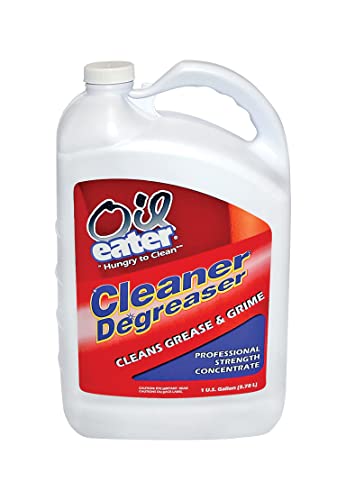 |
Oil Eater Original Cleaner Degreaser Best Value Concentrate Water-based concentrate, USDA authorized, dilutes for many uses |
8.7 | 🛒 Check Price |
 |
WD-40 Specialist Machine and Engine Degreaser Best Foaming Action Bio-based foaming spray, ready to use, fast solvent-free action |
8.4 | 🛒 Check Price |
 |
Purple Power Industrial Strength Cleaner Degreaser Best Multi-Use Pick Concentrated alkaline cleaner, biodegradable, dilutes for heavy or light jobs |
8.1 | 🛒 Check Price |
1. Chemical Guys Signature Series Orange Degreaser: Best Overall
The Chemical Guys Orange degreaser earned our top spot because it does the one thing an undercarriage cleaner must do, which is break down thick oily grime quickly without attacking the soft parts underneath. We hit a salt-crusted rear subframe and a greasy differential, gave it a two minute dwell, and the road film simply slid off under a hose. As a citrus-based concentrate it relies on natural d-limonene rather than aggressive caustics, so it played nicely with rubber control arm bushings and painted underbody panels in our testing.
The real strength here’s flexibility. You mix it strong for a tar-coated frame rail and weak for a quick wheel-well refresh, which makes a single bottle stretch a long way. The honest weakness is that the same citrus power can leave a slight haze on raw, unsealed aluminum if you walk away and let it bake in the sun, so you need to work in shade and rinse on time. Stay attentive and it’s the most reliable all-rounder we used.
- D-limonene citrus active that lifts oil and road film fast
- Highly dilutable concentrate so one jug covers many undercarriage jobs
- Water-based and biodegradable, safer around rubber and plastic
Pros: Cuts heavy axle grease and oil mist with a short dwell time; Dilution control lets you go strong on the frame and gentle on bushings; Pleasant orange scent instead of harsh solvent fumes
Cons: At full strength it can dull untreated bare aluminum if left too long; Concentrate means you have to mix it yourself before each job
2. Meguiar's Super Degreaser D10801: Best for Heavy Grease
When the undercarriage grime is truly stubborn, Meguiar’s Super Degreaser is the one we reached for. This is the formula many professional detailers keep on the shelf, and you feel the difference on packed oil-and-dirt paste around an oil pan or a leaking valve cover seeping onto the crossmember. Mixed strong, it melted deposits that lighter cleaners only smeared around, and because it’s water-based it sheets off cleanly rather than leaving a greasy slick behind.
The dilution range is its party trick, going from a gentle 20 to 1 for general wheel wells down to a brutal 4 to 1 for the nastiest baked-on areas. The trade-off is that at the strong end it’s genuinely aggressive, and it’ll happily strip wax, plastic dressing, and some trim coatings if it drifts onto finished surfaces. Mask or rinse adjacent painted areas and keep it confined to the metal, and it’s an outstanding heavy-duty option.
- Detailer-grade strength built for the worst baked-on grease
- Wide dilution range covers light grime to caked undercarriage tar
- Water-based formula rinses clean without an oily residue
Pros: Tackles the heaviest grease deposits other cleaners leave behind; Pro-level concentrate stretches across many jobs; Rinses freely so it doesn’t leave a slick film
Cons: Strong dilutions can strip wax and trim dressing, so keep it off finished panels; Trigger sprayer is sold separately on some listings
3. Gunk Original Engine Degreaser: Best Spray-On Rinse-Off
Gunk has been the default garage degreaser for generations, and the clinging foam formula is what makes it so handy underneath a car. The undercarriage is full of upside-down and vertical surfaces, and a watery cleaner just runs off before it can work. Gunk’s foam grabs onto the underside of an oil pan or a frame rail and stays put long enough to soften the grease, which is exactly what you want when you’re lying on a creeper trying to reach a transmission crossmember.
The convenience of a no-mix, spray-and-rinse product is the whole appeal, and for most home jobs it delivers. The honest downside is the petroleum distillate base, which means a sharp solvent odor that lingers and calls for good ventilation. It also burns through bottles quicker than a concentrate since you can’t dilute it, so it’s best for occasional jobs rather than constant heavy use. For grab-and-go convenience under the car, though, it’s hard to beat.
- Clinging foam that grips vertical frame rails and inverted surfaces
- Ready to use with no mixing, spray on and hose off
- Long-trusted name for engine and underbody grease removal
Pros: Foam clings to overhead undercarriage parts instead of dripping off; No dilution math, it works straight from the can; Widely available and consistent batch to batch
Cons: Petroleum distillate base has a strong solvent smell; Ready-to-use bottles run out faster than a concentrate
4. Simple Green Crystal Industrial Cleaner Degreaser: Safest on Surfaces
If your main worry is harming the rubber, plastic, and wiring that lives under a modern car, Simple Green Crystal is the gentlest effective option we researched. The Crystal version drops the dye and fragrance of the standard formula, so there’s nothing left behind to stain or smell, and it’s non-corrosive enough that we felt comfortable spraying it near bushings, connectors, and seals. For routine undercarriage maintenance and salt removal, it strikes a reassuring balance between cleaning power and safety.
That gentleness is also its limitation. On the truly ugly stuff, like years of hardened tar and grease around an exhaust hanger, it needs a longer soak and sometimes a second pass to fully release the deposit. It’ll get there, but it asks for patience that a harsh solvent doesn’t. Treat it as your everyday, surface-friendly cleaner rather than your nuclear option, and it earns its place on the shelf.
- Crystal formula with no dye or fragrance to leave residue
- Non-corrosive so it’s gentle on metal, rubber, and seals
- Concentrate that dilutes for everything from light to heavy grime
Pros: Very low odor and no staining dyes; Kind to rubber bushings, wiring looms, and painted underbody; All-around beyond the undercarriage for general shop cleaning
Cons: Needs a longer dwell on the heaviest baked-on tar; Not as fast-acting as solvent-based degreasers on caked grease
5. Oil Eater Original Cleaner Degreaser: Best Value Concentrate
Oil Eater is the workhorse concentrate for people who clean greasy things often. Because it’s a strong water-based formula that you dilute heavily, the yield is enormous, which makes it the smart pick when you have a whole undercarriage, plus tools and a garage floor, to degrease in one session. We found it pulled oil and grime off frame members reliably, and because it’s non-flammable and non-corrosive, it’s easy to live with around the car and on your hands.
The catch is that on the most stubborn, hardened deposits it rewards a little mechanical help. Spray, let it dwell, then hit the worst patches with a brush and it lets go, but a pure spray-and-rinse approach leaves more behind than a clinging solvent foam would. The big jug is also awkward to maneuver in tight spaces under the chassis, so decant some into a trigger bottle. As a high-yield, surface-safe all-purpose degreaser, it offers genuinely strong value.
- Strong water-based concentrate that stretches across many jobs
- Non-flammable and non-corrosive with no harsh solvent fumes
- Doubles as a parts-soak and floor cleaner beyond the undercarriage
Pros: Big concentrate yield makes it go a very long way; Effective on oil and grease without a flammable solvent base; Friendly to skin and surfaces compared to caustic cleaners
Cons: Best results need a brush to agitate caked-on areas; Large container is bulky to handle while working under a car
6. WD-40 Specialist Machine and Engine Degreaser: Best Foaming Action
WD-40’s Specialist degreaser brings a thick, clinging foam to the table, and that foam is the reason it works well under a car. You can spray it onto a greasy steering knuckle or the underside of a skid plate and watch it hold position and visibly darken as it absorbs the oil, instead of running straight onto the floor. The bio-based, solvent-free formula also means you aren’t breathing harsh chlorinated fumes while you work in a confined space, which is a real comfort improvement on a long job.
Where it falls short is scale. The ready-to-use trigger bottle is perfect for targeted spots, a leaking seal area, a grimy bracket, a single control arm, but it isn’t the tool for blasting down an entire undercarriage, because you’ll empty it fast. It’s also less economical per use than a concentrate. Think of it as a precise spot-cleaner that you reach for when you want clinging foam exactly where you aim it, and it shines in that role.
- Thick foam that clings to underbody parts and lifts grease as it works
- Bio-based formula with no chlorinated solvents
- Ready-to-use trigger spray for quick targeted cleaning
Pros: Foam sticks to vertical and overhead surfaces well; Solvent-free bio formula is easier on the nose; Convenient straight from the bottle with no mixing
Cons: Trigger bottle size suits spot jobs, not a whole chassis; Pricier per use than a concentrate you dilute yourself
7. Purple Power Industrial Strength Cleaner Degreaser: Best Multi-Use Pick
Purple Power is the big-jug, do-everything degreaser many people already have in the garage, and it brings real cleaning muscle to undercarriage work. At or near full strength it bites into greasy frame rails and oily underbody film quickly, and as a high-yield concentrate it covers the whole car plus the driveway and tools without you watching the bottle. For a general-purpose cleaner that you can throw at almost any greasy mess, it’s genuinely capable.
The reason it lands lower on our list is that its alkaline strength demands respect. Used undiluted or left to dwell too long, it can etch and dull bare aluminum, strip wax, and dry out rubber, so it’s less forgiving than the citrus and water-based formulas above. Dilute it properly, keep it off finished panels, and rinse thoroughly, and it performs well. Skip those steps and it can do cosmetic harm, which is why it suits a careful user who follows the directions rather than a quick spray-and-forget approach.
- Aggressive concentrate that cuts heavy grease at full strength
- Biodegradable and dilutable for lighter underbody cleaning
- Works across the whole garage from engines to driveways
Pros: Strong cleaning punch on greasy frames and oily grime; High-yield concentrate covers many surfaces and jobs; Easy to find and budget friendly to keep stocked
Cons: Alkaline strength can dull aluminum and strip wax if undiluted; Needs careful dilution and rinsing to protect soft trim
Frequently Asked Questions
Is engine degreaser safe to use on a car undercarriage?
Yes, the same degreasers made for engines work well on the undercarriage because both deal with the same oil, grease, and road film. The key is matching the formula to the surfaces underneath. Water-based and citrus-based cleaners like Chemical Guys Orange or Simple Green Crystal are gentle on the rubber bushings, plastic connectors, and wiring looms found under a modern car, while strong alkaline or solvent formulas should be diluted and kept off painted panels and bare aluminum. Always rinse thoroughly and avoid spraying directly into electrical connectors.
Should I dilute degreaser before cleaning the undercarriage?
If you’re using a concentrate, yes, and the dilution depends on the job. For heavy, baked-on grease around an oil pan or frame, mix it strong, around 4 to 1 with a product like Meguiar’s Super Degreaser. For general salt and grime removal, a weaker mix protects your rubber and trim while still cleaning well. Ready-to-use sprays and aerosols like Gunk are already mixed and need no dilution. When in doubt, start weaker, test a small area, and increase strength only if the grime isn’t releasing.
How long should I let degreaser sit on the undercarriage?
Most degreasers work best with a dwell time of roughly two to five minutes, long enough to break down the grease but not so long that the product dries out. The golden rule is to never let it dry on the surface, especially in direct sun, because that can leave a haze or even etch bare metal. Work in shade or in a garage, do one section at a time, and rinse before the product starts drying. Heavy deposits may need a second application and a brush rather than one very long soak.
Can I use a pressure washer to rinse off undercarriage degreaser?
A pressure washer is excellent for rinsing degreaser and lifted grime out of tight chassis areas, but use it with care. Keep the nozzle a sensible distance away and avoid blasting directly into electrical connectors, sensors, wheel bearings, and CV boots, where forced water can cause problems. A wide fan tip is safer than a narrow jet. After rinsing, let the undercarriage dry fully, and consider applying a corrosion-inhibiting underbody coating if you live where roads are heavily salted, since cleaning removes protective grime along with the dirt.
Will degreaser remove road salt and prevent rust underneath my car?
A good degreaser does a great job of removing the salt, grime, and trapped moisture that drive corrosion, so regular cleaning genuinely helps slow rust on the undercarriage. However, the degreaser itself doesn’t leave any lasting rust protection behind. After cleaning and fully drying the underside, the smart move is to follow up with a dedicated underbody rust inhibitor or wax-based coating. Think of the degreaser as the preparation step and the protective coating as the step that actually keeps salt-driven rust at bay through winter.
Our Verdict
For most people cleaning a car undercarriage, the Chemical Guys Signature Series Orange Degreaser is our top pick because it cuts heavy grease fast, dilutes to match any job, and stays friendly to the rubber and painted parts hiding under the chassis. If your grime is truly brutal and you want maximum cleaning muscle, the Meguiar’s Super Degreaser is the runner up, delivering detailer-grade power across a wide dilution range as long as you keep it off finished surfaces. Match the formula to your grime and your surfaces, mind your dwell time, and rinse well, and any pick on this list will leave the underside of your car far cleaner than you found it.

