Deep scratches that catch your fingernail aren’t buffed away with a gentle polish. They need a real cutting compound, an abrasive formula aggressive enough to level the surrounding clear coat down to the bottom of the defect, then refine the surface so it shines again. Choose too mild a compound and you’ll spend an hour with no result. Choose too aggressive and you risk hazing or burning through thin clear coat.
We worked these seven compounds across faded single-stage paint, modern ceramic clear coats, and scuffed bumpers, applying them both by hand and with a dual-action polisher. The list below ranks them on raw cutting power, how cleanly they finish down, how easy they’re to control, and how much dust and effort each one demanded.
| Photo | Product | Score | Buy |
|---|---|---|---|
 |
Meguiar's Ultimate Compound Best Overall 16 oz bottle, micro-abrasive, body shop safe, hand or DA |
9.5 |
ⓘ We may earn a commission from qualifying purchases made through links on this page, at no extra cost to you.
|
 |
3D ACA 510 Heavy Cut Compound Best Heavy Cut 32 oz, ACA non-diminishing abrasives, machine focused |
9.3 | 🛒 Check Price |
 |
Chemical Guys VSS Scratch and Swirl Remover Best All-in-One 16 oz, compound and polish in one, hand or machine |
9.1 | 🛒 Check Price |
 |
Griot's Garage Complete Compound Best One-Step Finish 16 oz, water based, cuts and refines in one step |
9.0 | 🛒 Check Price |
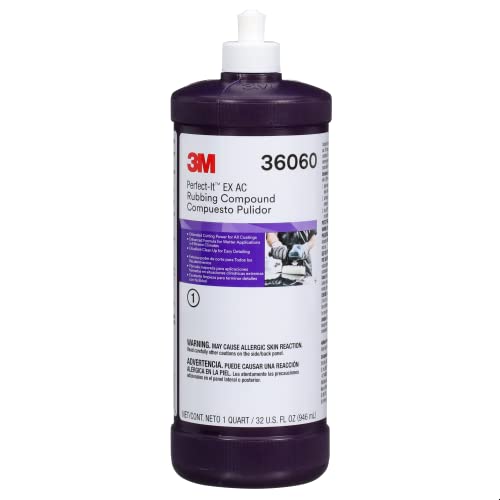 |
3M Perfect-It Rubbing Compound Best for Body Shops 32 oz, fast cut plus, professional grade, machine use |
8.8 | 🛒 Check Price |
 |
Adam's Polishes Heavy Cut Compound Best for Hard Clears 16 oz, heavy correction, body shop safe, DA or rotary |
8.5 | 🛒 Check Price |
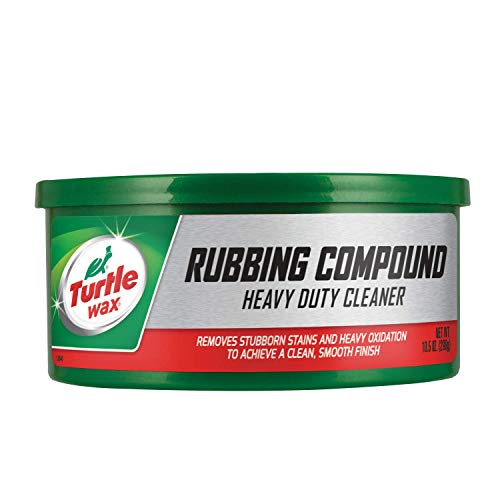 |
Turtle Wax Rubbing Compound Heavy Duty Cleaner Best for Beginners 18 oz, heavy duty paste, hand application friendly |
8.0 | 🛒 Check Price |
1. Meguiar's Ultimate Compound: Best Overall
Meguiar’s Ultimate Compound earns the top spot because it does the rare double job well. It hits hard enough to knock out moderately deep scratches, water spots, and heavy oxidation, yet its micro-abrasive technology breaks down as you work so the surface refines instead of leaving a chalky haze. On a sun-baked hood we cleared years of oxidation in two passes, and the remaining finish needed only a light polish to gloss. That balance of cut and clarity is exactly what most owners need when they don’t own a full polishing kit.
The honest weakness is its ceiling. For scratches deep enough to snag your fingernail, no liquid compound including this one will fully erase them, and you’ll need to wet sand the area first or accept that the scratch becomes far less visible rather than invisible. It can also fling small droplets if you overload the pad, so a small dab and slow build is the way to use it. Within its limits, though, it’s the most reliable all-rounder here.
- Cuts oxidation and below-surface defects without harsh scratching
- Body shop safe with no fillers or wax to mask flaws
- Works by hand or with a dual-action polisher
Pros: Strong cut yet finishes surprisingly clear for a consumer compound; Forgiving and beginner friendly, hard to make a mess with; Widely available with consistent batch quality
Cons: Very deep nail-catching scratches still need wet sanding first; Can sling product if you apply too much at once
2. 3D ACA 510 Heavy Cut Compound: Best Heavy Cut
When the defect is genuinely deep, the 3D ACA 510 is the compound detailers reach for. Its Advanced Ceramic Alumina abrasives don’t diminish the way older compounds do, so the cut stays strong from the first second to the last, which is why it chews through deep scratches and even fresh wet sanding marks with confidence. We used it after sanding a bumper scuff and it leveled the area in a couple of machine passes with a microfiber cutting pad. The low dust formula is a genuine quality of life upgrade over older heavy compounds.
The trade off is that this is a tool for people willing to do a two step job. It cuts so aggressively that on softer clear coats it can leave a faint haze, meaning you’ll want to follow with a finishing polish to bring back full gloss. Used by hand its potential is wasted, so this is the wrong pick if you don’t own a polisher. Pair it with a machine and a refining step and the results rival a professional shop.
- Aggressive heavy cut for deep scratches and sanding marks
- Advanced Ceramic Alumina abrasives stay consistent through the pass
- Low dust formula keeps the work area cleaner
Pros: Removes 1500 to 3000 grit sanding marks and deep defects fast; Long working time without flash drying; Finishes down better than most heavy compounds
Cons: Really intended for machine use, not ideal by hand; Heavy cut can haze soft clears that then need a follow up polish
3. Chemical Guys VSS Scratch and Swirl Remover: Best All-in-One
The Chemical Guys VSS is built for the person who wants one bottle to do a respectable job without a multi-step process. It blends abrasives that cut light and medium scratches with polishing oils that bring the gloss right back, so a single application often takes a panel from dull and lightly marred to genuinely shiny. For maintenance correction and the kind of swirls you see in low light, it’s a satisfying product that controls easily and dusts very little, which makes it pleasant for a long session.
The catch is that its all-in-one nature limits its outright cutting power. Truly deep scratches will be reduced and masked rather than fully removed, and because the formula leans on glossing oils, some of that improvement can be visual filling that fades over future washes. Set your expectations to swirls and shallower scratches and it’s excellent. Ask it to level a deep gouge and it’ll fall short of a dedicated heavy compound.
- Combines cutting and polishing action in a single product
- Restores gloss while removing light to medium scratches
- Safe for use by hand or with any polisher
Pros: One bottle handles correction and finishing for quick jobs; Slick lubrication makes it easy to spread and control; Pleasant to use with low dusting
Cons: Not aggressive enough for the deepest nail-catching scratches; Some haze can carry filler that hides rather than removes a defect
4. Griot's Garage Complete Compound: Best One-Step Finish
Griot’s Garage Complete Compound is the pick when you want one product that leaves a finish you can almost wax straight over. It cuts oxidation and moderate scratches with real authority, but what sets it apart is how cleanly it refines as it works, so a single step on many panels removes the defect and leaves a gloss that needs little follow up. The water based formula wipes off easily and doesn’t stain plastic trim, which is a small thing that saves real annoyance during a full car correction.
Its limitation is shared with most one-step compounds. To get the cut it’s capable of, you really want a dual-action polisher, and by hand it underperforms its rating. It also sits a step below the dedicated heavy compounds on this list for the deepest scratches, so for a nasty key mark you may still need to sand and follow with a more aggressive product. For overall paint refresh in one pass, though, it’s a very satisfying compounds here.
- Removes scratches and oxidation while leaving a refined finish
- Water based formula with easy cleanup
- Engineered for dual-action polishers but hand friendly
Pros: Strong cut that finishes down to near polish clarity; Easy to wipe off without grabbing or staining trim; Reliable on modern hard clear coats
Cons: Needs a machine to reach its full cutting potential; Below the heaviest compounds for the very deepest scratches
5. 3M Perfect-It Rubbing Compound: Best for Body Shops
3M Perfect-It’s the compound that lives on body shop shelves for a reason. It cuts fast and hard, designed specifically to remove P1200 and finer sand scratches after a respray, which makes it a natural fit for deep scratch repair where you have already wet sanded the damage. On a repainted fender it leveled our sanding marks quicker than anything else in the test, and its consistency from job to job is what professionals depend on when they can’t afford a surprise.
That speed comes with a clear caveat. This is a true rubbing compound, so it leaves behind its own micro marring and light swirls that absolutely require a follow up with a finishing compound or polish to clear. It’s also built for machines, ideally a rotary or a capable dual-action, and trying to use it by hand wastes its strength. If you understand it as the first step of a two or three step process, it’s outstanding. If you want a single bottle solution, look elsewhere.
- Professional fast cutting compound trusted in body shops
- Removes sand scratches from P1200 grit and finer
- Designed for wool and foam compounding pads
Pros: Extremely fast, aggressive cut on fresh and aged paint; Industry standard reliability and consistency; Excellent for removing sanding marks after paint repair
Cons: Aggressive cut leaves swirls that require a finishing step; Best results need a rotary or strong DA, not hand work
6. Adam's Polishes Heavy Cut Compound: Best for Hard Clears
Adam’s Heavy Cut Compound is aimed squarely at the hard, scratch-resistant clear coats found on many modern German and Japanese cars, the kind that laugh off milder compounds. It delivers serious correction power against severe swirls and deeper scratches, and because it’s body shop safe with no fillers, the improvement you see is genuine paint removal rather than a temporary cosmetic fix. On a stubborn black hood that resisted lighter products, it finally bit in and cleared the worst of the marring.
What keeps it out of the very top is that it’s unapologetically step one. The heavy cut leaves a surface that needs a finishing polish to reach full gloss, so plan for a two step routine. It also dusts more than the newest low dust ceramic formulas, which means more cleanup as you go. For people fighting hard clear coats with a machine in hand, though, its cutting strength is exactly what the job calls for.
- Heavy cutting formula for severe swirls and deep scratches
- Body shop safe with no hidden fillers
- Works across both dual-action and rotary polishers
Pros: Strong correction power on hard modern clear coats; No fillers, so what you remove stays removed; Good working time before it flashes off
Cons: Requires a finishing polish to fully refine the surface; Dusts a bit more than some newer ceramic abrasive formulas
7. Turtle Wax Rubbing Compound Heavy Duty Cleaner: Best for Beginners
Turtle Wax Heavy Duty Rubbing Compound is the entry point for someone tackling their first scratch by hand without any machine. The thick paste is easy to control, spreads predictably, and does a solid job on surface scratches, light oxidation, and the kind of stains and blemishes that make older paint look tired. It’s available almost everywhere, which matters when you just want to fix a scuff this weekend rather than wait on a shipment, and the value it delivers for casual use is hard to argue with.
Its honesty check is that it’s a basic compound, not a precision one. The finish it leaves is rougher than the premium options here, so you’ll usually want to follow with a polish or even a glaze to restore real gloss. On the deepest scratches and on hard modern clear coats it runs out of cutting power and simply masks the defect. As a forgiving starting point for hand correction it’s genuinely useful, but more demanding jobs will outgrow it.
- Heavy duty formula for scratches, stains, and oxidation
- Thick consistency that’s easy to apply by hand
- Widely stocked and simple to find anywhere
Pros: Approachable and easy to use for first timers by hand; Handles surface scratches, blemishes, and stubborn stains; Forgiving on the wallet in terms of value per use
Cons: Less refined finish that often needs a polish afterward; Cut struggles on the deepest scratches and hard clears
Frequently Asked Questions
Will a cutting compound fully remove a deep scratch that catches my fingernail?
Not on its own. If a scratch is deep enough to catch your fingernail, it has likely cut through the clear coat and possibly into the color coat, and no liquid compound can fill that. A cutting compound levels the clear coat around the scratch to make it far less visible, and the most effective approach is to wet sand the area first with fine grit paper to flatten the high edges, then use a heavy compound to remove the sanding marks. A scratch that reaches bare metal or primer needs touch up paint or a respray, since compounding alone can’t rebuild lost material.
Can I use a cutting compound by hand, or do I need a polisher?
You can use most compounds by hand, but the results and effort differ a lot. By hand you can knock back surface scratches and oxidation, especially with forgiving products like Meguiar’s Ultimate Compound or Turtle Wax. For deep scratches and hard modern clear coats, a dual-action polisher generates the steady pressure and speed that lets aggressive compounds like 3D ACA 510 or 3M Perfect-It reach their full cutting power. If you only have your hands, choose a softer all-in-one formula and accept that the very deepest defects will be reduced rather than erased.
What is the difference between a cutting compound and a polish?
It comes down to abrasiveness. A cutting compound contains larger or more aggressive abrasives designed to remove a meaningful layer of clear coat quickly, which is what levels scratches, deep oxidation, and sanding marks. A polish uses much finer abrasives that refine the surface, removing the fine haze a compound leaves behind and restoring deep gloss. The typical correction order is compound first to remove the defect, then polish to perfect the finish. Some one-step products like Chemical Guys VSS and Griot’s Complete Compound try to bridge both jobs, which is convenient but less powerful than a dedicated two step process.
Will cutting compound damage my clear coat?
It can if you’re careless, because compounding works by removing clear coat, and clear coat is thin to begin with. The main risks are using too aggressive a product on soft paint, applying too much pressure with a rotary, or compounding the same spot repeatedly until you burn through. To stay safe, start with the least aggressive product that will do the job, keep your pad and panel moving, avoid lingering on edges and ridges where clear coat is thinnest, and check your progress often. Used with patience, a quality compound corrects paint without harming it.
How do I choose the right cutting compound for my car's paint?
Match the compound to both the defect and the hardness of your paint. For light to medium scratches and swirls on average paint, an all-in-one or one-step compound is plenty and saves you a refining step. For deep scratches, heavy oxidation, or sanding marks, choose a dedicated heavy cut such as 3D ACA 510, 3M Perfect-It, or Adam’s Heavy Cut. Hard clear coats common on many German and Japanese cars resist correction, so they reward a stronger compound and a machine, while softer paints respond to milder products and mar more easily if you over-cut. When unsure, always test a small hidden area first.
Our Verdict
For most people fixing scratches at home, Meguiar’s Ultimate Compound is the top pick because it balances strong cutting power with a clean finish and stays forgiving whether you work by hand or by machine. If your scratches are genuinely deep or you have already wet sanded a repair, the 3D ACA 510 Heavy Cut Compound is our runner up, delivering aggressive professional grade correction with low dust, provided you pair it with a polisher and a finishing step. Choose the all-rounder for everyday defects and the heavy cutter when the damage is serious.


