Cutting compound is the product that scares most first-time detailers, and for good reason. Get it wrong and you can leave hazing, hologramming, or even burn through your clear coat. The good news is that modern beginner-friendly compounds have changed the game. They use non-diminishing abrasives that work the same whether you spend thirty seconds or three minutes on a panel, so your results stay predictable while you’re still learning to read the paint.
We focused this guide on compounds that are genuinely forgiving for someone holding a polisher for the first time. That means long working time, low dusting, easy wipe-off, and a finish that doesn’t demand a separate polishing step to look right. Every pick below removes real defects like swirls, light to medium scratches, water spots, and oxidation, but does it without punishing small mistakes. Ranked best first.
| Photo | Product | Score | Buy |
|---|---|---|---|
 |
Meguiar's Ultimate Compound Best Overall for Beginners 16 oz bottle, non-diminishing micro-abrasives, body-shop safe, works by hand or machine |
9.5 |
ⓘ We may earn a commission from qualifying purchases made through links on this page, at no extra cost to you.
|
 |
Chemical Guys VSS Scratch and Swirl Remover Best All-in-One Correction 16 oz, optical-grade abrasives, compound and polish hybrid in one bottle |
9.2 | 🛒 Check Price |
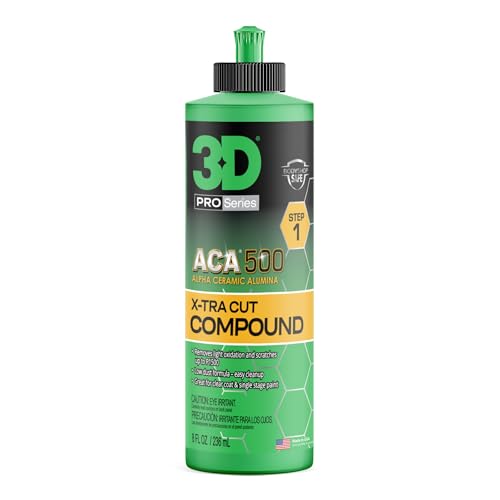 |
3D ACA 500 Cut and Color Compound Best Long Working Time 16 oz, water-based, long buffing cycle, dual action and rotary safe |
9.0 | 🛒 Check Price |
 |
Griot's Garage Complete Compound Best Low-Dust Formula 16 oz, smart abrasive technology, single-step capable, machine recommended |
8.8 | 🛒 Check Price |
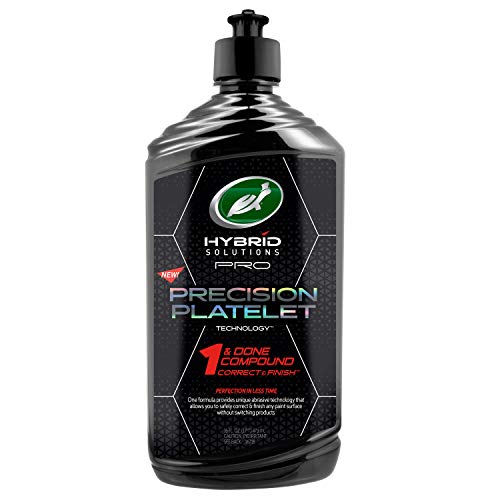 |
Turtle Wax Hybrid Solutions Pro Heavy Cut Compound Best for Heavy Defects 16 oz, graphene-infused, heavy cut, machine application |
8.5 | 🛒 Check Price |
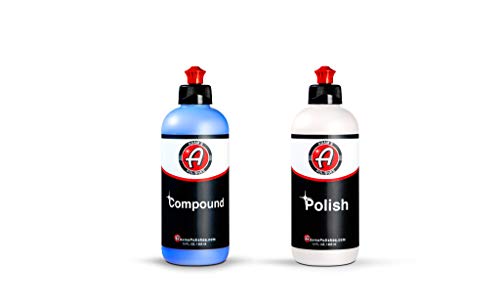 |
Adam's Polishes Cutting Compound Best for Easy Wipe-Off 16 oz, paint-safe abrasives, body-shop safe, dual action and rotary safe |
8.3 | 🛒 Check Price |
 |
Sonax Cut and Finish Compound Best One-Step Finish 16.9 oz, silicone-free, cut and finish in one, machine application |
8.1 | 🛒 Check Price |
1. Meguiar's Ultimate Compound: Best Overall for Beginners
If you have never touched a compound before, this is the one to start with. Meguiar’s built Ultimate Compound around micro-abrasives that keep cutting evenly instead of breaking down, which means you don’t have to nail a perfect technique to get a good result. You can apply it by hand with a foam applicator, throw it on a dual action polisher, or even run a rotary if you eventually move up, and it behaves predictably every time. For most daily-driver paint with swirls, light scratches, and oxidation, two or three passes brings back real clarity.
The honest weakness is cut strength. This is tuned to be safe rather than aggressive, so a genuinely deep scratch that catches your fingernail won’t disappear no matter how many passes you do. Beginners sometimes expect a single panel wipe to fix everything, and that isn’t this product. Treat it as a medium-cut all-rounder and it’ll reward you. Treat it as a one-pass miracle and you’ll be disappointed.
- Micro-abrasive technology that doesn’t require a special pad or polisher
- Safe to use by hand, with dual action polisher, or rotary
- Removes below-surface defects while leaving a clear, glossy finish
Pros: Extremely forgiving and almost impossible to overwork; Works fully by hand if you don’t own a polisher; Finishes clear enough to skip a separate polish on many paints
Cons: Cut is moderate, so deep scratches may need several passes; Can sling a little if you over-apply on a machine pad
2. Chemical Guys VSS Scratch and Swirl Remover: Best All-in-One Correction
VSS stands for Very Severe Scratch, but the smart part for beginners is that it acts as a compound and a polish at the same time. Instead of cutting hard and leaving you with haze to clean up afterward, the abrasives break down gradually so you finish closer to a polished surface in a single step. That collapses two intimidating stages into one, which is exactly what a nervous first-timer wants. It’s happy on a foam cutting or polishing pad and forgives uneven pressure.
Because it tries to do two jobs, it does neither at full strength. If you’re facing heavy oxidation or deeper key marks, a dedicated heavy cutting compound will pull them out faster. For the typical mix of swirl marks, light scratches, and dullness on a well-kept car, though, the convenience of one product and one pass is worth the slightly softer cut. Keep the pad clean and primed and it stays smooth start to finish.
- Combines cutting and polishing action so you can finish in one step
- Optical-grade abrasives reduce the risk of new haze
- Works by hand or with a polisher on most clear coats
Pros: One-step formula simplifies the whole process for first-timers; Leaves a glossy, ready-to-wax finish without a second product; Low dusting keeps your work area and pad cleaner
Cons: Less aggressive than a dedicated heavy compound; Best results still need a polisher for larger defects
3. 3D ACA 500 Cut and Color Compound: Best Long Working Time
One of the biggest beginner mistakes is working a compound too fast because it seems to be drying out. 3D ACA 500 solves that with a long working time, so you can move the polisher slowly, let the abrasives do their job, and actually watch the defects fall away instead of guessing. It cuts harder than the top two picks, which makes it a better choice when oxidation and swirling are heavier, yet it still breaks down to a surprisingly clean finish.
The trade-off for that extra cut is that on very dark or soft paint you may notice faint haze under bright light, so a quick polishing pass afterward is the safe play. That’s one more step than a true one-and-done product, but the forgiving working window and the genuine correction power make it a strong pick once you’re past your very first attempt. It’s the compound to grow into.
- Water-based formula with an extended working window
- Strong cut that still finishes down to a clean surface
- Dust and sling are kept low for easier cleanup
Pros: Long open time means you aren’t racing the product to dry; Good cut without the harsh hazing of older compounds; Body-shop trusted formula that buffs off cleanly
Cons: Aggressive enough that a follow-up polish is wise on dark paint; Bottle pump isn’t included and would help
4. Griot's Garage Complete Compound: Best Low-Dust Formula
Dust is one of the things that makes new detailers feel like they’re doing something wrong, and Griot’s Complete Compound almost eliminates it. The abrasives are designed to refine themselves as you buff, so the product starts with a useful cut and finishes with a polish-like clarity, all while keeping powder and sling to a minimum. For light to moderate swirls and scratches it genuinely works as a single step, which keeps the process simple.
Where it shows its limits is by hand and on serious damage. This compound really wants a dual action polisher to reach its potential, and applying it purely by hand leaves a lot of its capability on the table. On deep scratches the self-refining action also means the cut backs off before the defect is fully gone. As a clean, low-stress machine compound for cars that are already in decent shape, though, it’s excellent.
- Smart abrasives that refine as you work for a cleaner finish
- Very low dusting for a tidy, mess-free correction
- Engineered to perform as a single-step on light to moderate defects
Pros: Minimal dust makes the whole job less intimidating; Refines to a high gloss without a mandatory polish step; Consistent results across different pad types
Cons: Performs best on a machine rather than fully by hand; Cut tapers off on deeper, fingernail-catching scratches
5. Turtle Wax Hybrid Solutions Pro Heavy Cut Compound: Best for Heavy Defects
Sometimes a beginner inherits a neglected car, and a gentle one-step compound simply won’t cut it. Turtle Wax’s Pro Heavy Cut is the answer here, with a graphene-infused, genuinely aggressive formula that pulls out deeper scratches and heavy oxidation that the softer picks on this list can’t touch. Despite the strength it wipes off easily, which keeps it from feeling overwhelming, and it’s sold almost everywhere so refills are never a problem.
That power comes with the usual caution. A heavy cut leaves micro-marring and haze, especially on softer paint, so this isn’t a finish-in-one-step product. You’ll want to follow it with a polish to bring the gloss back, and you need to keep your pressure light to avoid creating new marks. For a confident beginner facing real damage rather than light swirls, it’s the right tool, just not the only tool you’ll use that day.
- Graphene-infused formula for strong defect removal
- Heavy cut tackles deep scratches and severe oxidation
- Wipes off easily despite the aggressive correction power
Pros: Real cutting power for problems other beginner compounds leave behind; Easy wipe-off keeps cleanup manageable; Widely available and easy to restock
Cons: Aggressive enough to need a follow-up polish to remove haze; Easier to mar soft paint if you use too much pressure
6. Adam's Polishes Cutting Compound: Best for Easy Wipe-Off
Adam’s built its reputation on products that are pleasant to use, and the Cutting Compound fits that mold. The abrasives are tuned to resist overworking, and the wipe-off is about as clean and easy as you’ll find, which removes a very frustrating parts of correction for a beginner. It plays nicely with both foam and microfiber pads and behaves consistently on a dual action polisher, so your technique can be a little rough and the result still comes out even.
The catch is that Adam’s clearly designed this as the first half of a two-step system. On its own the gloss is good but not stunning, and you’re nudged toward the matching polish to truly finish the paint. For light to moderate defects that’s fine, but on heavier oxidation the moderate cut means more passes than a dedicated heavy compound. As an easy, low-frustration entry point into machine correction, it earns its place.
- Paint-safe abrasive blend that resists overworking
- Designed to wipe off cleanly with little residue
- Works across foam and microfiber cutting pads
Pros: Very clean, easy wipe-off even for new users; Forgiving enough to resist hazing when worked correctly; Pairs neatly with a matching polish in the same lineup
Cons: Often needs the matching polish for the best final gloss; Moderate cut means heavy oxidation takes extra passes
7. Sonax Cut and Finish Compound: Best One-Step Finish
Sonax leans into the one-step idea harder than most, pairing a usable cut with a finish refined enough that many cars are ready to wax straight afterward. The detail beginners overlook is that it’s silicone-free, which matters because silicone-heavy products can temporarily fill and mask defects, fooling you into thinking the paint is fixed when it isn’t. With Sonax, what you see after wiping is what you actually corrected, so you learn faster and trust your results.
That honesty has a cost in raw cutting power. This is a light to medium compound, so deep scratches and heavy oxidation are beyond its comfort zone and need a stronger product first. Availability can also be patchy outside specialist detailing shops compared to the supermarket brands. For someone doing maintenance correction on paint that’s already in reasonable condition and who wants to finish in a single step, though, it’s a clean, dependable choice.
- Silicone-free so it won’t hide defects from you
- Combines meaningful cut with a refined final finish
- Buffs off with low dust and minimal effort
Pros: True one-step cut and finish saves a whole stage; Silicone-free formula shows your real results honestly; Refines well enough for dark paint to look clean
Cons: Cut is on the lighter side for severe damage; A little pricier on availability outside specialist stores
Frequently Asked Questions
What is the difference between cutting compound and polish?
Cutting compound uses more aggressive abrasives to remove a thin layer of clear coat, which is how it erases swirls, scratches, and oxidation that sit below the surface. Polish is finer and is meant to refine the surface afterward, clearing up any light haze the compound left and bringing back deep gloss. Many beginner-friendly products on this list blur the line by combining both jobs, but as a rule you compound first to correct defects, then polish to perfect the finish. If your paint only has very light marks, a good all-in-one compound may let you skip the separate polish entirely.
Can I use cutting compound by hand without a polisher?
Yes, several compounds here work by hand, with Meguiar’s Ultimate Compound being the standout for hand application. By hand you simply work the product into a small area with a foam applicator using firm, overlapping motions, then wipe off with a clean microfiber towel. The honest reality is that hand application takes far more effort and removes fewer defects than a machine, because you can’t match the speed and consistent pressure of a dual action polisher. For light swirls and spot repairs by hand is fine, but if you plan to correct a whole car regularly, an inexpensive dual action polisher will save you a lot of sweat and give better results.
Will cutting compound damage my clear coat?
It can if you’re careless, but the beginner-friendly compounds in this guide are formulated to make that hard to do. The main risk is heat and friction, especially with an aggressive compound on a rotary polisher held too long in one spot, which can burn through the clear coat to the paint beneath. To stay safe, work small sections, keep the polisher moving, use moderate pressure, and start with the least aggressive compound that will do the job. Non-diminishing formulas help because they don’t suddenly change behavior as you work. Edges and raised body lines have thinner clear coat, so treat those areas with extra care.
How do I know which cutting level I need?
Run your fingernail across a scratch. If it doesn’t catch, the defect is usually in the clear coat and a light to medium compound like Meguiar’s Ultimate Compound or Sonax Cut and Finish will likely remove it. If your nail clearly catches, the scratch is deeper and you’ll need a heavier cut such as the Turtle Wax Pro Heavy Cut, and even then it may only be reduced rather than erased. For general dullness, swirl marks, and water spots on a car that’s just tired rather than damaged, a medium one-step compound is almost always the right starting point. Always begin with the least aggressive option and step up only if needed.
Do I need to wax or seal the car after compounding?
Yes, and this step isn’t optional. Cutting compound removes a microscopic layer of clear coat along with the defects, and in doing so it also strips away any existing wax or sealant protection. That leaves the fresh surface exposed to UV, contamination, and new swirls. After you finish compounding and any polishing, always apply a wax, sealant, or ceramic coating to lock in the correction and protect the paint. Skipping this means your hard work will dull again quickly and the surface stays vulnerable, so treat protection as the mandatory final stage of every correction job.
Our Verdict
For most beginners, Meguiar’s Ultimate Compound is the clear top pick. It’s forgiving, works by hand or machine, finishes clean enough to often skip a separate polish, and is almost impossible to overwork, which is exactly what you want while learning to read paint. Our runner up is the Chemical Guys VSS Scratch and Swirl Remover, which earns its spot by combining cutting and polishing into one simple step so first-timers can correct light to moderate defects without juggling two products. Start with one of these two, keep your sections small and your polisher moving, and always seal the paint when you’re done.