Your Jeep Wrangler runs hot. Crawling rock at two miles an hour, idling on a trail in summer, or towing on the highway all push the cooling system harder than normal commuting ever will. The wrong coolant, or a universal jug poured in without checking the spec, can cause silica dropout, gasket corrosion, and a temperature gauge that creeps toward the red just when you need the engine most. Getting the right antifreeze in your radiator is one of the cheapest forms of insurance a Wrangler owner can buy.
The tricky part is that not all Wranglers take the same coolant. Older TJ and YJ models often ran HOAT or green conventional fluid, while modern JK and JL Jeeps call for a specific OAT formula meeting Mopar MS-12106. We sorted through the real options on Amazon, matched them to engine families, and ranked the seven coolants below by how well they protect, how easy they’re to use, and how confidently you can trust the spec match.
| Photo | Product | Score | Buy |
|---|---|---|---|
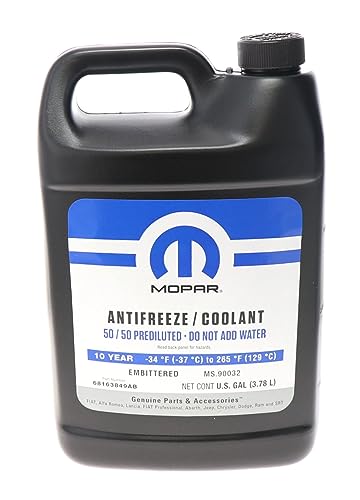 |
Mopar 10 Year/150,000 Mile Coolant Antifreeze OAT Concentrate Best Overall OAT, meets Mopar MS-12106, purple/violet, concentrate (mix 50/50) |
9.5 |
ⓘ We may earn a commission from qualifying purchases made through links on this page, at no extra cost to you.
|
 |
Zerex G-05 Antifreeze/Coolant Concentrate Best for TJ and Older HOAT, low silicate, meets Chrysler MS-9769, yellow/gold, concentrate |
9.3 | 🛒 Check Price |
 |
Prestone Dex-Cool 50/50 Prediluted Antifreeze/Coolant Easiest to Use OAT, prediluted 50/50, orange, ready to pour, no mixing |
9.0 | 🛒 Check Price |
 |
Engine Ice TG-1 High Performance Coolant Best for Trail Heat Propylene glycol based, prediluted, green, biodegradable, lowers temps |
8.8 | 🛒 Check Price |
 |
Peak Original Equipment Technology Antifreeze/Coolant for Asian and American Vehicles Best Value Pick OAT, prediluted 50/50, vehicle specific formula, ready to pour |
8.6 | 🛒 Check Price |
 |
Evans Waterless Engine Coolant Best for Extreme Builds Waterless, propylene glycol based, very high boiling point, no water |
8.3 | 🛒 Check Price |
 |
Valvoline Zerex Original Green Antifreeze/Coolant Concentrate Best Classic Green Conventional IAT, green, low silicate, concentrate, classic chemistry |
8.1 | 🛒 Check Price |
1. Mopar 10 Year/150,000 Mile Coolant Antifreeze OAT Concentrate: Best Overall
If you own a 2013 or newer Wrangler, the Mopar OAT coolant is the answer that ends the debate before it starts. This is the violet fluid that came from the factory in your JK or JL, and it meets the Mopar MS-12106 standard that the owner manual specifies. Pouring in anything else, even a quality competitor, introduces a small risk of additive incompatibility, and on a vehicle you plan to take far from pavement, that risk isn’t worth taking. The phosphate free, silicate free chemistry is built to coexist with the aluminum the engine relies on, so you get genuine long term corrosion control rather than a fluid that merely keeps things from freezing.
The honest weakness here’s convenience. This is a concentrate, which means you need to cut it with distilled water to a proper 50/50 ratio before it goes in, and that extra step trips up first timers who expect a ready to pour jug. You also have to be disciplined about never blending it with the orange or green coolants from older Jeeps, because mixing OAT with HOAT can drop the additive package out of suspension. Get the mix right and keep the chemistries separate, and this is the most trustworthy coolant a late model Wrangler can run.
- Factory fill formula engineered for modern JK and JL Wrangler engines
- Organic Additive Technology rated for 10 years or 150,000 miles
- Phosphate and silicate free to protect aluminum radiators and water pumps
Pros: Exact OEM spec match removes all guesswork for JK and JL owners; Long service interval means fewer flushes over the life of the Jeep; Plays nice with the aluminum components Chrysler uses throughout the cooling system
Cons: Sold as a concentrate, so you must mix with distilled water yourself; Don’t mix the violet OAT with older green or orange HOAT fluid
2. Zerex G-05 Antifreeze/Coolant Concentrate: Best for TJ and Older
For the TJ, YJ, and early HOAT era Jeeps, Zerex G-05 is the coolant the cooling system was actually designed around. This is the yellow HOAT fluid that Chrysler used as factory fill for years, and it carries the MS-9769 approval that those older manuals reference. The low silicate additive package is deliberately gentle, which matters in an aging radiator with original solder joints and rubber that you’d rather not shock with an aggressive modern formula. If your Wrangler predates the switch to violet OAT, this is the bottle that keeps everything in its happy chemical zone.
The catch is simply that newer isn’t always better here. G-05 is HOAT, not OAT, so it’s the wrong choice for a JL that wants MS-12106, and dumping it into a violet system is exactly the kind of cross contamination you should avoid. Like the Mopar fluid it ships as a concentrate, so plan on buying distilled water and mixing a true 50/50 batch. Match it to the right generation of Jeep and it’s faultless, but you do have to know which generation you’re dealing with first.
- HOAT chemistry that matches the factory fill in many TJ and early JK Jeeps
- Low silicate formula gentle on solder and gaskets in older cooling systems
- Meets Chrysler MS-9769 and plenty of European and domestic specs
Pros: Ideal correct spec replacement for HOAT era Wranglers; Trusted Valvoline brand with a long track record in domestic cooling systems; Broad approval list makes it useful across a mixed garage
Cons: Wrong chemistry for newer OAT spec JL Wranglers; Concentrate requires mixing with distilled water before use
3. Prestone Dex-Cool 50/50 Prediluted Antifreeze/Coolant: Easiest to Use
When you want zero hassle, Prestone Dex-Cool prediluted is the jug you grab. It arrives already cut to a 50/50 ratio, so there’s no math, no distilled water run, and no risk of mixing the blend wrong. That makes it the most sensible thing to throw in the trail box for an emergency top off, because at the worst possible moment you don’t want to be hunting for clean water on the side of a fire road. Prestone backs it with the Cor-Guard additive system, which does a genuinely good job holding corrosion at bay across the steel, aluminum, and copper a cooling system mixes together.
The fair criticism is that Dex-Cool, while a fine OAT fluid, isn’t formally the Mopar MS-12106 spec your JL manual lists. For an emergency top off that’s a non issue, and for many older Jeeps it’s perfectly serviceable. But if you’re doing a full flush and fill on a newer Wrangler and want to be by the book, the dedicated Mopar formula is the safer long term call. Treat this one as the convenient, always available backup rather than the exact spec hero, and it earns its spot.
- Prediluted 50/50 formula pours straight from the jug with no water needed
- Extended life OAT chemistry rated for long drain intervals
- Cor-Guard additive technology fights corrosion across mixed metals
Pros: Ready to pour with zero mixing, ideal for trailside top offs; Widely stocked and easy to find when you need it in a hurry; Strong corrosion protection from the Cor-Guard package
Cons: Dex-Cool spec isn’t an exact match for Mopar MS-12106; Best used as a top off rather than a full factory spec replacement on JL Jeeps
4. Engine Ice TG-1 High Performance Coolant: Best for Trail Heat
Engine Ice built its reputation in powersports and offroad racing, and that pedigree is exactly why it lands on a Wrangler list. The propylene glycol based formula is engineered to shed heat, and owners who crawl in summer or sit in long low speed lines often report the temperature gauge settling a few degrees lower after a switch. For a Jeep that spends its hardest hours barely moving, where airflow through the radiator is minimal, that thermal headroom is a real and useful thing rather than a marketing claim. It pours in prediluted, and the biodegradable chemistry is a nice bonus if a hose ever fails somewhere it shouldn’t.
The honest tradeoff is that Engine Ice is a performance coolant, not an OEM specification fluid, so it doesn’t carry the Mopar approval some owners care about for warranty reassurance. It also represents a premium pour rather than the everyday choice for routine maintenance. If your priority is squeezing out lower trail temps and you’re comfortable stepping outside the factory spec, it delivers. If you want strict by the book compliance, you’ll be happier with the Mopar or Zerex options higher on this list.
- Propylene glycol blend designed to pull peak operating temperatures down
- Prediluted and ready to pour straight into the system
- Biodegradable formula popular with the offroad and powersports crowd
Pros: Noticeably lowers running temperatures during slow technical wheeling; Ready to use with no mixing required; Safer for the environment if a hose lets go on the trail
Cons: Not an OEM spec match, so warranty minded owners should weigh that; Costs more value per gallon than a standard antifreeze top off
5. Peak Original Equipment Technology Antifreeze/Coolant for Asian and American Vehicles: Best Value Pick
Peak OET takes a smart approach by selling coolant matched to vehicle families rather than as one universal jug, and the American and Asian formula lines up well with what many domestic Jeep engines want. It’s prediluted to 50/50, so it pours straight in, and the long life additive chemistry is built for the extended drain intervals modern engines expect. For an owner who wants a sensible, well matched fluid without overthinking it, this is a quietly capable choice that punches above its reputation and offers genuinely strong value for what you get in the jug.
The one place to slow down is variant selection. Peak makes several color and chemistry specific products, and grabbing the wrong line for your Wrangler defeats the entire point of a vehicle specific formula. Confirm your Jeep wants the OAT American style fluid before you click buy, and double check you aren’t crossing it with an existing HOAT system. It’s also worth noting that while the chemistry is compatible, it isn’t formally badged to the Mopar standard, so spec purists may still prefer the OEM bottle. Choose the right variant and it’s hard to fault.
- Vehicle specific OET formula targeted at American and Asian cooling systems
- Prediluted 50/50 for pour and go convenience
- Long life additive package for extended service intervals
Pros: Strong qualitative value with a vehicle matched formula; Ready to pour with no mixing step; Easy to source and keep on hand as a maintenance staple
Cons: Verify the exact variant matches your Jeep generation before buying; Not branded to the Mopar spec even where chemistry is compatible
6. Evans Waterless Engine Coolant: Best for Extreme Builds
Evans takes a completely different path by removing water from the equation entirely. Because there’s no water, there’s no boilover and no steam pocket, and the boiling point climbs far above what a standard 50/50 mix can reach. For a built Wrangler that sees genuine extreme duty, hard desert running, big tires, serious towing, or a heavily modified engine, that thermal ceiling is a meaningful safeguard. The waterless chemistry is also non corrosive, so the internal erosion and rust cycles that water drives simply don’t happen, and the fluid can effectively stay in for the life of the engine.
This is firmly an enthusiast solution, and the installation is where most people should pause. Evans only works correctly if you completely purge every trace of water from the system first, because residual water defeats the entire premise and can leave you worse off than a normal mix. That’s a real job, not a five minute top off, and the fluid itself is a premium one time investment. For a daily driven stock Wrangler it’s overkill. For a serious build that punishes the cooling system, it’s one of the few options that genuinely raises the ceiling.
- Waterless chemistry with a boiling point far above conventional coolant
- Eliminates the water that drives corrosion, erosion, and overheating cycles
- Built for heavy duty, high heat, and severe duty applications
Pros: Extremely high boiling point removes overheat and boilover risk; Non corrosive and easy on internal components over the long haul; Effectively never needs replacing under normal service
Cons: Requires a full and thorough flush of all water before conversion; Premium fluid that demands a careful one time installation
7. Valvoline Zerex Original Green Antifreeze/Coolant Concentrate: Best Classic Green
For the oldest Jeeps in the family, the classic green Zerex still has a real role. This is traditional IAT chemistry, the green stuff that older YJ and early TJ cooling systems were engineered around, and the low silicate formula is deliberately easy on vintage radiators and original gaskets. If your Wrangler is old enough that it never saw a long life coolant from the factory, matching it back to a proven conventional green fluid keeps everything chemically consistent rather than forcing a modern additive package onto components that were never designed for it.
The clear limitation is service life. Conventional green coolant needs replacing more often than the extended life OAT and HOAT options at the top of this guide, so you trade longer intervals for old school simplicity. It’s also flatly the wrong fluid for any modern Wrangler, where it has no business going near the violet or yellow systems. Keep it in its lane as the correct period appropriate choice for the oldest Jeeps, accept the shorter drain interval, and it does exactly what it should without drama.
- Traditional green conventional coolant for older cooling systems
- Low silicate additive package suited to vintage radiators and gaskets
- Proven IAT chemistry with a long history in domestic engines
Pros: Correct classic green choice for the oldest YJ and early TJ Jeeps; Gentle low silicate formula respects aging components; Familiar, widely trusted chemistry that’s easy to service
Cons: Shorter service interval than modern OAT and HOAT fluids; Wrong choice for any newer Wrangler running violet or yellow coolant
Frequently Asked Questions
What coolant does my Jeep Wrangler actually take?
It depends on the generation. Modern JK (roughly 2013 and newer) and JL Wranglers call for an OAT coolant meeting the Mopar MS-12106 specification, which is the violet or purple fluid. Older TJ and early JK models often used yellow HOAT meeting MS-9769, and the oldest YJ and early TJ Jeeps may run traditional green conventional coolant. The safest move is to check your owner manual or the color of the fluid currently in the overflow bottle, then match it. When in doubt, the factory Mopar fluid for your year removes all guesswork.
Can I mix different colors or types of coolant in my Wrangler?
You should avoid it. Mixing OAT (violet), HOAT (yellow), and conventional green coolants can cause the additive packages to react, drop out of suspension, and form sludge or gel that clogs the radiator and heater core. If you only need a small emergency top off and have nothing else, a little prediluted universal fluid won’t destroy the engine, but you should flush and refill with the correct single chemistry as soon as you can. The right long term answer is to keep one coolant type matched to your Jeep and stick with it.
Do I need to mix concentrate with water, or buy prediluted coolant?
Concentrate must be mixed with distilled water, usually to a 50/50 ratio, before it goes in the system. Always use distilled water rather than tap water, because the minerals in tap water cause scale and corrosion over time. Prediluted coolant is already cut to 50/50 and pours straight from the jug with no mixing, which is more convenient and safer for trailside top offs. Concentrate often gives you more flexibility and value per gallon, while prediluted trades that for pure convenience. Both protect equally well when used correctly.
Will a different coolant help my Wrangler run cooler on the trail?
It can help at the margins. Performance fluids like Engine Ice are formulated to shed heat and many owners see the gauge settle a few degrees lower during slow technical wheeling, where there’s almost no airflow through the radiator. Waterless coolants like Evans raise the boiling point dramatically and remove boilover risk entirely. Still, coolant is only part of the picture. A clogged radiator, a tired water pump, a failing fan clutch, or a weak thermostat will overheat any Jeep regardless of what fluid is in it, so address the hardware first.
How often should I change the coolant in my Jeep Wrangler?
Follow your owner manual, but a good rule is that modern OAT and HOAT long life coolants are rated for many years and high mileage, often around ten years or 150,000 miles for the factory Mopar fluid. Traditional green conventional coolant needs changing far more often. Regardless of the rating, inspect the coolant regularly for a brown or rusty color, floating debris, or an oily film, since any of those signals a problem that warrants an earlier flush. Hard offroad use and heavy towing can also justify shortening the interval as cheap insurance.
Our Verdict
For most Jeep Wrangler owners, the Mopar 10 Year OAT coolant is the clear top pick, because matching the exact MS-12106 factory spec is the surest way to protect a JK or JL cooling system you depend on far from a tow truck. Our runner up is Zerex G-05, which is the correct HOAT answer for TJ and older HOAT era Jeeps and a name you can trust. Identify your generation first, match the chemistry, never blend types, and your Wrangler will hold its temperature whether you’re crawling rocks or towing home.

