Your Honda Civic left the factory with a very specific coolant, and using the wrong type is one of the quickest ways to invite corrosion, gunk, and a cooling system headache. Honda engines are engineered around a phosphated HOAT formula, often called Honda Type 2, which is silicate free and friendly to the aluminum and gasket materials inside the block, radiator, and heater core. Pour in a generic green coolant meant for older domestic engines and you risk scale buildup and premature water pump wear.
We looked at seven coolants that are either genuine Honda fluid or formulated to meet the same chemistry your Civic needs. We weighed corrosion protection, how long each one lasts between changes, whether it comes ready to pour or needs mixing, and how cleanly it behaves over years of heat cycling. Whether you drive a tenth generation 1.5T, an older K series, or a brand new model, there’s a correct match below.
| Photo | Product | Score | Buy |
|---|---|---|---|
 |
Genuine Honda OL999-9011 Type 2 Coolant Best Overall Pre-diluted 50/50 HOAT, phosphated, silicate free, blue, factory fill |
9.5 |
ⓘ We may earn a commission from qualifying purchases made through links on this page, at no extra cost to you.
|
 |
Zerex Asian Vehicle Blue Antifreeze/Coolant Best Aftermarket Match Phosphated HOAT, silicate and borate free, blue, Honda Type 2 compatible |
9.3 | 🛒 Check Price |
|
Honda Genuine Type 2 Long Life Antifreeze Concentrate Best Concentrate Full strength HOAT concentrate, phosphated, silicate free, mix 50/50 with distilled water |
9.1 | 🛒 Check Price |
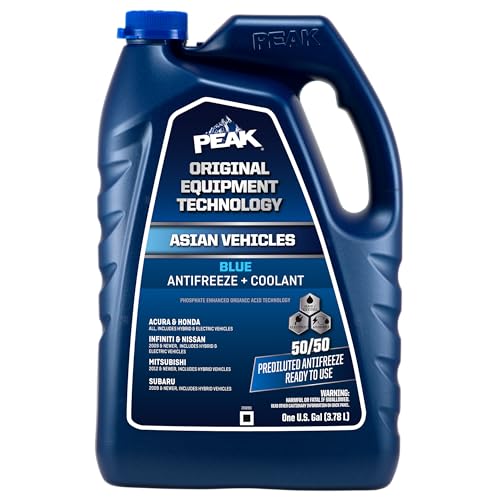 |
Peak OET Asian Vehicles Blue 50/50 Coolant Best Value Pre-diluted 50/50 phosphated OAT, silicate free, blue, Asian vehicle formula |
8.9 | 🛒 Check Price |
 |
Engine Ice TYDS008 High Performance Coolant Best for Hot Climates Propylene glycol based, pre-diluted, biodegradable, lowers operating temps |
8.6 | 🛒 Check Price |
 |
Prestone Asian Vehicle Blue Antifreeze/Coolant Most All-around Pre-diluted phosphated OAT, blue, Honda and Asian vehicle compatible |
8.4 | 🛒 Check Price |
 |
Maxima 82964 Cool-Aide Coolant Additive Best Cooling Additive Water wetter style additive, mixes with coolant or water, lowers temps and inhibits corrosion |
8.0 | 🛒 Check Price |
1. Genuine Honda OL999-9011 Type 2 Coolant: Best Overall
If you want zero doubt, this is the coolant Honda itself puts in the Civic on the assembly line. It’s a phosphated HOAT fluid in the signature blue color, silicate free, and pre-diluted to the 50/50 ratio Honda recommends. That means you crack the cap and pour, with no distilled water to measure and no mixing math. For a daily driver Civic that you plan to keep for years, matching the original chemistry exactly is the safest path, and it keeps the aluminum head, block, and radiator protected the way the engineers intended.
The honest weakness is availability and packaging. Because it ships pre-mixed, half of every jug is water you’re paying to move, and it isn’t always stocked the way a national brand is. You may wait a day or two for delivery rather than grabbing it locally. But for the engine you actually own, the reassurance of a true factory match is hard to beat, and that’s why it earns our top spot.
- Exact Honda Type 2 chemistry your Civic was engineered around
- Comes pre-mixed at 50/50 so no distilled water needed
- Long life formula rated for roughly 10 years or 120,000 miles on the first fill
Pros: Guaranteed correct chemistry with zero compatibility guesswork; Ready to pour straight into the reservoir; Protects aluminum components Honda specifies it for
Cons: Harder to find on shelves than aftermarket brands; Only sold pre-diluted, so you pay to ship the water content
2. Zerex Asian Vehicle Blue Antifreeze/Coolant: Best Aftermarket Match
Zerex Asian Vehicle Blue is the aftermarket coolant most Honda technicians reach for when they don’t have the genuine jug on hand. It’s a phosphated HOAT fluid that’s silicate and borate free, which is exactly what the Civic needs, and Valvoline markets it directly at Honda and Acura blue systems. Performance in real cooling systems is excellent, with strong corrosion inhibition for the aluminum and good high temperature stability through years of heat cycling.
The one thing you have to get right is the version. Zerex sells both a ready to use 50/50 bottle and a full strength concentrate, and grabbing the wrong one means you either over-dilute or pour in straight glycol that needs distilled water added. Read the label before you buy. Once you have the right format, this is as close to genuine Honda Type 2 as an aftermarket bottle gets, and it loses almost nothing to the factory fluid.
- Specifically formulated for Honda, Acura, and other Asian blue coolant systems
- Phosphate plus organic acid package matches the Type 2 spec
- Available pre-diluted (RTU) or as full strength concentrate
Pros: Engineered to meet the exact Honda blue chemistry; Widely stocked and easy to source; Choice of ready to use or concentrate for tailoring your mix
Cons: You must pick the correct RTU or concentrate version to avoid over-diluting; Color is close but not always an identical shade to factory fluid
3. Honda Genuine Type 2 Long Life Antifreeze Concentrate: Best Concentrate
This is the same genuine Honda Type 2 chemistry as our top pick, but in full strength concentrate form. If you do your own cooling system flushes and keep distilled water on hand, the concentrate stretches further because you aren’t paying to ship water. Mixed at the standard 50/50 ratio it delivers identical protection to the pre-diluted jug, and you can lean it slightly richer for very cold climates where you want extra freeze headroom.
The catch is simply the extra step. You must use distilled water, never tap water, because minerals in tap water create scale that undermines the whole point of a phosphate free design. Measure carefully, because a sloppy ratio leaves you either under-protected against freezing or with diluted corrosion inhibitors. For hands on owners this is a smart way to buy genuine fluid, but it asks a little more care than a pour and go bottle.
- Full strength genuine Honda fluid you dilute yourself
- Lets you tune the mix for colder climates
- Same blue Type 2 chemistry as the factory fill
Pros: More coolant per jug since you add your own water; Genuine Honda formula and corrosion package; Flexibility to adjust freeze protection for harsh winters
Cons: Requires distilled water and careful mixing; A wrong ratio reduces protection if you rush the job
4. Peak OET Asian Vehicles Blue 50/50 Coolant: Best Value
Peak OET for Asian Vehicles in blue is the practical everyman choice for a Civic owner who wants correct chemistry without hunting for the dealer jug. It’s a pre-diluted 50/50 phosphated coolant built for Honda style blue systems, so it carries the silicate free, aluminum friendly inhibitor package your engine wants. In day to day driving it holds temperatures steady and resists the corrosion that plagues mismatched fluids, and it pours in ready to use with no mixing.
Where it gives a little ground is at the very long end of the service interval. The genuine Honda fluid and Zerex carry slightly stronger longevity ratings, and a few owners notice the blue dye washing out paler after several years even though the protection holds. None of that’s a dealbreaker for a coolant you change on schedule, and for the value it offers this is an easy recommendation for budget conscious maintenance.
- Original equipment technology blend for Asian blue systems
- Pre-mixed and ready to pour with no measuring
- Phosphate package suited to Honda aluminum components
Pros: Strong protection at a sensible value; Easy to find at most parts stores; Ready to use straight from the jug
Cons: Long life claims sit slightly below genuine Honda fluid; Some owners report the dye fades faster over time
5. Engine Ice TYDS008 High Performance Coolant: Best for Hot Climates
Engine Ice is the pick for Civic owners who push their cars in serious heat, whether that’s autocross weekends, track days, or just brutal desert summers. It’s a propylene glycol based coolant that’s engineered to shed heat and keep operating temperatures lower than a conventional ethylene glycol fill. It pours in pre-diluted, it’s biodegradable, and it’s far less toxic if it ever spills, which matters in a home garage with pets around.
Be clear eyed about the trade off. Engine Ice isn’t a phosphated Honda Type 2 fluid, so it isn’t the right choice if your goal is a decade long set and forget interval matched to factory chemistry. It shines as a performance and hot weather coolant where you change fluid more often and value temperature control above maximum service life. For a track focused Civic it’s excellent, and for that specific job it earns its place here.
- Propylene glycol formula runs cooler than typical ethylene glycol
- Pre-mixed and ready to pour with no dilution
- Less toxic and biodegradable compared to standard antifreeze
Pros: Noticeably lower operating temperatures in heavy heat; Safer around pets and easier on cleanup spills; Ready to use straight from the bottle
Cons: Not a phosphated Honda Type 2 match, so not ideal for very long intervals; Better suited to spirited or hot weather driving than daily fleet use
6. Prestone Asian Vehicle Blue Antifreeze/Coolant: Most Multi-purpose
Prestone Asian Vehicle Blue is the do it all bottle for a household that runs more than one import. It targets the blue coolant systems used across Honda, Toyota, Nissan, and other Asian brands, with a phosphated inhibitor package that keeps the Civic aluminum protected. It’s pre-diluted and ready to pour, and you’ll find it on practically every parts store shelf, which makes it the easy grab when you need coolant today rather than tomorrow.
The flip side of that versatility is that a coolant built to satisfy several manufacturers is, by nature, a little less laser focused than one made for Honda alone. It does the job well and the chemistry is right for a Civic, but the genuine Type 2 and the Honda specific Zerex edge it out on the very longest service intervals. As a reliable, available, multi vehicle option it remains a sound choice.
- Formulated for Honda, Toyota, Nissan, and other Asian blue systems
- Pre-mixed 50/50 and ready to pour
- Corrosion package designed for aluminum cooling components
Pros: Easy to source nationwide at almost any store; Works across multiple Asian vehicles if you own more than one; Convenient ready to use format
Cons: Broad multi vehicle design is less tailored than a Honda specific fluid; Longevity is solid but trails the genuine Type 2
7. Maxima 82964 Cool-Aide Coolant Additive: Best Cooling Additive
Maxima Cool-Aide isn’t a coolant on its own, it’s a performance additive you blend into your existing Honda fluid or water based race mix to pull operating temperatures down and add a layer of corrosion protection. The surfactant chemistry lowers surface tension so heat moves from metal to fluid more efficiently, which can shave a few degrees off a Civic that runs hot in summer traffic or on a spirited drive. A single small bottle treats a full system, so it goes a long way.
The obvious limitation is that it’s a supplement, not a replacement. You still need a proper Type 2 coolant in the system for freeze protection and the full inhibitor package, because Cool-Aide only enhances what is already there. Think of it as a cooling tweak for owners chasing a thermal edge, not a substitute for changing your antifreeze. Used that way, it’s a clever and inexpensive addition, which is why it rounds out our list.
- Surfactant additive that improves heat transfer in your existing coolant
- Adds corrosion protection and reduces surface tension
- A small bottle treats a full cooling system
Pros: Drops coolant temperatures a few degrees in hard use; Affordable way to boost an existing fill; Easy to add without a full flush
Cons: An additive, not a standalone coolant, so it doesn’t replace antifreeze; Freeze protection still depends on the base coolant you run
Frequently Asked Questions
What type of coolant does a Honda Civic actually need?
Your Honda Civic needs a phosphated HOAT coolant, commonly called Honda Type 2, which is silicate free, borate free, and blue in color. This chemistry is designed to protect the aluminum head, block, radiator, and water pump that Honda engines use, and it’s gentle on the gaskets and seals inside the cooling system. Avoid old style green silicated coolants meant for older domestic engines, because the silicates can cause scale and abrasive wear in a Honda. Either genuine Honda fluid or an aftermarket coolant clearly labeled for Honda or Asian blue systems will be the correct match.
Can I use a universal or all makes all models coolant in my Civic?
You can, but it’s usually better to use a coolant labeled specifically for Honda or Asian blue vehicles. So called universal coolants are formulated to be broadly compatible, which means they make compromises to satisfy many manufacturers at once rather than matching the exact phosphated chemistry Honda specifies. For a vehicle you intend to keep long term, a Honda specific fluid gives you the most precise corrosion protection and the longest safe service interval. If you only have a quality Asian vehicle blue formula available, that’s a sound choice that mirrors the factory spec.
Do I need to mix the coolant with water or buy it pre-diluted?
It depends on the product you buy. Pre-diluted or ready to use coolant is already mixed at the 50/50 ratio Honda recommends, so you simply pour it into the reservoir with no measuring. Concentrate, or full strength coolant, must be mixed with distilled water, usually at a 50/50 ratio, before it goes into the system. Always use distilled water, never tap water, because the minerals in tap water create scale and deposits that defeat the corrosion protection. If you want the simplest job, choose a pre-diluted jug, and if you want more coolant per container and the flexibility to adjust the mix, choose concentrate.
How often should I change the coolant in my Honda Civic?
On most modern Honda Civics, the genuine Type 2 long life coolant is rated for roughly the first 10 years or 120,000 miles, after which the interval typically shortens to about every 5 years or 60,000 miles. Always confirm the exact schedule in your owner manual, since it can vary by model year. If you switch to a coolant that isn’t genuine Honda long life fluid, you may need to change it more often. It’s also wise to inspect the coolant condition periodically, because rusty color, debris, or a low level signals it’s time for service regardless of mileage.
What happens if I put the wrong coolant in my Civic?
Using the wrong coolant, such as a silicated green type or an incompatible orange fluid, can lead to corrosion, scale buildup, clogged radiator and heater core passages, and accelerated water pump wear. Mixing incompatible chemistries can also cause the inhibitors to drop out of solution and form sludge or gel that restricts flow. If you have accidentally added the wrong coolant, the safest fix is to fully flush the cooling system and refill with the correct Honda Type 2 compatible fluid. Catching it early and flushing promptly usually prevents lasting damage.
Our Verdict
For nearly every Honda Civic owner, the Genuine Honda OL999-9011 Type 2 Coolant is the smartest choice, because it matches the exact phosphated HOAT chemistry your engine was built around and pours in ready to use with no guesswork. If you can’t get the genuine jug or want a widely available equal, the Zerex Asian Vehicle Blue is our runner up and performs almost identically while being far easier to find. Pick the genuine fluid for total reassurance, reach for the Zerex when convenience matters, and you’ll keep your Civic cooling system clean and protected for the long haul.


