Aluminum engine blocks, heads, and radiators are light and shed heat fast, but they’re far more vulnerable to corrosion and electrolysis than old cast iron. The wrong coolant, or a tired one that has lost its additives, eats away at water pump impellers, head gaskets, and radiator passages from the inside. The right coolant keeps a protective film on every aluminum surface while it does the real job of carrying heat away.
We looked at the coolants buyers actually run in modern aluminum motors, focusing on additive chemistry (OAT, HOAT, and the silicate question), aluminum corrosion protection, freeze and boil protection, and how honestly each one matches what your owner manual calls for. Here are the seven we trust most, ranked best first, with the real weaknesses each one carries.
| Photo | Product | Score | Buy |
|---|---|---|---|
|
🚗
|
Zerex G05 Antifreeze/Coolant Concentrate Best Overall HOAT (low-silicate) chemistry, yellow/gold, 5-year/150,000-mile service |
9.5 |
ⓘ We may earn a commission from qualifying purchases made through links on this page, at no extra cost to you.
|
 |
Prestone Extended Life 50/50 Prediluted Antifreeze/Coolant Best All-Makes Compatibility Patented cor-guard OAT formula, prediluted 50/50, 10-year/300,000-mile claim |
9.3 | 🛒 Check Price |
 |
Engine Ice High Performance Coolant TYDS008 Best for Performance and Track Propylene glycol based, prediluted, non-toxic, designed for aluminum race engines |
9.1 | 🛒 Check Price |
 |
Valvoline Zerex Asian Vehicle Antifreeze/Coolant Best for Japanese Engines Phosphated HOAT, silicate-free, blue, for Honda, Toyota, Nissan and similar |
9.0 | 🛒 Check Price |
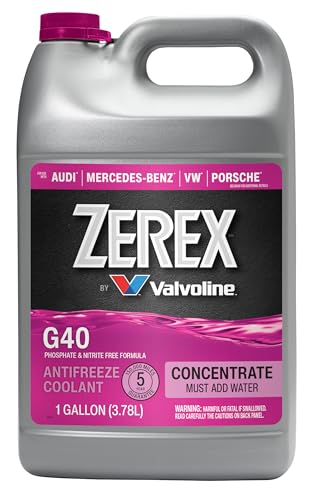 |
Zerex G40 Antifreeze/Coolant Concentrate Best for European Engines Si-OAT silicate-organic chemistry, pink/violet, VW/Audi G12evo and G13 compatible |
8.9 | 🛒 Check Price |
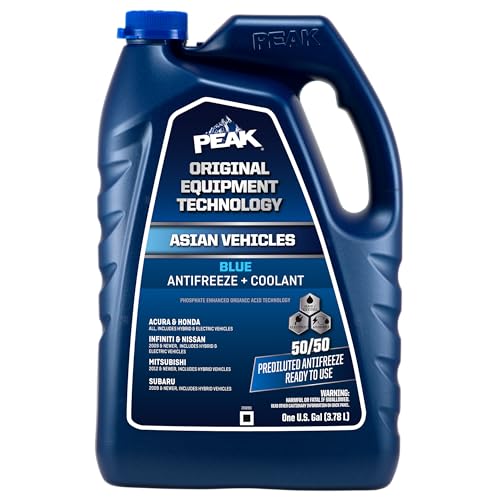 |
PEAK Long Life 50/50 Prediluted Antifreeze/Coolant Best Value Universal OAT-based universal formula, prediluted 50/50, 10-year/300,000-mile claim |
8.5 | 🛒 Check Price |
 |
Maxima Cool-Aide Premixed Engine Coolant Best Non-Glycol Option Glycol-free, water-based with wetting agents, premixed for aluminum powersports engines |
8.2 | 🛒 Check Price |
1. Zerex G05 Antifreeze/Coolant Concentrate: Best Overall
Zerex G05 is our top pick because it solves the central tension in aluminum cooling. Pure organic-acid (OAT) coolants protect for a long time but are slower to form a film on bare aluminum, while old silicate coolants protect aluminum instantly but drop out and clog. G05 is a hybrid (HOAT) that keeps a small, controlled dose of silicate for immediate aluminum and solder coverage, then leans on organic acids for years of service. That combination is exactly what an all-aluminum block and radiator wants.
The honest weakness is that G05 ships as a concentrate, so you have to mix it 50/50 with distilled water yourself. Mix it with tap water and the minerals will undermine the very aluminum protection you bought it for. It’s also a gold color that looks similar to several other coolants, so label your jug clearly. Get the prep right and this is the most broadly trustworthy aluminum coolant on the shelf.
- Hybrid OAT additive package balances fast aluminum protection with long organic-acid life
- Low silicate level guards water pump seals while still shielding aluminum on day one
- Meets plenty of European and domestic specs including many Chrysler and Mercedes calls
Pros: Excellent aluminum and water pump protection in one formula; Backed by Valvoline, a name with deep coolant history; Covers a huge list of vehicles, so guesswork drops
Cons: Sold as a concentrate, so you must mix with distilled water; Gold color can be confused with other coolants in the bay
2. Prestone Extended Life 50/50 Prediluted Antifreeze/Coolant: Best All-Makes Compatibility
Prestone Extended Life earns the all-makes spot because it’s the coolant most people can pour without a chemistry lesson. The cor-guard additive package is built specifically to attack the two failure points aluminum engines suffer, hot-surface corrosion on the block and head, and electrochemical attack at solder and braze joints. Because it arrives prediluted at 50/50 with the right water, you skip the distilled-water step that trips up so many DIY top-ups.
Its weakness is the flip side of its strength. A true universal coolant is formulated to get along with everything, which means it’s rarely the exact fluid a fussy European manufacturer specifies by part number. If your manual demands a single approved spec, follow that. For a general aluminum engine, a top-off, or a mixed fleet of vehicles, the convenience and broad protection here are hard to beat.
- Cor-Guard additive technology targets the aluminum hot-spot and solder corrosion
- Prediluted 50/50 with the correct water, so no mixing step
- Marketed as safe to mix with any other color coolant in an emergency
Pros: Comes ready to pour with no measuring or distilled water needed; Strong claimed aluminum protection from the cor-guard chemistry; Universal compatibility removes color and brand anxiety
Cons: Universal blends rarely match a strict factory spec perfectly; Long-life claims assume a clean, properly flushed system
3. Engine Ice High Performance Coolant TYDS008: Best for Performance and Track
Engine Ice is the coolant of choice for a lot of motorcycle, kart, and track-day owners running aluminum engines, and for good reason. Its propylene glycol base and tuned additive pack are engineered to pull heat out of aluminum quickly and run a few degrees cooler under sustained load, which is exactly what you want when an engine sees repeated heat cycles on a hot day. It’s also silicate and phosphate free, so there’s nothing in it to drop out and abrade aluminum surfaces.
The real limitation is cold weather. Engine Ice is optimized for heat management, not deep-freeze protection, so its low-temperature rating isn’t as aggressive as a winter-focused antifreeze. If you live where it gets seriously cold and park outside, this isn’t your year-round fluid. For a performance or track aluminum engine that mostly battles heat, it’s outstanding.
- Propylene glycol base lowers operating temperatures versus many ethylene glycol fluids
- Phosphate-free and silicate-free chemistry friendly to aluminum and seals
- Biodegradable and far less toxic to pets and wildlife than standard antifreeze
Pros: Genuinely helps drop coolant temps on hard-run aluminum engines; Non-toxic profile is safer in the garage and at the track; Ready to use with no dilution
Cons: Lower freeze protection makes it questionable in hard winter climates; Premium positioning and small bottles suit track use more than fleets
4. Valvoline Zerex Asian Vehicle Antifreeze/Coolant: Best for Japanese Engines
Asian and European engineers fundamentally disagree about coolant. European makers ban phosphates because of their hard water, while Japanese makers ban silicates and rely on phosphates to protect aluminum. Zerex Asian Vehicle coolant is built squarely for that Japanese philosophy, with a phosphated, silicate-free additive package that mirrors what Honda, Toyota, and Nissan put in their aluminum engines from the factory. If your car wears one of those badges, this fluid speaks its native language.
The weakness is simply that this specialization cuts both ways. The very phosphates that make it correct for a Honda make it wrong for a VW or BMW, so you mustn’t cross the streams. You should also confirm the exact factory color and spec for your model, since some makers split blue, green, and pink across model years. Inside its lane, though, this is one of the smartest aluminum-coolant choices you can make.
- Phosphate-based additive system matches what most Asian makers actually use
- Silicate-free design avoids the hard-water scaling Asian makers warn against
- Available in a low-silicate blue that mirrors factory Honda and Toyota fluids
Pros: Correct chemistry for aluminum Honda, Toyota, and Nissan engines; Silicate-free formula respects the maker's own guidance; Trusted Zerex quality at a sensible value
Cons: Phosphate chemistry is the opposite of what European makers want; Color matching still requires checking your specific model
5. Zerex G40 Antifreeze/Coolant Concentrate: Best for European Engines
Modern European engines are aluminum-intensive and extremely particular, and Zerex G40 is the coolant that satisfies them. It uses Si-OAT chemistry, which marries the long life of organic acids with a stabilized silicate that gives aluminum the instant protective film European hot-running designs demand, all without the phosphates European makers forbid. That’s why it carries compatibility with VW, Audi, Porsche, and Mercedes specifications that most universal coolants can’t honestly claim.
As a concentrate, G40 needs a proper 50/50 mix with distilled water, and that step matters more here than almost anywhere, because European cooling systems run hot and unforgiving. It’s also strictly the wrong fluid for a phosphate-loving Asian engine, so don’t buy it on color alone. If you drive a German car with an aluminum engine, this is the bottle that belongs in your garage.
- Si-OAT technology pairs organic acids with a stabilized silicate for aluminum
- Meets demanding VW, Audi, Porsche, and Mercedes coolant specifications
- Phosphate-free to satisfy strict European hard-water requirements
Pros: Genuinely matches modern VAG and Mercedes factory specs; Silicate-organic blend protects aluminum without phosphate; Long service life when the system is kept clean
Cons: Concentrate must be mixed with distilled water before use; Wrong for phosphate-based Asian engines
6. PEAK Long Life 50/50 Prediluted Antifreeze/Coolant: Best Value Universal
PEAK Long Life is the sensible value choice for a daily-driver aluminum engine that just needs reliable, modern protection. Its organic-acid additive package is designed to keep aluminum, steel, and copper components protected across a long service interval, and because it comes prediluted at 50/50, there’s no measuring and no chance of getting the mineral content wrong. For routine maintenance on a mainstream car, that simplicity has real worth.
The honest catch is that PEAK Long Life is a universal coolant, not a spec-matched one. It’ll protect a general aluminum engine well, but it isn’t a stand-in for a fluid your manufacturer calls out by an exact approval number, and topping a precise factory coolant with a universal one slowly waters down that tailored chemistry. Use it where the maker allows a universal long-life OAT, and it delivers a lot of protection for very little fuss.
- Organic acid technology built to protect aluminum and other metals
- Prediluted and ready to pour with no mixing required
- Promoted as compatible across makes and coolant colors
Pros: Strong everyday aluminum protection for the value; Convenient ready-to-use 50/50 dilution; Widely stocked and easy to find for top-ups
Cons: Not a substitute for a strict OEM-specified coolant; Universal formulas can dilute the protection of a precise factory fluid if blended
7. Maxima Cool-Aide Premixed Engine Coolant: Best Non-Glycol Option
Maxima Cool-Aide takes a different route to protecting aluminum. Instead of relying on glycol, it’s a water-based coolant loaded with a wetting agent and aluminum-specific corrosion inhibitors. Removing the glycol improves raw heat transfer, and the wetting agent helps the fluid cling to hot aluminum surfaces so it can carry heat away before localized boiling forms steam pockets. On a hard-run aluminum powersports engine fighting heat, that’s a genuine advantage.
The trade-off is blunt and you must respect it. With little glycol, Cool-Aide offers minimal freeze protection, so it isn’t meant for a vehicle that sits outside in winter. It’s also engineered for powersports and track use rather than as a drop-in automotive antifreeze. Within that purpose, on an aluminum engine that lives and dies by heat management, it’s an excellent and slightly unconventional pick.
- Glycol-free formula transfers heat better than traditional antifreeze in heat
- Built-in wetting agent reduces hot-spot boiling on aluminum surfaces
- Corrosion inhibitors tuned for aluminum motorcycle and ATV cooling systems
Pros: Excellent heat transfer for hard-working aluminum engines; Wetting agent helps prevent localized boiling and hot spots; Ready to use straight from the bottle
Cons: Glycol-free means little to no freeze protection in cold climates; Aimed at powersports, not a general automotive antifreeze replacement
Frequently Asked Questions
Does aluminum engine coolant really need to be different from regular coolant?
It needs to have the right additive chemistry, which most modern coolants now do. Aluminum corrodes faster than cast iron and is prone to electrolysis, so the coolant must keep a protective film on aluminum at all times and mustn’t contain anything that drops out and abrades the metal. Older green silicate coolants and any coolant past its service life are the real danger. As long as you choose a current OAT, HOAT, or Si-OAT coolant that lists aluminum protection and matches your engine, you’re covered. The mistake is running a tired coolant whose additives are exhausted, because depleted fluid actually accelerates aluminum corrosion.
Can I just use any universal coolant in my aluminum engine?
For a general domestic aluminum engine, a quality universal long-life coolant works well and is convenient. The caution is for engines with strict factory specs, especially European and Japanese ones. European makers forbid phosphates, Japanese makers forbid silicates, and a universal blend is a compromise that may not match either exactly. If your owner manual names a specific approval, such as a VW G13 or a Honda Type 2 fluid, buy a coolant that meets that spec rather than a generic one. Topping off in an emergency with a universal coolant is fine, but a full service should match what your engine was designed for.
Why does the color of the coolant matter, or does it?
Color is only a rough guide and it isn’t a reliable way to choose coolant. Manufacturers dye coolants different colors, but two coolants of the same color can have completely different and incompatible chemistry, and the same chemistry can appear in different colors across brands. Always choose by the additive technology and the specification your engine calls for, not by matching the color in the reservoir. The one thing color is useful for is spotting a leak or telling at a glance that someone added the wrong fluid. Read the spec on the bottle and your owner manual, then ignore the color.
Do I need to mix concentrate coolant with distilled water?
Yes, and the water choice is critical for aluminum engines. A concentrate must be diluted, almost always to a 50/50 ratio, and you must use distilled or deionized water. Tap water carries minerals and chlorine that cause scaling and corrosion on aluminum, which defeats the purpose of buying a protective coolant. If you’d rather skip the step entirely, buy a prediluted 50/50 product, which already contains the correct water. Never run straight concentrate, because it actually transfers heat worse than a proper mix and can run hotter than a correctly diluted coolant.
How often should I change the coolant in an aluminum engine?
Follow your owner manual first, but a practical rule is that long-life OAT and HOAT coolants are good for roughly five years or 100,000 to 150,000 miles, while some extended-life formulas claim even longer in a clean system. Aluminum engines are less forgiving of neglected coolant than iron ones, so don’t stretch the interval just because the fluid still looks colored. Test it with coolant test strips that read both freeze point and additive condition, and change it sooner if the strips show depleted inhibitors. When you do change it, flush the old fluid out fully so you aren’t mixing chemistries.
Our Verdict
For most aluminum engines, Zerex G05 is our top pick, because its low-silicate HOAT chemistry gives bare aluminum the instant protection it needs while still delivering years of organic-acid service life across a huge list of vehicles. If you want the same confidence without any mixing, the Prestone Extended Life 50/50 is our runner up, a prediluted, all-makes coolant whose cor-guard additives target the exact corrosion points aluminum engines suffer. Drivers of specific European or Japanese engines should step to Zerex G40 or Zerex Asian Vehicle respectively, since matching your maker’s chemistry always beats a compromise.