Perforated leather seats look and breathe beautifully, but those tiny ventilation holes are a magnet for trapped grime, sunscreen, dye transfer from jeans, and dried sweat. The wrong cleaner makes things worse: heavy gels and thick conditioners get pushed into the perforations and dry there as white crust, while harsh degreasers strip the finish and dull the surface. Cleaning perforated leather is really about controlling how much product goes in and how easily it comes back out.
We focused on cleaners that produce a controllable foam or light liquid, rinse or wipe away clean, and never pool inside the holes. We looked at how each one handled real interior soiling on ventilated seats, how much residue it left in the perforations, whether it stayed pH balanced enough for coated automotive leather, and how it smelled and felt once dry. Below are the seven that earned a spot, ranked best first.
| Photo | Product | Score | Buy |
|---|---|---|---|
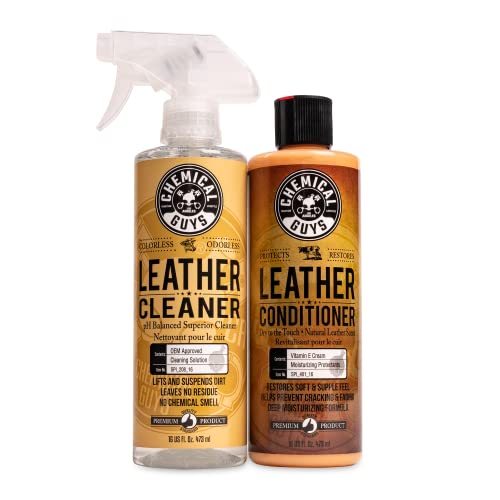 |
Chemical Guys Leather Cleaner Best Overall pH-balanced liquid cleaner, water based, safe on coated and perforated leather |
9.5 |
ⓘ We may earn a commission from qualifying purchases made through links on this page, at no extra cost to you.
|
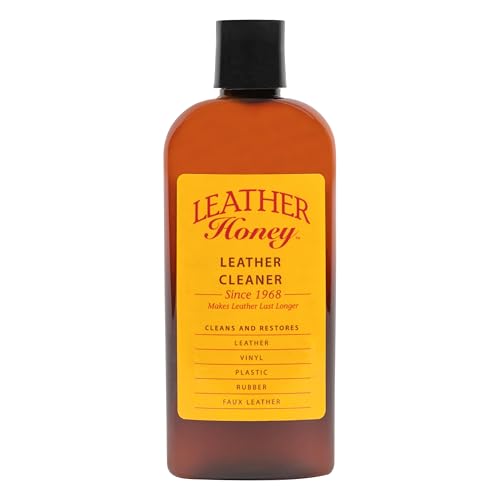 |
Leather Honey Leather Cleaner Best for Delicate Leather Concentrated water-dilutable cleaner, non-toxic, safe on finished automotive leather |
9.2 | 🛒 Check Price |
 |
Lexol Leather Cleaner Best Trusted Classic pH-balanced leather cleaner spray, water based, formulated for fine and automotive leather |
9.0 | 🛒 Check Price |
 |
CarGuys Super Cleaner Best All-Surface Multi-surface interior cleaner, safe on leather, vinyl, fabric and plastic trim |
8.8 | 🛒 Check Price |
 |
Meguiar's Gold Class Rich Leather Cleaner Best Easy Spray Leather cleaner and conditioner spray, aloe enriched, for automotive leather |
8.6 | 🛒 Check Price |
 |
Adam's Leather Cleaner Best Low-Residue Foam Water-based leather cleaner spray, pH-conscious, for coated automotive leather |
8.4 | 🛒 Check Price |
 |
Weiman Leather Cleaner Wipes Best Quick Wipes Pre-moistened leather cleaning wipes with UV protectants, ready to use |
8.0 | 🛒 Check Price |
1. Chemical Guys Leather Cleaner: Best Overall
This was the cleaner we reached for most often on perforated seats because it strikes the right balance: strong enough to pull out embedded denim dye and body oils, but light enough that it never floods the holes. We sprayed onto a microfiber or a soft brush rather than directly onto the seat, worked it in small circles, and wiped immediately. Because the liquid stays thin and low-foaming, almost nothing settled into the perforations, and what little did wiped away with a second dry pass. The leather came up clean and matte, with no greasy film.
The honest weakness is that it’s a cleaner and nothing more. It contains no conditioning oils, so on older or thirsty leather the surface can look slightly flat until you follow with a dedicated conditioner. That two-step approach is actually the correct way to treat perforated leather, but if you want a single bottle that cleans and feeds in one go, this isn’t it. For control and residue-free results, though, it’s the one we trust most.
- Light, low-foam liquid that wipes out of perforations instead of pooling in them
- PH-balanced formula safe for coated factory leather and most vinyl trim
- Pairs with a soft horsehair brush for agitating grime out of the holes
Pros: Cleans deeply without leaving white crust in the perforations; Gentle enough for frequent maintenance cleaning; Mild, non-chemical scent that fades fast
Cons: Doesn’t condition, so you need a separate conditioner afterward; Heavily soiled seats may need two light passes
2. Leather Honey Leather Cleaner: Best for Delicate Leather
If your perforated seats are older or you simply want the most cautious option, this concentrate is hard to beat. Because you dilute it yourself and apply it on a barely damp cloth, you keep moisture away from the holes entirely. We found it excellent for routine upkeep, wiping away dust, light hand oils, and the dull film that builds on a daily driver. It left the leather feeling clean and natural rather than coated or slick.
The trade-off is reach. On stubborn ground-in stains or dark dye transfer, the gentle formula needs several passes where a stronger cleaner would clear it in one. It’s also not an instant grab-and-spray product, since you have to mix it first. For owners who value a soft touch and a bottle that stretches a long way, those are small prices to pay for how kind it’s to the leather.
- Concentrate you dilute, so you control exactly how wet the seat gets
- Non-toxic formula with no harsh solvents or strong fragrance
- Works on a damp cloth that lifts grime without soaking the perforations
Pros: Very gentle, ideal for aged or lightly cracked perforated leather; A diluted bottle lasts a long time, so it offers strong value; No sticky residue once buffed dry
Cons: Diluting and mixing adds a step before you start; Less aggressive on heavy, set-in stains
3. Lexol Leather Cleaner: Best Trusted Classic
Lexol has been a detailer staple for decades, and on perforated seats it still earns its place. The pH-balanced formula is built around leather chemistry rather than general cleaning, so it loosens embedded soil while respecting the finish. We got the best results by spraying onto a brush or cloth first, agitating gently, then wiping; done that way it cleared the perforations cleanly and left the surface soft and ready for conditioner.
The one caution is application technique. The spray is fine but generous, and if you blast it directly into the perforations you can drive more liquid into the holes than you want. Apply it to your applicator instead of the seat and that problem disappears. It doesn’t condition on its own, so plan to follow with the matching conditioner for the complete clean-and-feed routine that perforated leather really wants.
- Long-standing pH-balanced formula designed specifically for leather pores
- Light spray that loosens grime so it lifts out of perforations
- Pairs naturally with the matching Lexol conditioner for a full system
Pros: Proven, leather-specific formula with a strong reputation; Cleans the perforations well without aggressive stripping; Widely available and easy to restock
Cons: Spray pattern can over-apply if you aim straight at the holes; Subtle scent that some find slightly clinical
4. CarGuys Super Cleaner: Best All-Surface
When you want one bottle for the whole interior and not just the seats, this all-surface cleaner is the most capable on our list. It cuts through grime on perforated leather and then keeps going onto the door cards, console, carpet, and plastics. We liked that you can dial the strength simply by how much you spray and how long you let it dwell, which makes it adaptable from a quick wipe to a deeper clean.
Because it’s a powerful multi-surface formula rather than a leather-only product, restraint matters on perforated seats. Heavy spraying produces a thick foam that can sit in the holes, so we kept coats light, worked with a soft brush, and wiped quickly before anything could dry. Used carefully it’s excellent, but it asks more attention than a dedicated leather cleaner. For a do-it-all bottle that still respects perforated leather, it’s a smart pick.
- Cleans perforated leather plus surrounding vinyl, plastic, and fabric trim
- Foaming action you can control by how much you spray and dwell
- One bottle handles the whole interior, not just the seats
Pros: Genuinely multi-purpose across the entire cabin; Strong cleaning power on grime and light stains; Good value since it replaces several single-use products
Cons: Strong enough that you must test and use light coats on leather; Foam can settle in perforations if over-applied
5. Meguiar's Gold Class Rich Leather Cleaner: Best Easy Spray
For drivers who want to keep nice seats nice without a multi-step ritual, this spray is the easy answer. It cleans and lightly conditions in one pass, which makes weekly maintenance painless. On perforated leather we sprayed onto a microfiber, wiped the surface, and the seats came up soft, matte, and fresh. The aloe-enriched formula avoids the slick, over-shined look that cheaper combos leave behind.
The compromise of any clean-and-condition product shows up around the holes. Because it carries conditioning agents, overspraying directly onto perforated seats can leave a faint residue inside the perforations that you then have to chase out with a dry brush. Apply it to the cloth, not the seat, keep it light, and that issue stays minor. As a deep stain remover it’s outgunned by the dedicated cleaners higher on this list, but for fast, regular care it’s genuinely handy.
- Convenient spray-and-wipe format for quick maintenance cleans
- Aloe-enriched formula that cleans while leaving a soft feel
- Light scent and matte finish that suits factory seats
Pros: Fast and beginner-friendly for routine upkeep; Leaves a clean, soft, non-greasy surface; Pleasant subtle scent
Cons: Combined formula can leave slight residue in perforations if oversprayed; Not a deep cleaner for heavy stains
6. Adam's Leather Cleaner: Best Low-Residue Foam
Adam’s built this cleaner for the coated leather most modern cars actually use, and that focus shows on perforated seats. The light foam lifts everyday grime and wipes away with little left behind, so the holes stay clear. We agitated with a soft horsehair brush, wiped with a clean microfiber, and the surface came up tidy and uniform without any tacky feel. It’s a pleasant, fuss-free product to use.
Its honest limitation is that it’s really designed as half of a two-step system. On its own it cleans well, but the leather looks its best only after you follow with the matching conditioner, which means buying into the pair. As a standalone deep cleaner for badly neglected seats it’s also on the gentler side. Treat it as the cleaning step in a proper routine and it performs exactly as intended on ventilated leather.
- Light foaming spray engineered to wipe away cleanly
- Water-based formula aimed at modern coated factory leather
- Designed to pair with the matching Adam's leather conditioner
Pros: Lifts grime with minimal residue when used as a system; Pleasant scent and clean matte result; Good control with a soft brush on perforations
Cons: Best results really require the matching conditioner too; Milder on deep stains than heavier cleaners
7. Weiman Leather Cleaner Wipes: Best Quick Wipes
Sometimes the smartest tool for perforated leather is the one that puts the least liquid on the seat, and that’s exactly why these wipes made the list. Because the cloth carries a controlled amount of cleaner, almost nothing pools in the holes. They’re ideal for a quick wipe-down after a commute, a fast spot clean, or keeping a glovebox-friendly option on hand. The added UV protectants are a nice bonus for seats that bake in the sun.
The limitation is simply throughput and strength. One wipe covers a modest area, so doing a full set of seats burns through several, and they’re built for maintenance rather than rescue, so deep or set-in stains will defeat them. For convenience, gentleness, and keeping ventilated seats clean between proper details, though, they’re a genuinely useful addition.
- Pre-moistened wipes with no spraying or mixing required
- Controlled moisture so very little liquid reaches the perforations
- Includes UV protectants to help guard against sun fade
Pros: Extremely convenient for in-car and on-the-go touch-ups; Low liquid load is naturally gentle on perforations; No overspray onto glass or electronics
Cons: Each wipe covers limited area, so a full clean uses several; Not strong enough for deep or set-in stains
Frequently Asked Questions
Why is cleaning perforated leather seats different from regular leather?
Perforated leather has hundreds of tiny ventilation holes that can trap and hold whatever you put on them. With solid leather, excess product just sits on the surface and wipes off, but on perforated seats a thick cleaner or conditioner gets pushed into the holes and dries there as visible white crust. That’s why the best approach uses a light, low-foam cleaner applied to a cloth or soft brush rather than sprayed directly into the perforations, followed by an immediate wipe so nothing has time to settle and dry inside the holes.
How do I get dried white residue out of the perforations?
White crust in the holes is usually dried conditioner or cleaner that was over-applied. To remove it, lightly mist a pH-balanced leather cleaner onto a soft horsehair brush, gently agitate the affected area in small circles to dissolve the residue, then immediately wipe with a clean dry microfiber. Repeat with light passes rather than soaking the seat. The goal is to re-wet the residue just enough to lift it without driving more liquid into the perforations. Going slowly across a few passes works far better than one heavy soak.
Can I spray cleaner directly onto perforated leather seats?
It’s better not to. Spraying straight at the perforations drives liquid into the holes where it can pool and dry. Instead, spray the cleaner onto your microfiber cloth or soft brush first, then work it into the leather. This gives you control over exactly how much product reaches the surface and keeps the perforations clear. The only real exception is pre-moistened wipes, which already carry a controlled amount of liquid, but even then you should avoid pressing hard enough to push moisture down into the holes.
Should I condition perforated leather after cleaning it?
Yes, but with restraint. Cleaning removes oils along with grime, so a light conditioner helps keep the leather supple and resistant to cracking. The key is to apply a thin amount onto a cloth, work it in, and then buff thoroughly so no conditioner is left sitting in the perforations. Avoid thick, greasy conditioners on ventilated seats, since they’re the most likely to clog the holes. A small amount, well buffed, protects the leather without the white residue problem that heavy application causes.
How often should I clean perforated leather car seats?
For a daily driver, a light maintenance wipe every couple of weeks keeps grime, body oils, and dye transfer from building up inside the perforations, where it’s hardest to remove later. A deeper clean with a dedicated leather cleaner and soft brush every two to three months is usually enough for most owners. Light bright leather and seats exposed to sunscreen, jeans, or pets benefit from more frequent attention. Staying ahead of the dirt is far easier than rescuing perforations that have been left to load up with grime.
Our Verdict
For most people, the Chemical Guys Leather Cleaner is our top pick because its thin, low-foam formula cleans deeply while wiping cleanly out of the perforations, which is exactly what ventilated seats need. Our runner up is the Leather Honey Leather Cleaner, a gentler dilutable concentrate that’s ideal for older or delicate perforated leather and stretches a long way per bottle. Whichever you choose, apply it to a cloth or soft brush rather than spraying into the holes, follow with a light conditioner, and your perforated seats will stay clean and crack-free for years.

