You do not need a flagship sonar unit to start marking fish and reading the bottom. A good budget fish finder gives you depth, structure, and fish arches that turn guesswork into a plan, and the gap between entry level and mid range has narrowed a lot. We spent time with the units below on kayaks, jon boats, and through the ice to see which ones actually earn a spot on a smaller rig.
Our picks favor real readability, a transducer that holds a bottom lock at speed, and menus that a first time owner can learn in an afternoon. We avoided units that look impressive on a spec sheet but wash out in sunlight or lose the signal the moment you idle forward. Below are seven affordable fish finders worth your attention, ranked best first, with the honest trade offs each one asks you to live with.
| Photo | Product | Score | Buy |
|---|---|---|---|
 |
Garmin Striker 4 Best Overall 3.5 inch color display, CHIRP sonar, built in GPS, 77/200 kHz transducer |
9.5 | 🛒 Check Price |
 |
Lowrance Hook Reveal 5 Best Screen 5 inch SolarMAX display, DownScan Imaging, Autotuning sonar, FishReveal |
9.3 | 🛒 Check Price |
 |
Humminbird PiranhaMAX 4 Easiest to Use 4.3 inch color display, dual beam sonar, 240 ft depth capability, tilt mount |
9.1 | 🛒 Check Price |
 |
Garmin Striker Vivid 4cv Best Imaging Value 4 inch display, ClearVu scanning sonar, GPS, GT20 transducer, vivid color palettes |
9.0 | 🛒 Check Price |
 |
Lowrance Hook2 4x Bullet Best for Trolling 4 inch display, wide angle Bullet Skimmer transducer, Autotuning sonar |
8.7 | 🛒 Check Price |
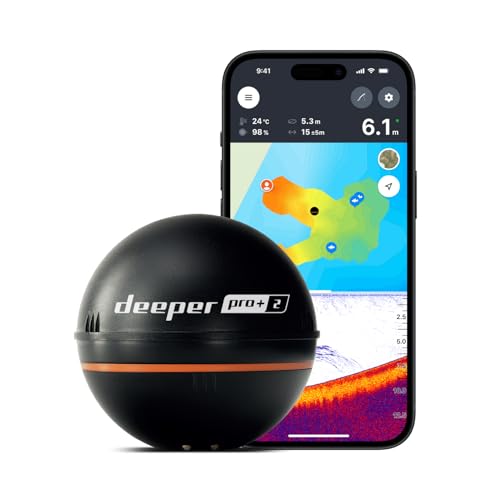 |
Deeper PRO Plus Smart Sonar Best Castable Wi-Fi castable sonar ball, GPS, dual beam, 330 ft depth, phone app display |
8.5 | 🛒 Check Price |
 |
ReelSonar iBobber Wireless Most Portable Castable Bluetooth bobber, 135 ft depth, LED beacon, fish and depth alarms via app |
8.0 | 🛒 Check Price |
1. Garmin Striker 4: Best Overall
The Garmin Striker 4 is the unit we hand to anyone who wants one fish finder that just works. The CHIRP sonar sweeps a range of frequencies instead of a single ping, so fish stacked near the bottom or tight against cover separate into distinct arches rather than one blurry blob. On the water it held a confident bottom lock while we trolled and while we drifted, which is exactly where cheaper single frequency units tend to stumble.
The real surprise at this tier is the built in GPS. You can drop a waypoint on a brush pile, a drop off, or a productive weed edge and motor straight back to it next trip, something most budget rivals simply cannot do. The honest weakness is the screen. At 3.5 inches it is perfectly legible but small, and if you fish in bright midday glare you will find yourself leaning in. There is also no preloaded lake cartography, so the map is only as good as the points you mark yourself.
- CHIRP traditional sonar for cleaner target separation than basic 2D units
- Built in GPS for marking waypoints, hotspots, and a simple breadcrumb trail
- Waypoint map plus a speed readout you rarely get at this tier
Pros: Reliable bottom lock and clean fish arches even at trolling speed; GPS waypoints are a genuine standout for the price class; Tough, water resistant build that survives a working kayak
Cons: Small 3.5 inch screen feels cramped if you are used to a tablet; No detailed lake mapping, only your own marked points
2. Lowrance Hook Reveal 5: Best Screen
If screen quality is the thing you will not compromise on, the Lowrance Hook Reveal 5 is the budget unit to beat. The 5 inch SolarMAX panel is brighter and higher in contrast than almost anything else in this group, which matters more than people expect because a finder you cannot read in the sun is useless. DownScan Imaging is the headline feature, painting submerged timber, rock piles, and weed lines with a clarity that flat 2D sonar cannot match.
FishReveal is the clever part, layering traditional sonar fish arches on top of the detailed DownScan image so you get structure and targets in one view. Autotuning quietly manages sensitivity and frequency so a first timer does not have to fiddle. The trade off is size and a slightly busier menu. On a compact kayak the larger housing and longer cable run take planning, and the deeper feature set means there are more screens to learn before it feels second nature.
- Larger 5 inch SolarMAX screen stays readable in direct sunlight
- DownScan Imaging renders structure with near photographic clarity
- FishReveal overlays fish arches onto the DownScan picture
Pros: Bright, high contrast display that beats most budget panels; DownScan makes brush, rock, and timber genuinely easy to identify; Autotuning sonar adjusts settings so beginners can leave it alone
Cons: Physically larger, so it eats more room on a small kayak console; Menu has a learning curve compared to the simplest units
3. Humminbird PiranhaMAX 4: Easiest to Use
The Humminbird PiranhaMAX 4 is the unit we recommend when someone just wants to see fish without reading a manual twice. The dual beam transducer pairs a wide cone that scans a big slice of water with a narrow cone that sharpens detail directly below the boat, a sensible setup for ponds, rivers, and smaller lakes. The color display is crisp for its size, and the fish ID icons plus depth alarm make it approachable for anyone who has never owned sonar before.
Where it stays honest is in what it leaves out. There is no GPS, so you cannot mark a waypoint or build a track, and if returning to an exact spot matters to you this is a real limitation. The dual beam picture is also a step behind the CHIRP and DownScan units higher on this list when you are trying to pick individual fish out of dense cover. For a straightforward, plug it in and go finder, though, the simplicity is the whole point and it delivers.
- Dual beam sonar covers a wide search area and a narrow detail cone
- Clean color display with intuitive fish ID and depth alarms
- Simple keypad navigation that makes setup nearly foolproof
Pros: About as beginner friendly as a fish finder gets; Dual beam gives you both wide coverage and focused detail; Bright color screen reads well for the size
Cons: No GPS or waypoint marking at all; Dual beam detail trails behind true CHIRP and imaging units
4. Garmin Striker Vivid 4cv: Best Imaging Value
The Garmin Striker Vivid 4cv is what you reach for when you want the Striker reliability plus imaging without jumping a price class. ClearVu scanning sonar adds a downward looking, near photographic view of structure, so brush piles and drop offs read with far more shape than plain 2D. The vivid color palettes are not just marketing, switching to a high contrast palette genuinely made fish and bait separate from the bottom more clearly during testing.
You also keep the built in GPS, so waypoints and tracks come along for the ride. The honest caveats are familiar Garmin ones at this tier. There is no preloaded lake cartography, so you are building your own map of marked spots, and ClearVu imaging looks its best at slower drift and idle speeds rather than wide open running. Treat it as a slow and methodical structure tool and it rewards you with a picture that punches above its bracket.
- ClearVu scanning sonar adds near photo quality structure detail
- Seven vivid color palettes sharpen contrast between fish and bottom
- Built in GPS with waypoint marking and route tracking
Pros: Combines CHIRP, ClearVu imaging, and GPS at a friendly tier; Color palettes genuinely help fish pop off the screen; Bigger 4 inch screen than the original Striker 4
Cons: No preloaded maps, only self marked waypoints; ClearVu performs best at slower speeds
5. Lowrance Hook2 4x Bullet: Best for Trolling
The Lowrance Hook2 4x Bullet is built around a single smart idea, a wide angle transducer cone that scans about twice the water of a typical narrow beam. For trolling and covering water that translates into more chances to mark fish as you move, and the Autotuning sonar means you are not stopping to adjust sensitivity every time the depth changes. Mounting is painless, whether you clamp the Bullet Skimmer to a transom or zip tie it to a trolling motor.
This is a deliberately stripped down tool, and you should know what you are giving up. This particular model carries no GPS, so there is no waypoint marking or trail, and it does not do down imaging. The phone style menu is easy but basic. If your fishing is about covering ground and reading depth and bottom hardness while you troll, it is hard to beat for the money. If you want to navigate back to spots or study structure in detail, look higher up this list.
- Wide angle cone covers double the water of many narrow beam units
- Autotuning sonar adjusts itself so there are few settings to manage
- Bullet Skimmer transducer mounts easily on transom or trolling motor
Pros: Wide coverage cone is excellent for scanning open water; Almost no menu fiddling thanks to Autotuning; Simple, durable, and quick to install
Cons: This model has no GPS or mapping; Narrower feature set than imaging capable units
6. Deeper PRO Plus Smart Sonar: Best Castable
The Deeper PRO Plus Smart Sonar throws the whole idea of a mounted unit out and replaces it with a sonar ball you cast on your line. For bank anglers, dock fishing, kayaks, and ice it is liberating, because you scan exactly where your bait will land with no transducer to install. The built in GPS is the standout, letting the companion app stitch your casts into a bathymetric map so you can learn a shoreline you have never been able to read before.
It pairs over its own Wi-Fi rather than Bluetooth, which gives it solid range and uses your phone as the display. That phone dependence is also the honest catch. Your screen, your battery, and your weatherproofing are all on you, and a dead phone means a dead fish finder. The cast, retrieve, and read rhythm is slower than glancing at a fixed screen, so it suits methodical shore sessions more than running and gunning from a boat.
- Castable design works from shore, dock, kayak, or ice with no boat needed
- Built in GPS lets the app build bathymetric maps as you cast
- Pairs over Wi-Fi to your phone, so the screen is your own device
Pros: Total freedom to fish from the bank with no mounting required; GPS mapping from shore is a feature few rivals offer; Compact enough to drop in a tackle bag
Cons: Depends entirely on your phone and its battery; Cast and reel workflow is slower than a fixed transducer
7. ReelSonar iBobber Wireless: Most Portable
The ReelSonar iBobber Wireless is the smallest, most grab and go finder here, a castable bobber roughly the size of a baseball that clips to your line and talks to your phone over Bluetooth. It reads depth, water temperature, and fish out to about 135 feet, and the app keeps a trip log while an LED beacon helps you spot it at dusk. For a backpack, a rental boat, or a kid getting into fishing, the convenience is the entire appeal.
You are trading detail and range for that portability, and it is a fair trade only if you go in clear eyed. Bluetooth does not reach as far as the Wi-Fi castables, and the shallower depth ceiling means it is happiest on ponds and modest lakes rather than deep reservoirs. The picture tells you fish are present and how deep, not the fine structure read you get from a transducer based unit. As a light, casual companion, though, nothing else here packs down this small.
- Tiny castable bobber pairs to your phone over Bluetooth
- Reads depth, water temperature, and fish location to about 135 ft
- LED beacon and trip log help with night and repeat sessions
Pros: Pocket sized and easy to pack for any trip; Works from shore, kayak, or through the ice; App is friendly for casual and younger anglers
Cons: Bluetooth range and depth limit trail the Wi-Fi castables; Detail is basic compared to a dedicated transducer
Frequently Asked Questions
Do cheap fish finders actually work well enough to find fish?
Yes, with realistic expectations. A budget unit like the Garmin Striker 4 or Humminbird PiranhaMAX 4 will reliably show you depth, bottom hardness, structure, and fish arches, which is the core job. What you give up versus premium gear is screen size, side imaging, and preloaded mapping, not the fundamental ability to mark fish. For ponds, rivers, smaller lakes, kayaks, and ice fishing, an affordable finder is genuinely all most anglers need to fish smarter.
What is the difference between CHIRP, DownScan, and dual beam sonar?
Traditional dual beam sonar pings at fixed frequencies, giving you a wide search cone and a narrow detail cone, which is simple and effective. CHIRP sweeps across a range of frequencies in each pulse, so targets separate more cleanly and fish near the bottom are easier to pick out. DownScan and ClearVu are imaging sonars that produce a near photographic, downward looking picture of structure. CHIRP and imaging give clearer detail, while dual beam is the most beginner friendly to read.
Do I need a fish finder with GPS?
It depends on how you fish. GPS lets you drop waypoints on productive spots like brush piles or drop offs and return to them exactly next trip, which is hugely valuable if you fish the same waters repeatedly. The Garmin Striker units and the Deeper PRO Plus include it, while several simpler units do not. If you mostly fish one small pond or like to roam and explore, you can skip GPS and save the feature for a future upgrade.
Which cheap fish finder is best for a kayak?
For most kayaks the Garmin Striker 4 hits the sweet spot, compact enough to mount on a small console, GPS equipped, and rugged. If you want the brightest screen and can spare the room, the Lowrance Hook Reveal 5 is excellent. If you would rather avoid mounting and wiring entirely, the Deeper PRO Plus castable sonar pairs to your phone and needs no transducer install, which many kayak anglers prefer for its simplicity and portability.
Can I use a castable fish finder from shore or through the ice?
Yes, that is exactly what castables are built for. The Deeper PRO Plus and the ReelSonar iBobber both work from the bank, a dock, a kayak, or dropped through an ice hole, pairing to your phone for the display. The Deeper offers GPS shore mapping and longer Wi-Fi range, while the iBobber is smaller and uses Bluetooth with a shorter reach. For anglers without a boat, a castable is often the most practical and affordable way to add sonar.
Our Verdict
For most anglers our top pick is the Garmin Striker 4, which pairs clean CHIRP sonar with built in GPS waypoints that no other unit at this tier matches, all in a tough package that thrives on a kayak or jon boat. Our runner up is the Lowrance Hook Reveal 5 for anyone who prioritizes a big, bright, sunlight readable screen and the genuinely useful clarity of DownScan Imaging. Choose the Striker for navigation and all around value, the Hook Reveal for the best picture, and one of the castables if you fish mainly from shore or through the ice.
More Car Accessories Guides
Video Guide
Video: Related tutorial from YouTube