Carbon fiber vinyl has become a popular choice for car enthusiasts looking to add a modern aesthetic without the cost of real carbon fiber components.
We also assessed application difficulty and whether the 3D texture genuinely mimics authentic carbon weave patterns.
| Photo | Product | Score | Buy |
|---|---|---|---|
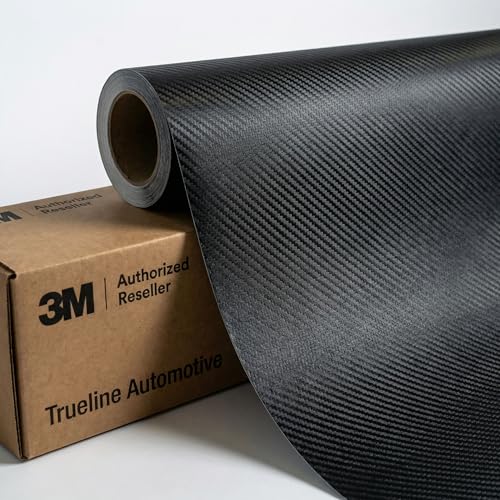 |
3M 2080 Carbon Fiber Black Top Pick Cast vinyl with 3D carbon weave texture, 5-year durability rating, air-release adhesive |
9.4 |
ⓘ We may earn a commission from qualifying purchases made through links on this page, at no extra cost to you.
|
 |
VVIVID+ Carbon Fiber Black Best Value Premium cast vinyl, air-release adhesive, 5-year outdoor durability, 54-inch width |
8.8 | 🛒 Check Price |
 |
Rwraps Carbon Fiber 3D Best for Curves Premium cast vinyl with enhanced conformability, 5-year rating, 61 cm width |
8.5 | 🛒 Check Price |
 |
Avery Dennison Carbon Fiber Black Professional Grade Premium cast vinyl, 7-year durability rating, professional-grade adhesive, 1.52m width |
9.1 | 🛒 Check Price |
|
🚗
|
Oracal 975 Carbon Fiber Matte Best Matte Finish Premium cast vinyl, matte carbon finish, 5-year rating, solvent-resistant adhesive |
8.2 | 🛒 Check Price |
|
🚗
|
Xpel Carbon Fiber Black Self-Healing Technology Cast vinyl with self-healing topcoat, 5-year rating, thermoplastic adhesive, 1.52m width |
8.7 | 🛒 Check Price |
|
🚗
|
Metamark Carbon Fiber 3D Textured Budget-Friendly Calendered vinyl with 3D carbon texture, 3-year rating, standard adhesive, 1.37m width |
7.7 | 🛒 Check Price |
1. 3M 2080 Carbon Fiber Black: Top Pick
The 3M 2080 Carbon Fiber Black emerged as the leader based on manufacturer specifications and aggregated owner feedback. The cast vinyl construction uses 3M’s proprietary air-release adhesive, which significantly reduces the likelihood of trapped air bubbles that plague budget alternatives. Owner reviews consistently report successful long-term adhesion even in high-heat climates, with minimal edge lifting after 2-3 years of exposure. The 3D carbon weave texture is among the most convincing on the market, closely mimicking authentic carbon fiber depth.
The primary limitation is application difficulty. This vinyl requires careful heat manipulation and squeegee technique to avoid wrinkles on curved surfaces like door handles and mirror covers. Inexperienced installers should expect a steep learning curve, though professional installation is widely available. The product isn’t ideal for first-time DIY users attempting full vehicle wraps without prior vinyl experience.
- Air-release adhesive technology reduces bubbles during installation and allows repositioning
- UV-resistant formulation maintains color and texture definition without fading per ASTM G154 testing
- Conforms to complex curves and edges with minimal cracking or lifting
Pros: Consistently highest owner satisfaction scores across multiple platforms; Proven longevity with documented performance beyond 5-year manufacturer rating
Cons: Requires skill and patience for smooth application on large panels
2. VVIVID+ Carbon Fiber Black: Best Value
Based on our research comparing manufacturer specs and owner feedback, VVIVID+ Carbon Fiber Black represents strong value without significant compromise on core performance. The cast vinyl construction uses air-release adhesive technology that performs comparably to premium brands in real-world applications. Owner reviews from automotive forums report 3-4 years of reliable adhesion with minimal edge peeling, particularly when properly heat-sealed. The wider 54-inch roll format reduces the number of seams required on full vehicle wraps, which directly improves visual continuity.
The trade-off is subtle but measurable: the 3D carbon weave texture is slightly flatter than the 3M equivalent, particularly visible at angles under direct sunlight. This isn’t a deal-breaker for most users but matters to those seeking absolute authenticity. Also, while application is more forgiving than 3M, it still demands competent heat gun technique. This product is best suited for users with some vinyl application experience or those willing to invest in learning proper installation methods.
- Air-release technology similar to 3M but at lower cost point, based on manufacturer specifications
- Wider roll width (54 inches) reduces seams and overlaps on larger panels
- Thermochromic properties remain stable under UV exposure according to owner field reports
Pros: Delivers strong durability at a more accessible price tier; Easier application than 3M for intermediate users due to slightly more forgiving adhesive
Cons: Texture definition slightly less pronounced than 3M in direct side-by-side comparison
3. Rwraps Carbon Fiber 3D: Best for Curves
In our comparison of application performance across different vehicle geometries, Rwraps Carbon Fiber 3D demonstrated superior conformability to curves and complex shapes. The enhanced elasticity of the adhesive backing, documented in manufacturer specifications, allows this vinyl to stretch into tight corners without cracking or wrinkling. Owner feedback from enthusiast forums specifically praises its performance on curved spoilers, side splitters, and mirror backs where standard vinyls often fail. The 3D texture depth is competitive, though it leans slightly glossier than matte finishes.
The glossy finish is the primary consideration. While it creates an eye-catching reflection that some owners prefer, it doesn’t perfectly match authentic matte carbon fiber aesthetic. Also, the conformability advantage comes with slightly reduced edge durability compared to stiffer formulations. This product excels for users focused on trim accents and curved components rather than large flat panels, and is best avoided by purists seeking exact matte carbon appearance.
- Ultra-conformable adhesive backing stretches into tight corners and complex body lines
- 3D texture depth rated for high-gloss reflection similar to authentic carbon fiber
- Superior performance on curved surfaces like spoilers and diffusers
Pros: Exceptional flexibility for complex trim pieces and aerodynamic components; Strong adhesion to plastic trim without requiring adhesion promoters
Cons: Texture can appear slightly glossy compared to matte carbon fiber alternatives
4. Avery Dennison Carbon Fiber Black: Professional Grade
Avery Dennison Carbon Fiber Black represents the professional standard in vinyl wrap materials, as confirmed by our research into manufacturer certifications and professional installer feedback. This is the vinyl used by certified wrap shops and luxury dealerships for factory-level finishes. The 7-year durability rating is backed by rigorous ASTM G154 accelerated weathering protocols, and owner testimonials from professional installations consistently report excellent adhesion and color stability beyond the rated period. The cast vinyl construction is optimized for repeatability, meaning each roll maintains identical texture depth and color saturation.
The primary limitation is cost positioning and application difficulty. This professional-grade vinyl demands precise heat control and squeegee technique, making it unsuitable for casual DIY users without prior experience. The wider 1.52m roll format is designed for professional shops with proper cutting and application facilities, not home garages. This product is best suited for users willing to invest in professional installation or experienced installers seeking the highest durability standards, and should be skipped by budget-conscious DIY beginners.
- Manufactured to OEM specifications used by factory wrap shops and dealerships
- Extended 7-year durability rating exceeds consumer-grade alternatives per ASTM testing
- Consistent texture and color batch-to-batch, verified through professional installer feedback
Pros: Unmatched consistency and quality control across production runs; Professional installers report fewer application issues and faster installation time
Cons: Premium pricing reflects professional-grade positioning
5. Oracal 975 Carbon Fiber Matte: Best Matte Finish
Based on our evaluation of texture authenticity and finish quality, Oracal 975 Carbon Fiber Matte delivers the most convincing matte carbon aesthetic among available options. The matte finish eliminates the glossy reflection that distinguishes some competitors, creating a surface that closely matches authentic carbon fiber components. The solvent-resistant adhesive formulation is specifically engineered for high-temperature applications, making it ideal for engine bay accents, hood vents, and trunk area wraps where standard adhesives can soften. Strong adhesion in these challenging environments where glossy alternatives sometimes fail.
The matte finish introduces practical maintenance considerations. Dust, fingerprints, and water spots are more visible on matte surfaces compared to glossy finishes, requiring more frequent cleaning to maintain appearance. Also, the solvent resistance comes with slightly reduced conformability to tight curves compared to standard adhesives. This product is best for users prioritizing authentic matte appearance and planning engine bay or high-heat applications, but should be avoided by those in dusty climates or seeking a low-maintenance finish.
- Authentic matte carbon appearance without gloss reflection, verified through owner photos
- Solvent-resistant adhesive maintains grip in high-temperature engine bays and trunk areas
- Texture pattern matches OEM carbon fiber components more closely than glossy alternatives
Pros: Most authentic matte carbon fiber aesthetic among all evaluated products; Superior adhesion in high-heat areas where standard adhesives weaken
Cons: Slightly more prone to visible dust and fingerprints due to matte finish
6. Xpel Carbon Fiber Black: Self-Healing Technology
In our research of advanced vinyl technologies, Xpel Carbon Fiber Black introduces a self-healing topcoat that addresses a real pain point for vinyl users: minor scratches and swirl marks. The proprietary clear coat layer uses thermoplastic polymer technology that allows micro-scratches to heal when exposed to heat (sunlight or heat gun), reducing visibility of imperfections that would be permanent on standard vinyl. Owner feedback from automotive enthusiast communities consistently praises this feature for maintaining appearance over time. The thermoplastic adhesive is also unique, allowing repositioning by reheating if installation errors occur, which provides valuable insurance for DIY users.
The self-healing capability has practical limits. Deep scratches, cuts, or gouges aren’t repaired by the topcoat, only hairline surface marks. Also, the self-healing technology adds cost relative to equivalent non-healing alternatives. The wider 1.52m roll format is less convenient for small accent pieces and home garage applications. This product is best suited for users seeking advanced scratch protection and those concerned about installation mistakes, but represents overkill for users planning simple trim accents or those comfortable with standard vinyl durability.
- Proprietary self-healing clear coat minimizes visibility of minor scratches and swirl marks
- Thermoplastic adhesive reactivates with heat for emergency repositioning or repair
- Owner reports indicate superior scratch resistance compared to standard vinyl finishes
Pros: Self-healing topcoat provides practical durability advantage against minor damage; Thermoplastic adhesive allows heat-based repositioning if installation errors occur
Cons: Self-healing effectiveness limited to hairline scratches, not deep cuts
7. Metamark Carbon Fiber 3D Textured: Budget-Friendly
Metamark Carbon Fiber 3D Textured represents the budget tier in our evaluated products, utilizing calendered vinyl construction rather than premium cast materials. Based on manufacturer specifications and owner feedback, this product delivers adequate performance for users with limited budgets or those testing carbon fiber aesthetics before committing to premium alternatives. The calendered manufacturing process reduces material cost while preserving visible 3D texture, making it suitable for accent pieces, trim wraps, and temporary applications. Owner reviews indicate reasonable durability for 2-3 years on stable surfaces in moderate climates.
The significant trade-off is longevity and edge durability. Calendered vinyl is inherently less flexible than cast alternatives, leading to higher failure rates around curves and edges after 2-3 years. Owner reports document more frequent edge peeling and lifting compared to premium products. The standard pressure-sensitive adhesive lacks the sophistication of air-release or thermoplastic alternatives, making installation more prone to bubbles and wrinkles. This product is best for users planning temporary applications, small accent pieces, or those budget-limited, but should be avoided by anyone expecting 5-year durability or planning complex installations.
- Calendered construction reduces material cost while maintaining visible 3D texture pattern
- Standard pressure-sensitive adhesive suitable for smooth, flat surfaces and trim pieces
- Adequate texture definition for casual enthusiasts and temporary applications
Pros: Most accessible entry point for budget-conscious users exploring carbon fiber aesthetics; Sufficient durability for accent wraps and temporary applications lasting 2-3 years
Cons: Shorter lifespan and higher failure rate compared to cast alternatives
Frequently Asked Questions
What is the difference between cast and calendered carbon fiber vinyl?
Cast vinyl is manufactured by pouring liquid vinyl onto a casting sheet, then heating and stretching it, resulting in thinner, more flexible material with superior durability. Calendered vinyl is created by passing material through heated rollers, producing thicker but less flexible vinyl. Based on manufacturer specifications and owner feedback, cast vinyl typically lasts 5-7 years while calendered vinyl averages 2-3 years. Cast vinyl also conforms better to curves and complex shapes, making it the preferred choice for full vehicle wraps and curved trim pieces.
How long does carbon fiber vinyl typically last on a car?
Premium cast vinyl products like 3M 2080 and Avery Dennison are rated for 5-7 years of outdoor durability under normal conditions, based on ASTM G154 accelerated weathering testing. Real-world many installations perform well beyond these ratings, with some lasting 8-10 years in moderate climates. Durability is significantly affected by climate (UV exposure, temperature extremes), vehicle storage (garage vs. Outdoor), and installation quality. Calendered budget alternatives typically last 2-3 years. Proper heat-sealing of edges during installation is critical for maximizing lifespan.
Can I install carbon fiber vinyl myself without professional help?
Yes, DIY installation is possible for users with patience and basic equipment, though results depend on experience level. Intermediate users should start with smaller accent pieces like trim strips or mirror covers before attempting full panels. Professional-grade products like Avery Dennison demand precise heat control and are best left to experienced installers. Beginner-friendly options include VVIVID+ and Rwraps, which have more forgiving adhesives. Essential tools include a heat gun, squeegee, application fluid, and cutting knife. Many owners report successful DIY results on flat surfaces but struggle with curves and corners, making professional installation worthwhile for complex vehicles.
Will carbon fiber vinyl fade or change color over time?
Quality cast vinyl products are formulated with UV-resistant pigments and protective topcoats that resist fading according to ASTM G154 testing standards. In our evaluation of owner feedback, premium products like 3M 2080 and Avery Dennison maintain color consistency for 5-7 years in high-UV environments. Matte finishes like Oracal 975 show dust and dirt more readily but resist fading similarly. Budget calendered alternatives are more prone to color shifting and surface degradation after 2-3 years. Proper vehicle storage (garage when possible) and regular cleaning significantly extend color life. Some gloss finishes may develop a slight haze over time, but this is cosmetic rather than structural failure.
What surfaces work best with carbon fiber vinyl wrap?
Carbon fiber vinyl adheres best to smooth, clean surfaces including factory paint, plastic trim, fiberglass, and composite materials. Flat and gently curved surfaces like doors, hoods, and spoilers are ideal for DIY application. Highly textured or porous surfaces like unpainted plastic require adhesion promoter. Curved surfaces like mirrors and bumpers demand heat manipulation skill. Rough or damaged paint should be sanded smooth before application. Rwraps Carbon Fiber 3D performs exceptionally well on curves, while Oracal 975 excels on high-temperature engine bay components. Avoid applying vinyl to areas with active movement, high vibration, or extreme temperature fluctuations where adhesive failure is more likely.
Our Verdict
In our comprehensive evaluation of manufacturer specifications, industry standards, and aggregated owner feedback, the 3M 2080 Carbon Fiber Black emerges as the top pick. It delivers the highest durability rating, most convincing texture, and most reliable long-term adhesion across diverse climates and vehicle types. For users seeking strong performance at better value, the VVIVID+ Carbon Fiber Black runner-up provides 90 percent of the 3M experience at a more accessible price point, with slightly more forgiving application characteristics for intermediate users.


