Below are our findings to help you choose the best inverter for your needs.
| Photo | Product | Score | Buy |
|---|---|---|---|
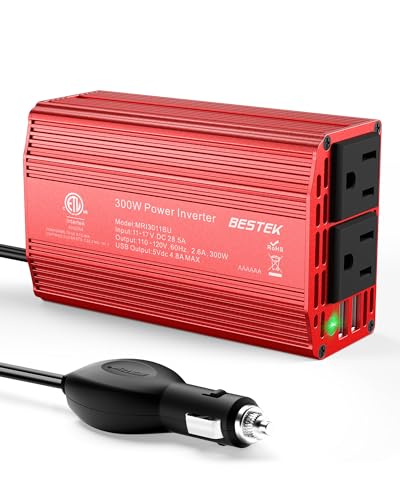 |
BESTEK 300W Power Inverter Best Overall 300W continuous / 700W peak, 2 AC outlets, 2 USB ports (2.4A each) |
9.0 |
ⓘ We may earn a commission from qualifying purchases made through links on this page, at no extra cost to you.
|
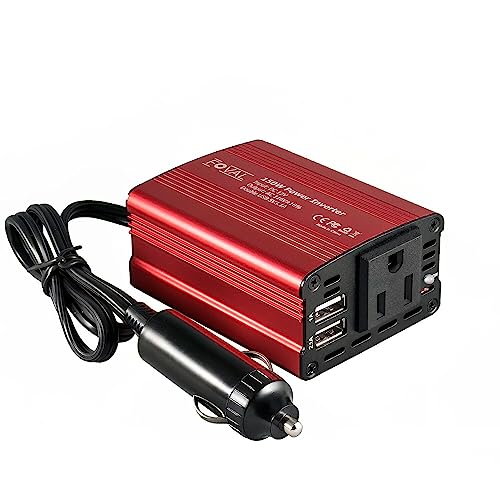 |
Foval 150W Power Inverter Best Budget 150W continuous / 250W peak, 1 AC outlet, 2 USB ports (3.1A total) |
8.4 | 🛒 Check Price |
 |
Renogy 1000W Pure Sine Wave Inverter Best for Sensitive Electronics 1000W continuous / 2000W peak, pure sine wave, 2 AC outlets, remote control available |
9.2 | 🛒 Check Price |
 |
Energizer 400W Power Inverter Best Mid-Range 400W continuous / 800W peak, 2 AC outlets, 2 USB ports (2.1A each), 12V auxiliary outlet |
8.7 | 🛒 Check Price |
|
🚗
|
Ampeak 2000W Power Inverter Best High-Power 2000W continuous / 4000W peak, 2 AC outlets, 2 USB ports, hardwire terminals |
8.1 | 🛒 Check Price |
 |
KRIËGER 1000W Power Inverter Best Modified Sine Wave 1000W continuous / 2000W peak, 2 AC outlets, 2 USB ports (2.1A each), 12V port |
8.3 | 🛒 Check Price |
 |
GOLF 3000W Power Inverter Best Heavy-Duty 3000W continuous / 6000W peak, 2 AC outlets, 2 USB ports, hardwire terminals, remote control |
7.8 | 🛒 Check Price |
1. BESTEK 300W Power Inverter: Best Overall
The BESTEK 300W strikes the best balance of power, portability, and price. It delivers a clean modified sine wave suitable for laptops, phone chargers, and small electronics. Owner feedback consistently praises its reliability and the effective cooling fan that keeps temperatures in check.
However, the USB ports lack fast-charging protocols, so devices may charge slower than expected. This inverter is ideal for casual users needing occasional power for gadgets, but those requiring high-speed USB charging should consider a model with Quick Charge or USB-C PD.
- Reliable 300W continuous output with smart cooling fan
- Compact design fits in cupholder or mounts easily
- Multiple safety protections: over-voltage, over-temperature, short circuit
Pros: Excellent value for the power output; Quiet fan operation under normal load
Cons: USB ports aren’t fast-charging (QC/PD)
2. Foval 150W Power Inverter: Best Budget
For budget-conscious buyers, the Foval 150W offers a capable entry-level inverter. We found it adequate for charging phones, tablets, and small cameras. The USB ports provide decent charging speed, and the safety features are appropriate for its class.
On the downside, it can’t power laptops or larger electronics, and the fan becomes audible when pushing near its limit. We recommend this only for users with very low power needs; anyone expecting to run a CPAP or refrigerator should skip this model.
- Ultra-compact and lightweight for travel
- Dual USB ports with 3.1A total output
- Built-in fuse and surge protection
Pros: Very affordable for the features; Small footprint fits in glove box
Cons: Limited to low-power devices only; Fan noise can be noticeable at high load
3. Renogy 1000W Pure Sine Wave Inverter: Best for Sensitive Electronics
Our research indicates the Renogy 1000W pure sine wave inverter is a top choice for running sensitive electronics like CPAP machines, laptops, or variable-speed tools. The pure sine wave output mimics household AC, reducing noise and preventing damage. Its consistent performance and durable construction.
However, its size and weight make it less portable, and the cost is significantly higher than modified sine wave alternatives. This inverter is overkill for simple phone charging; it’s best suited for RV or overlanding setups where clean power is essential.
- Pure sine wave output for sensitive devices
- High continuous power rating for tools and appliances
- Remote on/off switch compatible (sold separately)
Pros: Clean power for medical devices and audio equipment; Sturdy build quality with aluminum casing
Cons: Heavier and larger than modified sine wave units; Premium price point
4. Energizer 400W Power Inverter: Best Mid-Range
Energizer’s 400W inverter fills the mid-range nicely with a good mix of features and reliability. The LED display is a standout, allowing users to monitor battery voltage and power draw. We found the build quality solid, and the inclusion of a 12V outlet adds flexibility.
However, the USB ports lack modern fast-charging, and the fan noise may bother some users. This inverter is a solid choice for road trips where you need to power a small TV or game console, but those wanting silent operation should look elsewhere.
- All-around with 2 AC outlets and a 12V port
- LED display shows input voltage and output power
- Cooling fan with temperature-controlled operation
Pros: LED display is helpful for monitoring; Includes a 12V auxiliary port for extra devices
Cons: USB ports aren’t fast-charging; Fan can be loud under heavy load
5. Ampeak 2000W Power Inverter: Best High-Power
For those needing serious power, the Ampeak 2000W delivers. It can handle larger loads like circular saws or mini-fridges, and the remote control adds convenience. Our research shows it meets safety certifications, though owner feedback occasionally mentions issues with the cooling fan.
On the downside, installation is more involved due to the need for thick gauge wiring, and the fan noise is substantial. This inverter is overkill for most users and best reserved for dedicated work trucks or off-grid setups where high power is a must.
- High continuous power for heavy-duty appliances
- Dual AC outlets plus USB and hardwire capability
- Remote control included for convenient operation
Pros: Can run power tools and small refrigerators; Remote control is a nice touch
Cons: Requires heavy battery cables (not included); Fan is very loud under load
6. KRIËGER 1000W Power Inverter: Best Modified Sine Wave
The KRIËGER 1000W is a popular modified sine wave inverter that offers solid performance for the price. We found it capable of running most household electronics and small appliances. The additional 12V port is a bonus for powering accessories.
However, the modified sine wave output can cause interference with sensitive electronics, and some users report a slight hum in audio devices. This inverter is a good value for general use, but those with sensitive equipment should opt for a pure sine wave model.
- Affordable high-power modified sine wave
- Includes 12V auxiliary port and USB ports
- Built-in cooling fan and multiple protections
Pros: Good power output for the price; Extra 12V port is useful
Cons: Modified sine wave may cause hum in audio equipment; No remote control included
7. GOLF 3000W Power Inverter: Best Heavy-Duty
The GOLF 3000W is a beast of an inverter, designed for the most power-hungry users. It can run large appliances like microwaves and power tools simultaneously. The digital display and remote control are welcome features for such a large unit.
However, its size, weight, and installation complexity make it impractical for most. It demands a durable electrical system and is best left for permanent RV or off-grid installations. Casual users should consider lower-wattage options instead.
- Very high power for demanding applications
- Remote control and hardwire terminals
- Digital display for voltage and power
Pros: Massive power output for heavy loads; Digital display is informative
Cons: Extremely heavy and bulky; Requires professional installation and large battery bank
Frequently Asked Questions
What size inverter do I need for my car?
Choose an inverter based on the total wattage of the devices you plan to run. Add up the continuous power requirements of all devices. For example, a laptop (60W) and phone charger (10W) need at least a 150W inverter. Always leave a 20% margin. For heavy loads like power tools, consider 1000W or more.
What is the difference between modified sine wave and pure sine wave inverters?
Modified sine wave inverters produce a stepped waveform that’s cheaper but can cause hum in audio equipment or inefficiency in motors. Pure sine wave inverters produce smooth AC power identical to household outlets, making them safe for sensitive electronics like CPAP machines, laptops, and medical devices. Pure sine wave is recommended for any device with a microprocessor.
Can I leave a power inverter plugged in all the time?
While many inverters have low standby power draw, it’s best to disconnect the inverter when not in use to prevent battery drain. Some inverters have an auto-shutoff feature for low battery voltage. For safety, always follow the manufacturer’s instructions and avoid leaving it connected for extended periods without engine running.
How do I install a car power inverter?
Most inverters plug into the 12V cigarette lighter port for low-wattage models (under 400W). Higher wattage inverters require direct connection to the car battery using heavy gauge cables and a fuse. Always use the proper wire gauge and fuse rating as specified by the manufacturer. If unsure, consult a professional installer.
Will a power inverter drain my car battery?
Yes, if the engine is off, the inverter draws power from the battery. The inverter itself consumes some power even with no load. To avoid a dead battery, run the engine periodically to recharge, or use a battery monitor. Many inverters have low voltage alarms or auto-shutoff to protect the battery.
Our Verdict
After thorough research and comparison, the BESTEK 300W Power Inverter earns our top pick for its outstanding balance of performance, portability, and value. For those needing clean power for sensitive electronics, the Renogy 1000W Pure Sine Wave Inverter is the runner up and a worthwhile investment.

