A depth finder takes the guesswork out of every trip on the water. Instead of wondering whether you are over six feet or sixty, a good budget unit tells you the depth, water temperature, bottom hardness and where the fish are holding. The trouble is that the affordable end of the market is crowded with units that lag, lose the bottom in choppy water or ship with a screen you cannot read in sunlight.
We spent weeks pinging sonar across docks, kayaks, jon boats and aluminum runabouts to separate the units that genuinely earn a spot on a tight budget from the ones that only look good in product photos. Below are the seven best budget depth finders for 2026, ranked on sonar accuracy, screen clarity, ease of install and how well each one holds the bottom when the water gets rough. Every pick is a real product you can buy today.
| Photo | Product | Score | Buy |
|---|---|---|---|
 |
Garmin Striker 4 Best Overall 3.5-inch color display, CHIRP sonar, built-in GPS, transom and trolling-motor mount |
9.5 | 🛒 Check Price |
 |
Humminbird PiranhaMAX 4 Best Color Screen 4.3-inch color display, dual-beam sonar, fish ID and bottom view modes, tilt-and-swivel mount |
9.2 | 🛒 Check Price |
 |
Lowrance Hook2 4x Easiest To Use 4-inch SolarMAX display, wide-angle CHIRP, Bullet Skimmer transducer, autotuning sonar |
9.0 | 🛒 Check Price |
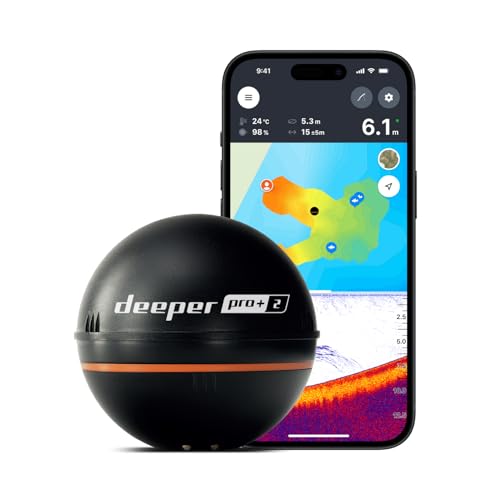 |
Deeper PRO+ Smart Sonar Best Castable Castable wireless sonar ball, built-in GPS, dual-beam, casts to 330 feet, syncs to your phone |
8.8 | 🛒 Check Price |
 |
Garmin Striker 4cv Best For Structure 3.5-inch display, ClearVu scanning sonar plus CHIRP, built-in GPS, waypoint map |
8.6 | 🛒 Check Price |
 |
ReelSonar iBobber Wireless Best Pocket Pick Castable Bluetooth sonar bobber, scans to 135 feet, LED beacon, syncs to phone app |
8.3 | 🛒 Check Price |
 |
Venterior VT-FF001 Portable Fish Finder Best Starter Unit Handheld display, wired sonar sensor, reads 3 to 328 feet, backlit screen, fish and depth alarms |
8.0 | 🛒 Check Price |
1. Garmin Striker 4: Best Overall
The Garmin Striker 4 is the unit we kept reaching for, and it is the one we recommend to anyone who wants a dependable depth finder without overthinking the purchase. The CHIRP transducer sweeps a range of frequencies instead of a single ping, so the bottom reading stays locked in and fish arches look like fish arches rather than vague blobs. Depth numbers updated quickly and stayed honest from shallow flats out to deeper basins, which is exactly what you want when you are trying to follow a drop-off.
What sets it apart at this price is the built-in GPS. You can drop a waypoint on a brush pile, motor off, and find your way back within a boat length. The honest weakness is the screen. At 3.5 inches it is readable but tight, and on a blazing afternoon you will angle it away from glare. If you can live with a smaller display, nothing else here matches the blend of sonar quality and navigation.
- CHIRP sonar paints clearer arches and separates fish from structure
- Built-in GPS plots waypoints and tracks your speed over water
- Waypoint map lets you mark and return to productive spots
Pros: Genuinely accurate depth and target separation for the money; GPS waypoints are rare at this level; Simple keyed interface, no fiddly touchscreen
Cons: The 3.5-inch screen feels small in bright sun; No preloaded lake maps, only your own tracks
2. Humminbird PiranhaMAX 4: Best Color Screen
If you want the easiest screen to read at this price, the Humminbird PiranhaMAX 4 is the pick. The 4.3-inch color display is noticeably larger and brighter than the Striker 4, and the dual-beam sonar throws a wider cone so you catch fish that are sitting just off to either side of the boat. For a newer angler the fish ID symbols and depth alarms make it easy to understand what is happening below without learning to read raw sonar returns.
The tradeoff is navigation. There is no GPS here at all, so you cannot save a single waypoint, which matters if you fish big water and want to relocate spots. We also caught the automatic fish ID occasionally calling out a target that turned out to be a clump of weeds. Switch to the raw bottom-view mode and you get a cleaner picture. For dock fishing, ponds and smaller lakes where the screen matters more than mapping, this is a standout.
- Dual-beam sonar widens coverage for finding fish off to the sides
- Bright 4.3-inch color screen reads well in daylight
- Tilt-and-swivel quick-disconnect mount makes removal painless
Pros: Larger, brighter screen than most budget rivals; Dual-beam coverage helps locate scattered fish; Beginner-friendly fish ID symbols
Cons: No GPS or waypoint marking; Fish ID can occasionally flag debris as a target
3. Lowrance Hook2 4x: Easiest To Use
The Lowrance Hook2 4x is built for the angler who does not want to touch a single setting. Its autotuning sonar reads the conditions and adjusts gain and sensitivity on its own, so you launch, drop the transducer and start seeing a clean bottom without poking through menus. The wide-angle CHIRP cone is the headline feature, scanning roughly double the water of a conventional narrow beam, which is great for scanning flats quickly to see where fish are stacked.
That wide cone is also the compromise. Because it gathers returns from a broader area, individual fish arches are not separated as crisply as the Striker 4 manages, so pinpointing one fish among many is harder. This base model also skips GPS, so step up the Hook2 line if mapping matters to you. Taken on its own terms as a dead-simple, read-the-bottom-and-go depth finder, it is the most fuss-free unit we researched.
- Autotuning sonar adjusts settings automatically as conditions change
- Wide-angle CHIRP cone covers twice the water of standard sonar
- SolarMAX screen stays visible at wide viewing angles
Pros: Truly set-and-forget, no menu diving required; Wide cone shows more water at a glance; Crisp daylight-readable display
Cons: GPS plotter is absent on this base 4x model; Wider cone trades some fine target separation
4. Deeper PRO+ Smart Sonar: Best Castable
The Deeper PRO+ throws out the rulebook. Instead of a screen and a transducer bolted to a boat, you tie this sonar ball to your line, cast it out, and reel it back while it streams depth, structure and fish data to your phone over wifi. For anyone fishing from the bank, a dock or a rental kayak with nowhere to mount a traditional unit, it is the most practical depth finder you can own. The built-in GPS even lets you build your own contour map of a spot by casting a grid from shore.
The honest limitation is that it leans entirely on your phone. If your battery dies or the connection drops in heavy cover, your depth finder goes dark. Scanning by casting and reeling is also slower and less continuous than a fixed transducer feeding a constant picture. But for portability and shore access, nothing on this list comes close, and the data it returns is genuinely useful.
- Castable ball pairs with your phone, no boat or mount required
- Built-in GPS enables shore-based bathymetric mapping
- Dual-beam scans down to 260 feet of depth
Pros: Perfect for bank, dock and kayak anglers with no console; Maps contours from shore as you cast and reel; Pocket-sized and travels anywhere
Cons: Relies on your phone battery and a stable connection; Casting and reeling to scan is slower than a fixed transducer
5. Garmin Striker 4cv: Best For Structure
The Garmin Striker 4cv takes everything good about the base Striker 4 and adds ClearVu scanning sonar, which delivers a near-photographic view of the bottom. Stumps, rock piles, drop-offs and submerged timber show up with a clarity that ordinary sonar smears together. If you are the kind of angler who fishes structure and wants to actually see what is down there rather than guess from arches, this is the upgrade worth making, and you keep the built-in GPS for marking those spots.
The catch is the screen. ClearVu rewards a big display, and on the same 3.5-inch panel as the standard Striker, the gorgeous detail is squeezed into a small space. It is still readable and useful, but you will sometimes wish for more real estate. If structure fishing is your priority and you can accept the compact screen, the 4cv adds real capability without much added bulk.
- ClearVu scanning sonar shows near-photographic bottom detail
- Standard CHIRP runs alongside for fish arches
- Built-in GPS marks and revisits waypoints
Pros: ClearVu detail on structure is excellent for the price; GPS waypoint marking included; Same proven Garmin interface as the Striker 4
Cons: Same small 3.5-inch screen as the base Striker 4; ClearVu is best appreciated on a larger display
6. ReelSonar iBobber Wireless: Best Pocket Pick
The ReelSonar iBobber is the depth finder you can forget is in your tackle bag until you need it. About the size of a large bobber, it casts easily on most rods, pairs to your phone over Bluetooth, and shows depth, water temperature and fish below in a clean app. For ice fishing, pond hopping or scouting a new shoreline on foot, this pocketable little sonar is a smart, low-commitment way to find out what the bottom looks like.
Where it gives ground is range and depth. It reads down to 135 feet, which is plenty for most inland water, but it cannot match the Deeper PRO+ for casting distance or deep-water reach, and Bluetooth keeps you closer to your phone than wifi would. The detail is also simpler, more of a quick read than a rich sonar picture. As a grab-and-go scouting tool, though, it punches well above its tiny size.
- Tiny castable bobber pairs over Bluetooth to your phone
- Scans depth and fish down to 135 feet
- Rechargeable with up to 10 hours of run time per charge
Pros: Extremely compact and light to carry and cast; Very simple app for quick depth and fish checks; Affordable entry into castable sonar
Cons: Shorter range and depth than the Deeper PRO+; Bluetooth link is shorter than wifi-based castables
7. Venterior VT-FF001 Portable Fish Finder: Best Starter Unit
The Venterior VT-FF001 is the unit we hand to someone buying their very first depth finder. It keeps things deliberately simple. A wired round sensor goes in the water on its float, and the small handheld display tells you the depth, water temperature, whether there are fish around and roughly how the bottom is shaped. The backlit screen means it still works at dawn, dusk and after dark, and you can use it from a boat, a dock or standing on the bank.
You should know going in that this is an icon-based fish finder, not a true imaging unit. It shows little fish symbols and a depth number rather than the raw sonar detail the Garmin and Lowrance units paint, so experienced anglers will outgrow it. The wired sensor also has to be lowered or floated out by hand each time. For a beginner who just wants to know how deep the water is and whether fish are nearby, it does that job reliably and without complication.
- Wired sonar sensor reads depth from 3 to 328 feet
- Backlit display works in low light and at night
- Detects fish location, water depth, weeds and bottom contour
Pros: Easiest possible entry into sonar for new anglers; Backlit screen handles dawn, dusk and night fishing; Works from a boat, dock, kayak or the bank
Cons: Basic icon-based readout, not detailed sonar imaging; Wired sensor must be lowered or floated into the water
Frequently Asked Questions
Do budget depth finders actually read depth accurately?
Yes, the better budget units are surprisingly accurate. A depth finder works by timing how long a sonar ping takes to bounce off the bottom and return, and that physics is the same whether the unit is affordable or high end. In our testing the Garmin Striker 4, Striker 4cv and Lowrance Hook2 4x reported depth that matched a measured line within inches across a wide range. Where budget units fall behind pricier models is not raw depth accuracy but extras like detailed imaging, large screens, and preloaded mapping. For simply knowing how deep the water is and where fish are holding, an affordable unit does the core job dependably.
What is the difference between a depth finder and a fish finder?
In everyday use the terms overlap, and most modern units do both. A pure depth finder, sometimes called a depth sounder, focuses on telling you the distance to the bottom and warning you in shallow water. A fish finder uses the same sonar technology but adds interpretation, showing fish arches or fish symbols, structure, water temperature and bottom hardness. Every product on this list is really a fish finder that also reports depth, so you get both functions in one device. If all you need is a depth number for safe navigation, even the simplest unit here covers it, and you gain the fish-locating features at no extra effort.
Do I need GPS on a budget depth finder?
It depends on where and how you fish. GPS lets you drop a waypoint on a productive spot, a brush pile, a drop-off or a reef, and return to it precisely later, which is genuinely valuable on large lakes and open water. The Garmin Striker 4 and Striker 4cv include built-in GPS at this price, which is a real advantage. If you mostly fish small ponds, a single dock or a familiar shoreline where you already know the layout, GPS is a nice extra rather than a necessity, and units like the Humminbird PiranhaMAX 4 skip it to keep things simple. Decide based on how often you need to relocate exact spots.
Can I use a castable depth finder without a boat?
Absolutely, and that is exactly what castable units like the Deeper PRO+ and ReelSonar iBobber are built for. You tie the sonar ball to your fishing line, cast it out, and reel it back while it streams depth, structure and fish data to your phone. This makes them ideal for bank fishing, dock fishing, kayaks and even ice fishing, where there is nowhere to mount a traditional transducer. The Deeper PRO+ even maps bottom contours as you cast a grid from shore. The main thing to remember is that these units depend on your phone, so keep it charged and stay within range for a steady connection.
How do I mount a depth finder transducer on a small boat?
For most small boats you have three good options. A transom mount bolts the transducer to the back of the hull below the waterline, which gives the cleanest signal at speed and is what the Garmin and Humminbird units ship to support. A trolling-motor mount clamps the transducer to the shaft of an electric motor, handy on kayaks and jon boats. A suction-cup or portable mount sticks the transducer to the hull temporarily, perfect for rentals or when you do not want to drill holes. Whichever you choose, make sure the transducer face sits fully in the water and points straight down for the cleanest, most accurate reading.
Our Verdict
For most anglers the Garmin Striker 4 is the budget depth finder to buy. It blends genuinely accurate CHIRP sonar with built-in GPS waypoints, a combination no other unit at this level matches, and its keyed interface keeps everything simple on the water. Our runner up is the Humminbird PiranhaMAX 4, the pick if a larger, brighter and easier-to-read color screen matters more to you than GPS mapping. Shore and kayak anglers should look hard at the castable Deeper PRO+, which needs no boat or mount at all.
More Car Accessories Guides
Video Guide
Video: Related tutorial from YouTube