A good polisher turns a tired, swirled hood into glass without the bodyshop bill, and you don’t need a professional-grade machine to get there. The trick with budget polishers is finding one that gives you real correction power while staying forgiving enough that a first-timer won’t burn through the clear coat. We ran a range of affordable dual action and orbital machines across single-stage paint, faded clear, and fresh ceramic prep to see which ones actually deliver.
Every polisher below is a real model you can buy today, and we ranked them on control, vibration comfort, pad availability, and how quickly a beginner gets a clean finish. If you want swirl-free paint on a weekend budget, start at the top of this list and work down based on how much hands-on detailing you plan to do.
| Photo | Product | Score | Buy |
|---|---|---|---|
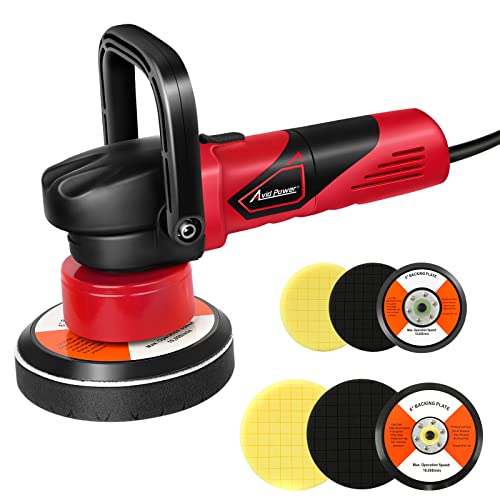 |
Avid Power 6 inch Dual Action Polisher Best Overall 6 inch DA random orbital, 6 variable speeds, includes pads and bonnets |
9.5 |
ⓘ We may earn a commission from qualifying purchases made through links on this page, at no extra cost to you.
|
 |
DEWALT DWP849X Variable Speed Polisher Most Powerful 7 to 9 inch rotary, 0 to 3500 rpm variable, 12 amp motor |
9.3 | 🛒 Check Price |
 |
TACKLIFE Dual Action Random Orbital Polisher Best for Beginners 6 inch DA, 6 variable speeds, soft-start, includes accessory kit |
9.1 | 🛒 Check Price |
 |
Ginour 900W Dual Action Polisher Best Value Kit 900W DA, 6 speeds, 6 inch plate, 7-piece pad and accessory set |
8.9 | 🛒 Check Price |
 |
PORTER-CABLE 7424XP Dual Action Polisher Detailer Favorite 6 inch DA random orbital, 4.5 amp, 2500 to 6800 opm variable |
8.7 | 🛒 Check Price |
 |
BLACK+DECKER WP900 Random Orbit Waxer/Polisher Easiest to Use 6 inch random orbit, 4400 opm, lightweight at around 3 pounds |
8.4 | 🛒 Check Price |
 |
Goplus Dual Action Polisher 6 inch Budget Pick 6 inch DA, 6 variable speeds, includes pads, bonnets, and side handle |
8.0 | 🛒 Check Price |
1. Avid Power 6 inch Dual Action Polisher: Best Overall
The Avid Power dual action polisher is the machine we hand to anyone polishing a car for the first time. Its random orbital motion wobbles the pad rather than spinning it under fixed rotation, so the worst-case outcome is a haze you can buff out, not a burn-through. The six-speed dial gives enough range to knock down light swirls on the low end and chew through oxidation near the top, and the included foam pads, wool bonnets, and backing plate mean you aren’t shopping for extras before your first job.
The honest weakness is the bundled pads. They’re fine for a wash-and-wax refresh, but they pack down and lose bite faster than quality aftermarket foam, so serious correction work will have you buying better pads quickly. The cord is also on the short side, which means an extension lead for most driveway jobs. Neither issue undercuts the core value, and for the money this is the most beginner-proof polisher we researched.
- 6 inch dual action random orbital plate that resists pad-stalling burns
- Six-speed dial from light finishing to heavier correction
- Bundle ships with foam pads, wool bonnets, and a backing plate
Pros: Forgiving random orbital action that’s hard to damage paint with; Generous accessory kit means you can start polishing day one; Comfortable weight and grip for long sessions
Cons: Stock pads wear out and you’ll want to upgrade them; Cord is shorter than some competitors
2. DEWALT DWP849X Variable Speed Polisher: Most Powerful
The DEWALT DWP849X is a true rotary polisher, and it’s the one to reach for when budget machines run out of muscle. The 12 amp motor holds its speed when you lean into heavy compound, so chalky oxidation and deep wash marring that stall a weaker tool come off without a fight. The variable-speed trigger paired with a top dial lets you set and lock a repeatable rpm, which matters when you’re working panel to panel and want consistent results.
The trade-off is real, and you have to respect it. A rotary spins the pad on a fixed axis, which builds heat fast, so an inattentive pass on a thin edge or body line can leave a burn. This isn’t the machine for a nervous first-timer. It’s also heavier and noisier than a dual action polisher, so your arms feel a long session. For anyone willing to learn rotary technique, the power-to-price ratio here’s outstanding.
- 12 amp motor that doesn’t bog down under heavy compound
- Variable speed trigger plus a top dial for repeatable rpm
- Wool and foam pad compatible for cutting and finishing
Pros: Serious correction power for deep defects and heavy oxidation; Built like a tool that lasts for years; Precise speed control for matching the job
Cons: Rotary action can burn paint if you’re careless; Heavier and louder than a dual action machine
3. TACKLIFE Dual Action Random Orbital Polisher: Best for Beginners
The TACKLIFE dual action polisher is built around ease of use, and it shows. The soft-start motor ramps the pad up smoothly instead of lurching, so you don’t fling compound across the panel when you pull the trigger, and the vibration stays low enough that beginners keep a steady hand. Add the detachable side handle and you have genuine two-hand control, which is exactly what a nervous newcomer needs over a curved fender.
Where it gives ground is raw cutting power. The motor is tuned for safety and comfort rather than brute force, so heavy oxidation and stubborn deep swirls take more passes than a stronger machine needs, and sometimes more than is practical. The plastic housing also feels less rugged than metal-bodied rivals. For light correction, wax application, and learning the craft, though, it’s one of the friendliest tools you can buy.
- Soft-start motor that eases up to speed without jerking the pad
- Detachable side handle and rear grip for two-hand control
- Comes with foam and wool pads plus a carry storage bag
Pros: Soft-start and low vibration make it very easy to learn on; Two-handle setup gives steady control on panels; Complete starter kit out of the box
Cons: Motor lacks bite for heavy oxidation removal; Plastic body feels less rugged than metal-bodied tools
4. Ginour 900W Dual Action Polisher: Best Value Kit
The Ginour dual action polisher leans on a 900W motor that punches above its station for a beginner-safe machine. You get the forgiving random orbital action, plus enough power to handle moderate swirl correction in fewer passes than the gentlest tools in this class. The seven-piece kit is the real draw, bundling multiple foam cut and finish pads, a wool pad, and bonnets, so you can run a full correction-and-protection job without a separate pad order.
The weak point is heft. That stronger motor adds weight, and you feel it on a full-vehicle session, especially on vertical panels where you’re fighting gravity as well as the pad. The six-speed dial also jumps in fairly coarse steps, so dialing in the exact finishing speed you want can be slightly fiddly. As an all-in-one starter package with room to grow, it’s hard to beat on value.
- 900W motor with a 6 inch dual action backing plate
- Seven-piece kit of foam pads, wool pad, and bonnets included
- Removable carbon brushes for easy long-term maintenance
Pros: Strong motor for a dual action at this price; Big accessory bundle covers cut and finish stages; Serviceable brushes extend the tool's life
Cons: Heavier than comparable DA machines; Speed dial steps can feel coarse between settings
5. PORTER-CABLE 7424XP Dual Action Polisher: Detailer Favorite
The PORTER-CABLE 7424XP is the dual action that taught a generation of enthusiasts how to polish. Its random orbital platform is famously safe, the variable-speed range from 2500 to 6800 orbits per minute covers everything from compounding to a final jeweling pass, and because it has been the reference DA for so long, the aftermarket support is enormous. Almost every pad and backing plate on the market is built to fit it.
The catch for budget shoppers is that it usually ships bare, so you need to buy pads and sometimes a backing plate before it does anything, which nudges the real entry cost up. It also gives up some cutting speed to the latest high-throw DA machines, so heavy correction is slower. But for smooth, predictable, paint-safe results and unbeatable parts availability, this old reliable still earns its spot.
- Proven random orbital platform trusted by detailers for years
- Variable speed from 2500 to 6800 orbits per minute
- Wide aftermarket pad and backing plate support
Pros: Reliable, time-evaluated DA that’s genuinely hard to damage paint with; Huge ecosystem of pads and backing plates; Smooth, predictable correction results
Cons: Sold as a bare tool with no pads included; Less cutting power than newer high-end DA machines
6. BLACK+DECKER WP900 Random Orbit Waxer/Polisher: Easiest to Use
The BLACK+DECKER WP900 is the simplest machine here, and that’s exactly its appeal. At roughly three pounds it’s light enough that a complete beginner, or anyone who just wants to wax the car faster, can run it one-handed across a whole vehicle without aching arms. The gentle random orbit motion spreads and removes wax beautifully, leaving an even, hand-buffed look in a fraction of the time.
Be clear about what it’s, though. This is a waxer and finisher, not a correction tool. The motor and orbit aren’t strong enough to cut out swirls or oxidation, and the single fixed speed means you can’t dial it up for heavier work. If your goal is removing defects, look higher up this list. If you mainly want to lay down wax or a sealant quickly and safely, nothing here’s easier to live with.
- Random orbit waxer ideal for applying and removing wax
- Lightweight body around 3 pounds for fatigue-free use
- Includes foam applicator and polishing bonnets
Pros: Extremely light and easy for anyone to handle; Practically impossible to damage paint with; Great for fast wax and sealant application
Cons: Not powerful enough for true swirl correction; Single fixed speed limits versatility
7. Goplus Dual Action Polisher 6 inch: Budget Pick
The Goplus dual action polisher is the entry ticket for anyone who wants a real orbital machine without overthinking the spend. It hits the essentials a budget detailer needs: a 6 inch dual action plate, six speeds to range from wax application to light correction, a choice of D-handle or side grip, and a starter set of foam pads and wool bonnets so the box is ready to use. The forgiving orbital motion makes it a safe place to learn.
What you give up is refinement. The build feels basic next to pricier tools, the housing and switches don’t inspire long-term confidence, and the vibration creeps up over a full session in a way the smoother machines avoid. It’s best thought of as a capable starter you might outgrow rather than a forever tool. For first-timers testing whether machine polishing is for them, it’s the lowest-commitment way in.
- 6 inch dual action plate with six selectable speeds
- Detachable D-handle and side grip for control options
- Ships with foam pads, wool bonnets, and a backing plate
Pros: A very affordable real DA polishers available; Comes with everything needed to start; Forgiving orbital action for nervous beginners
Cons: Build quality and finish are basic; Vibration is higher than premium machines on long jobs
Frequently Asked Questions
Is a dual action or rotary polisher better for beginners?
For almost every beginner, a dual action random orbital polisher is the safer choice. The pad oscillates and spins freely, so it scatters heat instead of concentrating it, which makes burning through clear coat very hard to do. A rotary polisher like the DEWALT DWP849X spins the pad on a fixed axis and corrects faster, but it builds heat quickly and can damage thin paint or edges in seconds if you linger. Learn on a dual action first, then graduate to rotary only if you want maximum cutting power and are ready to master the technique.
Can a budget car polisher actually remove swirl marks?
Yes, within reason. Most affordable dual action machines paired with a cutting pad and a quality compound will remove light to moderate swirls, water spots, and oxidation. What a budget machine struggles with is the heaviest defects, deep scratches you can feel with a fingernail, or severe oxidation, which need more cutting power or multiple slow passes. The single biggest factor isn’t the machine but your pads and polish. Upgrading the bundled pads to good aftermarket foam often does more for your results than spending more on the tool itself.
What pad and polish should I start with?
Begin with a medium-cut foam pad and an all-in-one or medium-cut polish, then keep a soft finishing pad on hand for the final pass. The all-in-one approach lets you correct light defects and leave a glossy finish in fewer steps, which is forgiving while you’re learning. Work in small sections, keep the pad flat, and let the machine do the work rather than pressing hard. Always test on a single panel first to confirm your pad and polish combination is cutting enough without leaving haze before you commit to the whole car.
What speed should I run a car polisher at?
Use the lower speeds, roughly settings one to three, for spreading compound and applying wax or sealant so you don’t sling product everywhere. Step up to the middle and higher settings, around four to six on most dials, for the actual correction passes where you need the pad working hard enough to break down the polish. Drop back to a lower speed for the final finishing pass to refine the gloss. Match the speed to the task, keep the polisher moving slowly and overlapping your passes, and never hold a fixed spot under speed.
How long does it take to polish a whole car?
Plan on three to six hours for a single-stage polish on a midsize car if you’re new to it, and longer for a full two-stage cut and finish. Time depends on the paint condition, the cutting power of your machine, and how methodically you work section by section. Budget dual action polishers correct more slowly than stronger machines, so they add time on heavily swirled paint. Don’t rush it. Working in small overlapping sections and wiping each one down to inspect your progress is what produces a clean, swirl-free result.
Our Verdict
For most people, the Avid Power 6 inch Dual Action Polisher is the best budget car polisher to buy, because its forgiving random orbital action, useful speed range, and ready-to-go accessory kit let a first-timer get swirl-free paint with almost no risk of damaging the clear coat. If you want serious correction muscle and are willing to learn proper technique, the DEWALT DWP849X is the runner up and the most powerful tool here, removing heavy oxidation and deep defects that gentler machines can’t touch. Start with the Avid Power to learn safely, and step up to the DEWALT when you’re ready to chase a flawless, show-level finish.


