The wrong bar and chain oil sprays off the nose sprocket, runs dry at the tip, and leaves your guide bar scorched after a few cuts. The right one clings to a chain spinning past 40 miles per hour, drags oil all the way to the working end, and keeps the bar groove cool and clean. That tackiness, the resistance to throw-off, is what separates a quality chain lube from a thin oil that just makes a mess and starves your bar.
We ran seven of the most widely sold bar and chain oils through real cutting sessions, watching how each one held to the chain, how far it threw onto the back of the bar, and how it flowed once temperatures dropped. Some stayed gummy and dependable in the cold, others thinned out fast and burned off under load. Here are the seven that earned a place in the shed, ranked best first.
| Photo | Product | Score | Buy |
|---|---|---|---|
 |
Husqvarna Bar and Chain Oil Best Overall Mineral base with tackifier, all-season blend, gallon jug |
9.5 |
ⓘ We may earn a commission from qualifying purchases made through links on this page, at no extra cost to you.
|
 |
STIHL Platinum Bar and Chain Oil Best Cling Premium mineral oil with high-tack additives, quart and gallon sizes |
9.3 | 🛒 Check Price |
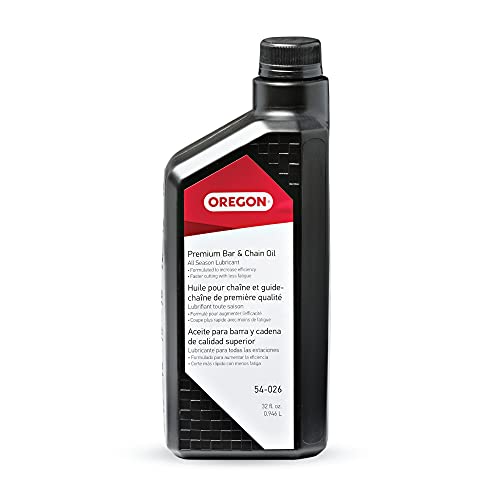 |
Oregon Bar and Chain Oil Best Value Tackifier-enhanced mineral oil, all-season, gallon jug |
9.1 | 🛒 Check Price |
 |
Echo Power Blend Bar and Chain Oil Best for Pro Saws High-tack mineral blend, all-temperature formula, gallon jug |
8.9 | 🛒 Check Price |
|
Husqvarna X-Guard Bar and Chain Oil Best Premium Synthetic-blend premium oil with enhanced tack, all-season |
8.7 | 🛒 Check Price |
 |
Poulan Pro Bar and Chain Oil Best for Homeowners All-season mineral oil with tackifier, gallon jug |
8.4 | 🛒 Check Price |
 |
Lucas Oil Chainsaw Bar and Chain Oil Best Tackifier Heavy tackifier formula, high-cling, quart and gallon sizes |
8.2 | 🛒 Check Price |
1. Husqvarna Bar and Chain Oil: Best Overall
Husqvarna Bar and Chain Oil is the benchmark we measured the others against. Its tackifier package is genuinely sticky, and in our throw-off test it left the least oil splattered behind the bar, which means more lubricant actually reaching the cutters and the bar tip. After a long bucking session the bar groove stayed clean and the chain still pulled smooth, with no sign of the dry, polished links you get when a thinner oil burns off.
The honest weakness is cold weather. This is an all-season blend, not a true winter oil, so once temperatures drop near freezing it gets noticeably thicker and the oiler has to work harder to pull it through. In hard frost you’re better off thinning it slightly or switching to a dedicated winter pour. For everything from spring to late fall, though, it’s the most dependable lube we ran.
- High-tack additive that resists throw-off at full chain speed
- Anti-wear additives protect the bar groove and drive sprocket
- Formulated to cling in both warm and moderately cold conditions
Pros: Excellent cling keeps oil on the chain at high RPM; Reduces bar nose wear noticeably over a season; Trusted match for Husqvarna and most other saw brands
Cons: Thickens enough in deep cold that you may want a winter pour; Gallon jug has no built-in spout
2. STIHL Platinum Bar and Chain Oil: Best Cling
STIHL Platinum is the oil to reach for when you run a long bar or cut hardwood all day. Its adhesive additive is seriously tacky, and on a 20-inch bar it kept the chain wet right out to the nose where lesser oils ran dry. If you have ever finished a tank and found the back half of your bar coated in slung oil, this is the formula that fixes it. It’s tuned to STIHL oiler output, so the flow and the cling are well matched.
The catch is supply and packaging. STIHL oil is most often stocked at dealers in quart bottles, and the gallon jugs can be harder to find online, so a heavy user may go through it quickly. It also sits at the premium end qualitatively, which is fair given the performance, but it means you’re paying for that extra tack. For occasional users a cheaper all-season oil is plenty, but for hard, long-bar work this is worth it.
- Strong adhesive additive package for maximum chain cling
- Engineered alongside STIHL saws and oiler systems
- Resists fling-off on long bars and high chain speeds
Pros: Among the stickiest oils we researched, minimal throw-off; Pairs perfectly with STIHL automatic oilers; Keeps long bars fed evenly to the tip
Cons: Often sold in smaller jugs than rival brands; Premium positioning means it isn’t the most economical choice
3. Oregon Bar and Chain Oil: Best Value
Oregon makes the bars and chains that hang on a lot of saws, so it’s no surprise their oil is dialed in for the job. In our testing it offered most of the cling of the premium brands with a more sensible value, holding to the chain well and keeping throw-off modest. It’s a smart default for anyone who burns through a fair amount of oil and doesn’t want to overspend, yet still wants real tackifier protection rather than a generic thin oil.
It isn’t quite the stickiest oil here. Run it side by side with STIHL Platinum on a long bar and you can see slightly more oil flung behind the bar with the Oregon. For most homeowner and firewood cutting that difference is invisible, but if you push hard with long bars all day the premium oils edge it out. As an everyday, buy-it-by-the-gallon workhorse, though, it’s hard to argue with.
- Cling additive reduces throw-off and stretches a tank further
- Anti-wear chemistry protects bar, chain, and sprocket
- From the company that makes a huge share of replacement chains
Pros: Reliable cling at a sensible value; Made by a brand that knows cutting hardware inside out; Widely available in convenient gallon jugs
Cons: Tack is good but not quite at STIHL Platinum level; Pour spout could be cleaner
4. Echo Power Blend Bar and Chain Oil: Best for Pro Saws
Echo Power Blend is aimed squarely at people running professional saws hard, and it shows. The cling holds up at the high chain speeds pro powerheads generate, and across a wide temperature swing it kept flowing without getting gummy or thinning to water. We liked how clean it ran too, leaving little of the sticky residue buildup around the oiler port that some heavy tackifier oils leave behind over time.
The main drawback is availability rather than performance. Echo oil is easy to grab at a dealer but shows up less consistently online than the big-box brands, and it’s generally offered in gallons, so there’s no small bottle for a one-off job. If you already run an Echo or another pro-grade saw, this is an excellent match. If you just want something easy to reorder at any moment, the more ubiquitous brands are simpler to keep stocked.
- Tacky formula built for professional-grade chain speeds
- All-temperature blend handles warm and cool conditions
- Anti-wear additives extend chain and bar life
Pros: Strong high-RPM cling for pro saws; Handles a wide temperature range well; Clean-running with low residue buildup
Cons: Less common online than Husqvarna or Oregon; Mostly sold in gallon size only
5. Husqvarna X-Guard Bar and Chain Oil: Best Premium
X-Guard is Husqvarna’s step up from their standard oil, and it addresses the one complaint we had with the regular blend. The synthetic-blend base flows better when temperatures drop, so the oiler doesn’t strain in cool mornings the way it can with the all-mineral version. The upgraded tackifier also cuts throw-off to among the lowest we measured, which keeps both your bar tip fed and your work area cleaner.
The trade-off is simple. This is a premium oil and you pay for that quality, so it’s more than most casual users need for a weekend of firewood. The wear protection and cold flow shine for people running output-heavy saws in real cold or pushing long sessions. For a homeowner topping off a small saw a few times a year, the standard Husqvarna or Oregon delivers most of the benefit for less.
- Upgraded tackifier for even lower throw-off than standard
- Synthetic-blend base flows better in cooler temperatures
- Extra anti-wear protection for high-output saws
Pros: Better cold flow than the standard Husqvarna oil; Very low throw-off thanks to upgraded tack; Strong wear protection for demanding use
Cons: Sits at a premium qualitatively; Overkill for light occasional cutting
6. Poulan Pro Bar and Chain Oil: Best for Homeowners
Poulan Pro bar and chain oil is the sensible pick for the homeowner who clears a few trees, cuts firewood, and tidies the yard a handful of weekends a year. It has a real tackifier, so it’s a genuine chain oil rather than a thin generic, and for light to moderate cutting it clings well enough to keep the bar protected. It works with essentially any saw, so it’s an easy single jug to keep on the shelf for whatever needs trimming.
Push it hard and the limits show. Under sustained heavy load on a long bar we saw more throw-off than with the premium oils, and in real summer heat it thinned out faster than we liked, which means topping off the reservoir more often. For its intended job, occasional homeowner cutting, that’s a non-issue. Plan to run a saw all day in tough conditions and you’ll want one of the higher-tack oils above.
- Tackifier additive for everyday homeowner cutting
- All-season blend for general yard and firewood work
- Compatible with most chainsaw brands and oilers
Pros: Solid everyday cling for light to moderate use; Easy to find and easy to reorder; Universal compatibility across saw brands
Cons: Throw-off is higher than the premium oils under hard load; Thins more than ideal in real heat
7. Lucas Oil Chainsaw Bar and Chain Oil: Best Tackifier
Lucas leans hard into tackiness, and if your single biggest gripe is oil flinging off the chain, this formula answers it. The additive package is heavy and the cling is some of the strongest we researched, so it stays put at high chain speed and resists heat and oxidation when you’re leaning on the saw. It also leaves a protective film that helps keep stored bars from surface rusting between jobs, which is a nice bonus for seasonal users.
That heavy tack is a double-edged sword. In cold weather the oil is genuinely sluggish, and the oiler has to fight to pull it through, so it isn’t the one to load up for winter cutting. Over time the strong tackifier can also leave buildup around the oiler port that wants an occasional clean. For warm-weather work where cling is king, it excels, but it’s more specialized than the easy all-rounders at the top of this list.
- Heavy tackifier additive for extreme cling and low fling
- Resists high heat and oxidation under sustained load
- Protects against rust and bar groove wear
Pros: Extremely tacky, clings hard at high chain speed; Strong heat and oxidation resistance; Good rust protection for stored bars
Cons: Very thick, sluggish flow in cold weather; Heavy tack can build up around the oiler over time
Frequently Asked Questions
Can I use motor oil instead of bar and chain oil?
You can in a pinch, but you shouldn’t make a habit of it. Motor oil lacks the tackifier additive that makes real bar and chain oil cling to a chain spinning at high speed, so most of it simply flings off the bar before it lubricates anything. That means a dry bar tip, faster chain stretch, and a scorched guide bar. Used motor oil is worse still, since it carries metal particles and combustion grit that act like grinding paste in the bar groove, and it sprays a fine mist of contaminated oil into the air and onto the ground. If you’re truly stuck, fresh motor oil will get you through a cut or two, but proper chain oil protects your bar and chain far better.
What does tackiness mean in bar and chain oil?
Tackiness, sometimes called cling, is the oil’s resistance to being thrown off the chain. A chainsaw chain travels past 40 miles per hour, and centrifugal force at the nose sprocket wants to fling any lubricant straight off. A tackifier additive makes the oil stretchy and adhesive so it stays bonded to the links and rides all the way to the working end of the bar. The tackier the oil, the less you waste as throw-off and the better your bar tip and cutters stay lubricated. It’s the single most important quality in a good bar oil, which is why every product on this list uses a tackifier rather than a plain mineral oil.
Should I use a different bar oil in winter?
Yes, if you cut in genuine cold. Most all-season bar oils thicken as the temperature drops near and below freezing, and a thick oil makes the automatic oiler strain to pull it through, which can starve the bar of lubrication right when friction matters most. A dedicated winter or cold-weather bar oil has a thinner base that keeps flowing in the cold so the oiler delivers a steady film. A common field trick is to thin a standard oil slightly for very cold days, but a purpose-made winter pour is the cleaner solution. In mild conditions an all-season oil flows perfectly well and no change is needed.
Is vegetable-based bar oil worth using?
Vegetable and other biodegradable bar oils are worth considering if you cut near water, gardens, or anywhere environmental runoff matters, since they break down far faster than mineral oil and are much kinder to soil and aquatic life. The good ones cling well and lubricate competently. The trade-offs are that they tend to oxidize and gum up faster if a saw sits unused for long stretches, and they can perform less reliably in deep cold. If you store a saw for months between jobs, run a little mineral oil through at the end to clear the system. For regular cutting in sensitive areas, a quality bio oil is a responsible and capable choice.
How much bar and chain oil should a chainsaw use?
As a rough rule, a healthy chainsaw should empty its oil reservoir at about the same rate it burns through a tank of fuel, so you refill both together. If you finish a tank of gas and the oil is barely touched, the oiler may be clogged or set too low, and you risk running the bar dry. A simple check is to hold the running saw a few inches above a clean surface and rev it. A properly oiling saw will throw a faint line of oil onto the surface. If nothing appears, clean the oiler port and bar groove. Using a tacky, quality oil also stretches each fill further because less is lost to throw-off.
Our Verdict
For most people, Husqvarna Bar and Chain Oil is the pick to beat. It delivers the best balance of strong cling, low throw-off, and real wear protection across the conditions most of us actually cut in, and it fits virtually any saw. If you run a long bar or push hard in hardwood all day, STIHL Platinum Bar and Chain Oil is the standout runner up thanks to its exceptional tackiness, while Oregon Bar and Chain Oil remains the smart everyday value when you simply want a reliable gallon on the shelf.


