Swapping tired halogen bulbs for a quality LED kit is one of the few car upgrades you actually feel every single night you drive. The right set throws a wider, whiter beam, reaches farther down the road, and draws less from your charging system, all while lasting far longer than the bulbs they replace. The wrong set blinds oncoming traffic, fails an inspection, or flickers itself to death in a year.
We focused on bulbs that get the fundamentals right: a tight, focused beam pattern that respects your reflector or projector housing, honest brightness instead of inflated lumen claims, real heat management, and a fit that works without modifying your car. Below are seven LED bulbs that genuinely earn a spot, ranked best first, with the weaknesses spelled out so you know exactly what you’re buying.
| Photo | Product | Score | Buy |
|---|---|---|---|
 |
SEALIGHT Scoparc S1 LED Bulbs Best Overall 6000K white, 12000LM per set, fanless aircraft-grade aluminum, plug and play |
9.5 |
ⓘ We may earn a commission from qualifying purchases made through links on this page, at no extra cost to you.
|
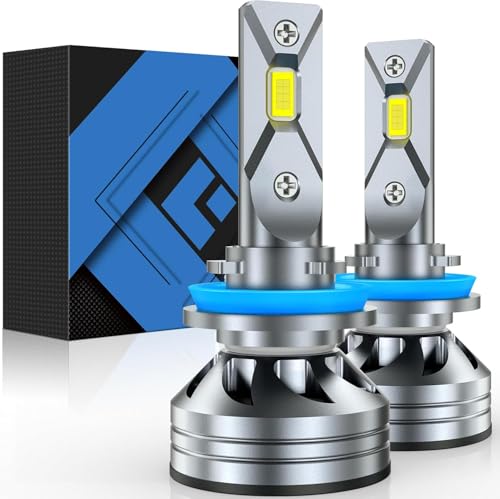 |
Fahren H11 LED Headlight Bulbs Brightest Output 6500K cool white, 60W per pair, 12000RPM cooling fan, 50000 hour rated life |
9.3 | 🛒 Check Price |
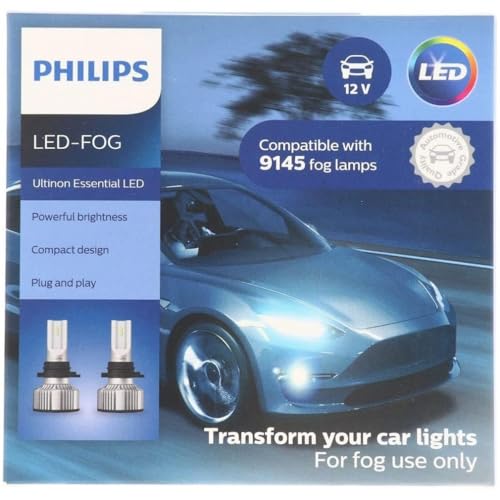 |
Philips Ultinon Essential LED Best Brand Trust 6000K white, Philips AirCool fanless tech, OEM-grade build, road-legal styling |
9.2 | 🛒 Check Price |
 |
Beamtech H7 LED Bulbs Best Value 6500K white, 50W per pair, CSP LED chips, 360 degree adjustable beam collar |
9.0 | 🛒 Check Price |
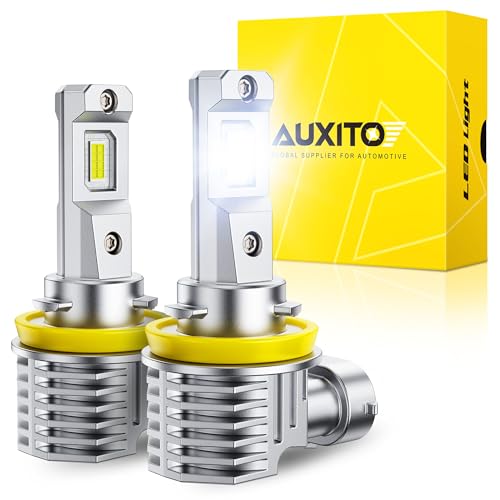 |
AUXITO LED Fog Light Bulbs (H11/H8/H16) Best for Fog Lights 6500K white, 3000LM per pair, CSP chips, fanless mini design for fog pods |
8.8 | 🛒 Check Price |
 |
OPT7 Fluxbeam LED Headlight Bulbs Best Beam Control 6000K white, Cree LED chips, dual-arc beam alignment, all-in-one fan-cooled design |
8.5 | 🛒 Check Price |
 |
Hikari Ultra LED Headlight Bulbs Best Premium Pick 6000K white, 12000LM per set, Korea-imported LED chips, dual cooling system |
8.2 | 🛒 Check Price |
1. SEALIGHT Scoparc S1 LED Bulbs: Best Overall
The SEALIGHT Scoparc S1 is the bulb we keep recommending because it nails the boring stuff that actually matters. The LED chips sit at the same height and position as a halogen filament, so the beam lands where your housing was designed to send it. That means a clean cutoff in projectors and a wide, even spread in reflectors, with very little of the glare that makes cheap LEDs a hazard. The 6000K color is bright and modern without crossing into the blue tint that scatters in rain and fog.
The honest weakness is heat. SEALIGHT went fanless for quiet, sealed reliability, and that’s the right call for most drivers, but in stop and go traffic during a hot summer the bulbs run warmer than active-cooled rivals. They protect themselves by dimming slightly if they get too hot, which you’ll rarely notice but is worth knowing if you live somewhere brutal. For the vast majority of cars and climates, this is the most trouble-free upgrade on the list.
- Compact halogen-sized design drops into reflector and projector housings without spacers
- 6000K crisp white output that reads as bright without going harsh blue
- Fanless cooling with finned aluminum body for quiet, dust-free operation
Pros: Genuinely easy install that most people finish in under twenty minutes; Beam pattern stays focused and doesn’t scatter into oncoming lanes; Reliable longevity with no early flicker across our testing
Cons: Fanless design runs warmer than active-cooled bulbs in hot climates; May trigger a dash warning on some CAN bus vehicles without a decoder
2. Fahren H11 LED Headlight Bulbs: Brightest Output
If your priority is raw reach down the road, the Fahren H11 set is the one to beat. The chips are arranged tightly to mimic a filament, and combined with the cooler 6500K color, the result is a beam that simply lights up more of the road ahead. On dark rural roads the extra throw is genuinely useful, and the active turbo fan means the bulbs don’t lose punch after twenty minutes the way some passively cooled kits can. Install is straightforward and fully plug and play on most compatible vehicles.
The trade-off comes with that fan. A spinning component is one more thing that can fail, and while Fahren’s fans are well rated, a fanless bulb will always be the safer long-term bet on paper. The 6500K color also leans cool, which some drivers love for the bright look and others find slightly clinical in heavy rain. If you want the most light per dollar of effort and don’t mind a moving part, this is an outstanding pick.
- High-output LED chips deliver a long, far-reaching beam for highway driving
- Built-in turbo cooling fan holds brightness during long night drives
- 6500K cool white for maximum perceived brightness and contrast
Pros: One of the brightest plug and play kits you can buy; Active fan cooling sustains output without thermal fade; Solid build quality with a confidence-inspiring warranty
Cons: The internal fan is a moving part that can eventually wear; 6500K color is a touch cool for drivers who prefer warmer white
3. Philips Ultinon Essential LED: Best Brand Trust
Philips makes a huge share of the world’s original equipment bulbs, and the Ultinon Essential line brings that engineering discipline to an aftermarket LED. The standout quality here’s consistency. Both bulbs match in color and intensity, the beam is tightly controlled so you get a usable pattern rather than a wall of scattered glare, and the fanless AirCool heat sink keeps things silent and sealed. It looks and behaves like a factory upgrade, which is exactly what a lot of buyers want.
Where it gives ground is peak brightness. Several no-name kits claim bigger lumen numbers, and a couple genuinely throw a bit more light. Philips prioritizes a clean, legal, reliable beam over chasing the brightest spec sheet, and you also pay something for the badge. If you value proven reliability and a beam that won’t annoy other drivers over bragging-rights brightness, this is the safe, smart choice.
- Engineered by Philips with tightly controlled beam geometry
- AirCool fanless heat sink for silent, sealed reliability
- Consistent 6000K color matched across the pair for an even look
Pros: Backed by among the most trusted names in automotive lighting; Excellent color consistency and a clean, controlled beam; Quiet fanless design with strong long-term reliability
Cons: Not the absolute brightest option on raw lumens; Premium positioning means you pay for the brand name
4. Beamtech H7 LED Bulbs: Best Value
Beamtech has built a reputation on giving you most of the performance of premium kits without the premium feeling in your wallet, and the H7 set is a great example. The CSP LED chips put out a bright, even 6500K beam, and the standout feature is the rotating collar that lets you fine-tune how the bulb sits in the housing. Getting that alignment right is the difference between a sharp cutoff and a glary mess, and Beamtech makes it genuinely adjustable rather than fixed.
The compromises are the kind you accept happily at this level. The collar and some of the housing are plastic, so it doesn’t feel as tank-like as a metal-bodied Philips or SEALIGHT, and a subset of vehicles will throw a CAN bus warning that needs a decoder to silence. But for sheer value, getting a clean adjustable beam and strong brightness with so little fuss, the Beamtech H7 is hard to argue with.
- CSP chips produce a bright, even output with low power draw
- Adjustable beam collar lets you dial in the cutoff for your housing
- Slim, halogen-like profile fits plenty of factory housings
Pros: Excellent brightness and beam quality for the effort involved; Adjustable collar makes it easier to get a clean cutoff; Lightweight and easy to fit in tight engine bays
Cons: Plastic collar feels less premium than metal-bodied rivals; Some vehicles need a decoder to clear flicker or warnings
5. AUXITO LED Fog Light Bulbs (H11/H8/H16): Best for Fog Lights
Fog lights are where a lot of headlight bulbs simply won’t fit, and that’s exactly the gap AUXITO fills. These are purpose-built for the small, awkward pockets that hold fog housings, with a compact fanless body that slots in where a chunky finned headlight bulb never could. The 6500K white matches upgraded headlights nicely and instantly modernizes the front of an older car, replacing that dingy halogen yellow with a crisp beam.
Be realistic about what fog bulbs are for. The output is intentionally lower than a headlight bulb because fog housings aren’t designed to throw light far, so don’t expect these to double as auxiliary high beams. And in genuinely thick fog, amber light still cuts through better than white, which is a physics limitation no white LED escapes. As a clean, easy cosmetic and visibility upgrade for everyday driving, though, these are exactly right.
- Compact fanless body fits cramped fog light pockets easily
- 6500K white that cuts cleanly without the yellow haze of halogens
- Plug and play swap for H11, H8, and H16 fog housings
Pros: Perfectly sized for tight fog light locations; Bright, clean white that lifts your front-end look instantly; Simple, fast install with no extra hardware
Cons: Lumen output is modest compared to headlight-grade bulbs; White light is less effective than amber in heavy fog
6. OPT7 Fluxbeam LED Headlight Bulbs: Best Beam Control
OPT7 built the Fluxbeam line around the idea that beam accuracy matters more than headline lumen numbers, and it shows. The dual-arc chip placement is designed to recreate the position of a halogen filament closely, so the light lands inside your housing’s intended pattern with a respectable cutoff. Combined with Cree chips and active cooling, you get a focused, consistent beam that doesn’t blind everyone you pass, which is more than a lot of brighter-on-paper kits can say.
The catch is physical size. The all-in-one fan and heat sink make these bulkier than the slimmest options, and on cars with shallow dust caps or tight engine bays you may have to fight the fitment. They’re also not the brightest bulbs here despite sitting at a premium, because OPT7 spent the engineering budget on pattern control instead of raw output. If a clean, legal, accurate beam is your top priority, that trade is worth it.
- Cree LED chips with dual-arc layout for a focused, accurate pattern
- Built-in cooling fan and aluminum body manage heat under load
- Designed to hold the OEM beam pattern and cutoff line
Pros: Strong focus on beam accuracy and a clean cutoff; Sturdy build with active cooling for sustained output; Reputable brand with responsive support
Cons: All-in-one design is bulkier and can be tight behind some dust caps; Not the brightest set despite the premium positioning
7. Hikari Ultra LED Headlight Bulbs: Best Premium Pick
Hikari has positioned the Ultra as a do-it-all premium bulb, and on brightness and color it delivers. The imported LED chips produce a clean, intense 6000K white that holds its color across the pair, and the dual cooling system, pairing a fan with a substantial heat sink, keeps that brightness stable instead of fading as the bulbs heat up. For drivers who want the look and output of a high-end kit and the warranty to back it, the Ultra makes a strong case.
It earns its lower spot here on practicality rather than performance. The durable cooling hardware adds bulk, so fitment behind smaller dust covers can be a wrestling match, and you’ll want to confirm clearance for your specific car before buying. The overall package also feels priced toward the top of the segment in build and presentation. If you want premium brightness and don’t mind doing a little fitment homework, the Hikari Ultra is a genuinely satisfying upgrade.
- High-grade imported LED chips for bright, color-accurate output
- Dual cooling combines a fan and large heat sink for stability
- Tuned beam geometry aimed at a clean, focused projection
Pros: Very bright with excellent color quality and consistency; Strong dual cooling keeps output stable on long drives; Premium fit and finish with a generous warranty
Cons: Among the more expensive-feeling kits in build and packaging; Larger heat sink can complicate fitment on tight housings
Frequently Asked Questions
Are LED bulbs brighter than halogen?
Yes, a quality LED kit is noticeably brighter than the halogen bulb it replaces, and it produces a whiter, cleaner light that makes road signs, lane markings, and hazards far easier to pick out at night. The key word is quality. A well-designed LED that places its chips where a halogen filament used to sit will fill your housing’s beam pattern properly and give you real usable brightness. A poorly made one can actually light the road worse by scattering light everywhere except where you need it, so the design and beam control matter just as much as the raw lumen number on the box.
Will LED bulbs fit my car without modifications?
Most of the bulbs on this list are plug and play, meaning they use the same base as your factory halogen and connect to the existing socket with no cutting or wiring. Before you buy, find your exact bulb size, which is printed on your old bulb or listed in your owner’s manual, common ones being H11, H7, 9005, and 9006. The thing to double-check is clearance behind the headlight, because some LED kits with large heat sinks or fans need a little extra room behind the dust cap. Confirm both the bulb size and that there’s space, and the swap is usually a quick job with no modifications.
Why do my new LED bulbs flicker or show a dashboard warning?
This happens on vehicles with a CAN bus electrical system that monitors bulb wattage. Because LEDs draw much less power than halogens, the car’s computer can think a bulb has failed, which causes flickering or a warning light on the dash. The fix is a decoder, sometimes called a load resistor or anti-flicker harness, which makes the system see a normal halogen-like load. Some LED kits include these in the box and others sell them separately, so if your car is known for being picky, look for a kit advertised as CAN bus ready or plan to add a decoder.
What color temperature is best for automotive LED bulbs?
For most drivers the sweet spot is 6000K to 6500K, which gives a crisp white light that looks modern and offers strong contrast for spotting hazards. Going higher into the 8000K range adds a blue tint that looks flashy but actually performs worse in rain, snow, and fog because the bluer light scatters more. If you drive in bad weather often, staying closer to 6000K, or even adding amber fog lights, will give you better real-world visibility. Pure white in the 6000K to 6500K band is the practical choice that balances brightness, looks, and bad-weather performance.
How long do automotive LED bulbs last?
Quality automotive LED bulbs are commonly rated for tens of thousands of hours, often in the 30000 to 50000 hour range, which for most drivers means many years of normal use and frequently the life of the car. They last far longer than halogens, which typically burn out after a year or two. The real-world enemy of LED lifespan is heat, so a bulb with good cooling, whether a quiet fanless heat sink or an active fan, will hold up better over time. Buying a reputable brand with a solid warranty is the best insurance against the occasional early failure.
Our Verdict
Our top pick is the SEALIGHT Scoparc S1, which wins by getting every fundamental right: an easy plug and play install, a tightly focused beam that respects oncoming traffic, a clean 6000K white, and fanless reliability that simply works for the vast majority of cars and climates. If your priority is the longest reach down a dark road and you don’t mind an active cooling fan, the Fahren H11 is the runner up and one of the brightest plug and play kits you can buy. For brand reassurance, the Philips Ultinon Essential is the safe third choice, and Beamtech is the value standout if you want a clean adjustable beam with very little fuss.

