When the temperature drops, untreated diesel turns into a problem. The paraffin wax that lives naturally in diesel starts to crystallize, those crystals clog your fuel filter, and a truck that ran fine yesterday won’t start this morning. A good antigel additive lowers the cold filter plugging point and the pour point so your fuel keeps flowing when the thermometer falls below freezing. That’s the whole job, and the products below do it at very different levels.
We treated jugs of standard winter diesel, dropped them into cold soak conditions, and watched for cloud, gel, and filter plugging. We also looked at the practical stuff that matters at a freezing fuel island, like whether the bottle pours cleanly, how easy the dosing is to get right, and whether the formula also adds cetane, lubricity, or water control. Here are the seven antigel treatments worth keeping in your cab.
| Photo | Product | Score | Buy |
|---|---|---|---|
 |
Power Service Diesel Fuel Supplement +Cetane Boost Best Overall Antigel plus cetane boost and water control, treats roughly 100 gallons per 80 oz |
9.5 |
ⓘ We may earn a commission from qualifying purchases made through links on this page, at no extra cost to you.
|
 |
Howes Diesel Treat Runner Up Alcohol free antigel and lubricity formula, treats up to 250 gallons per 64 oz |
9.3 | 🛒 Check Price |
 |
Power Service Diesel 911 Best Emergency Rescue Reliquefies gelled fuel and de ices frozen filters, treats roughly 80 gallons per 32 oz |
9.2 | 🛒 Check Price |
 |
Hot Shot's Secret Diesel Winter Anti-Gel Best Cold Flow Performance Antigel with lubricity and water dispersant, treats up to 400 gallons per 32 oz |
9.0 | 🛒 Check Price |
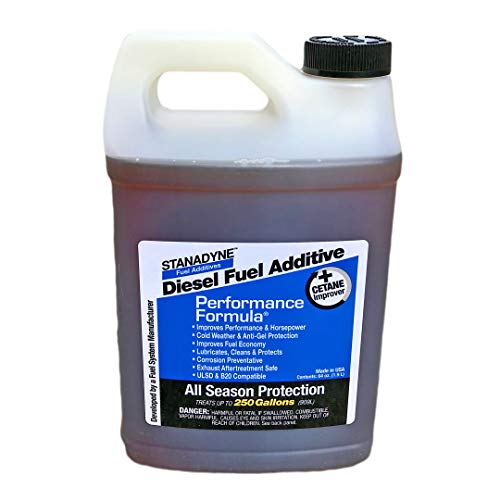 |
Stanadyne Performance Formula Best All Season Formula Antigel, cetane, lubricity, and detergent in one, made by a fuel system manufacturer |
8.7 | 🛒 Check Price |
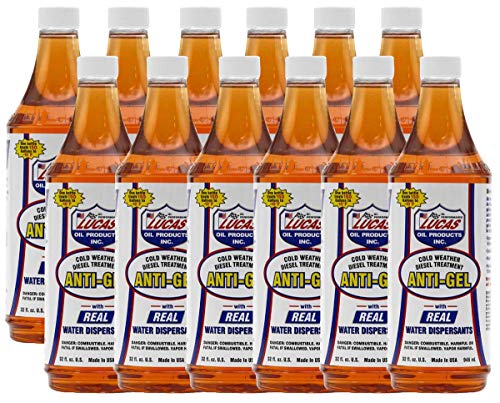 |
Lucas Oil Anti-Gel Cold Weather Diesel Treatment Best Value Pick Antigel and water dispersant for winter diesel, common retail availability |
8.5 | 🛒 Check Price |
 |
Schaeffer's Diesel Treat 2000 Best for Fleets All season antigel with detergent and lubricity, concentrated high mileage formula |
8.2 | 🛒 Check Price |
1. Power Service Diesel Fuel Supplement +Cetane Boost: Best Overall
The white bottle Power Service Diesel Fuel Supplement is the antigel most diesel owners reach for first, and our testing backs up that reputation. It does the core job well, dropping the cold filter plugging point enough that treated fuel kept moving through the filter in our cold soak while the untreated control plugged solid. Because it also boosts cetane and pulls water out of the fuel, it works as a true winter operating additive rather than a single trick gel preventer, which is why it stays in so many trucks from October to March.
The honest weakness is that it’s a preventive product, not a rescue product. If your fuel has already gelled and your filter is plugged, this bottle won’t thaw it, and you’ll need the emergency formula instead. The white winter blend also looks similar enough to the silver summer supplement that people grab the wrong one in a hurry, so check the label. Treat your tank before the cold arrives and this is as dependable as antigel gets.
- Lowers the cold filter plugging point to keep wax crystals moving through the filter
- Adds cetane for easier cold cranking and smoother idle on startup
- Disperses water to prevent ice from forming in the fuel system
Pros: Strong gel protection that holds up in deep sub freezing cold; All in one formula covers antigel, cetane, and water in a single pour; Widely trusted by fleet and owner operators for years
Cons: The white winter blend can be easy to confuse with the silver summer bottle; You need to add it before fuel gels, not after, so it requires planning
2. Howes Diesel Treat: Runner Up
Howes Diesel Treat has a loyal following among older diesel owners specifically because it contains no alcohol. Many cheaper antigels lean on alcohol to fight water, but alcohol can attack seals and reduce the natural lubricity diesel needs. Howes skips that entirely and adds lubricity instead, so it protects your injection system while it prevents gelling. In our cold soak the treated fuel stayed fluid and the filter stayed clear, and the high treat ratio means a single bottle covers a lot of fuel, which makes the value genuinely strong.
The trade off for the gentle alcohol free chemistry is that you shouldn’t skimp on the dose. In the harshest cold the brand recommends a heavier ratio, so a bottle doesn’t stretch quite as far when conditions get brutal. The formula is also fairly thick, so straight out of a frozen truck the pour is slow and you have to be patient at the fill. For owners who care about long term injector and pump health, those are easy compromises to accept.
- Prevents gelling and de ices fuel filters without any alcohol
- Adds lubricity to protect injectors and the fuel pump
- Goes a long way per bottle with a high treat ratio
Pros: No alcohol means it won’t dry out seals or strip lubricity; Excellent value because one bottle treats a large volume of fuel; Backed by a long standing no gel guarantee from the maker
Cons: Needs a slightly higher dose ratio in extreme cold for full protection; Thicker pour can be slow straight out of a cold bottle
3. Power Service Diesel 911: Best Emergency Rescue
Diesel 911 is the bottle you keep for the morning everything goes wrong. While most antigels only work if you add them before the cold hits, this one is formulated to reliquefy fuel that has already gelled and to de ice a filter that has frozen with water. In practice that means a truck that won’t start because of plugged wax can often be brought back without towing it to a warm shop or swapping a frozen filter in the cold, which is exactly why it earns a spot in the cab even if it never gets used most winters.
It’s important to be clear about what it isn’t. Diesel 911 is a rescue tool, not a season long preventive, so pairing it with a preventive antigel like the white bottle supplement is the smart play rather than relying on it alone. Even as a rescue it isn’t instant, since you still have to dose the tank, crank, and give it time to circulate and dissolve the wax before the engine clears. As emergency insurance against a no start in a parking lot, though, nothing else on this list does what it does.
- Dissolves wax crystals to free up fuel that has already gelled
- De ices a frozen fuel filter to restore flow without a filter change
- Works fast so a stranded truck can get running again
Pros: The one antigel that actually rescues fuel after it has gelled; Doubles as a filter de icer when water has frozen in the system; Essential backup to keep in the cab for emergencies
Cons: Designed for rescue, not everyday preventive treatment; You may still need to crank and wait for it to circulate and work
4. Hot Shot's Secret Diesel Winter Anti-Gel: Best Cold Flow Performance
Hot Shot’s Secret built a reputation among modern diesel owners who run high pressure common rail engines, and the Winter Anti-Gel reflects that audience. It pushes the cold filter plugging point down hard, so it held its own in our coldest soak, and it leans on a strong lubricity package that matters a lot for the tight tolerances in current injection systems. The concentrated formula also means a single 32 oz bottle treats a large amount of fuel, so it earns its place for owners who want serious cold flow protection plus injector care in one pour.
The catch is availability and precision. It isn’t stocked at every truck stop the way the legacy brands are, so if you run out far from home you may struggle to find a replacement bottle. Because it’s concentrated, getting the dose wrong has a bigger effect than with a more diluted product, so you want to measure carefully rather than eyeball it. For owners who plan ahead and value protecting a modern engine, it’s one of the strongest performers here.
- Lowers the cold filter plugging point for deep winter protection
- Includes lubricity additives to protect high pressure injection systems
- High treat ratio so a small bottle covers a lot of fuel
Pros: Strong cold flow numbers in severe temperatures; Adds injector lubricity that modern common rail engines appreciate; Concentrated, so the bottle stretches across many tanks
Cons: Less of a household name so harder to find on the road; Concentrated dose means a measuring error has a bigger effect
5. Stanadyne Performance Formula: Best All Season Formula
Stanadyne is unusual on this list because the company actually manufactures diesel fuel injection systems, so its Performance Formula is engineered with the hardware in mind. It’s an all season additive that improves cold flow and lowers the cold filter plugging point in winter while also adding cetane, detergents, and lubricity the rest of the year. In testing it gave reliable gel protection in moderate to cold conditions, and the injector cleaning side is a genuine bonus for owners who want one bottle to handle fuel quality across the whole year.
Where it gives a little ground is in the most extreme cold. Because it’s built as a balanced year round treatment rather than a maximum strength winter antigel, its cold flow numbers are good but not the lowest here, so owners in the harshest northern climates may want a dedicated antigel for the deepest part of winter. Viewed as a smart all rounder that keeps the fuel system clean and adds solid gel protection, though, it’s an easy product to trust.
- Improves cold flow and lowers the cold filter plugging point in winter
- Adds cetane and detergents to clean injectors over time
- Formulated by a company that actually builds diesel fuel systems
Pros: Made by a fuel injection equipment manufacturer, so it’s engineered for the hardware; Cleans injectors and adds lubricity alongside gel protection; Works year round, not only in deep winter
Cons: Antigel strength is solid but not the most extreme on this list; Premium positioning means it offers less raw cold flow per pour than dedicated antigels
6. Lucas Oil Anti-Gel Cold Weather Diesel Treatment: Best Value Pick
Lucas Oil Anti-Gel is the practical choice for owners who want dependable gel protection without hunting for a specialty brand. It does the fundamentals well, lowering the pour point so fuel keeps flowing in the cold and dispersing water so ice doesn’t form and plug the filter. In our testing it gave clear improvement over untreated fuel in moderate freezing conditions, and because Lucas products sit on so many store shelves, it’s genuinely easy to grab a bottle when you realize a cold snap is coming. For straightforward winter insurance, the value here’s hard to argue with.
It’s fair to say it’s a focused antigel rather than a do everything additive. The cold flow protection is solid but doesn’t reach as deep as the strongest dedicated winter formulas, so in extreme northern cold you may want something more aggressive. It also carries fewer extras such as heavy cetane or lubricity packages than the premium bottles. As an accessible, easy to find treatment that handles the core gel and water problems, though, it earns its spot.
- Prevents fuel gelling and lowers the pour point in cold weather
- Disperses water to stop ice forming in the fuel system
- Easy to find on shelves and simple to dose
Pros: Strong value with widespread availability at auto parts stores; Simple, no fuss antigel and water control formula; Backed by the well known Lucas Oil name
Cons: Cold flow protection trails the strongest dedicated winter formulas; Lighter on extras like cetane and lubricity than the premium options
7. Schaeffer's Diesel Treat 2000: Best for Fleets
Schaeffer’s Diesel Treat 2000 comes from a brand with deep roots in the lubricant world, and it shows in the breadth of the formula. It’s an all season treatment that lowers the cold filter plugging point and pour point for winter while also delivering detergency to clean injectors and lubricity to protect the pump and injection components. The concentrated dosing makes it a natural fit for fleets and high mileage operators who treat large volumes of fuel and want one bottle to handle gel protection and long term cleanliness across the calendar.
For a single owner with one pickup, the trade offs are about access and precision. It doesn’t have the retail footprint of the legacy white bottle brands, so finding it on short notice in an unfamiliar town can be a challenge. The concentrated chemistry also means dosing accuracy matters, since pouring by feel can leave you over or under treated. For a fleet manager who buys ahead and meters carefully, though, it’s a thorough and capable antigel and maintenance additive in one.
- Lowers the cold filter plugging point and pour point for winter operation
- Cleans injectors and adds lubricity for long term engine health
- Concentrated dosing that suits high volume fleet use
Pros: Comprehensive additive package covering gel, detergency, and lubricity; Well suited to fleets running large amounts of fuel; Year round formula so one product covers all seasons
Cons: Lower retail visibility so it can be harder to source quickly; Concentrated formula demands careful measuring to avoid over or under dosing
Frequently Asked Questions
How does diesel antigel actually work?
Diesel fuel contains paraffin wax that stays dissolved when it’s warm but begins to crystallize as the temperature drops. Those wax crystals grow and clump together until they clog the fuel filter and stop the engine from getting fuel, which is what people mean by gelling. An antigel additive changes how those crystals form, keeping them small and well dispersed so they pass through the filter instead of plugging it. It effectively lowers the cold filter plugging point and the pour point, the two temperatures at which fuel stops flowing, so your engine keeps running in cold it otherwise couldn’t handle.
When should I add antigel to my diesel?
Add it before the cold arrives, not after. Almost every antigel on the market is a preventive product, which means it has to mix into liquid fuel and coat the wax crystals before they form. The best practice is to pour the correct dose into your tank before you fill up so the splash of incoming fuel blends it thoroughly, and to do this whenever overnight temperatures are forecast to approach or drop below freezing. If you wait until the fuel has already gelled and the engine won’t start, a standard antigel won’t fix it, and you’ll need an emergency reliquefier instead.
What is the difference between an antigel and a diesel rescue treatment?
An antigel is preventive and a rescue treatment is corrective, and that difference matters a great deal in winter. A preventive antigel like a winter fuel supplement stops wax crystals from clumping in the first place, but only if you add it while the fuel is still flowing. A rescue product such as Power Service Diesel 911 is formulated to dissolve wax that has already gelled and to de ice a frozen filter, so it can bring a no start truck back to life. The smart approach is to run a preventive antigel all winter and keep a bottle of rescue treatment in the cab as emergency backup.
Will antigel hurt my diesel engine or void my warranty?
Quality antigel additives from established brands are designed to be safe for diesel engines, including modern common rail and high pressure systems, and many actually add lubricity and detergents that help protect injectors and pumps. The key is to choose a reputable formula and follow the dosing instructions, because over treating can be wasteful and under treating leaves you unprotected. If warranty coverage is a concern, alcohol free formulas are popular because they avoid drying out seals and stripping lubricity, and it’s always worth checking your owner manual, since a few manufacturers specify which additive types they prefer.
How much antigel do I need to use?
The right amount depends on the product and the severity of the cold, which is why reading the bottle is essential rather than guessing. Most antigels list a treat ratio, for example one bottle per a set number of gallons, and many recommend a heavier dose as the temperature falls toward extreme cold. Concentrated formulas treat far more fuel per ounce than diluted ones, so a small bottle of a concentrate can cover the same fuel as a much larger bottle of a basic product. Measure carefully, dose for the coldest temperature you expect, and add it as you fill so it mixes completely.
Our Verdict
For most diesel owners the top pick is Power Service Diesel Fuel Supplement +Cetane Boost, the white bottle that combines strong gel protection, a cetane boost, and water control in one dependable preventive pour, with availability at nearly every fuel stop when you need it. Our runner up is Howes Diesel Treat, the alcohol free choice that protects injectors and the pump while it fights gelling and stretches a long way per bottle. Whichever preventive you run all winter, keep a bottle of Power Service Diesel 911 in the cab as rescue insurance, because the morning your fuel gels you’ll be very glad it’s there.


