Rust is the quiet killer of every car body. Once corrosion gets a foothold on a fender, rocker panel or frame rail, it spreads under the paint and never stops on its own. A good anti rust primer is the layer that does the real work, either by converting existing surface rust into a stable, paintable film or by sealing fresh bare metal so moisture never reaches it again. Get the primer right and the topcoat lasts. Get it wrong and you’re sanding the same spot again next year.
We put seven of the most trusted anti rust primers and rust converters through real-world testing on bare steel patches, surface-rusted brackets and undercarriage areas exposed to road salt. We looked at how well each one bit into clean metal, how completely it neutralized light rust, how easy it was to topcoat, and how it held up after months of weather. Below are the seven that earned a spot, ranked best first, with an honest look at where each one falls short.
| Photo | Product | Score | Buy |
|---|---|---|---|
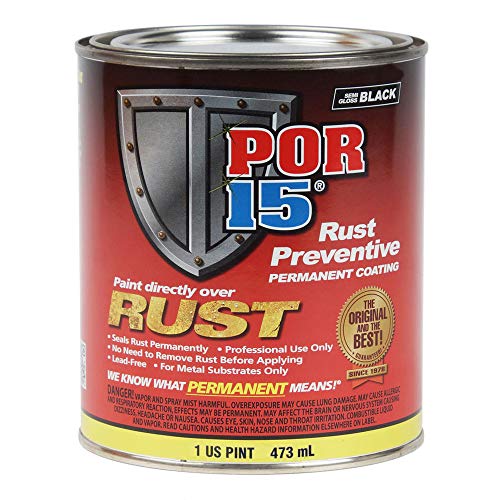 |
POR-15 Rust Preventive Coating Best Overall Moisture-cured single-component coating, brush or spray on, paint directly over rust |
9.5 |
ⓘ We may earn a commission from qualifying purchases made through links on this page, at no extra cost to you.
|
 |
Rust-Oleum Rust Reformer Best Rust Converter Spray-on rust converter, bonds to rust and turns it into a flat-black paintable surface |
9.2 | 🛒 Check Price |
 |
SEM Rust-Seal Best for Pros High-build rust encapsulating primer, brushable or sprayable, seals rust against moisture |
9.1 | 🛒 Check Price |
 |
Rust-Oleum Self Etching Primer Best for Bare Metal Acid-etch aerosol primer for clean bare steel and aluminum, promotes topcoat adhesion |
8.9 | 🛒 Check Price |
 |
Eastwood Rust Encapsulator Best Encapsulator Rust encapsulating coating, brush or spray, seals rusted and bare metal in one step |
8.7 | 🛒 Check Price |
 |
Permatex Rust Treatment Best Brush-On Converter Brush-on rust converter, dissolves and converts rust into a black protective primer coat |
8.4 | 🛒 Check Price |
 |
Rust-Oleum Automotive Filler Primer Best Build Primer High-build sandable filler primer, fills scratches and levels surfaces before topcoat |
8.1 | 🛒 Check Price |
1. POR-15 Rust Preventive Coating: Best Overall
POR-15 is the primer most serious restorers reach for, and our testing showed why. On a rust-pitted bracket we left half bare and coated the other half, the POR-15 side was still solid and unchanged after months of salt exposure while the bare side flaked further. Its trick is moisture curing: instead of fighting the humidity that usually ruins a coating, it uses that humidity to cross-link into a glass-hard, fully sealed shell. It grips rusted and pitted steel better than anything else we tried, which makes it ideal for frame rails, floor pans and rocker panels where you can’t always get to perfectly clean metal.
The honest weakness is sunlight. Left exposed to UV, POR-15 chalks and breaks down on the surface, so it’s strictly a primer or undercoat that needs a topcoat anywhere the sun hits it. It’s also messy and permanent on contact, and the can lid can seal itself shut between uses if you aren’t careful to keep the rim clean. Treat it as a committed, do-it-right product rather than a casual touch-up and it rewards you with the longest-lasting rust protection in this test.
- Bonds chemically to rusted metal and hardens into a rock-hard, non-porous film
- Uses ambient humidity to cure, so it seals tighter the damper the conditions
- Stops existing rust from spreading and blocks new moisture from reaching the steel
Pros: Exceptional adhesion to rusted and pitted surfaces other primers can’t grip; Extremely durable, chip resistant film that survives undercarriage and frame use; Can be applied over light rust without grinding back to shiny bare metal
Cons: Needs a UV-blocking topcoat because raw POR-15 chalks in sunlight; Unforgiving on skin and clothing, and a sealed can is hard to reopen once started
2. Rust-Oleum Rust Reformer: Best Rust Converter
If your problem is light surface rust rather than bare metal, Rust-Oleum Rust Reformer is the easiest fix in this guide. You spray it directly onto the rusted area and it chemically reacts with the corrosion, locking it down and turning it into a flat black, paint-ready film. In our testing on a rusty bumper bracket it left a uniform matte surface that took a topcoat cleanly and showed no fresh bleed-through over the following months. For small rust spots, brackets, suspension parts and underbody patches, it’s hard to beat for sheer convenience.
The limitation is the kind of rust it can handle. Reformer works on tight surface rust, but if you have thick, flaking scale you still need to knock that loose first, and very heavy rust is better served by a dedicated converter and a tougher sealing primer like POR-15. The aerosol can also doesn’t cover much area, so it shines on touch-ups and small jobs rather than full panels. Within that lane, it does exactly what it promises with almost no prep, which is why it earns the rust-converter pick.
- Reacts with existing rust and converts it into a stable, non-rusting black coating
- Goes straight onto rusted metal with no grinding to bare steel required
- Dries to a flat black primer surface ready for most topcoats
Pros: Genuinely converts surface rust instead of just hiding it; Aerosol application is fast and reaches awkward, rusted areas easily; Trusted, widely stocked brand that topcoats with other Rust-Oleum paints
Cons: Best on light to moderate surface rust, not heavy flaking scale; Aerosol coverage per can is limited for large panels
3. SEM Rust-Seal: Best for Pros
SEM Rust-Seal is the can you see on the shelf of a real collision shop. It’s a high-build encapsulator designed to seal rusted metal completely, choking off the oxygen and moisture that corrosion needs to keep growing. In testing it laid down a noticeably thicker film than the aerosols, filling minor pitting and leaving a surface we could sand flat and build on. That makes it a strong choice when you’re doing a proper repair, because it integrates with body filler and modern refinish topcoats instead of fighting them.
Because it’s a thicker, brush-or-spray encapsulator, it asks more of the user than a point-and-shoot converter. You need to mix and apply it carefully so it flows out without runs, and it takes longer to work with than something like Rust Reformer. It’s also more product than a small touch-up demands. But for anyone restoring a panel properly and wanting a sealed, sandable, shop-quality foundation under the paint, Rust-Seal delivers exactly the kind of durable base coat the pros rely on.
- Encapsulates and seals existing rust to stop oxygen and moisture reaching the metal
- High-build formula fills minor pitting and levels rough rusted surfaces
- Sands smooth and accepts body filler and topcoats used in pro body shops
Pros: Body-shop grade durability and adhesion on rusted steel; Builds thick enough to bury light pitting in one or two coats; Plays nicely with fillers and refinish systems for full repairs
Cons: Needs careful mixing and clean application to flow out well; Heavier and slower to work with than a quick aerosol converter
4. Rust-Oleum Self Etching Primer: Best for Bare Metal
When you have ground a repair back to fresh, shiny steel, a self-etching primer is the correct first layer, and Rust-Oleum’s version does the job well. It contains an acid that bites into clean bare metal, creating a tenacious bond that ordinary primers can’t match and laying down a corrosion-resistant foundation for the topcoats above. In our bare-metal patch test it gripped hard and gave the following color and clear coats a far better surface to hold onto, with no early lifting or edge peel.
The thing to understand is that this is the opposite tool to a rust converter. It’s built for clean metal and should never be sprayed over active rust, because it has nothing to etch into there and won’t seal corrosion the way an encapsulator does. The etch layer is also thin, so on a repair with low spots you’ll still want a high-build primer on top to fill and level. Used in its proper role, as the adhesion layer on bare steel, it’s a very reliable starting points you can buy.
- Etches into clean bare metal for a strong mechanical and chemical bond
- Combines an etching primer and filler primer in one fast aerosol step
- Creates a corrosion-resistant base that grips topcoats tightly
Pros: Excellent adhesion on fresh bare steel and aluminum; Quick aerosol application with a smooth, sandable finish; Great first layer before color on new metal repairs
Cons: Designed for clean bare metal, not for coating over existing rust; Thin etch layer still needs a build primer for serious filling
5. Eastwood Rust Encapsulator: Best Encapsulator
Eastwood built its name on rust control, and the Rust Encapsulator is the everyday workhorse from that catalog. It penetrates into existing rust and seals it under a tough, flexible film, and unlike a self-etching primer it’s happy on both rusted and clean metal, which makes it forgiving on the kind of mixed surfaces you find under an older car. In testing it laid down an even, chip-resistant coat on a rusty floor section and held up well through repeated wet and dry cycles, exactly where you want a frame or underbody coating to perform.
It carries the same caveat as other encapsulators: leave it exposed to sunlight and it’ll degrade, so anywhere UV hits it you need a topcoat over the top. We also found that thick coats applied in cool, damp weather stayed tacky longer than we would like, so thinner passes and patience pay off. Those points aside, it’s a dependable middle ground between the bulletproof-but-fussy POR-15 and the quick aerosol converters, and a smart pick for sealing rusty undercarriage metal.
- Penetrates and seals existing rust to stop corrosion in its tracks
- Works on both rusted and clean metal as a single protective base coat
- Flexible film resists chipping on undercarriage and frame surfaces
Pros: Strong rust-sealing performance from a brand built around corrosion control; Flexible, chip-resistant finish suited to underbody and frame areas; Available in aerosol and brushable forms for different jobs
Cons: Like most encapsulators it needs a UV topcoat for exposed areas; Heavier coats can stay tacky longer in cool, damp conditions
6. Permatex Rust Treatment: Best Brush-On Converter
Permatex Rust Treatment is the bottle to keep on the shelf for small, stubborn rust spots. It’s a brush-on converter that reacts with rust and turns it into a black, primer-like coating that resists further corrosion and is ready to paint once cured. The brush format gives you control that an aerosol can’t, so it’s genuinely useful for getting into seams, bolt heads, brackets and small rusted patches where overspray would be a problem. On our test brackets it converted light rust cleanly and left a sound surface for the topcoat.
The trade-off is speed and scale. Brushing is fine for a few small areas but becomes tedious and uneven across a whole panel, where a spray converter or a build primer is the better tool. As with every converter, it works best on tight surface rust, so deep or flaking corrosion still needs to be wire-brushed or sanded back first. Kept to the job it’s designed for, targeted spot treatment, it’s an effective and fuss-free way to stop rust before it spreads.
- Chemically converts rust into a stable black coating that resists further rusting
- Brush-on liquid gives controlled application on small rusted spots
- Leaves a primer-ready surface for topcoating after curing
Pros: Precise brush control for spot repairs and tight areas; Converts rust and primes in a single, simple step; Easy to use with minimal prep for small jobs
Cons: Brush application is slow and impractical for large panels; Heavy or deep rust needs mechanical removal first for best results
7. Rust-Oleum Automotive Filler Primer: Best Build Primer
Rust-Oleum Automotive Filler Primer rounds out the list because rust protection is only half the battle, the surface still has to be smooth before color goes on. This is a high-build, sandable primer that fills fine scratches, sand scratches and minor low spots, then sands flat to give the topcoat a uniform base. In our testing it built quickly over a treated repair and sanded to a clean, even surface that made the final paint look far better than spraying color straight over a patchy primer.
The important honest note is that this is a build primer, not a rust treatment. It adds a measure of corrosion resistance, but it doesn’t chemically convert rust or etch into bare metal, so on its own over active rust it’ll eventually let corrosion creep back. Used the right way, on top of a self-etching primer or a rust converter as the smoothing and leveling coat, it completes a proper layered system. Think of it as the finishing primer that makes everything underneath look right, rather than the layer doing the rust fighting.
- High-build formula fills fine scratches, sand marks and minor imperfections
- Sands smooth to create a level, uniform base for color coats
- Adds a corrosion-resistant layer over treated or primed metal
Pros: Excellent for leveling and smoothing repaired areas before paint; Sands easily to a flat, paint-ready surface; Pairs well over etch primer or rust treatment for a complete system
Cons: Not a rust converter, so it can’t stop active corrosion on its own; Needs a proper sealing or etch layer underneath on bare or rusty metal
Frequently Asked Questions
Do I need to remove all the rust before applying anti rust primer?
It depends on which type of product you use. With a rust converter or a rust encapsulator like Rust-Oleum Rust Reformer, Eastwood Rust Encapsulator or POR-15, you can leave tight surface rust in place because the product is designed to bond to and neutralize it. You should still remove any loose, flaking scale and clean off grease and dirt first, since nothing bonds well to crumbling rust or oil. With a self-etching primer it’s the opposite: that type needs clean bare metal to etch into, so you must grind or sand back to shiny steel before spraying it. Matching the primer type to how much rust you have left is the single most important decision in the whole job.
What is the difference between a rust converter and a self-etching primer?
They solve two different problems. A rust converter, such as Rust-Oleum Rust Reformer or Permatex Rust Treatment, chemically reacts with existing rust and turns it into a stable black coating that stops the corrosion from spreading, so it’s for metal that’s already rusty. A self-etching primer, like Rust-Oleum Self Etching Primer, contains an acid that bites into clean bare steel or aluminum to create a strong bond and a corrosion-resistant base, so it’s for fresh metal you have ground back to shiny condition. Many quality repairs actually use both ideas in sequence on different areas: convert or encapsulate the rusty spots, etch the clean metal, then build and level before paint.
Can I paint my car's topcoat directly over anti rust primer?
In most cases you can, but check the specific product because the details matter. Rust converters generally dry to a flat, paint-ready surface that accepts a topcoat once fully cured. Encapsulators such as POR-15 and Eastwood Rust Encapsulator must be topcoated anywhere sunlight reaches them, because raw encapsulator chalks and breaks down under UV, and many of them also want the topcoat applied within a recoat window for the best chemical bond. If you’re after a smooth finish, a high-build filler primer like Rust-Oleum Automotive Filler Primer sanded flat between the rust layer and the color will give you a far better looking result than spraying paint straight over a rough converted surface.
How long does anti rust primer take to dry and cure?
Surface dry time and full cure are two different things, and the cure is what actually protects the metal. Most aerosol converters and etch primers feel dry to the touch within a half hour or so and are ready to recoat in a few hours, while a full hardness cure can take a day or more. Moisture-cured coatings like POR-15 behave differently, since they harden using humidity in the air and cure faster in damp conditions than in very dry ones, which is the opposite of what most people expect. Cool, damp weather slows everything down and can leave heavier coats tacky, so apply thin coats and always follow the recoat and cure times on the specific can rather than rushing the topcoat.
Which anti rust primer is best for the underbody and frame rust?
For undercarriage, frame rails and rocker panels, you want a tough sealing encapsulator rather than a thin etch primer or a quick spot converter. POR-15 is our top choice there because it bonds to pitted, rusted steel and cures into a hard, sealed film that shrugs off road salt and moisture, and Eastwood Rust Encapsulator is a strong, more forgiving alternative that flexes well on chip-prone underbody areas. Both should be topcoated where they’re exposed to sunlight, and both reward good cleaning and loose-rust removal beforehand. For sealing rusty metal in the harsh environment under a car, that encapsulating approach lasts far longer than a thin primer that only addresses the surface.
Our Verdict
For all-around rust stopping power, POR-15 Rust Preventive Coating is our top pick. Nothing else in this test grips rusted, pitted steel as tenaciously or cures into as durable and fully sealed a film, which is exactly what frame rails, floor pans and rocker panels need, as long as you remember to topcoat it where the sun hits. If you want the easiest path on light surface rust, our runner up is Rust-Oleum Rust Reformer, which sprays straight onto rust, converts it to a paint-ready black surface and asks for almost no prep. Pair the right product with your level of rust, clean the metal first, and follow the recoat times, and any of these seven will buy your car years of extra life against corrosion.


