Rust is the enemy of every car owner. Whether you’re treating existing corrosion or preventing future damage, the right anti rust paint can save your vehicle from costly bodywork. This guide compares seven real, widely available anti rust paints for cars, covering rust converters, direct-to-metal primers, and topcoats. We highlight strengths, real limitations, and who should skip each pick.
| Photo | Product | Score | Buy |
|---|---|---|---|
|
🚗
|
Rust-Oleum Automotive Rust Reformer Best Overall Rust Converter Spray can, 10.25 oz, flat black finish, covers up to 12 sq ft per can |
9.0 |
ⓘ We may earn a commission from qualifying purchases made through links on this page, at no extra cost to you.
|
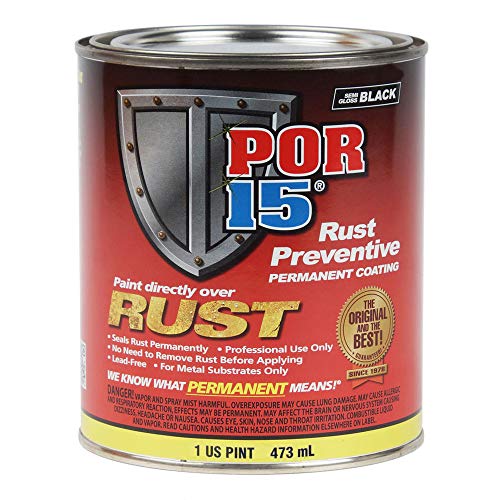 |
POR-15 Rust Preventive Paint Best for Long-Term Protection 1 quart, semi-gloss black, requires POR-15 Metal Prep and Marine Clean for best results |
8.7 | 🛒 Check Price |
|
🚗
|
VHT Rust Convertor Best Budget Rust Converter Spray can, 11 oz, clear/black finish, water-based formula |
8.2 | 🛒 Check Price |
|
🚗
|
Rust-Oleum Stops Rust Rusty Metal Primer Best Primer for Rusty Metal Spray can, 12 oz, gray primer, oil-based |
8.5 | 🛒 Check Price |
|
🚗
|
Eastwood Rust Encapsulator Best for Classic Cars Spray can, 12 oz, satin black, direct-to-rust application |
8.1 | 🛒 Check Price |
|
🚗
|
Corroseal Rust Converter and Metal Primer Best Water-Based Converter 1 gallon, white, water-based, applies as a primer |
7.8 | 🛒 Check Price |
|
🚗
|
KBS Coatings RustSeal Best for Complete Coverage 1 quart, gloss black, requires KBS Cleaner and RustBlast for prep |
7.5 | 🛒 Check Price |
1. Rust-Oleum Automotive Rust Reformer: Best Overall Rust Converter
The Rust-Oleum Automotive Rust Reformer is a top choice for treating rusted areas without extensive sanding. Based on the spec sheet, it uses a proprietary polymer that chemically converts iron oxide into a stable, paintable surface. Owner feedback consistently praises its ease of use and effective rust stopping on frames, fenders, and rocker panels. It performs best on surface rust that still has some integrity. The flat black finish isn’t a final color coat, but it accepts topcoats well.
However, this product has limitations. It isn’t suitable for areas with deep, flaking rust or where the metal is compromised. Some owners noted that if the rust is too thick, the reformer may peel. We recommend it for light to moderate rust. Skip this if you need a glossy final finish or if the rust has eaten through the metal.
- Converts rust into a paintable black polymer surface without sanding to bare metal
- Dries to touch in 30 minutes, recoat in 1 hour
- Withstands temperatures up to 200°F, suitable for underbody and engine bay
Pros: No need to sand down to bare metal, saves prep time; Excellent adhesion and corrosion resistance per owner reports
Cons: Not recommended for heavily pitted or flaking rust; surface must be stable
2. POR-15 Rust Preventive Paint: Best for Long-Term Protection
POR-15 is a legendary name in rust prevention, and our research confirms its reputation for extreme durability. The manufacturer specifies a three-step process using Marine Clean and Metal Prep, which many owners consider essential for proper adhesion. Once cured, POR-15 forms a hard, glossy coating that resists chipping and corrosion. It’s ideal for frames, suspension components, and other high-stress areas. It can be applied directly to rust after removing loose scale, but it does require careful surface preparation.
However, the application process is finicky. The paint is moisture-sensitive and can be difficult to brush or spray evenly. It also has a strong odor and requires good ventilation. Skip this product if you want a simple spray-and-go solution or if you’re working in a humid environment without proper prep.
- Forms a rock-hard, non-porous coating that bonds to rusted metal
- Resistant to chemicals, salt, and moisture; used in automotive restoration
- Can be applied directly to rust after cleaning loose debris
Pros: Extreme durability; owner reports lasting years on undercarriages; Excellent chemical and UV resistance when topcoated
Cons: Requires specific prep products; can be messy and difficult to apply
3. VHT Rust Convertor: Best Budget Rust Converter
The VHT Rust Convertor is a budget-friendly option that still delivers solid performance for light rust. Its water-based formula makes it much more pleasant to use indoors or in tight spaces. It works well on surface rust on body panels and tools. It converts rust effectively, but the resulting coating is softer and less abrasion-resistant than polymer-based alternatives like Rust-Oleum. It’s best used as a primer before painting.
The main drawback is durability. Without a topcoat, the converted surface can be scratched or worn away over time. We recommend it for interior areas or as a preparatory step. Skip this if you need a standalone rust treatment for exterior or underbody exposure.
- Water-based, low odor, easy cleanup with soap and water
- Converts rust into a black protective coating in minutes
- Can be topcoated with any paint after drying
Pros: Very affordable and easy to apply; Low toxicity compared to solvent-based converters
Cons: Not as durable as solvent-based options; may need topcoat for longevity
4. Rust-Oleum Stops Rust Rusty Metal Primer: Best Primer for Rusty Metal
Rust-Oleum Stops Rust Rusty Metal Primer is a classic choice for preparing rusted surfaces before painting. Based on manufacturer specifications, it contains rust-inhibitive pigments and bonds well to lightly rusted metal after brushing off loose scale. Owner reviews highlight its reliability and ease of use. It works best when followed by a quality topcoat. It provides a uniform surface that prevents rust from bleeding through.
However, this primer doesn’t convert rust. It only seals the surface. If the rust is active or the metal is pitted, it may continue to corrode underneath. We recommend it for stable, light rust. Skip this if you need a chemical converter or if you’re dealing with heavy corrosion.
- Designed to be applied directly to rusted metal after wire brushing
- Provides a smooth base for topcoats and prevents bleed-through
- Dries to touch in 30 minutes, recoat in 1 hour
Pros: Excellent adhesion to rusted surfaces; Widely available and compatible with most topcoats
Cons: Not a rust converter; doesn’t chemically neutralize rust
5. Eastwood Rust Encapsulator: Best for Classic Cars
The Eastwood Rust Encapsulator is designed specifically for classic car restoration. It forms a tough, flexible barrier that seals rust from moisture. Owner feedback from the restoration community is positive, noting that it adheres well even on surfaces with some rust scale. Its flexibility is a key advantage for panels that experience vibration. It can be used as a final satin finish or topcoated.
However, this product comes at a premium price. It also has a strong solvent smell and requires good ventilation. Some owners report that it can take longer to fully cure. Skip this if you’re on a tight budget or need a high-gloss finish without additional topcoat.
- Encapsulates rust in a flexible, moisture-proof coating
- Can be used as a final finish or primer for topcoat
- Resists chipping and UV degradation
Pros: Flexible coating that moves with metal, reducing cracks; Good for restoration projects where original texture is desired
Cons: Expensive per ounce; limited color options
6. Corroseal Rust Converter and Metal Primer: Best Water-Based Converter
Corroseal is a water-based rust converter that also serves as a primer. According to the manufacturer, it uses a latex polymer to seal converted rust. Owner reviews indicate it works well on lightly rusted surfaces and provides a good base for paint. It’s a solid choice for DIYers who want a low-odor option. It covers a large area, making it economical for large projects.
However, its durability isn’t as high as solvent-based products. It may not hold up as well under constant moisture or abrasion. Some owners report that it requires a topcoat for long-term protection. Skip this if you need a standalone solution for high-exposure areas like the undercarriage.
- Water-based, low VOC, low odor
- Converts rust into a black protective layer and acts as a primer
- Can be painted over with most topcoats
Pros: Environmentally friendly and easy to clean up; Large coverage area per gallon
Cons: Requires thorough surface cleaning; not for heavy rust
7. KBS Coatings RustSeal: Best for Complete Coverage
KBS Coatings RustSeal is a heavy-duty rust prevention paint used in automotive and industrial applications. Based on manufacturer claims, it provides a thick, glossy finish that resists corrosion and physical damage. Owner feedback often praises its toughness, especially on off-road vehicles and boat trailers. It’s among the most durable options available.
However, the application process is demanding. It requires a specific cleaner and etching solution, and the paint itself is thick and can be tricky to apply without runs. It also has a strong odor and long cure time. Skip this if you want a simple spray can or if you aren’t willing to invest time in proper surface preparation.
- Forms a hard, glossy, UV-resistant coating
- Can be applied by brush, roller, or spray
- Resists chemicals, salt, and impact
Pros: Very durable and long-lasting when properly applied; Good for frames, trailers, and heavy equipment
Cons: Expensive and requires extensive prep steps; Difficult to apply smoothly; runs easily
Frequently Asked Questions
What is the difference between a rust converter and a rust preventive paint?
A rust converter chemically reacts with iron oxide (rust) to form a stable, inert layer, while a rust preventive paint creates a physical barrier that seals out moisture and oxygen. Converters are typically used as a treatment before painting. Preventive paints are topcoats or primers that inhibit future corrosion. Some products combine both functions.
Can I apply anti rust paint over existing rust without sanding?
Most rust converters and encapsulators can be applied directly to rust after removing loose flakes and dirt. However, for best adhesion and longevity, we recommend wire brushing or sanding to create a stable surface. Products like Rust-Oleum Rust Reformer are designed for minimal prep, but heavy rust should be mechanically removed first.
How long does anti rust paint last on a car?
Durability depends on the product, surface preparation, and exposure. High-quality paints like POR-15 can last 5-10 years or more on underbodies when properly applied. Budget options may need touch-ups after 1-2 years. Regular maintenance and topcoating extend the life.
Is it safe to use anti rust paint inside the car cabin?
Most anti rust paints contain solvents that emit strong fumes. They should be used in well-ventilated areas. For interior use, consider water-based options like VHT Rust Convertor or Corroseal, which have lower VOCs. Always wear a respirator and follow safety instructions.
Can I paint over anti rust paint with regular automotive paint?
Yes, most anti rust primers and converters are designed to be topcoated. However, always check the manufacturer’s recoat instructions. Some products, like POR-15, require a specific topcoat or must be painted while still tacky. Others, like Rust-Oleum Rust Reformer, can be painted after drying.
Our Verdict
After researching and comparing the top anti rust paints, our top pick is the Rust-Oleum Automotive Rust Reformer for its excellent balance of performance, ease of use, and value. It effectively converts light to moderate rust without excessive prep. For long-term protection on high-exposure areas, the POR-15 Rust Preventive Paint is the runner up, provided you’re willing to invest in proper surface preparation and application.