A fogged-up visor at 60 mph is among the most dangerous things a rider can deal with, and it always seems to happen at the worst moment: cold mornings, rainy commutes, or stop-and-go traffic where airflow drops. A good anti fog spray lays down a thin hydrophilic or hydrophobic layer on the inside of your shield that stops condensation from beading into that blinding white haze. It will not replace a Pinlock insert on every helmet, but a quality spray is portable, works on visors that no insert fits, and doubles up on goggles, glasses, and even your face shield’s outer face for rain runoff.
We put the most popular options through cold-weather breath tests, humid-day commutes, and repeated wipe cycles to see which sprays actually last and which ones streak or wear off after a tank of fuel. Below are the seven we trust, ranked best first, with honest notes on where each one falls short so you can match the right product to your climate and helmet.
| Photo | Product | Score | Buy |
|---|---|---|---|
 |
Muc-Off Anti-Fog Treatment Best Overall 35ml pump spray, biodegradable formula, safe on coated and uncoated visors |
9.5 | 🛒 Check Price |
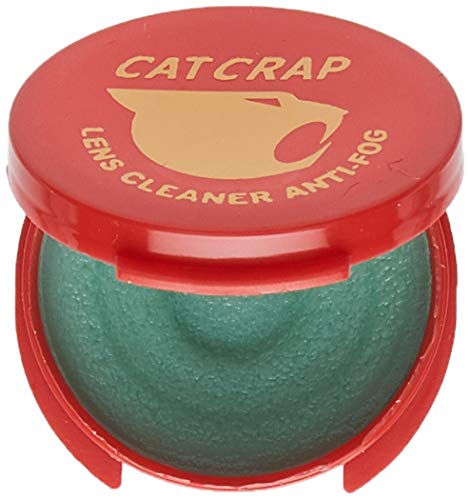 |
Cat Crap Anti-Fog Paste Best for Cold Weather Rub-on wax paste, 0.5oz tin, works on visors, goggles, and glasses |
9.2 | 🛒 Check Price |
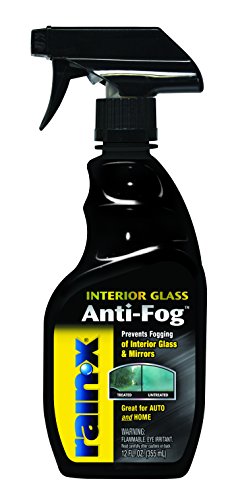 |
Rain-X Anti-Fog Most Flexible 103ml spray bottle, interior glass and plastic formula, large volume |
9.0 | 🛒 Check Price |
 |
Ziss Premium Anti-Fog Spray Longest Lasting 30ml fine-mist spray, optical-grade formula, long dwell time per coat |
8.8 | 🛒 Check Price |
 |
Gear Aid Op Drops Anti-Fog Best Compact 37ml drops bottle, military-spec heritage, dab-and-spread application |
8.6 | 🛒 Check Price |
 |
Crispi Anti-Fog Spray Easiest to Apply 60ml pump spray, no-buff formula, fast-drying application |
8.3 | 🛒 Check Price |
 |
Nikwax Visor Proof Best Eco Choice 75ml sponge-applicator bottle, water-based, PFC-free formula |
8.0 | 🛒 Check Price |
1. Muc-Off Anti-Fog Treatment: Best Overall
Muc-Off built its reputation on bike care, and that attention to coatings shows here. In our cold breath tests the treated half of the visor stayed clear while the untreated half fogged instantly, and the layer survived several wet commutes before clarity started to drop. The formula is the part we trust most: it is designed not to attack the anti-scratch and anti-UV coatings that aftermarket sprays sometimes cloud over time, so you can use it on a premium shield without worrying.
The honest weakness is process. This is not a wipe-and-go product. You get the best results by cleaning the visor first, applying a thin even coat, and letting it cure rather than buffing it off wet, which takes a few minutes you may not have on a rushed morning. The pump also throws a slightly wider pattern than ideal for a compact visor, so expect a little overspray. Respect the application steps and it is the most reliable spray we researched.
- Streak-free hydrophilic layer that holds up through long cold-weather rides
- Single small bottle treats a full visor many times over
- Evaluated safe on anti-scratch coatings and Pinlock-ready shields
Pros: Long-lasting clarity between applications; Gentle formula will not haze coated visors; Compact bottle fits a jacket pocket
Cons: Needs a clean visor and a short cure time to work its best; Pump can spray a little wide on a small shield
2. Cat Crap Anti-Fog Paste: Best for Cold Weather
Cat Crap is a cult favorite among skiers and cold-climate riders for good reason. Where many sprays struggle in genuinely freezing air, this rub-on paste held a clear film through our coldest test runs and kept breath condensation from gripping the visor. A pea-sized dab covers a whole shield, so the little tin will outlast most spray bottles by a wide margin, and it crosses over perfectly to goggles and glasses if you ride in winter gear.
The trade-off is the format. Because it is a paste, you have to rub it on and then buff it down to a fully clear film with a soft cloth, and if you stop buffing too early you are left with visible smears that catch headlights at night. It is also slower to reapply roadside than a quick spritz. For riders who battle real cold, that extra minute is worth it, but commuters in mild, humid climates may prefer the convenience of a pump spray.
- Wax-style paste that excels in freezing and sub-zero conditions
- Tiny tin lasts a very long time per application
- Works on visors, ski goggles, and prescription lenses
Pros: Outstanding fog resistance in deep cold; One tin lasts season after season; Doubles as a goggle and glasses treatment
Cons: Must be buffed to a clear film or it smears; Paste format is slower to apply than a spray
3. Rain-X Anti-Fog: Most Adaptable
Rain-X is a household name in clarity products, and its dedicated anti-fog formula carries that crossover appeal. The large bottle means you are not only treating a visor, you can hit your riding glasses, your interior windshield, and your mirrors with the same product, which makes it the most all-around pick here. Application is fast: spray, spread, and wipe to a clear haze-free finish, and in our humid commute tests it kept the visor clear through stop-and-go traffic where airflow was minimal.
The honest limitation is durability and streaking. If you wipe unevenly you can leave faint streaks that show up against oncoming headlights, and the protection wears down faster in sustained heavy rain than the wax-based rider pastes. It is best thought of as an excellent all-rounder for mixed conditions rather than a specialist for extreme cold or downpours. For a rider who wants one bottle for the bike and the car, it is hard to beat.
- Generous bottle size that treats helmets, glasses, and car interior glass
- Familiar trusted brand with wide availability
- Quick spray-and-wipe application
Pros: Big bottle covers many surfaces and seasons; Easy fast application; Works on your visor and your car windows alike
Cons: Can streak if not buffed evenly; Less durable than dedicated rider pastes in hard rain
4. Ziss Premium Anti-Fog Spray: Longest Lasting
Ziss positions itself as an optical-grade anti-fog, the kind of product designed for camera lenses and glasses, and that precision carries over nicely to a helmet visor. The fine-mist nozzle lays down a thin, even coat with very little overspray, which is exactly what you want on a small curved shield. In testing, a single proper application outlasted several cheaper sprays, holding clarity through repeated cold breath cycles before it needed a refresh, which earned it the longest-lasting nod here.
The catch is the bottle size and the cure requirement. At 30ml it is on the smaller side, so daily commuters who reapply often will work through it faster than a bulk bottle. And like most high-performance formulas, it rewards patience: you need to let the coat cure rather than wiping it off immediately, or you sacrifice some of that durability. Apply it properly the night before a cold ride and it pays you back with hours of clear vision.
- Optical-grade formula aimed at lenses and visors
- Fine even mist for thin streak-resistant coats
- One coat lasts noticeably longer than budget sprays
Pros: Long wear between applications; Fine mist applies evenly with little overspray; Safe on coated optical surfaces
Cons: Smaller bottle empties faster with frequent use; Needs full cure time for best durability
5. Gear Aid Op Drops Anti-Fog: Best Compact
Gear Aid’s Op Drops come from the world of dive masks and field optics, where fogging is not an inconvenience but a real hazard, and that pedigree makes them a dependable choice for a visor. The drop-bottle format is genuinely pocketable, easily the most compact option here, so it lives in a jacket pocket or tank bag for emergency reapplication mid-ride. You place a few drops, spread them with a fingertip or cloth, and buff to a clear film, with no aerosol overspray to clean up.
The weakness is dosing control. Squeeze a little too hard and you get more product than you need, which then takes extra buffing to clear out and can leave a faint film if you rush it. Because there is no spray to even things out, you are relying on your own technique to get a uniform coat. Riders who like the ritual of a careful application will love it; those who want a foolproof one-second spritz may find the drops fiddly.
- Pocket-sized drop bottle that travels anywhere
- Heritage in military and dive optics
- Spreads with a fingertip or cloth, no aerosol
Pros: Tiny and pocketable for roadside use; Proven anti-fog heritage from optics and diving; No aerosol mist, so no wasted overspray
Cons: Drops can over-apply if you squeeze too hard; Requires manual spreading for an even film
6. Crispi Anti-Fog Spray: Easiest to Apply
If your main frustration with anti-fog is the fuss of buffing, Crispi’s spray is built to solve exactly that. It is a no-buff formula: you mist it on, it dries clear largely on its own, and you are ready to ride sooner than with paste-style products. The 60ml bottle is a sensible middle ground for regular commuters, and in our humid-day tests it kept the visor usable through typical city riding where you stop and go and breath builds up at the lights.
The honest trade-off for that convenience is staying power. In heavy, persistent fog or sustained cold it gives up sooner than the wax pastes, so you will reapply more often in harsh conditions. It also performs best on a truly clean visor; any leftover grease or old coating shortens its life noticeably. For mild and moderate climates where you value speed and simplicity over maximum endurance, it is the easiest spray here to live with day to day.
- No-buff formula that dries clear on its own
- Mid-size 60ml bottle for regular use
- Fast-drying so you can ride sooner
Pros: Genuinely quick spray-and-go application; Decent bottle size for the convenience; Dries clear without heavy buffing
Cons: Shorter wear than wax pastes in heavy fog; Best on a spotlessly clean visor
7. Nikwax Visor Proof: Best Eco Choice
Nikwax is best known for waterproofing outdoor gear, and Visor Proof brings that same water-based, PFC-free philosophy to your helmet. For riders who care about what they are spraying near their face and into the environment, this is the most eco-conscious option here. The built-in sponge applicator is a smart touch, giving you neat controlled coverage without aerosol drift, and it adds genuine water-repellency to the outer face of the visor so rain beads and runs off at speed instead of smearing.
The honest framing is that this leans more toward visor care and outer rain-shedding than aggressive interior anti-fog. Its fog resistance on the inside is milder than the dedicated cold-weather pastes, so deep-winter riders may find it needs help from a Pinlock or a stronger spray on the worst days. The sponge also needs an occasional rinse to keep from dragging grit across the shield. As an all-weather visor treatment with a clear conscience, though, it earns its place.
- Water-based PFC-free formula for eco-minded riders
- Built-in sponge applicator for controlled coverage
- Adds water-repellency to the visor's outer face too
Pros: Environmentally friendly water-based formula; Sponge applicator gives neat even coverage; Helps rain run off the outside of the visor
Cons: Anti-fog effect is milder than dedicated interior sprays; Sponge needs occasional rinsing to stay clean
Frequently Asked Questions
Do anti fog sprays really work on motorcycle helmet visors?
Yes, a quality anti fog spray genuinely works, but it manages fog rather than eliminating the cause. Fog forms when warm, moist breath hits a cold visor and condenses into thousands of tiny droplets that scatter light. A good spray leaves a microscopic layer that either spreads that moisture into an invisible sheet (hydrophilic) or makes it bead and run off (hydrophobic), so your eye sees a clear surface instead of a white haze. In our testing the difference between a treated and untreated visor in cold breath was dramatic. The key is applying to a clean visor, using a thin even coat, and reapplying when clarity drops, since no spray lasts forever.
Is anti fog spray as good as a Pinlock insert?
They solve the same problem in different ways and many riders use both. A Pinlock insert creates a sealed double-pane on the visor that resists fog extremely well and lasts for years, which makes it the gold standard if your helmet supports one. Anti fog spray is the more flexible tool: it works on visors and goggles that no Pinlock fits, it is portable for roadside touch-ups, and it treats your riding glasses too. The honest answer is that for a dedicated cold-weather commuter, a Pinlock is hard to beat, but a spray is the better universal solution and a perfect backup for the days condensation sneaks past the insert’s edges.
Will anti fog spray damage my visor's anti-scratch coating?
It can if you choose the wrong product, which is exactly why we weighted coating safety heavily in our ranking. Some harsh or solvent-based cleaners can cloud or craze the anti-scratch and anti-UV coatings on a modern visor over time. The sprays we recommend, especially the Muc-Off and optical-grade Ziss formulas, are designed to be gentle on those coatings. To stay safe, always apply to a visor that has been cleaned with water or a visor-safe cleaner first, avoid household glass cleaners with ammonia, and test a new product on a small corner if you are unsure. Used correctly, a purpose-made anti fog spray will not harm a quality visor.
How often do I need to reapply anti fog spray?
It depends heavily on the product, the weather, and how often you wipe the visor. In mild, humid conditions a durable spray or wax paste can last several rides before you notice fogging creeping back, while in harsh cold or heavy rain you may need to refresh it every ride or two. Wax-based pastes like Cat Crap and optical formulas like Ziss tend to last longest, whereas convenient no-buff sprays trade some endurance for speed. The practical tip is to keep a small bottle in your jacket or tank bag so a quick reapplication is never more than a minute away when clarity starts to fade.
Can I use the same anti fog spray on my glasses and goggles?
In most cases yes, and that crossover is one of the best reasons to own a bottle. Many of the products here, including Cat Crap, Rain-X Anti-Fog, Gear Aid Op Drops, and Ziss, are explicitly safe for glasses and goggle lenses, which is handy if you wear prescription glasses under your helmet or switch to goggles on an off-road lid. Just check the label for lens coatings, since some prescription glasses have delicate anti-reflective layers that prefer gentler optical-grade formulas. Apply a thin coat, buff to a clear film, and you get the same fog-free benefit on every lens you ride with, which keeps your whole kit consistent.
Our Verdict
For most riders, the Muc-Off Anti-Fog Treatment is our top pick: it delivers the most reliable streak-free clarity, it is genuinely safe on premium coated visors, and the compact bottle goes anywhere. If you battle real cold, the runner up is Cat Crap Anti-Fog Paste, whose wax film simply refuses to fog when the temperature drops, and a single tin lasts seasons. Pair either with a clean visor and the right application habit and you will not ride blind again.
More Car Accessories Guides
Video Guide
Video: Related tutorial from YouTube