Rocky bottoms are the toughest place to set an anchor. There’s no soft seabed to bury a fluke into, so a good rock anchor has to do something completely different. It needs to wedge a tine into a crevice, hook around a boulder, or grab a ledge and stay put while wind and current try to drag you off. The wrong anchor either skates across the rock without ever grabbing, or grabs so well it gets permanently stuck and you lose it on the way up. Both outcomes ruin a day on the water.
We focused this guide on anchors that genuinely earn their keep over rock, gravel, ledge, and rubble. That means grapnel-style flukes that catch in any direction, claw anchors that handle uneven terrain, and a few clever designs with retrieval features that let you break a stubborn set free. Below are seven anchors that real boaters trust when the bottom is hard and unforgiving, ranked best first, with the honest weaknesses of each so you can match one to your boat.
| Photo | Product | Score | Buy |
|---|---|---|---|
 |
Lewmar Claw Anchor (Bruce Style) Best Overall for Rock One-piece galvanized steel claw, sizes from 4.4 lb to 33 lb |
9.5 |
ⓘ We may earn a commission from qualifying purchases made through links on this page, at no extra cost to you.
|
 |
Extreme Max BoatTector Grapnel Anchor Best Grapnel for Crevices Folding 4-fluke grapnel, galvanized, available 1.5 lb to 13 lb |
9.3 | 🛒 Check Price |
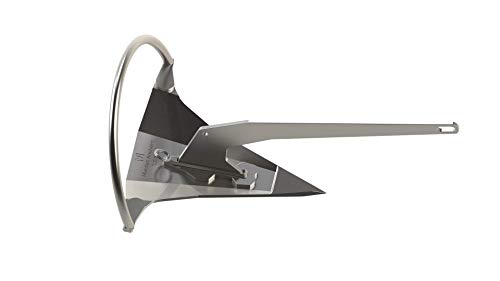 |
Mantus M1 Anchor Best Heavy-Duty Setter Bolt-together steel plow with sharp toe, sizes 8 lb and up |
9.2 | 🛒 Check Price |
 |
Slide Anchor Box Anchor Best for Mixed Rocky Terrain Folding box-frame anchor, no hinge, sizes Small to Large |
9.0 | 🛒 Check Price |
 |
Seachoice Utility Anchor (Folding Grapnel) Best Compact Pick 4-fluke folding grapnel, galvanized, light 1.5 lb to 7 lb sizes |
8.7 | 🛒 Check Price |
 |
Rocna Vulcan Anchor Best Premium All-Bottom Roll-bar-free scoop anchor, hardened steel, 9 lb and up |
8.5 | 🛒 Check Price |
 |
Greenfield Products Richter Folding Grapnel Anchor Best Value Grapnel 4-tine folding grapnel, vinyl-coated or galvanized, light sizes |
8.2 | 🛒 Check Price |
1. Lewmar Claw Anchor (Bruce Style): Best Overall for Rock
The Lewmar Claw is the anchor we reach for first when the bottom is rock, and there’s a simple reason: the claw shape doesn’t care which way it lands. Drop it onto a rocky shelf and one of its three points almost always finds a crack or edge to bite. Because it’s forged as a single piece with no hinge, there’s nothing to bend when a tine wedges hard into stone, which is exactly where lighter folding anchors give up. In our experience it resets quickly too, so when the wind clocks around and the boat swings over a different patch of rubble, the claw rolls and re-grabs instead of plowing out.
The honest weakness is holding power per pound. On rock the claw shines, but if you also anchor a lot in soft mud or thin sand you’ll notice it doesn’t dig as deep or hold as hard as a modern scoop-style plow of the same weight. You compensate by sizing up, which means more weight on the bow. For a boater whose home water is genuinely rocky, that trade is worth it, and the bombproof simplicity is why this is our top pick.
- Single-piece claw design with no moving parts to bend or jam on rock
- Three-point scoop sets in any orientation it lands, ideal for uneven ledge
- Hot-dip galvanized finish resists corrosion in salt and fresh water
Pros: Sets fast on rock, gravel, and broken bottoms without fussing; No hinges or trip mechanisms to fail or seize; Wide size range fits dinghies up to mid-size cruisers
Cons: Lower holding-to-weight ratio than newer plow designs in soft mud; Bulky shape can be awkward to stow on a small bow roller
2. Extreme Max BoatTector Grapnel Anchor: Best Grapnel for Crevices
A grapnel is the classic rocky-bottom tool, and the Extreme Max BoatTector is a well-made, fairly priced version that does the job. Its four flukes mean you’re throwing four chances to hook at the bottom every time you drop it. On a rocky or gravel seabed where there’s nothing to burrow into, that hook-and-catch action is exactly what you want. We have used grapnels like this off kayaks, jon boats, and small center consoles to hold position over reef and ledge where a fluke anchor simply skidded along doing nothing.
The flip side of a grapnel that grabs well is a grapnel that doesn’t want to let go. Wedge a fluke deep into a crack and you can find yourself motoring back and forth trying to pop it loose, and occasionally you sacrifice it. We strongly recommend rigging it with a trip line tied to the crown so you can pull it out backward. It also isn’t the anchor for a heavy boat riding out wind in open water, where its modest holding power shows. For small craft over rock, though, it’s hard to beat.
- Four sharp flukes hook into rock crevices and around boulders
- Flukes fold flat against the shank for compact storage
- Galvanized steel construction stands up to salt water
Pros: Excellent at catching in cracks and rubble where flukes have nothing to bury in; Folds down small for kayaks, dinghies, and tight lockers; Multiple flukes mean at least one almost always grabs
Cons: Can wedge so firmly it’s hard to retrieve from deep crevices; Not ideal as a primary anchor for larger boats in open water
3. Mantus M1 Anchor: Best Heavy-Duty Setter
The Mantus M1 is a modern next-generation anchor, and while it’s best known as a sand and mud champion, its aggressive sharp toe and roll bar make it a strong performer on the hard mixed bottoms you often find around rocky shorelines. Think gravel, shell, broken rock, and patches of weed over hardpan. The toe is designed to penetrate, and the roll bar guarantees the anchor flips upright and digs in no matter how it lands. For a boater whose anchorages mix rock with stretches of harder packed bottom, the M1 covers more situations than a pure grapnel can.
Where it meets its limit is true bare rock or smooth solid ledge. There the toe has nothing to penetrate, and the M1 relies on snagging an edge or crevice rather than its designed digging action, so it’s less dependable than a dedicated grapnel in that exact scenario. It’s also a serious chunk of steel in the bigger sizes, so hauling one up repeatedly by hand gets old fast without a windlass. As an all-rounder that leans tough, it’s excellent value.
- Sharp pointed toe penetrates gravel, shell, and hard mixed bottoms
- Roll bar forces the anchor to right itself and set every drop
- Bolt-together design disassembles flat for storage
Pros: Sets extremely reliably even on hard and mixed terrain; Strong holding power for its weight once it bites; Disassembles for easier stowage than a fixed plow
Cons: Pure smooth rock or solid ledge gives the toe little to dig into; Heavier sizes are a lot to handle by hand without a windlass
4. Slide Anchor Box Anchor: Best for Mixed Rocky Terrain
The Slide Anchor Box Anchor takes a different approach, and it works surprisingly well over rough ground. Instead of one plow point, its open box frame presents flukes on opposing sides, so when it lands it digs or catches almost immediately and holds with far less scope than a traditional anchor needs. That short-scope holding is a real advantage when you’re tucked into a rocky cove with limited swing room. On mixed bottoms of rock, gravel, clay, and weed we have seen it grab where conventional anchors dragged, and because there’s no hinge, there’s nothing to bend or seize.
The downside is bulk. Even folded flat, the box frame is a wide, awkward shape that doesn’t tuck onto a bow roller, so it tends to live in a locker or lashed on deck. It also sits at the upper end of the value range for its size, which is a fair ask given the build quality but worth knowing before you buy. If your water is a genuine mix of rock and other tough bottoms and swing room is tight, this is a very adaptable choices here.
- Open box frame digs flukes in on multiple sides for fast set
- Holds well on rock, gravel, clay, and weed without a long scope
- Folds flat with no chains, pins, or moving hinges to fail
Pros: Sets on a variety of difficult bottoms including rock and weed; Short scope holding is great for crowded or tight anchorages; Folds flat for clean storage
Cons: Bulky footprint even when folded; Premium build means it carries a higher value position
5. Seachoice Utility Anchor (Folding Grapnel): Best Compact Pick
For paddlers and small-boat owners, the Seachoice folding grapnel is a no-fuss way to stay put over rock without taking up half the cockpit. It uses the same proven four-fluke grapnel principle as the bigger units, with a sliding collar that locks the flukes open for use and folds them tight for storage. We like it specifically for kayaks, canoes, jon boats, and inflatables that spend time near rocky shorelines and ledges, where its flukes can catch on something even when there’s nothing to bury into.
Its limitation is right there in the spec sheet: it only comes in light sizes. That’s perfect for the craft it’s designed for and useless for anything bigger, where you’d be dangerously under-anchored. It’s also a poor choice on open soft bottoms, since a small grapnel has nothing to hook in pure sand. Used within its lane, on small boats over rock, it’s reliable, packable, and represents genuinely good value. Rig a trip line, as with any grapnel, so a deep set doesn’t cost you the anchor.
- Four-fluke folding grapnel built for rock and rubble
- Locking collar holds flukes open or folds them flat
- Compact and light for kayaks, canoes, and small craft
Pros: Very compact and easy to stow on small boats; Folding collar makes it simple to deploy and pack away; Affordable, dependable hook-style holding over rock
Cons: Light sizes only, not suited to larger or heavier boats; Soft sand and mud aren’t its strong suit
6. Rocna Vulcan Anchor: Best Premium All-Bottom
The Rocna Vulcan is a premium scoop anchor that earns its reputation as an all-bottom performer, and around rocky cruising grounds that versatility matters. Its sharp chisel-shaped toe is engineered to penetrate the hard, packed, and mixed bottoms that surround most rocky coastlines, and it sets with very little drag. Unlike its roll-bar sibling, the Vulcan has no bar over the top, so it slides neatly onto a standard bow roller, which is a big practical win for cruisers who want one serious anchor permanently mounted and ready.
We’re honest about the catch: no scoop plow, however good, is a true rock specialist. On bare smooth rock or solid ledge with no crevice, the Vulcan has nothing to dig its toe into and will rely on snagging an edge, exactly the situation where a grapnel wins. It also asks a premium for its quality. But for a cruiser who anchors over a constantly changing mix of rock, gravel, sand, and mud and wants one anchor to handle all of it from a bow roller, the Vulcan is the most capable all-rounder here.
- Sharp chisel toe penetrates hard and mixed bottoms quickly
- Roll-bar-free shape sets reliably and stows on a bow roller
- High-tensile steel resists bending under heavy load
Pros: Outstanding setting and holding across many bottom types; Fits standard bow rollers thanks to no roll bar; Tough steel handles the shock loads rock can deliver
Cons: Like all scoop plows, struggles on bare smooth rock; Sits at a premium position in the lineup
7. Greenfield Products Richter Folding Grapnel Anchor: Best Value Grapnel
The Greenfield Richter folding grapnel rounds out our list as a dependable, value-minded option for anchoring small craft over rock and structure. It works on the same four-tine catching principle as the other grapnels here, and several versions come vinyl-coated, which is a thoughtful touch if you’re tired of bare galvanized steel banging against your gelcoat and leaving marks. For small fishing boats and tenders that hold position over rocky reef, rubble, and submerged brush, the Richter grabs well above what its modest size suggests.
Like every grapnel, it’s light duty by design, so don’t ask it to anchor a heavy boat in real wind, and it can lodge stubbornly in a deep crack. A trip line tied to the crown is essential insurance. It’s also worth saying the coated finish can chip over time as it scrapes across rock, which is purely cosmetic but worth expecting. As an inexpensive, effective grapnel for small boats working rocky structure, the Richter delivers genuine value and is an easy one to keep aboard as a backup as well.
- Four folding tines grab in rock cracks and brush
- Vinyl coating on some models protects the boat finish
- Compact folding shape for easy stowage
Pros: Strong grab on rock and structure for the size; Coated versions are gentle on gelcoat and deck; Folds away small and deploys quickly
Cons: Light duty only, not a primary anchor for bigger boats; Can lodge firmly and need a trip line to recover
Frequently Asked Questions
Why do normal anchors fail on a rocky bottom?
Most popular anchors, like fluke (Danforth) and plow designs, are built to bury themselves into soft sand or mud. Their holding power comes from the seabed packing around the buried surface. On rock there’s nothing to bury into, so those anchors skate across the surface and never set. Rocky-bottom anchoring relies on a completely different mechanism: hooking, wedging, or catching a fluke into a crevice or around a boulder. That’s why grapnel and claw style anchors, which grab rather than dig, are the right tool when the bottom is hard rock, ledge, or rubble.
What style of anchor holds best on rock?
For pure rock, a grapnel anchor is usually the best holder because its multiple flukes give several chances to catch in a crack or around an obstruction no matter how it lands. For mixed rocky terrain that includes gravel, shell, weed, and patches of harder bottom, a one-piece claw anchor like the Lewmar Claw is often the smarter all-rounder because it sets reliably on uneven ground and resets when your boat swings. If your anchorages constantly change between rock and softer bottoms, a quality scoop anchor with a sharp toe can cover most of them, with a grapnel kept aboard for the truly rocky spots.
How do I get a stuck anchor out of the rocks?
The single best habit is to rig a trip line before you drop. Tie a line to the crown (the bottom end) of the anchor and run it to a small float on the surface, or back up to your boat. When the anchor is wedged, you pull from the crown end to back it straight out of the crevice the way it went in, instead of fighting it from the shank. If you have no trip line, try motoring slowly in a wide circle to change the pull angle, or move directly above the anchor and pull straight up. Grapnels are the most likely to lodge hard, so a trip line is close to mandatory with them.
Should I use chain when anchoring on rock?
Yes, a length of galvanized chain between your anchor and rope rode is even more important on rock than on sand. Rock has sharp edges that will chafe through bare rope quickly, and a chain leader takes that abrasion instead of your line. Chain also adds weight low down, which helps keep the pull on the anchor more horizontal so it stays caught. Use at least a boat-length of chain for small craft and more for larger boats, and inspect it for wear after rocky anchoring since rock is hard on gear.
Can one anchor handle both rock and sand?
One anchor can do a reasonable job of both, but there’s always a compromise. A claw anchor handles rock well and still sets acceptably in sand, which makes it a strong single choice for mixed cruising grounds. A modern scoop anchor with a sharp toe is superb in sand, mud, and hard mixed bottoms and adequate on rock when it can snag an edge, though it isn’t a true rock specialist. Many experienced boaters simply carry two anchors: a primary scoop or claw for everyday use and a folding grapnel stowed away for the days the bottom turns to solid rock.
Our Verdict
If you anchor over rock often and want one dependable anchor, the Lewmar Claw is our top pick. Its hingeless one-piece design sets in any orientation on uneven rock, resets when your boat swings, and has nothing to bend or seize, which is exactly what hard bottoms demand. For small boats and pure rocky crevices, the Extreme Max BoatTector Grapnel is our runner up, grabbing where flukes have nothing to bury into, just be sure to rig a trip line so a deep set doesn’t cost you the anchor. Match the size to your boat, add a chain leader to fight chafe, and you’ll hold ground that defeats ordinary anchors.