Your subwoofer is only as good as the amplifier feeding it. A weak or poorly matched amp leaves a great sub sounding flat, distorted, or starved at higher volumes, while the right amplifier unlocks tight, deep, controlled bass that you feel in your chest. The trouble is that the market is crowded with inflated power ratings and confusing class ratings, so picking the correct amp for your sub is harder than it should be.
We focused on monoblock and multichannel amps that actually deliver their rated wattage, run cool under load, and give you real tuning control with a low pass filter, bass boost, and a remote level knob. Below are the seven amplifiers we trust most for driving car subwoofers, ranked from our top overall pick down, with honest notes on where each one falls short.
| Photo | Product | Score | Buy |
|---|---|---|---|
 |
Rockford Fosgate Punch P1000X1bd Best Overall Class BD monoblock, 1000W RMS at 1 ohm, variable 12dB bass boost, remote level control included |
9.5 |
ⓘ We may earn a commission from qualifying purchases made through links on this page, at no extra cost to you.
|
 |
JL Audio JD1000/1 Best Sound Quality Class D monoblock, 1000W RMS at 2 ohms, NexD switching, differential balanced inputs, remote level control |
9.3 | 🛒 Check Price |
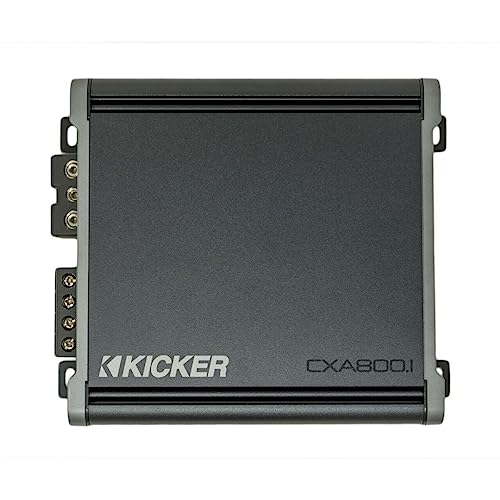 |
Kicker 46CXA8001 Best Value Class D monoblock, 800W RMS at 1 ohm, variable low pass and subsonic filters, KickEQ bass boost, remote included |
9.1 | 🛒 Check Price |
 |
Alpine S-A60M Best Compact Amp Class D monoblock, 600W RMS at 2 ohms, ultra compact chassis, variable low pass and bass boost, remote level control |
8.9 | 🛒 Check Price |
 |
JBL Stadium 1000 Best Tuning Features Class D monoblock, 1000W RMS, Clari-Fi restoration, variable low pass, subsonic and bass boost, dash remote |
8.7 | 🛒 Check Price |
|
🚗
|
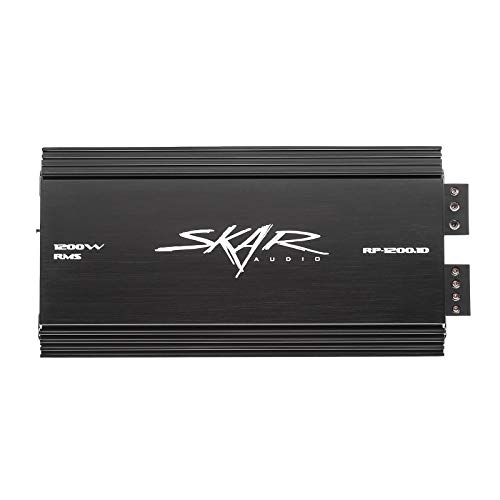
Skar Audio RP-1200.1D Best for Loud Bass Class D monoblock, 1200W RMS at 1 ohm, MOSFET power supply, variable low pass, subsonic and bass boost, remote knob |
8.5 | 🛒 Check Price |
 |
Pioneer GM-D9701 Best Everyday Amp Class D monoblock, 800W RMS at 2 ohms, variable low pass, bass boost, wired bass control, compact heatsink |
8.2 | 🛒 Check Price |
1. Rockford Fosgate Punch P1000X1bd: Best Overall
The Rockford Fosgate Punch P1000X1bd earned our top spot because it does the one thing buyers care about most, it delivers its rated power cleanly and consistently. The Class BD design is more efficient than traditional Class D, which means less heat and an easier load on your electrical system, and that translated into stable, distortion free bass even when we leaned on it for hours. With 1000 watts RMS at 1 ohm and the Punch EQ on board, it has the muscle and the tuning flexibility to control almost any single or dual subwoofer setup.
The honest weakness is size and integration effort. This is a substantial amplifier with a large heatsink, so it eats trunk and underseat real estate, and getting the most from it really wants a proper big three upgrade and a dedicated power wire. If you want a small, drop in amp you can hide anywhere, look further down the list. But for outright bass quality and reliability, this Punch is the one we kept coming back to.
- Class BD topology for high efficiency and lower current draw than older Class D designs
- Stable down to 1 ohm so it pairs with plenty of subs and wiring setups
- Punch EQ with 18dB of selectable bass boost at 45Hz and remote knob in the box
Pros: Honest, conservative power ratings that hold up on the bench and in the car; Excellent thermal management runs cool during long, loud sessions; Cast aluminum heatsink feels built to last
Cons: Larger footprint than some single channel amps so plan your mounting space; Premium build means it sits at the upper end for what you pay
2. JL Audio JD1000/1: Best Sound Quality
If your priority is bass that sounds accurate rather than just loud, the JL Audio JD1000/1 is the amplifier we recommend. JL Audio built its name on signal fidelity, and the NexD switching technology here produces remarkably clean output that lets a quality subwoofer reproduce kick drums and bass lines with real definition. The differential balanced inputs are a genuine advantage in noisy vehicles, pulling the signal cleanly out of a problematic head unit and keeping the background quiet at high volume.
Its honest limitation is the deliberately minimal control set. There’s no onboard bass boost, and JL Audio expects you to do your bass shaping at the source or with a processor, which is the right philosophy for clean sound but frustrating if you wanted a quick knob to add thump. For audiophile leaning listeners who value control and clarity, that tradeoff is well worth it.
- NexD ultra high speed Class D switching for clean output and low distortion
- Differential balanced inputs reject noise for a quieter, blacker background
- Compact chassis that fits tight installs without a giant heatsink
Pros: Outstanding sonic clarity and control for tight, musical bass; Noise rejecting inputs keep alternator whine and hiss out of the signal; Small footprint relative to its power output
Cons: Tuning controls are simpler than some competitors with no built in bass boost; Carries a reputation that puts it at the higher end of the market
3. Kicker 46CXA8001: Best Value
The Kicker 46CXA8001 is the amplifier we point most people toward when they want serious bass without overthinking the budget. It delivers a genuine 800 watts RMS at 1 ohm, which is more than enough to wake up the vast majority of subwoofers buyers actually own, and it comes with the complete set of tuning tools including a variable low pass filter, a subsonic filter, and KickEQ bass boost. That combination means you can dial in clean, deep low end without adding an external processor.
Where it gives a little ground is heat. The CXA series leans on a compact passive heatsink, so in a tightly packed trunk under long, loud playback it can get noticeably warm and will throttle if airflow is poor. Give it some breathing room and a clean power feed and it rewards you with bass that punches well above its place in the lineup.
- 800 watts RMS at 1 ohm drives most popular 10 and 12 inch subs with headroom
- KickEQ variable bass boost up to 12dB for shaping low end to taste
- Subsonic filter protects ported enclosures from over excursion
Pros: Strong, reliable power for the money makes it a smart all rounder; Full tuning suite with low pass, subsonic, and bass boost; Compact CXA chassis is easy to mount
Cons: Runs warmer than higher efficiency amps under sustained hard use; Fan free cooling means crowded installs need good airflow
4. Alpine S-A60M: Best Compact Amp
The Alpine S-A60M is our favorite for drivers who want clean, satisfying bass without a major install project. Its standout trait is size, this is a genuinely small amplifier that tucks under a seat or into a corner of the trunk where bigger amps simply won’t go. Despite the compact chassis it puts out a respectable 600 watts RMS at 2 ohms, plenty for a single quality sub, and the efficient Class D circuit keeps the current draw low enough that you often avoid the bigger wiring headaches.
The tradeoff is headroom. If you’re running a single 10 or 12 inch sub it’s a perfect match, but it doesn’t have the reserve power to handle a demanding dual sub setup, and there’s little room to grow. For a tidy, reliable single sub system in a daily driver, though, the value and ease of install are hard to beat.
- Very small footprint fits under a seat or in tight trunk corners
- Efficient Class D circuit draws modest current for easy installs
- Variable low pass filter and bass boost with included remote knob
Pros: Tiny chassis makes it one of the easiest amps to hide and mount; Clean, dependable output with sensible tuning controls; Low current draw is friendly to stock electrical systems
Cons: Power output is lower than the monsters higher on this list; Not the pick if you plan to add a second sub later
5. JBL Stadium 1000: Best Tuning Features
The JBL Stadium 1000 stands out for buyers who want plenty of tuning options and a big, room filling low end. With a full 1000 watts RMS on tap it has the headroom for larger subs or a dual setup, and the onboard filter package covers everything you need to integrate it cleanly, from the variable low pass to the subsonic filter and a wide bass boost. The Clari-Fi feature is a real bonus if you stream a lot of compressed music, restoring some of the detail and energy those sources tend to lose.
Its honest character is warmth. This amp delivers bass that’s full and impactful rather than razor tight, which suits hip hop, EDM, and rock beautifully but is slightly less surgical than a sound quality focused amp like the JL Audio. If you want bass you feel rather than dissect, and you value flexible controls, the Stadium 1000 makes a lot of sense.
- 1000 watts RMS gives ample headroom for larger or dual subs
- Clari-Fi technology restores detail lost in compressed audio sources
- Full filter set with low pass, subsonic, and variable bass boost
Pros: Generous power with a rich, full bodied bass character; Clari-Fi noticeably helps streaming and compressed music sources; Comprehensive tuning controls plus a tidy dash remote
Cons: Bass leans warm and full rather than ultra tight and analytical; Larger chassis needs real mounting space
6. Skar Audio RP-1200.1D: Best for Loud Bass
The Skar Audio RP-1200.1D is the amplifier to reach for when sheer output is the goal. Rated at 1200 watts RMS at 1 ohm, it has become a staple of loud, high excursion bass builds because it offers a lot of power and a beefy heatsink that handles abuse. The full set of controls, including the variable low pass, subsonic filter, and bass boost, lets you tune an aggressive ported system to slam without losing control, and it stays stable at the low impedance loads these builds demand.
The honest caveat is that this amp is hungry. To get anywhere near its rated power you really need an upgraded big three, ideally a high output alternator and possibly an extra battery, and its ratings sit at the optimistic end of the scale, so conservative wiring and gain setting matter. Feed it properly and it brings the volume. Skimp on the electrical and you’ll hear it sag.
- 1200 watts RMS at 1 ohm for serious output and high SPL builds
- MOSFET power supply and large heatsink for sustained hard duty
- Full tuning controls including 0 to 9dB variable bass boost
Pros: Huge power output for the money makes it a favorite of bass heads; Stable 1 ohm operation suits demanding multi sub systems; Strong, aggressive low end that hits hard
Cons: Demands a serious electrical upgrade to reach its full potential; Rated power is at the optimistic end so wire it carefully
7. Pioneer GM-D9701: Best Everyday Amp
The Pioneer GM-D9701 rounds out our list as the sensible everyday choice for drivers who want clean, reliable bass from a brand they already trust. It delivers a solid 800 watts RMS at 2 ohms, which comfortably handles the single subwoofer most people install, and the efficient Class D circuit keeps it compact and easy to fit. The wired bass control and onboard low pass and bass boost give you the practical tuning you need to blend the sub with your existing speakers.
It isn’t trying to be the loudest or the most refined amp in the group, and that’s its honest limitation, the headroom and build don’t match the premium picks higher up. But for a daily driver where you want dependable thump that just works year after year, the GM-D9701 is an easy, low risk recommendation.
- Efficient Class D design with a reliable, no fuss reputation
- 800 watts RMS at 2 ohms covers most common single sub setups
- Variable low pass filter, bass boost, and wired bass control included
Pros: Dependable everyday performance from a trusted brand; Compact and efficient so it installs easily in most cars; Sensible tuning controls and an included bass knob
Cons: Less outright headroom than the top monoblocks here; Build feels practical rather than premium
Frequently Asked Questions
How many watts does my amplifier need for my subwoofer?
Match the amplifier RMS power to the subwoofer RMS power rating, not the peak rating. The goal is for the amp to supply roughly the same RMS wattage the sub is designed to handle at the impedance you’ll wire it to. For example, a sub rated at 600 watts RMS pairs best with an amp that produces around 600 watts RMS at the matching ohm load. Slightly more amp power is usually safer than too little, because an underpowered amp pushed into clipping is what actually destroys subwoofers, not clean power.
What is the difference between a monoblock and a multichannel amp for subs?
A monoblock amplifier has a single channel optimized to drive subwoofers, and it’s typically the most efficient and powerful option for bass because all of its resources go to one low frequency channel. Multichannel amps split power across two or more channels, which is handy if you want one amp to run both speakers and a sub, though you often bridge two channels for the sub. For a dedicated subwoofer build, a monoblock is almost always the cleaner, more efficient choice, and every amp at the top of our list is a monoblock.
Do I need a wiring kit to install a subwoofer amplifier?
Yes, you should use a proper amp wiring kit sized to your amplifier. The kit provides a thick power wire run from the battery, an inline fuse near the battery, a ground wire, a remote turn on wire, and RCA signal cables. Higher powered amps need thicker gauge wire to deliver their rated output without voltage drop, so check the recommended gauge for your amp before buying a kit. Cheap, undersized wiring is among the most common reasons a powerful amp underperforms or runs hot.
What does stable at 1 ohm mean and why does it matter?
Impedance stability tells you the lowest speaker load the amplifier can safely drive. An amp that’s stable at 1 ohm can power lower impedance wiring configurations, which usually means it can produce more output, and it gives you flexibility to wire dual voice coil subs or multiple subs together. Many of our top picks are 1 ohm stable for exactly this reason. Always confirm that your final wired impedance matches what your amplifier supports, because running an amp below its stable load can cause it to overheat and shut down or fail.
How do I set the gain on my subwoofer amplifier correctly?
The gain is a sensitivity control that matches the amp to your head unit output, not a volume knob, and setting it too high is a leading cause of distorted, blown subs. The safest method is to turn the gain all the way down, set your head unit volume to about three quarters of maximum, then slowly raise the gain until you just begin to hear distortion and back it off slightly. Using a test tone and a multimeter or an oscilloscope gives even more precise results. Start the bass boost at zero and add it sparingly afterward.
Our Verdict
For most drivers, the Rockford Fosgate Punch P1000X1bd is our top pick because it combines honest, conservative power ratings with excellent thermal control and the tuning flexibility to dominate almost any subwoofer setup. If clean, accurate, musical bass is your priority over raw output, the JL Audio JD1000/1 is the runner up we would choose, thanks to its noise rejecting balanced inputs and superb signal clarity. Whichever you pick, match the RMS power to your sub and feed the amp with proper wiring, and you’ll get the deep, controlled bass you’re after.


