The 6.0 LS family (LQ4, LQ9, L76, L96) is one of the best foundations in the GM world for big, reliable power, but the factory cathedral and rectangle port heads run out of breath long before the short block does. Swapping to a good set of aftermarket cylinder heads is usually the single biggest bang for the effort, freeing up real airflow on a cam swap, a nitrous setup, or a forced induction build.
We dug through the heads people actually run on 6.0 truck engines, looked at port shape, valve sizing, CNC work, and combustion chamber volume, then ranked the seven that deliver the most usable power without nasty surprises on assembly. Whether you’re building a daily driver LQ4 or a boosted street car, there’s a head here that matches your goals. Always confirm bolt pattern, port type (cathedral versus rectangle), and pushrod length before you buy.
| Photo | Product | Score | Buy |
|---|---|---|---|
 |
Trick Flow GenX 225 LS Cylinder Heads (Cathedral Port) Best Overall Cathedral port, 225cc intake runner, 64cc chamber, fully CNC ported A356 aluminum |
9.5 |
ⓘ We may earn a commission from qualifying purchases made through links on this page, at no extra cost to you.
|
 |
Brian Tooley Racing (BTR) PRC 6.0 LS Cathedral Port Heads Best for Boost Cathedral port, CNC ported, 2.04/1.57 valves, available in multiple chamber sizes |
9.3 | 🛒 Check Price |
 |
Air Flow Research (AFR) 245 Mongoose LS Cylinder Heads Best Flow Cathedral port, 245cc runner, as-cast and CNC chamber, premium 6061 components |
9.2 | 🛒 Check Price |
 |
Dart Pro 1 LS Aluminum Cylinder Heads (Cathedral Port) Best Casting Quality Cathedral port, premium Dart casting, CNC ported, 2.040/1.575 valves |
9.0 | 🛒 Check Price |
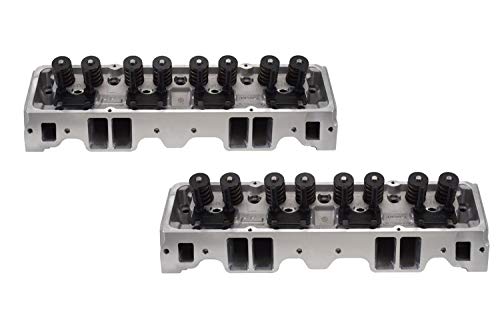 |
Edelbrock E-CNC 215 LS Cylinder Heads Best Street Manners Cathedral port, 215cc CNC runner, 70cc chamber, complete assembled head |
8.8 | 🛒 Check Price |
|
🚗
|
ProMaxx Performance Maxx Series LS Cathedral Port Heads Best Value Cathedral port, as-cast or CNC options, 2.02/1.57 valves, assembled |
8.5 | 🛒 Check Price |
|
Speedmaster LS Cathedral Port Aluminum Cylinder Heads Best Budget Pick Cathedral port, as-cast aluminum, assembled, 2.02/1.57 valves, 64cc chamber |
8.0 | 🛒 Check Price |
1. Trick Flow GenX 225 LS Cylinder Heads (Cathedral Port): Best Overall
The Trick Flow GenX 225 is the head we point most 6.0 builders toward because it nails the balance the cathedral port platform needs. The 225cc runners and CNC chamber work move serious air without going so big that you lose the fat low-end torque that makes a 6.0 fun to drive. They arrive fully assembled with quality springs, hardened seats, and bronze guides, so you bolt them on, set your pushrod length, and go. On a cammed LQ4 these wake the engine up dramatically and they take well to nitrous and mild boost.
The honest weakness is that this isn’t a no-homework head. The 64cc chambers raise compression, which is great for power but means you must verify piston-to-valve clearance and quench on an aggressive cam, and the taller runners can demand a non-stock pushrod length. Budget a little extra setup time and a pushrod length checker. Do that and these reward you with the most complete, drama-free power gain on this list, which is exactly why they take the top spot.
- 225cc CNC ported intake runners that bolt straight onto cathedral port 6.0 blocks
- 2.040 in intake and 1.575 in exhaust valves with hardened seats and guides
- 64cc combustion chambers for a strong static compression bump on LQ4 and L96
Pros: Excellent out of the box flow with no extra port work needed; Complete assembled package saves hours of machine shop time; Proven on cammed truck and street builds for big mid-range torque
Cons: Larger chambers and tall runners can require valvetrain and pushrod checks; Heavier port volume can soften low-rpm response on a stock cam
2. Brian Tooley Racing (BTR) PRC 6.0 LS Cathedral Port Heads: Best for Boost
If your 6.0 is headed for a turbo or supercharger, the BTR PRC cathedral port heads are the ones the boost crowd keeps coming back to. The Precision Race Components casting is thick and stable, and BTR’s CNC program pushes excellent airflow on both the intake and exhaust side, which is exactly what a forced induction engine wants on the way out. Because they’re offered in several chamber sizes, you can keep compression sensible for boost or run a tighter chamber for a snappy naturally aspirated combo. The available high lift spring packages mean you aren’t fighting valve float on a big cam.
The catch is that these are tuned toward making power, so a very aggressive port and spring combo can feel slightly busier at idle and light throttle than a softer street head. They also require more decisions at checkout, since you pick chamber volume and spring rate to match your build. For a knowledgeable builder that flexibility is a feature, but a first timer should call BTR or lean on a tuner to spec them correctly. Get it right and these are a genuine top-tier boost head.
- Precision Race Components casting with aggressive CNC port and chamber work
- Offered in several chamber volumes to dial in compression for boost or N/A
- Upgraded spring packages available to support high lift cams
Pros: Outstanding flow numbers that shine under boost and nitrous; Flexible chamber options let you target your exact compression ratio; Strong, consistent castings with a great reputation in the LS community
Cons: Aggressive porting can trade a little street manners for top-end power; Spring and chamber choices make ordering more involved than a one-size head
3. Air Flow Research (AFR) 245 Mongoose LS Cylinder Heads: Best Flow
AFR built its name on flow, and the 245 Mongoose lives up to it on a 6.0 LS. The large 245cc runners and refined Mongoose port shape deliver some of the best airflow numbers you can get from a cathedral port casting, and the quality of the valves, springs, and retainers means these heads keep breathing cleanly at the top of the rev range where lesser heads fall off. On a stout cam, a 6.0 with these heads pulls hard and keeps pulling, making them a favorite for high-rpm street and strip combos that still need to drive home.
The trade-off is twofold. First, AFR sits at the premium end of the market, so you’re paying for that engineering and finish quality. Second, the 245cc runners are genuinely large, and on a mild build with a near-stock cam you won’t use all that flow, which can blunt low-speed crispness. Match these to a real camshaft and a free-flowing exhaust and they’re spectacular. Pair them with a sleepy combo and you leave their best on the table.
- 245cc Mongoose runner design with class leading airflow
- High quality valves, retainers, and locks for high rpm durability
- Multiple chamber and spring options to suit street or race
Pros: Some of the highest flow figures available for a cathedral port head; Top-shelf valvetrain hardware that handles aggressive cams; Holds power up high without giving away usable street torque
Cons: Premium pricing tier relative to budget castings; 245cc runners are more head than a mild stock-cam build needs
4. Dart Pro 1 LS Aluminum Cylinder Heads (Cathedral Port): Best Casting Quality
Dart has a deserved reputation for building the toughest cylinder heads in the business, and the Pro 1 LS carries that DNA to the 6.0 platform. These castings are noticeably beefier than most, with extra material where high cylinder pressure tries to crack lesser heads, which makes them a smart pick if you’re chasing serious boost or a heavy nitrous shot. The CNC port and chamber work is clean and consistent, so you get repeatable flow and a quality valvetrain that holds up to abuse. For a power-adder 6.0 that needs to live, the structural confidence here’s hard to beat.
That strength is also the main reason not everyone needs them. The solid casting and premium components put the Pro 1 at the upper end of the price ladder, and on a mild naturally aspirated 6.0 the extra durability is capability you’ll never tap into. There’s nothing wrong with the airflow, but you’re buying these primarily for the bulletproof casting, not a flow advantage over the AFR or BTR heads. For a hard-used boosted build they’re worth every minute of the install.
- Heavy duty Dart casting with extra material in critical areas
- CNC ported runners and chambers for strong, repeatable flow
- Designed to handle high cylinder pressure from boost and nitrous
Pros: Among the strongest castings on the market for high power builds; Consistent, repeatable porting from head to head; Backed by Dart's long track record in performance heads
Cons: Premium price for the extra casting strength; Overkill for a basic naturally aspirated daily build
5. Edelbrock E-CNC 215 LS Cylinder Heads: Best Street Manners
Not every 6.0 build is a race car, and the Edelbrock E-CNC 215 is the head for the people who actually drive their truck. The 215cc CNC runners are sized for excellent low and mid-range torque, which is exactly what you want for a daily driver, a tow rig, or a cruiser that needs to feel strong off idle rather than scream at 7000 rpm. The 70cc chambers keep compression sensible on pump gas, so you can run a streetable cam without detonation headaches. They come fully assembled with good hardware, and Edelbrock’s fit and support make them an easy, low-stress install.
The honest limitation is right there in the runner size. At 215cc these are the smallest-port performance head on our list, and that means they sign off on top-end power earlier than the 225cc and 245cc options. If you’re building a high-rpm screamer, you’ll eventually want more head. But for the huge number of 6.0 owners who want a torquey, dependable street engine that pulls hard where they actually use it, the E-CNC 215 is the smart, drama-free choice.
- 215cc fully CNC ported runners tuned for street response
- 70cc chambers keep compression friendly on pump fuel builds
- Assembled with quality springs and seals ready to install
Pros: Great low and mid range torque for daily and towing use; Friendly chamber size that plays nice with stock compression; Trusted Edelbrock fit, finish, and support
Cons: 215cc runners give up some top-end to the bigger heads here; Not the choice if peak rpm horsepower is your only goal
6. ProMaxx Performance Maxx Series LS Cathedral Port Heads: Best Value
For the builder who wants a real flow gain without spending like a race team, ProMaxx Maxx Series heads are a smart middle ground. They flow noticeably better than the factory 6.0 cathedral port castings, come assembled with usable springs, and are offered in both as-cast and CNC versions so you can scale the investment to your goals. On a typical cam-and-bolt-ons 6.0, these wake the engine up and deliver a satisfying, repeatable gain that punches above their place on the price ladder. For a first head swap or a value-focused build, they make a lot of sense.
The reality check is that you aren’t getting the same fit, finish, and head-to-head consistency as the premium brands. The castings are good, but quality control and surface finish sit a notch below AFR, Dart, or Trick Flow, and if you plan a high-lift cam you should plan on verifying or upgrading the springs. None of that’s a deal breaker for a sensible street build, but go in knowing these are a value play rather than a no-compromise race head. Judged on what they cost to do, they earn their value badge.
- Strong flowing as-cast and CNC options at an accessible tier
- Assembled heads ready to bolt on with quality springs
- Good upgrade over factory castings for the effort involved
Pros: Excellent power per dollar for budget conscious builds; Solid flow gains over stock 6.0 heads; Available assembled to save shop labor
Cons: Finish and consistency not quite at the premium brand level; May want a spring upgrade for very aggressive cams
7. Speedmaster LS Cathedral Port Aluminum Cylinder Heads: Best Budget Pick
When the budget is tight but you still want aluminum heads on your 6.0, Speedmaster gives you a complete, assembled option at the entry point of the market. They ship with valves, springs, and seals installed, the 64cc chambers give you a useful compression bump over big stock truck chambers, and switching from heavy iron truck heads to aluminum sheds real weight off the front of the engine. For a budget cruiser or a low-buck swap where the goal is better-than-stock breathing without a big outlay, they get the job done.
You do need to go in with clear eyes. The flow numbers, surface finish, and overall consistency are a clear step below the premium castings, and Speedmaster’s quality control can vary unit to unit, so it’s wise to inspect the heads, check the valve job, and verify spring pressures before bolting them on. They aren’t the head for a serious power-adder build. But for an honest budget swap where you simply want light, decent-flowing aluminum heads on a daily 6.0, they earn their place as the value floor of this list.
- Affordable assembled aluminum heads for the cathedral port 6.0
- 64cc chambers for a compression bump over larger stock chambers
- Includes valves, springs, and seals out of the box
Pros: Lowest barrier to entry for a complete aluminum head swap; Drops weight versus heavy iron truck castings; Assembled package gets a budget build running quickly
Cons: Flow and finish trail the premium brands by a clear margin; Quality control varies, so inspection before install is wise
Frequently Asked Questions
Do I need cathedral port or rectangle port heads for my 6.0 LS?
The vast majority of 6.0 truck engines (LQ4, LQ9, L76, L96) use cathedral port heads from the factory, so cathedral port aftermarket heads bolt right on and match your stock cathedral port intake manifold. Rectangle port heads, like the LS3 and LS7 style, flow more but require a rectangle port intake and different gaskets, which turns a simple head swap into a bigger parts swap. Unless you’re specifically building a high-rpm combo and switching to a rectangle port intake, stick with cathedral port heads to keep the install straightforward and your existing intake usable.
How much horsepower will aftermarket heads add to a 6.0 LS?
Heads alone on an otherwise stock 6.0 might add a modest amount, but their real value shows up when paired with a camshaft and supporting parts. A good set of CNC ported cathedral port heads with a matched cam, headers, and a tune commonly lifts a 6.0 well into the high 400s or beyond at the crank on a naturally aspirated street build, and far more under boost or nitrous. The exact number depends on your cam, compression, exhaust, and tune, but the heads are the part that lets everything else breathe, so they unlock gains the rest of your combo can’t make on their own.
Will I need new pushrods when I install aftermarket heads?
Very often, yes. Aftermarket heads frequently have milled chambers, different deck thicknesses, or taller runners that change the geometry between the lifter and the rocker, which moves your required pushrod length away from stock. The correct way to handle this is to use an adjustable pushrod length checker after the heads are torqued down, measure for proper rocker tip pattern and lifter preload, and then order pushrods to that exact length. Don’t assume stock pushrods will work. Getting pushrod length right protects your valvetrain and is a non-negotiable step on any head swap.
What combustion chamber size should I choose for my 6.0 LS?
Chamber size sets your static compression ratio, so it matters a lot. Smaller chambers, around 64cc, raise compression and make great power on pump gas for a naturally aspirated build, which is why many street heads use them. Larger chambers, around 70cc and up, lower compression, which is what you want for a forced induction or heavy nitrous setup to keep cylinder pressure and detonation in check. Calculate your target compression with your specific pistons and head gasket before choosing, and if you’re running boost, err toward the larger chamber to stay safe.
Can I install aftermarket cylinder heads myself or should a shop do it?
A mechanically confident DIYer with a torque wrench, a pushrod length checker, and a service manual can absolutely do a 6.0 head swap in a home garage, and many people do. The work is methodical rather than exotic: clean decks, new head gaskets, proper torque-to-yaw sequence on the head bolts, correct pushrod length, and a careful valvetrain setup. Still, if you’re running an aggressive cam, chasing tight piston-to-valve clearance, or building for serious power, having a shop verify clearances and do the final assembly is cheap insurance. And no matter who installs them, the engine needs a proper tune afterward.
Our Verdict
For most 6.0 LS builds, the Trick Flow GenX 225 is our top pick because it delivers the best blend of strong airflow, fat mid-range torque, and a complete, ready-to-bolt-on package without forcing you to chase down extra parts. If your engine is headed for boost, the BTR PRC cathedral port heads are the runner up and arguably the better choice once a turbo or supercharger enters the picture, thanks to their stout casting, flexible chamber options, and proven track record under pressure. Match your head to your real combo, get your pushrod length and compression right, and a 6.0 LS will reward you with the kind of power this platform is famous for.


