A piece of exterior trim flapping in the wind on the highway is one of those small annoyances that quickly turns into a real problem. The wrong glue lets go after the first hot afternoon or the first automatic car wash, and you’re right back where you started. Picking an adhesive built for automotive bonding, surface temperature swings, and constant vibration is the difference between a fix that lasts a week and one that lasts for years.
We looked at the products body shops and trim installers actually reach for, then judged them on bond strength, weather resistance, how forgiving they’re to work with, and how well they handle the plastics and painted metal you find on modern cars. Below are seven adhesives that hold exterior molding, side trim, emblems, and chrome strips through real-world abuse, ranked best first.
| Photo | Product | Score | Buy |
|---|---|---|---|
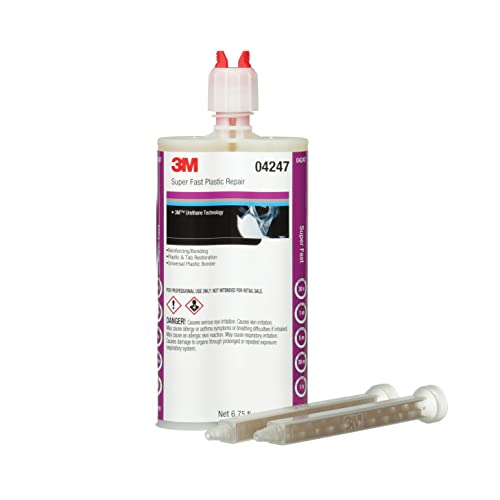 |
3M Super Fast Plastic Adhesive (08010) Best Overall Two-part cyanoacrylate, 15 second handling time, bonds plastic and painted metal |
9.5 |
ⓘ We may earn a commission from qualifying purchases made through links on this page, at no extra cost to you.
|
 |
3M Molding Tape (06383) Best Tape for Molding Acrylic foam double-sided tape, 1/2 inch wide, weather and UV resistant |
9.3 | 🛒 Check Price |
 |
Loctite Plastics Bonding System (681925) Best for Hard Plastics Two-part super glue with activator pen, bonds polypropylene and polyethylene |
9.1 | 🛒 Check Price |
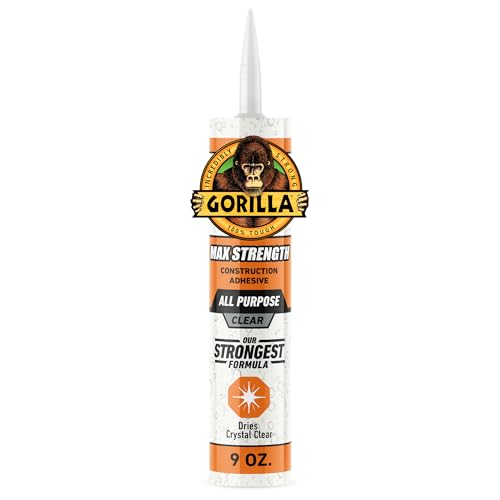 |
Gorilla Heavy Duty Construction Adhesive Best All-Weather Hold Clear hybrid adhesive, paintable, water resistant, indoor and outdoor rated |
8.9 | 🛒 Check Price |
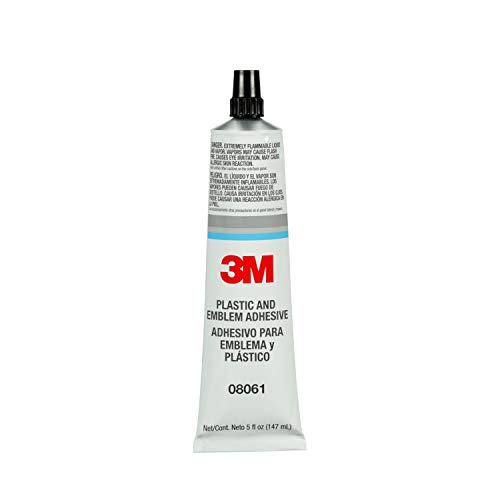 |
3M Emblem and Trim Adhesive (08061) Best for Emblems Black urethane adhesive, flexible bond, weather and temperature resistant |
8.7 | 🛒 Check Price |
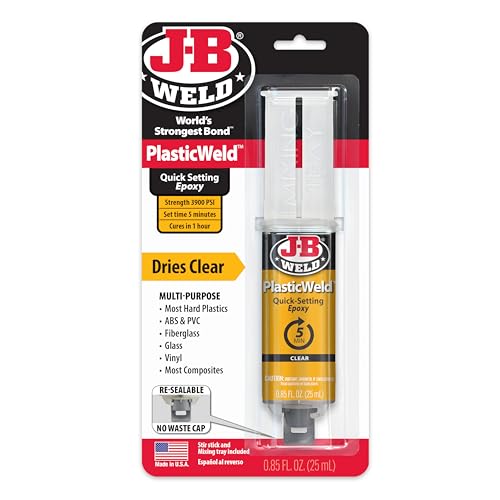 |
J-B Weld PlasticWeld Syringe (50132) Best Epoxy Option Two-part epoxy syringe, 5 minute set, bonds plastic, metal, and fiberglass |
8.4 | 🛒 Check Price |
 |
Permatex Black Plastic Welder (84115) Best Value Pick Two-part black epoxy, 15 minute set, flexible bond for plastic trim |
8.1 | 🛒 Check Price |
1. 3M Super Fast Plastic Adhesive (08010): Best Overall
This is the adhesive that pros pull out when a piece of trim absolutely can’t come back off. The two-part design lets you apply activator to one surface and adhesive to the other, then press them together for a bond that grabs almost instantly and cures into something genuinely structural. On TPO bumper trim, ABS molding, and painted metal strips it held everything we threw at it, including a deliberate try to peel pieces back by hand.
The honest weakness here’s the learning curve. With a handling time measured in seconds, you don’t get to reposition a strip of molding once it touches down, so dry fitting and marking your placement first is mandatory. Rush it and you’ll bond a piece crooked with no easy way back. For confident installers this speed is the whole point, but a first timer should practice on scrap before committing to a visible panel.
- Two-part system bonds flexible and rigid plastics in seconds
- Works on TPO, ABS, and painted sheet metal trim
- Sets fast enough to hold trim without long clamping
Pros: Extremely strong structural bond on automotive plastics; Very fast set time so trim stays put while you work; Trusted by professional body shops
Cons: Short working time punishes mistakes; Bottle nozzle can clog if not capped quickly
2. 3M Molding Tape (06383): Best Tape for Molding
For long runs of side molding and body side trim, double-sided foam tape is often the right tool over liquid glue, and this is the tape most installers reach for. The acrylic foam core does double duty by bonding the piece and cushioning it against constant road vibration, which is exactly what kills cheaper tapes over time. It conforms to gently curved panels and fills the tiny gaps that rigid trim leaves behind, so the bond is even across the whole length.
Its limitation is mass. The foam is fantastic for flat or lightly curved molding, but a heavy chrome strip or a thick piece of trim can exceed what tape alone should carry, and a few of those cases really want a mechanical clip backing it up. You also need a warm surface and genuine clamping pressure during install, because applying it cold or with a light press leaves the bond well below its potential. Treat those two rules seriously and it lasts the life of the panel.
- Acrylic Plus foam core absorbs vibration and road shock
- Conformable foam fills small gaps on curved trim
- Designed specifically for side molding and body side trim
Pros: Clean install with no liquid mess or runs; Excellent long term hold through heat and cold cycling; Forgiving enough to position before full bond sets
Cons: Needs firm pressure and warm surfaces to reach full strength; Not ideal for heavy or thick trim pieces
3. Loctite Plastics Bonding System (681925): Best for Hard Plastics
Modern car trim is often molded from polypropylene or polyethylene, two plastics that shrug off standard glue because nothing wants to stick to them. This kit solves that with an activator pen you swipe across the surface first, which primes the plastic so the included super glue can finally grab. For small clips, tabs, and lightweight trim pieces made of these stubborn materials, it bonds in seconds and holds well in everyday driving.
The catch is in the chemistry. A cyanoacrylate bond is rigid by nature, so on a piece of trim that flexes repeatedly the bond line can become brittle and eventually crack rather than stretch with the part. It’s brilliant for rigid joints and small repairs, less ideal for long flexible molding that bends every time you wash the car. We also found the activator pen empties well before the glue tube does, so plan to use it sparingly.
- Activator pen primes hard to bond plastics first
- Bonds polypropylene and polyethylene that normal glue ignores
- Sets in seconds with no clamping for most parts
Pros: Handles plastics that defeat ordinary cyanoacrylate; Activator pen plus glue combo is easy to apply accurately; Quick set keeps small trim pieces in place
Cons: Activator pen runs out faster than the glue; Bond line can be brittle under flexing
4. Gorilla Heavy Duty Construction Adhesive: Best All-Weather Hold
When a piece of trim has an uneven backing or a gap to bridge, a thick gap filling adhesive often beats a thin glue, and this clear formula handles that job well outdoors. The strong initial tack means most trim stays put without elaborate clamping, and because it dries clear any small amount of squeeze out at the edges is far less obvious than a white or amber glue would be. It shrugs off rain and car washes once cured.
The trade off with a thick adhesive is mess and patience. Lay too heavy a bead and it’ll ooze out from behind the trim when you press it down, so masking the edges and wiping promptly saves a headache later. It also wants real cure time before the bond reaches full strength, which means leaving the car parked rather than driving off immediately. For curved or imperfect surfaces, that extra effort buys a hold that simpler glues can’t match.
- Dries clear so squeeze out is less visible
- Strong initial grab reduces the need for long clamping
- Water resistant formula stands up to rain and washing
Pros: Gap filling body holds uneven or curved trim; Dries clear for cleaner looking edges; Strong grab on many materials
Cons: Thicker bead can squeeze out and need cleanup; Full cure takes longer than instant glues
5. 3M Emblem and Trim Adhesive (08061): Best for Emblems
Reattaching a badge or nameplate is a different problem from gluing long molding, and this urethane adhesive is tuned for exactly that. Unlike a rigid super glue, it stays flexible after curing, so when the panel heats up, cools down, and vibrates on the road the bond flexes along with it instead of snapping. That flexibility is why emblems set with it tend to stay on for years rather than popping off the next hot summer.
Because it’s black, you do want to keep it tidy on light colored or chrome emblems where any squeeze out would show against the paint. It also sets slower than instant glues, which is actually helpful for positioning but means you should tape the emblem in place while it cures rather than trying to hold it by hand. For its intended job of badges, nameplates, and small trim, it’s hard to beat.
- Flexible urethane moves with the panel instead of cracking
- Black color hides behind emblems and dark trim
- Holds badges and nameplates through heat and washing
Pros: Stays flexible so vibration doesn’t crack the bond; Purpose built for emblems and small nameplates; Handles temperature swings without letting go
Cons: Black color shows if it squeezes past light trim; Slower set means emblems need taping in place
6. J-B Weld PlasticWeld Syringe (50132): Best Epoxy Option
Sometimes a piece of trim is also cracked or has a mounting tab broken off, and that’s where an epoxy earns its place over a simple adhesive. The dual syringe doses equal parts of resin and hardener so the mix ratio is right every time, and within about five minutes you have a hard setting bond that grips plastic, metal, and fiberglass. Because it cures rigid and fills voids, you can rebuild a broken trim clip and then bond it back in one go, and the cured material sands and paints cleanly.
That same rigidity is the reason it isn’t our pick for long flexible molding. A part that bends repeatedly will eventually stress a hard epoxy joint until it cracks, so reserve this for rigid repairs and structural rebuilds rather than flexible strips. The five minute working window also moves quickly, so have your parts dry fitted and your surfaces cleaned before you press the plunger.
- Dual syringe dispenses equal parts for an even mix
- Sets in about five minutes and cures hard
- Bonds plastic, metal, and fiberglass trim alike
Pros: Strong rigid bond that fills cracks and gaps; Bonds dissimilar materials like plastic to metal; Sandable and paintable once fully cured
Cons: Rigid cure isn’t ideal for flexible trim; Mixing and timing the five minute window takes care
7. Permatex Black Plastic Welder (84115): Best Value Pick
For dark plastic trim and bumper covers, this two-part black epoxy is a smart choice because the cured color blends in instead of standing out as a pale repair line. Permatex tuned it to stay slightly flexible rather than rock hard, which is a meaningful advantage on bumper trim that takes minor knocks and flexes with the panel. It bonds and repairs at the same time, so a trim piece that’s both loose and lightly cracked can be handled in one step.
The longer fifteen minute set time is a double edged feature. It gives you a generous window to position the part, but it also means you need to clamp or tape the trim and wait, rather than walking away in a couple of minutes. And as the name suggests, the black color is perfect for dark trim yet a poor match for light or chrome pieces where it would be visible. Within its lane of dark plastic, it delivers strong results without fuss.
- Black color blends with dark trim and bumpers
- Slightly flexible cure tolerates some panel movement
- Bonds and repairs plastic trim, bumpers, and panels
Pros: Black finish hides repairs on dark plastic; More flexible than typical rigid epoxy; Strong bond suited to bumpers and trim
Cons: Fifteen minute set means longer clamping; Color only suits dark trim, not light surfaces
Frequently Asked Questions
What is the best adhesive for exterior car trim?
For most exterior trim jobs, a purpose built automotive adhesive like the 3M Super Fast Plastic Adhesive gives the strongest, most durable bond because it’s formulated for the plastics and painted metal cars are made of and it resists heat, cold, and vibration. For long side molding specifically, 3M automotive molding tape is often a cleaner and equally lasting choice. The right pick depends on the trim: fast structural glue for permanent bonds, foam tape for molding, flexible urethane for emblems, and epoxy for pieces that are also cracked.
Will trim adhesive survive a car wash and hot weather?
Yes, as long as you choose an adhesive rated for automotive exterior use and you let it fully cure before exposing it to water or heat. Products like the 3M tape and emblem adhesive are engineered to handle the temperature swings of a sun baked panel and the pressure of an automatic car wash. The common failure isn’t the product but rushing it: many adhesives need 24 to 72 hours to reach full strength, so washing the car the same day you bond the trim is the fastest way to make it let go.
How do I prep the surface before gluing car trim?
Surface prep matters more than the glue itself. Clean both the trim and the body with isopropyl alcohol or a dedicated adhesion promoter to remove wax, grease, road grime, and old adhesive residue, then let it dry completely. Old tape or glue must be scraped and cleaned off down to clean paint or plastic, because new adhesive bonds to whatever is on the surface, not the panel underneath. For best results, work on a warm surface around room temperature, since cold panels weaken almost every adhesive bond.
Should I use glue or double-sided tape for car trim?
It depends on the trim. Long flat or curved molding is usually best with automotive double-sided foam tape because the foam absorbs road vibration and the install is clean with no liquid mess. Heavy pieces, emblems, broken tabs, and trim on irregular surfaces are better served by a liquid adhesive or epoxy that can fill gaps and create a stronger structural hold. Many quality installs actually use both, with tape for the run of the molding and a dab of adhesive at the high stress ends.
How long does car trim adhesive take to cure?
It varies widely by product. Fast cyanoacrylate adhesives grab in seconds and reach handling strength almost immediately, while five minute epoxies are workable in minutes but want a few hours to harden fully. Foam tapes hold right away but build to full bond strength over 24 to 72 hours as the acrylic flows into the surface. Whatever you use, read the label and avoid washing, driving in heavy rain, or stressing the trim until the full cure time has passed, since early strength is only a fraction of final strength.
Our Verdict
Our top pick is the 3M Super Fast Plastic Adhesive for its genuinely structural, fast setting bond on the plastics and painted metal that make up modern car trim, as long as you’re comfortable with its quick working time. If you’re bonding long side molding or want a cleaner, more forgiving install, the 3M automotive molding tape is the runner up and the better everyday choice, pairing strong all weather hold with vibration cushioning and a mess free application. Match the adhesive to the trim, prep the surface properly, and respect the cure time, and any of these will keep your trim where it belongs.


