A carpet or poly dash cover only looks good when it lies flat. The trouble starts at the edges, where the windshield base, the defroster vents, and the curved corners all want to lift the moment your dash bakes in summer sun. The wrong glue either fails in the heat, oozes out and stains the fabric, or grabs so hard you can never reposition the cover. The right adhesive disappears under the carpet and just holds.
We looked at the products owners actually reach for when a dash cover starts peeling, from automotive trim adhesives built for headliners and door panels to repositionable sprays and gel super glues for spot fixes around vents. Below are seven options that bond carpet-backed and molded dash covers cleanly, survive the temperature swings inside a parked car, and let you work without ruining the fabric.
| Photo | Product | Score | Buy |
|---|---|---|---|
 |
3M Super 77 Multipurpose Spray Adhesive Best Overall Aerosol spray, fast tack, bonds carpet and foam to plastic and metal |
9.5 |
ⓘ We may earn a commission from qualifying purchases made through links on this page, at no extra cost to you.
|
 |
3M Headliner and Fabric Adhesive 38808 Best for Heat Resistance High-temp aerosol formulated for automotive interior fabric and foam |
9.3 | 🛒 Check Price |
 |
Gorilla Heavy Duty Spray Adhesive Strongest Bond Aerosol contact adhesive with adjustable nozzle and strong permanent bond |
9.1 | 🛒 Check Price |
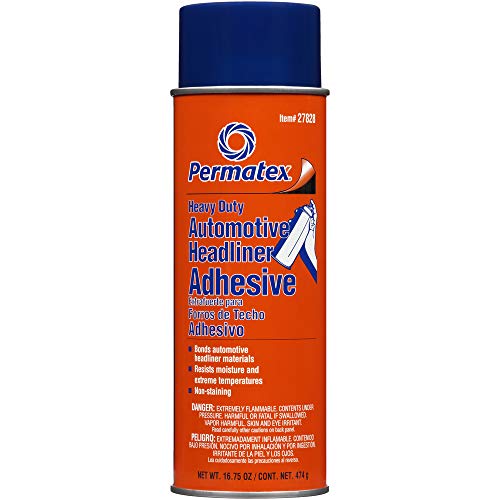 |
Permatex 27828 Body Shop Heavy Duty Headliner Adhesive Best Trim Adhesive High-temperature aerosol trim adhesive for interior fabric and panels |
8.9 | 🛒 Check Price |
 |
Loctite Vinyl Fabric and Plastic Flexible Adhesive Best for Edge Repairs Clear flexible brush-on glue for fabric, vinyl, and plastic bonding |
8.7 | 🛒 Check Price |
 |
Gorilla Super Glue Gel Best for Quick Spot Fixes No-run cyanoacrylate gel for fast pinpoint bonds on small areas |
8.4 | 🛒 Check Price |
|
3M General Purpose 45 Spray Adhesive Best for Repositioning Light-tack aerosol spray with a more forgiving repositionable bond |
8.2 | 🛒 Check Price |
1. 3M Super 77 Multipurpose Spray Adhesive: Best Overall
If you want one adhesive that handles the whole dash cover job, Super 77 is the default for a reason. The light, fast mist lets you coat both the cover backing and the dash surface, wait a moment for tack, then lay the cover down and smooth it from the center out. It bites firmly enough to keep edges and corners flat, which is exactly where cheaper sprays let go. Around the defroster vents and the windshield base, where heat is highest, the cured bond stays put rather than peeling back into a lifted ridge.
The honest weakness is overspray and working time. The mist drifts, so you really do need to mask the glass, the gauge cluster, and the console before you spray, or you’ll spend an afternoon cleaning haze off plastic. Tack also comes fast, which is great for edges but unforgiving on a full molded cover, since you get only a brief window to slide it into position. Spray light coats, line the cover up before you commit, and it rewards you with a clean, permanent hold.
- Fast-drying mist that tacks in seconds and lets you smooth the cover before it sets
- Bonds carpet-backed and foam-backed dash covers to plastic, vinyl, and metal dashes
- Wide spray pattern covers large flat dash areas evenly without heavy puddles
Pros: Even, low-soak mist that won’t bleed through carpet fabric; Strong permanent bond once cured, holds edges down through heat; Familiar, widely trusted formula for trim and upholstery work
Cons: Overspray drifts, so you must mask the windshield and console; Grabs quickly, leaving little room to reposition large panels
2. 3M Headliner and Fabric Adhesive 38808: Best for Heat Resistance
A dash sits in the hottest, most sun-blasted part of the cabin, so an adhesive made for headliners is a smart match for a dash cover. The 38808 formula is tuned to stay bonded when interior temperatures climb, which is the exact failure mode that ruins lesser glues, where the bond softens midsummer and the cover starts to bubble. It lays down a controlled fan of adhesive that grips fabric and foam backing firmly while staying off the show side of the carpet.
The catch is patience. Heat-resistant interior adhesives reach their full strength after curing, so if you glue a cover down and immediately park in direct sun, you can stress the bond before it has set. Give it the cure time the can specifies, ideally working in shade or a garage, and the payoff is a dash cover that stays flat through the worst of summer instead of lifting at the vents within a week.
- Engineered for interior cabin heat, designed to resist softening on hot days
- Bonds fabric and foam-backed covers without soaking through to the surface
- Controlled aerosol fan reduces drift compared with general-purpose sprays
Pros: Built specifically for the heat load inside a parked car; Holds carpet and foam dash covers without telegraphing glue lines; Trusted by interior trim shops for headliner-grade adhesion
Cons: Needs a full cure before exposure to peak heat for best results
3. Gorilla Heavy Duty Spray Adhesive: Strongest Bond
When a dash cover keeps lifting no matter what you try, Gorilla’s heavy duty spray brings the muscle. The adjustable nozzle is the standout, letting you narrow the pattern to a tight line for the windshield edge and corners, then widen it for the broad center of the dash. The bond is genuinely strong and moisture resistant, so a cover that has fought you for months finally stays down, including at the stubborn defroster lip where heat and curvature work against you.
That strength is also the trade-off. This is a serious contact adhesive, so the moment the cover touches glued surface, it grabs and you’re committed. There’s essentially no sliding it into place afterward, which means careful alignment is mandatory before contact. Apply light, even coats too, because the formula is thick enough to wick into thin carpet if you lay it on heavy. Treat it as a one-shot placement and it delivers the most tenacious hold on this list.
- Adjustable nozzle dials spray from a narrow line to a wide fan
- Strong, moisture-resistant permanent bond for fabric and foam backing
- Clear formula dries without yellowing on light-colored carpet covers
Pros: Very aggressive grip that locks down stubborn lifting edges; Adjustable spray width gives control around vents and corners; Dries clear so it won’t discolor the cover
Cons: Aggressive tack makes repositioning nearly impossible once placed; Heavier application can soak thin fabric if you overspray
4. Permatex 27828 Body Shop Heavy Duty Headliner Adhesive: Best Trim Adhesive
Permatex’s body shop headliner adhesive is a tradesman favorite for soft trim, and a dash cover is squarely in its wheelhouse. It sprays tacky and gives you a brief repositionable window, which is exactly what you want on a molded cover that has to line up around the gauge cluster and air vents. Once it grabs, the high-temperature formula keeps fabric and foam anchored under the kind of heat that builds on a dash behind glass.
The downsides are the usual aerosol ones, amplified. The spray pattern is broad and the solvent smell is strong, so this is a windows-down, mask-everything job rather than a quick spritz. Plan your masking before you press the nozzle, give the cabin air, and you get a confident, shop-grade bond that handles the dash, and any headliner sag you want to fix while you’re in there.
- High-temperature formula aimed at interior headliner and trim work
- Tacky, repositionable window before it reaches full strength
- Bonds fabric, foam, vinyl, and carpet to interior surfaces
Pros: Short repositionable window helps you align before final set; High-temp design suited to dash and headliner conditions; Multi-purpose across the soft trim materials a dash cover uses
Cons: Spray pattern is broad, so masking nearby areas is a must; Strong solvent odor calls for good ventilation while you work
5. Loctite Vinyl Fabric and Plastic Flexible Adhesive: Best for Edge Repairs
Not every dash cover problem needs a full re-glue. Often it’s one lifted corner near the A-pillar or a curling edge at the windshield base, and that’s where Loctite’s vinyl, fabric, and plastic adhesive shines. You squeeze a precise bead exactly where you need it, press, and the clear, flexible cure holds without the mess of an aerosol. Because it stays flexible, the bonded edge moves with the cover as the dash heats and cools instead of going brittle and popping loose again.
It isn’t the tool for laying down an entire molded cover. Bonding a large surface bead by bead would take forever and never coat evenly, so reach for a spray for that job. For targeted edge and corner repairs, though, the controlled application, clear finish, and crack-resistant flexibility make it the cleanest fix on the list, with no masking and no overspray to clean up afterward.
- Stays flexible after curing so bonded edges move without cracking
- Dries clear and waterproof for clean, invisible spot repairs
- Precise tube application targets lifted edges and corners only
Pros: Flexible cure that won’t crack as the cover flexes with heat; Clear, waterproof, and tidy for visible edge fixes; Pinpoint control with no overspray to mask against
Cons: Tube application is too slow for bonding a whole large cover; Best suited to spot repairs rather than full installs
6. Gorilla Super Glue Gel: Best for Quick Spot Fixes
For the small, annoying lift that you want gone in five minutes, Gorilla Super Glue Gel is the grab-and-go answer. The gel doesn’t run, which matters on a dash where any liquid glue would dribble straight down the defroster slots, and it sets fast enough that you barely have to hold the spot in place. It’s especially handy where a molded cover’s hard backing or a retaining tab has pulled away, since the cyanoacrylate grips rigid plastic better than fabric sprays do.
Keep its limits in mind. A cured cyanoacrylate bond is hard, not flexible, so if you run it along a long edge that flexes with daily heat cycling, it can eventually crack and let go. Use it for small, mostly static spots and hard-backing reattachment, not as a substitute for a flexible edge adhesive or a full-coverage spray. Within that lane, nothing on this list fixes a problem faster.
- No-run gel formula stays put on vertical edges and curved corners
- Sets fast for quick fixes without clamping or holding for long
- Tiny precise application for clips, tabs, and small lifted spots
Pros: Gel won’t run down vents or drip onto the dash; Very fast set time for on-the-spot edge repairs; Bonds the hard backing and clips, not just fabric
Cons: Rigid cure can crack under repeated flex if overused on edges; Not for bonding large fabric areas of a cover
7. 3M General Purpose 45 Spray Adhesive: Best for Repositioning
If you have ever fought a spray that grabbed before your cover was straight, 3M 45 is the antidote. Its lighter tack and longer open time let you lay a big molded cover down, then nudge it into alignment around the gauge cluster and vents before the bond fully takes. That forgiveness makes it the friendliest pick for a first install, where getting the cover square matters more than maximum grip, and the fine mist keeps adhesive from soaking through the carpet face.
The trade-off is right there in the benefit. A more repositionable bond is also a less aggressive one, so on the hottest edges, the windshield base and the defroster lip, you may want to follow up with a stronger edge adhesive or a flexible glue to lock those problem spots. Used as the main field adhesive with a tougher product reserved for the corners, it gives you the best of both, clean alignment now and a hold that lasts.
- Lighter tack gives a generous window to slide the cover into place
- Fine, low-soak mist that won’t bleed through carpet backing
- Good for fitting large molded covers that need careful alignment
Pros: Forgiving working time, ideal for first-time installs; Clean mist that keeps glue off the show surface; Easy to align large covers before committing the bond
Cons: Lighter bond may need a stronger edge adhesive at hot vents; Less aggressive hold than permanent contact sprays
Frequently Asked Questions
What is the best adhesive for a carpet dash cover that keeps lifting?
For a carpet-backed dash cover, a high-temperature interior spray adhesive like 3M Super 77 or 3M Headliner Adhesive 38808 is the best all-around choice. They lay down an even mist that bonds the carpet backing to the dash without soaking through to the visible fabric, and they hold up to the heat that makes covers lift in the first place. For the stubborn corners and the windshield edge, follow up with a flexible edge glue so those high-stress spots stay flat through summer.
Will dash cover adhesive damage or stain my dashboard?
A quality interior adhesive applied in light, even coats shouldn’t stain your dash, but heavy application and overspray are the real risks. Always mask the windshield, gauge cluster, and console before spraying, and build up thin coats rather than one wet layer. If you ever remove the cover later, work slowly and use a plastic-safe adhesive remover to lift residue. Spot-repair glues like Loctite’s flexible adhesive avoid overspray entirely, which makes them gentler on surrounding trim.
Does dash cover adhesive hold up in summer heat?
The good ones do, but this is exactly where cheap glue fails. A dash behind glass can get extremely hot, which softens weak bonds and causes bubbling and lifting. Choose an adhesive marketed for automotive interiors or headliners, since those are formulated for cabin heat. Just as important, let the bond fully cure before parking in direct sun. Gluing a cover down and immediately baking it can stress the adhesive before it reaches full strength.
Should I use spray adhesive or super glue for a dash cover?
It depends on the job. Spray adhesive is right for bonding large areas of a full molded or carpet cover because it coats evenly and holds broad fabric down. Super glue gel is for small, fast spot fixes, like a lifted tab, a pulled-away hard backing, or a tiny corner. Avoid running rigid super glue along long flexing edges, since it can crack over time. Many owners use a spray for the field and a gel or flexible glue for the trouble spots.
How do I prep a dashboard before gluing a dash cover?
Clean is everything. Wipe the dash with a mild interior cleaner to remove dust, old protectant, and silicone shine products, since those leave a slick film that ruins adhesion. Let the surface dry completely, then mask off the windshield, vents, and console. Dry-fit the cover first so you know exactly how it sits before any glue goes down. Work in shade or a garage at a moderate temperature, apply light coats, and give the bond the cure time the product specifies.
Our Verdict
For most people, 3M Super 77 Multipurpose Spray Adhesive is the top pick, with an even, low-soak mist and a permanent bond that keeps a dash cover flat through heat and curves alike, as long as you mask first and place it carefully. Our runner up is the 3M Headliner and Fabric Adhesive 38808, which trades a little versatility for a formula tuned specifically to cabin heat, making it the safest bet if your covers always seem to lift at the vents by midsummer. Pair either with a flexible edge glue like the Loctite vinyl and fabric adhesive for the corners, and your dash cover will stay put for the long haul.

