A neglected carburetor is among the most common reasons an engine surges, stalls, floods, or refuses to idle. Ethanol fuel leaves behind varnish and gum that clog tiny jets and passages, and pulling the carb apart to scrub it’s a job most people would rather avoid. A good cleaning additive lets you dissolve a lot of that buildup through the fuel system, often without ever touching a screwdriver.
We ran these additives through carbureted lawn mowers, ATVs, motorcycles, classic cars, and small generators that had been sitting on stale fuel. We looked at how well each one cut through deposits, whether it played nicely with rubber and gaskets, how it affected idle quality, and how all-around it was across two-stroke and four-stroke engines. Here are the seven that actually earned their spot.
| Photo | Product | Score | Buy |
|---|---|---|---|
 |
Sea Foam SF-16 Motor Treatment Best Overall 16 oz pour-in treatment, safe for gas and diesel, two-stroke and four-stroke |
9.5 |
ⓘ We may earn a commission from qualifying purchases made through links on this page, at no extra cost to you.
|
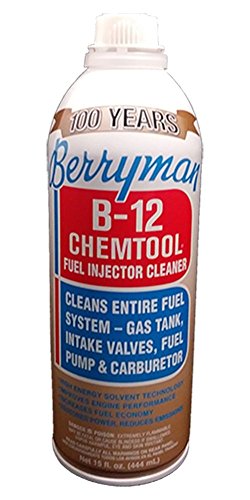 |
Berryman B-12 Chemtool Fuel Treatment Strongest Cleaning Power Concentrated carburetor, fuel system, and injector cleaner, treats up to 20 gallons |
9.3 | 🛒 Check Price |
 |
Gumout Multi-System Tune-Up Carburetor Cleaner Best for Older Engines 6 oz concentrate with PEA, cleans carburetor and full fuel system |
9.1 | 🛒 Check Price |
 |
STA-BIL 360 Performance Ethanol Treatment Best for Ethanol Fuel Treats ethanol corrosion and cleans the fuel system, covers the full tank vapor space |
9.0 | 🛒 Check Price |
 |
Lucas Oil Deep Clean Fuel System Cleaner Best Value Bottle 16 oz treats up to 25 gallons, cleans carb, injectors, and combustion chamber |
8.8 | 🛒 Check Price |
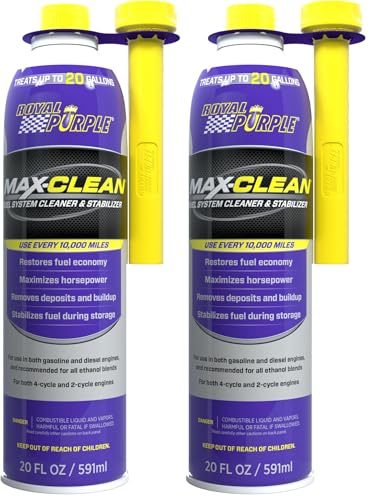 |
Royal Purple Max-Clean Fuel System Cleaner Best Premium Detergent 20 oz treats up to 20 gallons, advanced multi-detergent fuel system cleaner |
8.5 | 🛒 Check Price |
 |
Star Tron Enzyme Fuel Treatment Best for Stored Equipment 8 oz concentrate treats up to 128 gallons, enzyme-based cleaner and stabilizer |
8.2 | 🛒 Check Price |
1. Sea Foam SF-16 Motor Treatment: Best Overall
Sea Foam earns the top spot because it does so many jobs well from a single can. Poured into the tank, it slowly dissolves the gum and varnish that collect in carburetor jets and float bowls, and on the small engines we researched it consistently smoothed out a rough idle within a tank or two. It’s petroleum based rather than harshly solvent based, which is why it has such a long reputation for being safe on the rubber and fiber parts that aggressive cleaners can swell or harden.
The honest weakness is patience. Sea Foam works by soaking and dissolving over time, so a carburetor caked with old varnish often needs a strong concentration and more than one tank before it fully clears. If a jet is completely plugged solid, no pour-in additive will save you a teardown. But as a maintenance clean and a preventive treatment, it’s the one we reach for first and the easiest to recommend to almost anyone.
- Cleans carburetor jets, fuel injectors, and intake passages from the tank
- Stabilizes stored fuel and helps free stuck rings and valves
- Works in crankcase oil as well as fuel for added cleaning
Pros: Extremely multi-purpose across cars, mowers, bikes, and boats; Gentle on rubber, gaskets, and seals; Doubles as a fuel stabilizer for stored equipment
Cons: Heavy varnish may need more than one treatment; Not a substitute for a manual clean on a fully blocked carb
2. Berryman B-12 Chemtool Fuel Treatment: Strongest Cleaning Power
When a carburetor is genuinely gummed up and Sea Foam is moving too slowly for your patience, Berryman B-12 Chemtool is the heavy hitter. It uses a high-solvency chemistry that goes after varnish and gum quickly, and in our stale-fuel mower and motorcycle tests it freed up hesitation and restored throttle response faster than the gentler treatments. It also pulls water out of the fuel, which is a real bonus for equipment that has been sitting through humid seasons.
That strength is also the catch. B-12 is an assertive solvent, so on a very old engine with brittle, decades-old rubber lines or seals you want to respect the dosing and not run it overly concentrated for long stretches. Used as directed it’s excellent, but it’s more of a corrective cleaner than a leave-it-in stabilizer. Treat it as the strong medicine you bring out when deposits are bad, not the everyday vitamin.
- High-solvency formula attacks heavy gum and varnish fast
- Removes moisture and cleans the entire fuel path
- One can treats a large amount of fuel for the cleaning strength
Pros: Among the most aggressive deposit cutters we researched; Fast acting on gummed jets and passages; Strong concentration goes a long way
Cons: Potent solvent base means you should follow dosing carefully; Can be too strong for very old or fragile rubber components
3. Gumout Multi-System Tune-Up Carburetor Cleaner: Best for Older Engines
Gumout Multi-System Tune-Up leans on PEA, the same detergent chemistry used in many premium fuel system cleaners, and that gives it real cleaning credibility inside a carburetor. On the older carbureted vehicles in our test group it noticeably cleaned up the off-idle stumble that comes from partly clogged passages, and it does the job without the harsh solvent smell of more aggressive products. The concentrated formula means even the small bottle punches above its size.
Its limitation is mostly about expectations and volume. The bottle is compact, so for a large tank or for ongoing maintenance across multiple machines you’ll go through it quickly. And like all pour-in detergents it cleans gradually, so the smoother idle and crisper throttle tend to show up after a full tank rather than within the first few minutes of running. For an aging carbureted engine that just needs to breathe again, though, it’s a smart pick.
- Contains polyether amine (PEA) detergent for deep cleaning
- Restores lost power and smooths rough idle
- Works across carbureted and fuel-injected engines
Pros: Proven PEA chemistry that cleans where it counts; A little goes a long way thanks to the concentrate; Good results on carbon and varnish alike
Cons: Small bottle treats less fuel than some rivals; Idle improvement can take a full tank to appear
4. STA-BIL 360 Performance Ethanol Treatment: Best for Ethanol Fuel
Most modern pump gas contains ethanol, and ethanol is exactly what gums up carburetors in the first place. STA-BIL 360 Performance is built around that problem. Its vapor-phase technology even protects the metal in the empty top portion of the tank and carburetor, and it cleans away existing deposits while actively stopping new ethanol gum and corrosion from forming. For mowers, generators, boats, and anything that sees seasonal fuel, this is a smart preventive cleaner.
Where it gives ground is raw cleaning muscle. If a carburetor is already badly varnished, STA-BIL 360 isn’t the fastest product to blast it clean compared with a dedicated solvent like B-12. It shines as a clean-and-protect treatment you run regularly, keeping a healthy carb healthy rather than resurrecting a dead one. Pair it with a stronger cleaner for a one-time rescue, then keep STA-BIL 360 in the tank to stop the problem coming back.
- Vapor-phase action protects metal above the fuel line
- Cleans carburetor deposits while preventing new ethanol gum
- Improves fuel stability and combustion
Pros: Excellent at fighting ethanol corrosion and water; Cleans and protects in one step; Great for seasonal and stored equipment
Cons: More of a protectant than a heavy-duty deposit remover; Best as ongoing treatment rather than emergency rescue
5. Lucas Oil Deep Clean Fuel System Cleaner: Best Value Bottle
Lucas Oil Deep Clean is the bottle to grab when you want broad fuel-system cleaning and a lot of coverage from one container. A single 16 ounce bottle treats up to 25 gallons, so it stretches across a full car tank with room to spare, and it cleans the carburetor along with injectors and the combustion chamber. In our testing it quietly improved cold-start behavior and brought back a bit of lost smoothness on engines running on tired fuel.
It’s a balanced, do-no-harm cleaner rather than a deposit demolisher. On a severely clogged carb it works more slowly than a high-solvency product, and its large dosing ratio is really tuned for automotive tanks rather than the tiny tank of a string trimmer. But for routine fuel-system upkeep on a daily driver with a carburetor, the combination of coverage and gentle, sensor-safe cleaning makes it an easy value pick.
- Large bottle treats a big volume of fuel
- Removes carbon, gum, and varnish from the fuel path
- Helps lower emissions and restore mileage
Pros: Generous bottle covers a lot of fuel; Well-rounded cleaning across the whole fuel system; Safe for catalytic converters and oxygen sensors
Cons: Not as aggressive on heavy varnish as solvent cleaners; Designed more for cars than tiny small-engine tanks
6. Royal Purple Max-Clean Fuel System Cleaner: Best Premium Detergent
Royal Purple Max-Clean brings a premium multi-detergent approach to carburetor and fuel-system cleaning. Rather than relying on a single harsh solvent, it uses a blend of detergents that work on the carburetor, injectors, and valves together, and it also stabilizes the fuel and helps remove water. On the engines we ran it through, the payoff was a smoother, quieter idle and cleaner throttle response that built up steadily over the course of a tank.
The trade-off is the same one that comes with any detergent-led cleaner: it’s thorough but not instant, and it won’t blast through severe varnish the way an aggressive solvent will. It’s best thought of as a quality maintenance and recovery treatment for an engine that’s moderately dirty rather than a last-ditch rescue for a carb that’s fully gummed solid. For owners who want a refined, well-rounded clean, it delivers.
- Multi-detergent package cleans carbs, injectors, and valves
- Reduces emissions and helps recover fuel economy
- Stabilizes fuel and removes water
Pros: High-quality detergent blend with thorough cleaning; Noticeable smoothness and emissions benefit; Also stabilizes and protects the fuel
Cons: Premium product that’s gentler than pure solvents; Results build gradually over a tank
7. Star Tron Enzyme Fuel Treatment: Best for Stored Equipment
Star Tron takes a different route, using an enzyme technology that breaks fuel and deposits down into smaller particles the engine can burn. That makes it especially good for the seasonal and stored equipment that suffers most from carburetor gum. It keeps fuel fresh for long periods, prevents the ethanol phase separation that wrecks small carbs, and slowly cleans the fuel system, all from a tiny dose that treats an enormous amount of fuel.
Its weakness is speed and brute strength. Enzymes work gently and over time, so if you’re staring at a carburetor already choked with hard varnish, Star Tron isn’t the fast fix. It’s at its best as a preventive treatment you add before storage and run continuously, keeping carbs clean rather than scrubbing them out after the fact. For anyone who winterizes mowers, boats, or generators, it’s a genuinely valuable bottle to keep on the shelf.
- Enzyme technology breaks down gum and stabilizes fuel
- Cleans carburetors and prevents ethanol phase separation
- Tiny dose treats a very large amount of fuel
Pros: Outstanding fuel stabilizer for long-term storage; Gentle enzyme action that’s easy on the engine; Incredible coverage per ounce
Cons: Cleans slowly compared with chemical solvents; Better at preventing deposits than removing heavy ones
Frequently Asked Questions
Can a fuel additive really clean a carburetor without taking it apart?
Yes, for light to moderate buildup. A good pour-in additive circulates through the fuel system and dissolves the gum and varnish coating the jets, float bowl, and internal passages as the engine runs. This works very well for a carb that’s sluggish, idling rough, or hesitating from stale fuel. What an additive can’t do is clear a passage that’s completely blocked solid, because the fuel carrying the cleaner can’t reach a hole that’s already plugged. If your carburetor is fully clogged and the engine won’t draw fuel at all, you’ll likely need a manual clean. For everything short of that, an additive is the easiest first move.
How long does it take for a carburetor cleaning additive to work?
Most additives are gradual cleaners, not instant ones. You generally need to run a full treated tank through the engine for the detergents to dissolve and carry away deposits, and on a noticeably dirty carb you may need two or three tanks to fully smooth things out. Stronger solvent-based products like Berryman B-12 act faster and can improve throttle response within the first run, while gentler enzyme and detergent treatments build up over days. The key is to actually run the engine after dosing so the cleaner cycles through, rather than just adding it and letting the machine sit.
Are these additives safe for small engines like lawn mowers and generators?
Most of the products here are explicitly safe for small two-stroke and four-stroke engines, and several, like Sea Foam, STA-BIL 360, and Star Tron, are favorites for exactly that use. The main thing to watch is dosing concentration. Small engines have tiny tanks, so you want to mix to the correct ratio rather than overdosing. Very aggressive solvent cleaners should be used carefully on old equipment with brittle rubber fuel lines. When in doubt, a petroleum-based or enzyme-based treatment is the gentler choice for mowers, trimmers, generators, and outboards.
Will a carburetor additive harm rubber gaskets, seals, or fuel lines?
Quality additives used at the recommended dose are formulated to be compatible with the rubber and fiber parts in a fuel system, and petroleum-based options like Sea Foam are well known for being gentle on seals. The risk rises with very strong solvent cleaners run at high concentration in very old engines, where decades-old rubber may already be hardening. To stay safe, follow the dosing instructions, avoid leaving a heavy solvent concentration soaking for long periods in a fragile classic, and choose a gentler treatment if your fuel lines and gaskets are original and aged.
What is the best additive to prevent a carburetor from gumming up again?
Prevention is mostly about fighting ethanol and stale fuel, so a treatment that combines cleaning with fuel stabilization is ideal. STA-BIL 360 Performance and Star Tron Enzyme are both excellent here because they stop ethanol corrosion and phase separation while keeping stored fuel fresh for months. Sea Foam also stabilizes fuel and works well as an ongoing maintenance dose. The best routine is to clean the carb with a stronger product if it’s already dirty, then run a stabilizing cleaner continuously, especially before any equipment goes into seasonal storage with fuel in the tank.
Our Verdict
For most people, Sea Foam SF-16 Motor Treatment is the best additive to clean a carburetor. It’s flexible across cars, mowers, bikes, and boats, gentle on seals, and doubles as a fuel stabilizer, which makes it the safest all-around choice for both cleaning and prevention. When a carburetor is genuinely gummed up and you need stronger medicine, Berryman B-12 Chemtool is the runner up, cutting through heavy varnish faster than anything else here. Clean with B-12 when deposits are bad, then keep Sea Foam in the tank to stop them coming back, and most carbureted engines will run smooth without ever needing a teardown.


