Almost every pump in the country now sells gasoline blended with up to 10 percent ethanol, and some pumps push 15 percent. Ethanol is great for octane and emissions, but it loves water. It pulls moisture out of the air, and once enough water collects in the tank the fuel can phase separate, leaving a corrosive ethanol and water layer at the bottom that engines hate. On top of that, ethanol fuel goes stale faster, varnishes injectors, and chews on rubber lines and aluminum carburetor parts in older engines and seasonal equipment.
The right ethanol fuel additive fixes most of that. A good one disperses small amounts of water so it burns off harmlessly, coats metal to slow corrosion, cleans injectors and intake valves, and stabilizes fuel so it stays fresh between fill ups or through winter storage. We looked at the products real owners buy for cars, trucks, boats, motorcycles, mowers, and generators, and ranked the seven that consistently earn their place in the garage.
| Photo | Product | Score | Buy |
|---|---|---|---|
 |
STA-BIL 360 Protection Ethanol Treatment Best Overall Treats up to 320 gallons per 32 oz bottle, dual phase vapor and liquid protection |
9.5 |
ⓘ We may earn a commission from qualifying purchases made through links on this page, at no extra cost to you.
|
 |
Sea Foam SF-16 Motor Treatment Best All-Around Cleaner 16 oz treats up to 16 gallons in fuel, safe in gas and diesel |
9.3 | 🛒 Check Price |
 |
Star Tron Enzyme Fuel Treatment Gas Best for Marine and Boats 8 oz treats up to 256 gallons, enzyme formula for E10 and E15 |
9.2 | 🛒 Check Price |
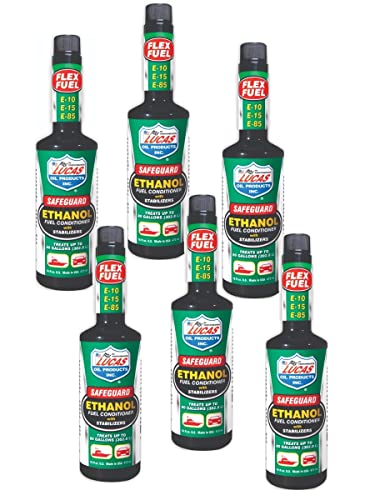 |
Lucas Oil Safeguard Ethanol Fuel Conditioner with Stabilizer Best for Corrosion Protection Treats up to 80 gallons per 32 oz, built specifically for ethanol blends |
9.0 | 🛒 Check Price |
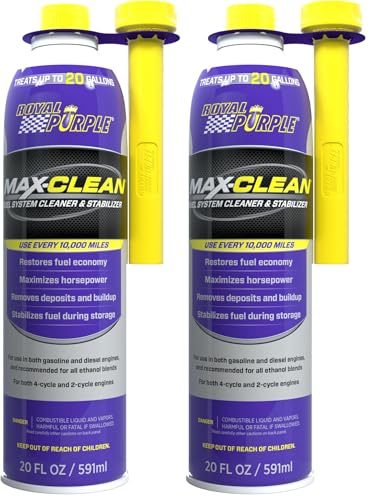 |
Royal Purple Max-Clean Fuel System Cleaner Best Deep Cleaner 20 oz treats up to 20 gallons, removes deposits and reduces emissions |
8.8 | 🛒 Check Price |
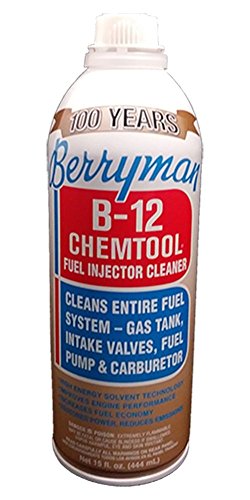 |
Berryman B-12 Chemtool Total Fuel System Cleaner Best Fast-Acting Solvent 15 oz treats up to 21 gallons, removes water and dissolves gum fast |
8.5 | 🛒 Check Price |
 |
Gumout Multi-System Tune-Up Fuel System Cleaner Best Value Maintenance Multi-treatment bottle, cleans the full fuel system including ethanol deposits |
8.2 | 🛒 Check Price |
1. STA-BIL 360 Protection Ethanol Treatment: Best Overall
STA-BIL 360 Protection earns the top spot because it does the most jobs well at once. Most additives only treat the liquid fuel sitting in the tank, but ethanol problems also start in the empty space above the fuel where moisture and acidic vapor attack metal. The 360 vapor technology releases a protective layer into that headspace, so the top of the tank, the fuel cap area, and exposed internals get coated too. Underneath, it still does the core work: it disperses water so it burns off, fights gum and varnish, and keeps fuel stable for up to a year of storage.
In real use it shines for anything that sits, like boats, generators, and seasonal equipment, and it’s equally at home in a daily driver running E10. The honest weakness is the cap. The graduated dosing cap is convenient but shallow, and it’s easy to slosh past the line if you pour fast, which wastes product. Pour slowly and it doses cleanly. For one bottle covering this much fuel and this many engine types, it’s the most complete ethanol treatment we researched.
- Vapor technology coats the upper tank and parts that liquid additive can’t reach
- Removes water and prevents corrosion across the whole fuel system
- Stabilizes fuel for up to 12 months of storage
Pros: All-in-one ethanol defense for both running and stored engines; Works across cars, boats, mowers, and powersports; Long storage stabilization window
Cons: Dosing cap is easy to overfill if you pour quickly
2. Sea Foam SF-16 Motor Treatment: Best All-Around Cleaner
Sea Foam is the bottle that lives in nearly every mechanic and small engine owner’s garage, and for ethanol gas it pulls double duty. It’s a petroleum based cleaner that dissolves the gum and varnish ethanol fuel leaves behind in carburetors and injectors, and it also helps stabilize fuel and control light moisture so equipment fires up after sitting. The flexibility is the real selling point. You can pour it in the tank, add it to the crankcase before an oil change, or pour it straight into a carb to free a stuck float.
The trade off is focus. Sea Foam is a great generalist, but it isn’t a dedicated water dispersing additive, so if your boat tank has already taken on real water you’ll want something purpose built for phase separation. It also has a sharp solvent smell that lingers on your hands. For routine ethanol cleanup, fuel freshness, and storage prep across mixed equipment, though, it’s hard to beat the value and track record.
- Cleans injectors, carburetors, and intake deposits
- Stabilizes fuel and helps control moisture in the tank
- Can be added to fuel, oil, or used to free stuck components
Pros: Trusted, all-around formula owners have used for decades; Cleans and stabilizes ethanol fuel in one step; Safe across a huge range of engines
Cons: Not a dedicated water dispersant, so heavy water needs a stronger product; Strong solvent smell
3. Star Tron Enzyme Fuel Treatment Gas: Best for Marine and Boats
Star Tron is the additive boaters reach for, and ethanol is exactly why. Marine tanks live in humid air and sit for long stretches, which is a strong recipe for water pickup and phase separation. Star Tron uses an enzyme formula instead of harsh solvents, breaking down the sludge and gum that ethanol leaves into tiny particles that pass through filters and burn off in combustion. It also disperses accumulated water so it stays suspended in the fuel and exits the engine instead of pooling at the bottom of the tank.
It’s highly concentrated, so the small bottle treats a surprising amount of fuel, and it stabilizes for up to two years, which suits seasonal boats and equipment perfectly. The honest caveat is that the enzyme approach cleans gradually. It isn’t the right pick if you want to blast loose a heavily clogged carburetor overnight, because it works best as ongoing maintenance over multiple tanks. As steady ethanol insurance for anything that floats or sits, it’s outstanding.
- Enzyme technology breaks down gum and sludge into smaller particles that burn
- Disperses water buildup to help prevent phase separation
- Stabilizes fuel for up to two years of storage
Pros: Concentrated, so a small bottle treats a lot of fuel; Excellent at managing water in marine tanks; Long two year storage stability
Cons: Enzyme cleaning works gradually rather than instantly
4. Lucas Oil Safeguard Ethanol Fuel Conditioner with Stabilizer: Best for Corrosion Protection
Lucas Safeguard is named for exactly what it does. This isn’t a repurposed general cleaner, it’s engineered around the chemistry of ethanol blended gas. Its main strength is corrosion control. Ethanol and the water it attracts create an acidic environment that pits aluminum carb parts and rusts steel, and Safeguard neutralizes that while leaving a lubricating film on metal surfaces. It also manages moisture to help head off phase separation and stabilizes fuel during storage, so it covers the core ethanol threats in one pour.
Where it falls a little short is coverage and cleaning. A 32 ounce bottle treats fewer gallons than some competitors, so the cost per tank is higher if you run a lot of fuel, and it’s more of a protectant than an aggressive deposit remover. If your injectors are already gummed, pair it with a dedicated cleaner. But for owners who mainly want to stop ethanol from corroding and lubricating their fuel system, it’s a focused, reliable choice.
- Neutralizes the corrosive effects of ethanol on metal parts
- Controls moisture and helps prevent phase separation
- Lubricates fuel system components and stabilizes fuel
Pros: Purpose built for ethanol rather than a general additive; Strong corrosion and moisture defense; Adds upper cylinder lubrication
Cons: Lower gallons-per-bottle ratio than some rivals; Less of a deep deposit cleaner
5. Royal Purple Max-Clean Fuel System Cleaner: Best Deep Cleaner
If ethanol fuel has already left its mark, Royal Purple Max-Clean is the bottle to reach for. It carries a serious detergent package that scrubs injectors, intake valves, and combustion chamber deposits, the kind of buildup that makes an engine idle rough and lose throttle response after a season of stale E10. Owners regularly report smoother idle and recovered fuel economy after a treatment, which is the clearest evidence a cleaner is actually working. It also stabilizes fuel and inhibits the corrosion that ethanol drives.
The catch is that it’s built as a periodic deep clean, not a pour every tank product. The concentrated detergent dose is meant to be used occasionally, and one bottle covers a fairly small fuel volume, so it isn’t the most economical choice for constant use. Treat it as the restorative you run a few times a year, then keep a maintenance additive in the tank between treatments. In that role it’s among the most effective ethanol deposit removers you can buy.
- Strong detergent package cleans injectors, valves, and combustion chambers
- Stabilizes fuel and inhibits corrosion from ethanol
- Helps restore lost fuel economy and power
Pros: Excellent at clearing built up ethanol deposits; Noticeable improvement in idle and throttle response; Works in gas and diesel systems
Cons: More of an occasional deep clean than a daily additive; Single bottle treats a smaller tank volume
6. Berryman B-12 Chemtool Total Fuel System Cleaner: Best Fast-Acting Solvent
Berryman B-12 Chemtool is the additive you grab when an engine is acting up right now. It’s an aggressive solvent based cleaner that dissolves gum, varnish, and carbon fast, which makes it a favorite for reviving carburetors and injectors fouled by old ethanol fuel. It also pulls water out of the system, absorbing the moisture ethanol attracts so it passes through and burns off instead of phase separating in the tank. For a quick recovery on a no start mower or a rough running engine, it acts faster than most enzyme or maintenance products.
That potency is also its limitation. B-12 is strong, and the label dosing matters, because overdoing it isn’t better and can be hard on certain seals if abused. It’s also built to clean and remove water, not to stabilize fuel for long storage, so it isn’t the bottle for winterizing equipment. Used as directed for an occasional deep solvent clean and water purge, it’s a very effective fast acting fixes for ethanol fouling.
- Aggressive solvent dissolves gum, varnish, and carbon quickly
- Absorbs and removes water from the fuel system
- Cleans carburetors, injectors, and intake valves
Pros: Works fast on stubborn ethanol deposits; Strong water removal in one tank; Trusted in shops for problem engines
Cons: Potent solvent that shouldn’t be overdosed; Not formulated as a long term fuel stabilizer
7. Gumout Multi-System Tune-Up Fuel System Cleaner: Best Value Maintenance
Gumout Multi-System Tune-Up is the easy, no fuss bottle for keeping a daily driver healthy on pump E10. It’s a straightforward detergent cleaner that clears the injectors, intake valves, and combustion deposits that ethanol fuel leaves behind over time, and it offers some moisture control and corrosion protection along the way. It’s sold nearly everywhere, simple to dose, and made for the owner who just wants to pour something in every few fill ups and keep the fuel system clean without thinking hard about it.
It’s honest about being a maintenance product rather than a heavy hitter. It doesn’t match the water dispersing power of a dedicated marine additive, and its storage stabilization is limited, so it isn’t the right pick for winterizing a boat or generator. For a car or truck that runs through fuel regularly and just needs routine ethanol cleanup, though, it does the job reliably and is one of the easiest additives to keep in rotation.
- Removes deposits from injectors, valves, and intake
- Helps control moisture and protect against ethanol corrosion
- Easy regular maintenance pour for daily drivers
Pros: Simple, widely available maintenance additive; Good general cleaning for everyday ethanol gas; Friendly for routine every-few-fill-ups use
Cons: Lighter duty than dedicated marine or storage additives; Limited storage stabilization
Frequently Asked Questions
What does an ethanol fuel additive actually do?
A good ethanol additive tackles the specific problems ethanol blended gasoline creates. It disperses small amounts of water so the moisture ethanol attracts burns off harmlessly instead of pooling and causing phase separation. It coats metal to slow the corrosion that the acidic ethanol and water mix causes in aluminum carburetors and steel parts. Most also include detergents that clean the gum and varnish ethanol leaves in injectors and valves, and many add a stabilizer that keeps fuel fresh during storage. The better products combine all of these jobs in one pour.
Do I really need an additive if my car runs on regular E10?
For a daily driver that burns through a tank every week or two, the fuel rarely sits long enough to phase separate, so you can get by without one. Still, a periodic cleaner still helps keep injectors and intake valves free of the deposits ethanol leaves, which protects idle quality and fuel economy over the years. The case for an additive becomes much stronger for anything that sits, including boats, motorcycles, generators, mowers, and seasonal or weekend vehicles, where stale ethanol fuel and water pickup cause the most expensive damage.
Will these additives prevent ethanol phase separation?
They help a lot, but no additive can rescue fuel that has already badly separated. The way these products work is by dispersing small amounts of water so it stays suspended in the fuel and burns off through the engine, which keeps water levels from ever reaching the point of separation. Once a tank has taken on enough water that a distinct ethanol and water layer has formed at the bottom, the only real fix is to drain and replace the fuel. Use the additive as prevention at fill up and storage, not as a cure after separation has happened.
How much additive should I add to my fuel?
Always follow the dosing on the bottle, because concentrations vary widely between products. Highly concentrated formulas like Star Tron treat hundreds of gallons from a small bottle, while solvent based deep cleaners treat far less per ounce. A common mistake is assuming more is better, especially with strong solvents, where overdosing offers no extra benefit and can be hard on some seals. For best results add the additive before you fill up so it mixes thoroughly with the incoming fuel, and use the higher storage dose when you’re stabilizing equipment for the off season.
Are ethanol additives safe for boats, mowers, and motorcycles?
Yes, and those engines are exactly where additives matter most. Small engines, marine motors, and motorcycles often sit for long periods, run carburetors that are sensitive to varnish, and live in humid conditions, all of which make ethanol damage more likely. Marine focused products like Star Tron and full system protectants like STA-BIL 360 are specifically formulated for these uses and are safe for two and four stroke engines. Just confirm the label lists your engine type, and use the storage dose when winterizing rather than the standard maintenance dose.
Our Verdict
For most people, STA-BIL 360 Protection is the additive to buy, because it defends the entire fuel system against ethanol with both liquid and vapor protection, removes water, fights corrosion, and stabilizes fuel for storage all in one bottle, making it equally useful in a daily driver or a boat that sits all winter. Our runner up is Sea Foam SF-16, the multi-purpose garage staple that cleans, stabilizes, and controls light moisture across nearly any engine, and earns its spot for sheer flexibility and a decades long track record. If your needs are more specific, choose Star Tron for marine water control, Lucas Safeguard for corrosion defense, or Royal Purple Max-Clean when you need a deep cleaning restore.