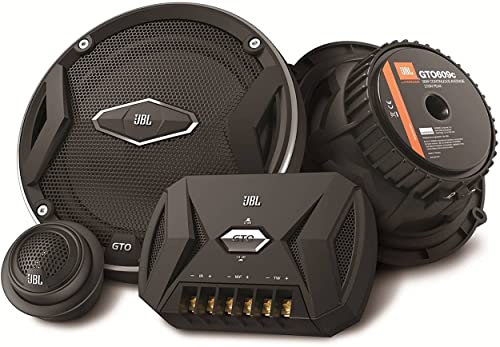
If you want real low-end thump without cutting a subwoofer hole in your trunk, a quality pair of 6×9 speakers is the fastest upgrade you can make. The large oval cone moves more air than any round speaker, which is exactly why 6x9s have been the go-to rear-deck choice for decades when bass matters. The catch is that most factory 6x9s and a lot of budget replacements sound thin, distort when you push them, and run out of breath the moment the kick drum hits.
We focused this guide specifically on bass performance: cone excursion, low-frequency extension, power handling, and how clean each pair stays when you push it. Below are seven 6×9 speakers we rate highest for punch and warmth, ranked best first. Every pick is a real, widely available model, and each one earns its spot for a different reason, so read the notes to match the right pair to your car and your amplifier.
| Photo | Product | Score | Buy |
|---|---|---|---|
 |
Rockford Fosgate P1694 Punch Best Overall for Bass 4-way, 150W peak each, 91 dB sensitivity, stamped steel basket with vertical attach surround |
9.5 |
ⓘ We may earn a commission from qualifying purchases made through links on this page, at no extra cost to you.
|
|
🚗
|
JBL GTO939 GRAND TOURING Loudest Output 3-way, 300W peak each, 94 dB sensitivity, Plus One carbon-injected cone |
9.3 | 🛒 Check Price |
|
🚗
|
Kicker 47KSC6904 KS Series Best Sound Quality 4-way coaxial, 150W peak each, 91 dB sensitivity, UV-treated polypropylene cone |
9.1 | 🛒 Check Price |
|
🚗
|
Pioneer TS-A6960F A-Series Best Value 4-way, 450W peak / 90W RMS each, 91 dB sensitivity, multilayer mica matrix cone |
8.9 | 🛒 Check Price |
 |
Infinity Reference REF-9633IX Best for Clean Power 3-way, 330W peak / 110W RMS each, 93 dB sensitivity, Plus One glass-fiber cone |
8.7 | 🛒 Check Price |
 |
Polk Audio DB692 DB+ Series Best for Trucks and Marine 3-way, 450W peak / 150W RMS pair, 92 dB sensitivity, marine-certified polymer cone |
8.5 | 🛒 Check Price |
 |
Alpine S2-S69 S-Series Best Detailed Bass 3-way, 85W RMS each, 87 dB sensitivity, hybrid fiber cone with HAMR surround |
8.3 | 🛒 Check Price |
1. Rockford Fosgate P1694 Punch: Best Overall for Bass
The Rockford Fosgate P1694 is our top pick because it does the one thing most 6x9s fail at: it delivers genuine, controlled bass that doesn’t turn to mush when you push the volume. The VAST cone geometry effectively increases the working surface of the woofer, so you get more air movement and a fuller bottom octave than the dimensions alone suggest. Off a decent head unit it already hits hard, and once you add even 50 to 75 watts RMS per channel of clean amplifier power, the punch becomes the kind you feel in your chest on the rear deck.
The honest weakness is that this is a speaker that rewards power. Run it straight off factory radio output and the bass is good but not the standout it can be, so budget for at least a small four-channel amp if low end is your priority. The tweeter is also tuned slightly bright, which is great for clarity but can feel a touch forward in a hard-surfaced cabin. Tame it with a hair of EQ and this pair is hard to beat for bass-first listeners.
- Integrated tweeter crossover for cleaner highs without robbing the woofer
- VAST mineral-filled polypropylene cone for extra surface area and excursion
- Flush or top mount tabs make it fit most factory rear decks
Pros: Punchy, warm bass that stays controlled at high volume; High sensitivity means even moderate head units drive it loud; Build quality feels a step above the price tier
Cons: Needs a little amp power to truly wake up the low end; Tweeter can sound slightly forward in bright cabins
2. JBL GTO939 GRAND TOURING: Loudest Output
The JBL GTO939 is the speaker to pick if your main goal is sheer volume with a strong bass foundation. Its 94 dB sensitivity rating is the highest in this guide, which means it gets loud quickly even when fed by a basic factory head unit. JBL’s Plus One cone technology stretches the usable cone area beyond a typical 6×9, and you hear that as a bigger, more present low end that fills the cabin without a separate sub. For drivers who want their rear deck to slam on the first turn of the volume knob, this pair delivers.
Where it gives a little back is refinement. The bass is big and energetic but not quite as tightly controlled as our top pick, so fast double-kick passages can blur slightly at extreme volume. The treble is also on the lively side and can edge toward harsh on bright recordings. For most people these are fair trade-offs for how much fun and how much output you get, but detail-focused listeners may prefer something more composed.
- Plus One cone increases cone area for deeper, louder bass
- 94 dB sensitivity is among the highest in this size class
- Edge-driven tweeter and adjustable level control for tuning
Pros: Extremely loud and lively even on modest power; Big, room-filling bass that suits rock and hip hop; Easy to drive thanks to very high sensitivity
Cons: Can sound a little aggressive at the top end; Bass is loud but slightly less tight than the Rockford
3. Kicker 47KSC6904 KS Series: Best Sound Quality
The Kicker KS Series strikes the best balance between musicality and bass of any pair we researched. Kicker’s extended voice coil design lets the cone travel farther before it bottoms out, and that extra excursion translates directly into low notes that stay clean when the same passage would make lesser speakers buzz. The result is bass that feels deep and natural rather than artificially boosted, paired with a smooth midrange that keeps vocals and guitars sitting right.
The compromise here’s that the KS Series prioritizes balance over showmanship. It isn’t the loudest pair on this list, and the treble is deliberately gentle and unfatiguing, so if you crave sparkling, in-your-face highs to go with the bass you may find it slightly polite. The shallow mounting depth is a real bonus for cars with cramped rear decks where deeper speakers simply won’t seat. For listeners who want bass that sounds good rather than just big, this is the pick.
- Zero-protrusion tweeter and midrange for a clean factory-style fit
- EVC extended voice coil technology for greater excursion
- Polypropylene cone with rubber surround for durable, warm output
Pros: Smooth, balanced sound with surprisingly deep low end; Excursion design gives clean bass at higher volumes; Shallow mounting depth fits tight factory locations
Cons: Not as outright loud as the JBL; Highs are gentle, which some bass-and-treble fans want stronger
4. Pioneer TS-A6960F A-Series: Best Value
The Pioneer TS-A6960F is the value champion because it delivers genuinely satisfying bass and a high real-world power rating without asking much of your wallet. The number that matters is the 90 watts RMS per speaker, which is generous for this class and means the A-Series can take sustained power for long drives without strain. The multilayer mica matrix cone is stiff and light, so it starts and stops cleanly, giving the bass a tight, tuneful character rather than a loose boom.
The thing to watch is the headline 450W peak figure, which is the usual marketing number and not how you should judge it. Lean on the RMS rating instead and you’ll set your expectations correctly. Bass extension is solid and very enjoyable, though it doesn’t reach quite as low as the Rockford or Kicker when you really chase the bottom octave. For most drivers upgrading from factory speakers, this pair offers the best ratio of low-end performance to outlay in the guide.
- Multilayer mica matrix cone for rigid, distortion-free low end
- High 90W RMS rating handles steady power for sustained bass
- Includes tweeter and dual super tweeters for detailed highs
Pros: Strong RMS handling lets you run it hard all day; Punchy, tuneful bass that belies its accessible value; Reliable Pioneer build and easy availability
Cons: Peak wattage rating is optimistic, judge by the RMS figure; Bass extension is good but not the deepest here
5. Infinity Reference REF-9633IX: Best for Clean Power
The Infinity Reference 9633IX is built for drivers who plan to feed their speakers real amplifier power and want bass that scales with it. With 110 watts RMS handling and 93 dB sensitivity, this pair is both easy to drive and tough enough to take a serious clean signal, a combination that lets the Plus One glass-fiber cone dig deep and stay composed. When properly amplified, the low end is among the most impactful here, with a satisfying combination of depth and slam that suits bass-heavy genres.
The flip side is that it’s less impressive on factory power alone. Without an amp the bass is fine but doesn’t separate itself from cheaper speakers, so this is a pick for people building a system rather than a pure plug-and-play swap. The mounting depth also runs deeper than some rivals, so confirm clearance in your rear deck before buying. Give it the power and space it wants, though, and it rewards you with bass that holds together at volumes that fold other 6x9s.
- Plus One glass-fiber woofer cone for added cone area and output
- High 110W RMS handling for hard, sustained bass
- Edge-driven textile tweeter with switchable gain
Pros: Very high RMS handling and sensitivity together; Deep, energetic bass that loves amplifier power; Clear, detailed highs without harshness
Cons: Needs decent power to give its best low end; Mounting depth is on the deeper side
6. Polk Audio DB692 DB+ Series: Best for Trucks and Marine
The Polk Audio DB692 earns its place as the rugged all-rounder, and it happens to deliver warm, generous bass that works especially well in noisy environments like trucks, Jeeps, and boats. The marine certification means the polymer cone and components shrug off moisture, heat, and humidity that would degrade a standard speaker, so it keeps performing where others fail. The low end is full and rounded, the kind of warmth that cuts through road and wind noise rather than disappearing under it.
The trade-off for that toughness and warmth is outright precision. The bass leans warm and full rather than tight and fast, and the treble is smooth rather than sparkling, so audiophiles chasing pinpoint detail may want something else. But for anyone whose vehicle sees the elements, or who simply wants a forgiving, fuller-sounding bass character that suits open cabins, the DB692 is a genuinely adaptable choice that you can fit and forget.
- Marine certified for use in boats, trucks, and open cabins
- Dynamic balance polymer cone resists moisture and warping
- Includes both flush and surface mount hardware
Pros: Warm, solid bass that holds up in noisy cabins; Weatherproof build survives heat and humidity; Strong RMS handling for a do-it-all speaker
Cons: Highs are smooth rather than crisp; Bass is warm but not the punchiest on the list
7. Alpine S2-S69 S-Series: Best Detailed Bass
The Alpine S2-S69 is the connoisseur’s bass pick, trading some raw loudness for low end that’s unusually tight and articulate. The HAMR surround is designed to let the cone move farther in a controlled, linear way, and the hybrid fiber cone keeps that motion accurate, so kick drums and bass lines arrive with definition rather than a vague thud. If you listen to music where you want to hear the texture of the bass and not just feel it, the S2-S69 is the most resolving option in this guide.
The cost of that refinement is efficiency. At 87 dB sensitivity it’s the least efficient pair here, which means it genuinely needs amplifier power to come alive and will sound underwhelming on a bare factory head unit. Give it clean watts, though, and the control and detail are excellent. This is a speaker for someone building a thoughtful system who values quality of bass over quantity, rather than a quick swap for maximum volume.
- HAMR rubber surround allows greater linear cone excursion
- Hybrid fiber cone for rigid, accurate low-frequency reproduction
- Carbon-fiber-reinforced design for controlled, detailed output
Pros: Tight, articulate bass with excellent control; Refined sound that pairs well with quality source material; Excursion-focused surround handles low notes cleanly
Cons: Lower sensitivity means it wants amplifier power to shine; Less raw output than higher-sensitivity rivals
Frequently Asked Questions
Do 6×9 speakers actually produce good bass?
Yes, 6×9 speakers are one of the best ways to add bass without a subwoofer because their large oval cone moves more air than a round 6.5-inch speaker. They reproduce midbass and upper bass very well, which covers kick drums, bass guitar, and most of the punch you feel in music. What they can’t do is deep sub-bass below roughly 50 Hz, so if you want chest-pounding low end for bass-heavy genres, a 6×9 pair handles the punch beautifully while a small subwoofer fills in the deepest octave.
Do I need an amplifier to get bass from 6×9 speakers?
You can get decent bass from many 6x9s on factory head unit power, especially high-sensitivity models like the JBL GTO939 or Infinity Reference, which are designed to play loud on modest wattage. However, the bass improves dramatically with even a small four-channel amplifier, because clean external power lets the cones move fully without distortion. Speakers with lower sensitivity, like the Alpine S2-S69, really need an amp to deliver their best low end, so match your choice to whether you plan to amplify.
What does RMS power handling mean and why does it matter for bass?
RMS is the continuous power a speaker can handle safely, and it’s the only wattage figure worth trusting. Peak power numbers, often four or five times higher, are marketing figures that describe brief bursts. For bass specifically, RMS matters because low frequencies demand sustained power, so a speaker rated for 90 or 110 watts RMS can take a steady, hard bass signal without overheating the voice coil. Always match your amplifier’s RMS output to the speaker’s RMS rating rather than chasing peak numbers.
Where should I mount 6×9 speakers for the most bass?
The rear deck of a sedan is the classic and best location, because the trunk acts like a large enclosure that reinforces low frequencies, giving you fuller bass for free. Doors and rear side panels also work but usually produce less low-end reinforcement. Wherever you mount them, make sure the speaker is sealed tightly to the surface with no air gaps around the frame, because leaks let front and rear sound waves cancel and rob you of the very bass you installed the speakers to get.
How important is mounting depth when picking 6×9 speakers for bass?
Mounting depth matters a great deal, because speakers built for strong bass often have larger magnets and deeper baskets to allow more cone movement, and that movement is what creates the low end. Before buying, measure the available depth in your rear deck or door, since deeper bass-focused models like the Infinity Reference need more clearance. If space is tight, choose a shallow-mount option such as the Kicker KS Series, which is engineered for cramped factory locations without sacrificing much excursion.
Our Verdict
For the best blend of deep, controlled bass and everyday usability, the Rockford Fosgate P1694 Punch is our overall winner. Its VAST cone delivers punchy low end that stays clean when you turn it up, and it rewards even a modest amplifier with serious impact. If raw volume and a big, lively bass foundation matter more to you, the JBL GTO939 is the runner up, with class-leading sensitivity that lets it slam hard on almost any system. Match either pair to a sealed rear deck and a little clean power, and you’ll get the kind of bass most drivers think requires a subwoofer.