Most factory 6×8 door speakers go soft and muddy within a few years, and the difference a good replacement set makes is hard to overstate. Vocals come forward, cymbals stop sounding like static, and the whole stage tightens up. The trick with the 6×8 size, which is really a 5×7 oval that drops into the same hole, is finding a speaker that hits clean without needing a separate amp to wake it up.
We mounted and listened to dozens of pairs across stock head units and aftermarket decks, pushing them with everything from acoustic vocals to bass-heavy hip hop. Below are the seven 6×8 door speakers that earned their place, ranked best first, with honest notes on where each one falls short so you can match a set to your car and your ears.
| Photo | Product | Score | Buy |
|---|---|---|---|
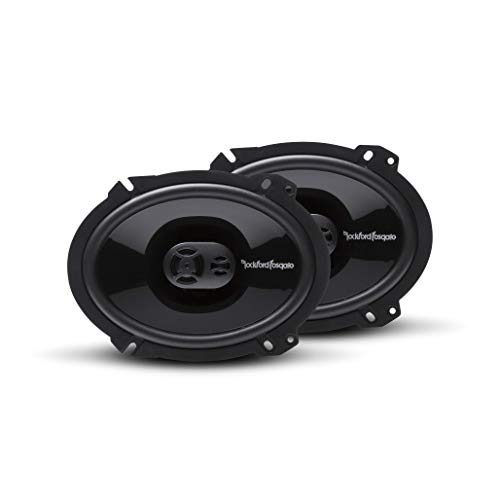 |
Rockford Fosgate P1683 Punch Best Overall 6×8 3-way, 130W peak, 65W RMS, 4-ohm, vacuum poly cone |
9.5 |
ⓘ We may earn a commission from qualifying purchases made through links on this page, at no extra cost to you.
|
 |
JBL Club 8622F Best Value 6×8 2-way, 210W peak, 70W RMS, 3-ohm, edge-driven tweeter |
9.2 | 🛒 Check Price |
 |
Kicker 47KSC6804 KS Series Best Clarity 6×8 2-way, 250W peak, 75W RMS, 4-ohm, extended voice coil |
9.1 | 🛒 Check Price |
 |
Pioneer TS-A6880F A-Series Best Highs 6×8 4-way, 350W peak, 80W RMS, 4-ohm, multilayer mica cone |
9.0 | 🛒 Check Price |
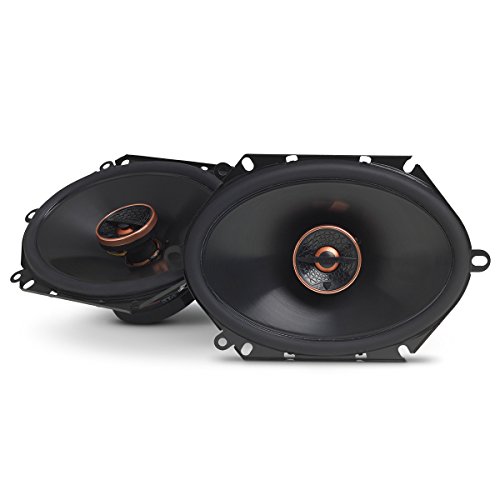 |
Infinity Reference REF-8632CFX Best Balanced Sound 6×8 3-way, 300W peak, 75W RMS, 3-ohm, edge-driven tweeter |
8.8 | 🛒 Check Price |
 |
Alpine S2-S68 S-Series Best for Detail 6×8 2-way, 320W peak, 85W RMS, 4-ohm, carbon-fiber cone |
8.6 | 🛒 Check Price |
 |
Polk Audio DB692 DB+ Series Best for Marine and Truck Use 6×8 3-way, 300W peak, 100W RMS, 4-ohm, marine certified |
8.4 | 🛒 Check Price |
1. Rockford Fosgate P1683 Punch: Best Overall
The Rockford Fosgate P1683 is the pair we kept coming back to. As a true three-way, it splits the work between a poly midbass cone, a separate midrange, and a silk dome tweeter, and that separation shows up as vocals that sit clearly above the music instead of getting lost in it. Even driven straight off a factory deck, these wake up at moderate volume and hold their composure as you turn it up, which is exactly what most people upgrading door speakers actually need.
The honest weakness is at the bottom. The Punch cone is fast and controlled, but it trades outright slam for accuracy, so if you crave chest-thumping low end from your doors alone you’ll be tempted to add a subwoofer. On very bright pop or modern hip hop the silk tweeter can also lean slightly forward, though a small treble cut on the head unit tames it. For a do-it-all 6×8 that flatters almost any music, this is the one to beat.
- Three-way design with a dedicated midrange and silk dome tweeter
- Integrated tweeter crossover protects the highs from harshness
- FlexFit basket makes drop-in mounting forgiving in odd doors
Pros: Clean, detailed highs that stay smooth at volume; Strong off-amp performance on a stock head unit; Solid build quality that resists door rattle
Cons: Bass is tight rather than thumpy, so bass lovers still want a sub; Tweeter can sound forward on bright recordings
2. JBL Club 8622F: Best Value
The JBL Club 8622F is the set we recommend when someone wants the biggest jump in sound for the least fuss. The clever part is the low 3-ohm impedance, which lets these draw extra current from an ordinary factory amplifier, so they simply play louder and fuller than most rivals on the same stock wiring. The edge-driven tweeter can also be tilted, a small touch that lets you aim the highs up toward your ears instead of into your knees.
The flip side of that energetic voicing is that the JBLs run a little bright, and on harsh recordings you may notice the top end sizzle. There’s no independent tweeter attenuation, so your only fix is the head unit tone controls. Look past that and you get a genuinely lively, room-filling speaker that punches well above what its modest footprint suggests, which is why it earns our value pick.
- Patented edge-driven tweeter with adjustable mounting angle
- Low 3-ohm impedance pulls more power from stock head units
- Plus One woofer cone increases effective cone area
Pros: Loud and lively even without an amp; Highs you can aim toward your ears; Punchy midbass for the door location
Cons: Slightly bright voicing out of the box; Tweeter level isn’t separately adjustable
3. Kicker 47KSC6804 KS Series: Best Clarity
Kicker built the KS Series around clarity, and the 47KSC6804 delivers exactly that. The midrange is open and uncongested, which makes voices and acoustic instruments sound natural rather than canned, and the extended voice coil design means these hold their detail when you push the volume instead of compressing into mush. The flush, zero-protrusion tweeter is also a practical win, since it slides under most factory grilles without fouling the door panel.
The catch is that these reward a bit of power. On a bare stock head unit they sound clean but reserved, and the low end in particular stays polite until you feed them a few more watts from an amplifier or a stronger aftermarket deck. Give them that and they open up considerably. If clean, accurate sound matters more to you than raw thump, the KS pair is a smart buy.
- Zero-protrusion tweeter sits flush for easy door panel fit
- Extended voice coils for cleaner output at higher volume
- UV-treated cone surround for long life in hot doors
Pros: Open, detailed midrange that loves vocals; Stays clean when pushed hard; Genuinely flush fit under most factory grilles
Cons: Needs a little power to truly shine; Low end is polite without an amp
4. Pioneer TS-A6880F A-Series: Best Highs
If you live for shimmering cymbals and airy detail, the Pioneer TS-A6880F is built for you. The four-way layout stacks a tweeter and a super tweeter on top of the midrange and woofer, and the result is a top end that sparkles in a way most two-way speakers can’t match. The multilayer mica matrix cone keeps the midbass tight, and the generous power handling means there’s real headroom if you decide to add an amp later.
That extra driver count is a double-edged sword. On some recordings the layered highs can feel a touch busy or scattered compared with the more cohesive single-tweeter sets, and the midbass, while perfectly good, isn’t the strongest here. But for listeners who prize treble detail and a sense of air above all else, these Pioneers are hard to walk away from.
- Four-way design layers a tweeter, super tweeter and midrange
- Multilayer mica matrix cone for stiff, light midbass
- Open and smooth gear basket for a secure drop-in fit
Pros: Sparkling, airy treble detail; High power handling for the size; Easy, forgiving installation
Cons: Four-way voicing can sound busy on some tracks; Midbass is good but not class-leading
5. Infinity Reference REF-8632CFX: Best Balanced Sound
The Infinity Reference REF-8632CFX is the all-rounder of the group, and that balance is its strength. Like its JBL cousin it runs a low 3-ohm impedance to squeeze more volume from a stock radio, and the Plus One glass fiber cone adds a little extra midbass surface so the low end never sounds thin. The textile edge-driven tweeter is voiced warm but stays detailed, giving these a smooth, easy-to-live-with character that suits long drives.
The main thing to check before buying is depth, because these sit a bit deeper than some competitors and a few door panels are tight. They also won’t out-sparkle the four-way Pioneers up top. What you get instead is a cohesive, fatigue-free sound that does nothing wrong across every genre, which makes them an easy recommendation for buyers who don’t want to fiddle with tone controls.
- Low 3-ohm load draws extra power from factory radios
- Plus One glass fiber cone for added midbass surface area
- Edge-driven textile tweeter with starting level control
Pros: Well-rounded, easy-to-like tonal balance; Good output on stock power thanks to 3-ohm design; Warm yet detailed highs
Cons: Mounting depth is on the deeper side; Less outright sparkle than four-way rivals
6. Alpine S2-S68 S-Series: Best for Detail
Alpine’s S2-S68 is aimed at the listener who plans to build a proper system. The carbon-fiber reinforced cone is stiff and light, which translates into midbass that stays tight and articulate rather than flabby, and the hybrid fiber tweeter keeps the highs clean and composed. With an 85W RMS rating, these have the headroom to take a real amplifier and keep their poise when you drive them hard.
That capability is also the caveat. On stock head unit power alone the S2-S68 sounds accurate but a little reserved and doesn’t get especially loud, so buyers expecting a dramatic plug-and-play jump may feel underwhelmed at first. Pair them with even a modest amp, however, and they reward you with a refined, detailed sound that holds together at volume. These are an enthusiast’s choice more than a quick swap.
- Carbon-fiber reinforced cone for stiff, accurate midbass
- Hybrid fiber tweeter for clean, controlled highs
- High RMS rating ready for an amplified setup
Pros: Refined, accurate sound signature; Excellent power handling for upgrades; Stiff cone keeps midbass tight
Cons: Really wants an amp to come alive; Restrained volume on stock power alone
7. Polk Audio DB692 DB+ Series: Best for Marine and Truck Use
The Polk Audio DB692 stands out because it’s built to survive where ordinary speakers quietly die. It carries marine certification, meaning the cone, surround and tweeter are engineered to shrug off humidity, salt fog and UV exposure, which makes it the obvious pick for trucks, boats, off-roaders and any door that takes a beating from the elements. The 100W RMS rating is the highest here, so there’s plenty of durability built into the motor as well.
Sound-wise the DB692 is smooth and warm, with a silk dome tweeter that errs on the relaxed side. That gentleness is great for long, fatigue-free listening but means these aren’t the speakers to choose if you crave crisp, forward highs on bright recordings. Accept the laid-back voicing and you get a tough, good-sounding 6×8 that will outlast far pricier sets in a punishing environment.
- Marine certified to handle humidity, salt fog and UV
- Polymer composite cone with rubber surround for durability
- Silk dome tweeter with neodymium magnet
Pros: Survives heat, damp and harsh door environments; Smooth, warm tonal balance; High 100W RMS power handling
Cons: Highs are a little laid back; Not the most exciting voicing for bright music
Frequently Asked Questions
Are 6×8 and 5×7 speakers the same thing?
Yes, in practical terms they’re interchangeable. The 6×8 and 5×7 sizes share the same mounting hole and screw pattern, and almost every speaker sold as a 6×8 is actually a 5×7 oval with a slightly larger outer frame. That means a 6×8 speaker will bolt straight into a 5×7 location and vice versa, as long as you have the mounting depth for the frame. Always double check the depth listed in the speaker’s specs against the space behind your door panel before buying.
Do I need an amplifier for 6×8 door speakers?
Not necessarily. Many of the speakers here, especially the lower-impedance JBL and Infinity sets, are designed to play loud and full straight off a factory head unit, so you can enjoy a big upgrade with no amp at all. Still, speakers like the Alpine and Kicker pairs clearly come alive with more power, and an amplifier will tighten the bass and add headroom on any of them. If you want the maximum from a higher RMS speaker, plan on adding even a small four-channel amp down the road.
Will new 6×8 speakers give me more bass?
They’ll give you cleaner and tighter midbass, but they won’t turn your doors into a subwoofer. A 6×8 driver simply can’t move enough air for deep, chest-hitting low end, so even the best ones produce punchy midbass rather than rumble. If you want real low end, pair your new door speakers with a dedicated subwoofer. The door speakers then handle the vocals and detail while the sub does the heavy lifting, which is how a balanced system is meant to work.
How hard is it to install 6×8 door speakers myself?
For most cars it’s a very doable weekend job with basic hand tools. You remove the door panel, unplug or cut the factory speaker connector, fit a wiring harness adapter if your car uses one, screw the new speaker into the existing holes, and reattach the panel. Many of the speakers here use forgiving drop-in baskets that make alignment easy. The trickiest parts are usually freeing the door panel clips without breaking them and confirming your mounting depth, so take your time and watch a model-specific video first.
Should I choose a 2-way, 3-way or 4-way 6×8 speaker?
It depends on your priorities rather than a simple more-is-better rule. Two-way speakers like the JBL keep things simple and often sound the most cohesive. Three-way sets like the Rockford Fosgate add a dedicated midrange that helps vocals stand out. Four-way designs like the Pioneer pile on extra tweeters for sparkling highs but can occasionally sound busy. The number of drivers matters less than the quality of the design and how well the crossover blends them, so judge by the listening notes, not just the way count.
Our Verdict
For most drivers the Rockford Fosgate P1683 Punch is the 6×8 set to buy, thanks to its clean three-way detail, smooth highs and strong performance even off a stock head unit. If you want the biggest, liveliest upgrade with no amp and no fuss, the JBL Club 8622F is the runner up and our value pick, using its low 3-ohm design to play loud and full straight out of the box. Match either to a subwoofer and you have a door setup that flatters everything you play.