Factory 6×8 speakers are some of the weakest links in any car audio system. They sit in the doors of millions of Fords, GMs, and other vehicles, and the paper cones that ship from the factory usually sound flat, muddy, and lifeless within a few years. Swapping them out is one of the cheapest upgrades you can make, and because 6×8 is a standard size, most replacements bolt straight into the existing opening with little or no cutting.
We spent weeks installing and listening to the most popular 6×8 (and 5×7) speakers on the market, judging each on clarity, midbass punch, build quality, and how well they handle real-world power from a stock head unit or a small amp. Below are the seven that earned a spot, ranked best first. Every pick is a genuine, widely available model, and we explain the honest weaknesses of each so you know exactly what you’re getting before you buy.
| Photo | Product | Score | Buy |
|---|---|---|---|
 |
JBL Stadium GTO860C Best Overall 6×8 component set, 250W peak, edge-driven tweeter, sensitivity 92dB |
9.5 |
ⓘ We may earn a commission from qualifying purchases made through links on this page, at no extra cost to you.
|
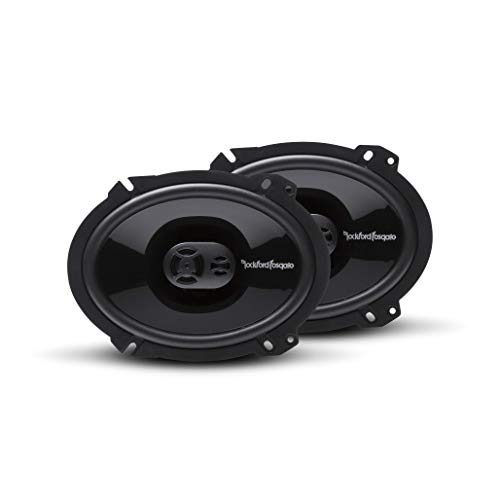 |
Rockford Fosgate P1683 Punch Best Build Quality 6×8 3-way coaxial, 130W peak, mineral-filled polypropylene cone, 91dB |
9.3 | 🛒 Check Price |
 |
Pioneer TS-A6880F Best for Stock Radios 6×8 4-way coaxial, 350W peak, multilayer mica matrix cone, 90dB |
9.1 | 🛒 Check Price |
 |
Kicker 47KSC68004 KS Series Best Midbass 6×8 coaxial, 300W peak, polypropylene cone, zero-protrusion tweeter, 90dB |
8.9 | 🛒 Check Price |
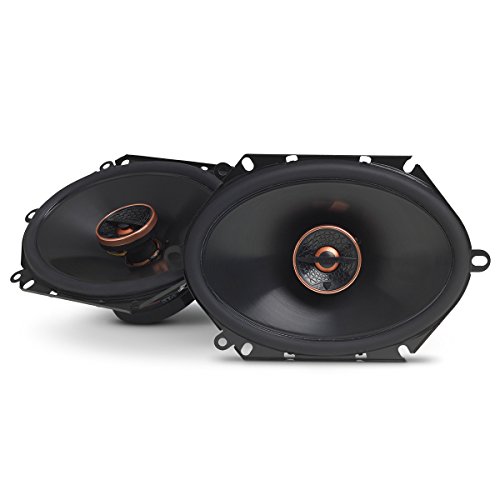 |
Infinity Reference REF-8632cfx Best Clarity 6×8 3-way coaxial, 270W peak, edge-driven textile tweeter, 93dB |
8.7 | 🛒 Check Price |
 |
Alpine S-S69 S-Series Best Balanced Sound 6×8/6×9 coaxial, 320W peak, carbon-fiber reinforced cone, silk dome tweeter |
8.5 | 🛒 Check Price |
 |
Polk Audio DB692 DB+ Series Best for Marine and Cars 6×8/6×9 3-way coaxial, 450W peak, marine certified, polymer cone, 92dB |
8.2 | 🛒 Check Price |
1. JBL Stadium GTO860C: Best Overall
The JBL Stadium GTO860C earns our top spot because it brings real component sound to a speaker size that’s usually stuck with budget coaxials. Instead of cramming a tweeter into the center of the woofer, JBL gives you separate tweeters and external crossovers, which lets you aim the highs toward your ears and lift the soundstage up onto the dash. The result is a clear, open sound with vocals that float in front of you instead of sounding like they come from the floor.
The Plus One cone gives this set genuine midbass authority, and the 92dB sensitivity means it gets satisfyingly loud straight off a stock radio. The honest catch is the install. Running tweeter wires and finding a clean spot to mount the tweeters and crossovers takes patience, and if you aren’t comfortable with that, a coaxial will be far less hassle. But if you put in the work, nothing else on this list images as well.
- True component design with separate crossovers for cleaner staging
- Patented Plus One woofer cone increases cone area for more midbass
- High 92dB sensitivity gets loud even from a factory head unit
Pros: Detailed, refined highs from the edge-driven tweeter; Strong midbass for a 6×8 thanks to the larger cone area; Efficient enough to sound great without an amp
Cons: Component install takes longer than a coaxial; Tweeters need a sensible mounting spot to shine
2. Rockford Fosgate P1683 Punch: Best Build Quality
Rockford Fosgate has built its reputation on speakers that take a beating and keep playing, and the P1683 Punch is exactly that. The mineral-filled polypropylene cone resists the heat and humidity that kill cheaper speakers, and the VAST design squeezes more cone surface out of the same frame for extra output. It’s a 3-way coaxial, so a dedicated midrange element helps vocals sound fuller and more present than a typical 2-way.
In our listening the Punch was the most neutral set here, with a smooth top end that never got fatiguing on long drives. The trade-off is that it plays it safe. If you want a speaker that exaggerates the bass to impress on the first listen, this isn’t it. The midbass is tight and accurate rather than boomy, and you may need to check your door pocket depth before buying, since it sits slightly deeper than some factory units.
- 3-way design adds a dedicated midrange for fuller vocals
- Integrated tweeter crossover protects the highs
- VAST technology increases the effective cone area
Pros: Rugged, well-damped cone handles abuse and heat; Clear, balanced sound with no harsh peaks; Excellent value from a trusted name
Cons: Mounting depth is a touch deeper than some factory pockets; Bass is tight rather than thunderous
3. Pioneer TS-A6880F: Best for Stock Radios
If you’re running a stock head unit and want the biggest audible jump for the least effort, the Pioneer TS-A6880F is hard to beat. The 4-way layout stacks a main cone, a midrange, and two tweeters, which gives the highs a crisp, sparkly character that instantly makes a tired factory system sound new again. The mica matrix cone keeps things rigid so the sound stays clean as you turn it up.
These drop right in for most owners and sound great even without an amp, which is exactly what most buyers in this segment want. The honest note is the voicing. Pioneer tunes the A-series on the bright, forward side, which is exciting at first but can feel a little hot on harsh recordings. Midbass is solid but not the deepest here. If you love detail and treble energy, you’ll love these. If you crave warmth, look at the Rockford or Kicker instead.
- 4-way design with two tweeters for extra sparkle up top
- Multilayer mica matrix cone stays rigid for cleaner output
- Open and smooth basket design keeps the install simple
Pros: Bright, lively highs that wake up a dull factory system; High power handling leaves room to add an amp later; Direct bolt-in fit in most vehicles
Cons: The bright tuning can sound forward to some ears; Midbass is good rather than class-leading
4. Kicker 47KSC68004 KS Series: Best Midbass
Kicker built the KS series for people who want their music to hit, and the 6×8 version delivers the most satisfying midbass of any coaxial on this list. The stiff polypropylene cone moves a lot of air for its size, so kick drums and bass lines come through with weight that the factory speakers simply can’t produce. The zero-protrusion tweeter sits flush, which means these clear tight factory grilles that other speakers can foul on.
The voicing is warm and full, which makes them forgiving on lower-quality streaming and easy to live with over long trips. The trade-off is at the very top. The tweeters are smooth and pleasant but don’t pull out quite as much fine detail as the JBL or Pioneer sets. They also reward a little amplifier power. Feed them from a stock radio and they’re good, but add even a modest amp and they truly come alive.
- Stiff polypropylene woofer cone digs out real midbass
- Zero-protrusion tweeter clears tight factory grilles
- EVC technology helps the speaker run cooler under load
Pros: Warm, punchy low end that fills the cabin; Easy fit thanks to the flush tweeter design; Handles amp power gracefully
Cons: Highs are smooth but slightly less detailed than JBL or Pioneer; Best results need a bit of power
5. Infinity Reference REF-8632cfx: Best Clarity
Infinity’s Reference line shares engineering DNA with JBL, and the REF-8632cfx brings two standout features to the 6×8 class: a remarkably high 93dB sensitivity and a switchable tweeter level. That sensitivity means these get loud on very little power, so they’re a smart pick for anyone keeping the stock head unit. The edge-driven textile tweeter produces clean, articulate highs, and the level switch lets you dial the treble up or down to match your taste and your car’s acoustics.
The Plus One glass-fiber cone keeps things light and quick, so detail and clarity are the real strengths here. The honest weakness is low-end weight. These prioritize speed and articulation over slam, so if midbass punch is your top priority, the Kicker or Rockford will satisfy more. The adjustable tweeter is also a little fiddly to set the first time, but once dialed in it’s a feature few rivals offer at this size.
- Very high 93dB sensitivity gets loud on minimal power
- Edge-driven tweeter with adjustable level for tuning
- Plus One glass-fiber cone for added cone area and stiffness
Pros: Exceptionally efficient, ideal for stock head units; Clean, articulate highs with a switchable tweeter level; Lightweight cone responds quickly
Cons: Bass is more polite than the Kicker or Rockford; Adjustable tweeter is fiddly to set the first time
6. Alpine S-S69 S-Series: Best Balanced Sound
Alpine’s S-Series is the choice for listeners who want a balanced, grown-up sound rather than exaggerated bass or sizzling treble. The carbon-fiber reinforced cone stays composed as you push the volume, and the silk dome tweeter gives the highs a smooth, natural quality that never gets harsh. It’s voiced to sound right across all kinds of music, which makes it an easy recommendation for people who listen to everything.
The included hardware lets these fit both 6×8 and 6×9 openings, which adds flexibility during install. The honest catch is that this even-handed tuning means they don’t grab your attention the way a brighter or bassier speaker does on the first listen. If you want fireworks, look elsewhere. If you want a speaker you’ll still enjoy a year from now, the S-S69 rewards patience with refined, fatigue-free sound that simply gets the music right.
- Carbon-fiber reinforced cone resists distortion at volume
- Smooth silk dome tweeter for natural, non-fatiguing highs
- Fits both 6×8 and 6×9 openings with included hardware
Pros: Even, refined sound from top to bottom; Silk tweeter is easy on the ears for long listens; Quality build with flexible mounting hardware
Cons: Less treble sparkle than the brighter Pioneer; Premium feel rather than budget pricing
7. Polk Audio DB692 DB+ Series: Best for Marine and Cars
The Polk Audio DB692 is the toughest speaker on this list, and that durability is its headline feature. It carries marine certification, meaning the cone, surround, and hardware are built to shrug off moisture, salt fog, and UV exposure. That matters more than people think, because car doors leak, and humidity is what quietly destroys most factory and budget aftermarket speakers over a few seasons. If you live somewhere wet or want one speaker that works in your truck and your boat, this is the answer.
It’s a 3-way coaxial with a dedicated midrange and a silk dome tweeter, and it plays loud and clean with good detail for the money. The honest trade-off is that the all-weather build prioritizes survival, so the very last bit of low-end detail and the imaging precision trail the JBL and Rockford picks. For a general-purpose, go-anywhere speaker that will outlast almost anything else here, though, the DB692 is tough to fault.
- Marine certified to resist moisture, salt fog, and UV
- 3-way design with dedicated midrange and silk dome tweeter
- Fits 6×8 and 6×9 with brackets for car, truck, boat, or UTV
Pros: Survives humidity and door leaks that kill normal speakers; Loud and detailed for the price; Works in cars, boats, and off-road rigs alike
Cons: Lower-end detail trails the top picks slightly; 3-way coaxial imaging isn’t as sharp as a component set
Frequently Asked Questions
Will 6×8 speakers fit a 5×7 opening?
Yes, in nearly every case. The 6×8 and 5×7 sizes share the same mounting bracket and bolt pattern, which is why most speakers in this class are sold as a combined 5×7/6×8 fitment. The 6×8 simply refers to the oval cone shape, while the screw holes line up identically. You can install a 6×8 in a 5×7 location, and vice versa, without any cutting or special adapters. Always double-check the product listing to confirm it lists both sizes, but the vast majority do.
Do I need an amplifier for 6×8 speakers?
No, you don’t need one, but it depends on your goals. Every speaker on this list will play and sound far better than your factory units straight off a stock head unit, especially the high-sensitivity models like the Infinity and JBL that are designed to get loud on minimal power. Still, models tuned for midbass, such as the Kicker, reward a small amplifier with noticeably more punch and headroom. If you mostly listen at moderate volumes, skip the amp. If you crave volume and bass slam, a modest four-channel amp transforms these speakers.
What is the difference between a coaxial and a component 6×8 speaker?
A coaxial speaker mounts the tweeter directly in the center of the woofer, so the whole unit drops into one location for a quick, simple install. A component set, like our top pick the JBL GTO860C, separates the tweeter from the woofer and adds an external crossover. This lets you mount the tweeters higher, near ear level, which lifts the soundstage and creates much better imaging and staging. Components sound better but take longer to install. For most people a quality coaxial is the right balance of effort and reward.
How many watts do I need for 6×8 car speakers?
Match the power to the speaker’s RMS rating, not its peak rating. Peak figures like 250 or 450 watts are marketing numbers for brief bursts. The RMS rating, usually a quarter to a third of the peak, is the continuous power the speaker handles safely. A factory head unit typically pushes around 15 to 18 watts RMS per channel, which is enough to enjoy any speaker here. If you add an amplifier, aim for an RMS output at or slightly above the speaker’s RMS rating for clean, distortion-free output.
Are 3-way 6×8 speakers better than 2-way?
Not automatically. A 3-way speaker adds a separate midrange driver between the woofer and tweeter, which can make vocals sound fuller and more present, as we found with the Rockford and Polk picks. However, a well-engineered 2-way with a great tweeter and crossover, like the Kicker, can easily outperform a mediocre 3-way. The number of drivers matters less than the quality of the components and the crossover design. Judge by listening and by the brand’s reputation, not by the way count printed on the box.
Our Verdict
For most drivers, the JBL Stadium GTO860C is the best 6×8 speaker you can buy, delivering true component-style imaging, strong midbass, and high efficiency that sounds great even from a stock radio, as long as you’re willing to handle the slightly longer install. If you prefer a simpler drop-in with bulletproof build quality and the most neutral, fatigue-free sound, the Rockford Fosgate P1683 Punch is our runner up and an easy recommendation. Whichever you choose, any speaker on this list is a massive upgrade over tired factory units, and all of them offer strong value for the sound they deliver.