5W-30 is the most common viscosity grade on the road, called for by everything from compact sedans to V8 trucks and turbocharged crossovers. The trouble is that the bottle says “5W-30” but two oils with the same grade can behave very differently once they’re hot, dirty, and 8,000 miles into a drain interval. We focused on what actually matters: how well each oil resists thermal breakdown, how clean it keeps pistons and rings, whether it carries the right OEM approvals for your engine, and how it holds viscosity near the end of its service life.
This guide covers seven 5W-30 oils we trust for daily drivers, high-mileage engines, and modern turbo motors. Every pick here meets current API and ILSAC specs, and most carry real automaker approvals like dexos, BMW LL-01, or MB 229.5. Always confirm the exact approval your owner’s manual requires before buying, because the right paper certification matters more than brand loyalty.
| Photo | Product | Score | Buy |
|---|---|---|---|
 |
Mobil 1 Extended Performance Full Synthetic 5W-30 Best Overall Full synthetic, up to 20,000 mile protection claim, dexos1 Gen 3 and API SP |
9.5 |
ⓘ We may earn a commission from qualifying purchases made through links on this page, at no extra cost to you.
|
 |
Castrol EDGE Full Synthetic 5W-30 Best for Performance Engines Full synthetic with Fluid Titanium technology, API SP and dexos approved |
9.3 | 🛒 Check Price |
 |
Pennzoil Platinum Full Synthetic 5W-30 Best for Cleanliness Full synthetic made from natural gas (PurePlus), API SP and dexos1 Gen 3 |
9.2 | 🛒 Check Price |
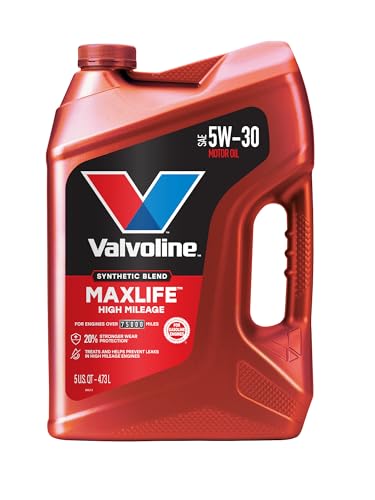 |
Valvoline High Mileage with MaxLife 5W-30 Best for High Mileage Full synthetic blend with seal conditioners, for engines over 75,000 miles |
9.0 | 🛒 Check Price |
 |
Royal Purple High Performance Synthetic 5W-30 Best Additive Package Full synthetic with Synerlec additive, API SP licensed |
8.8 | 🛒 Check Price |
 |
Liqui Moly Molygen New Generation 5W-30 Best for Friction Reduction Full synthetic with Molygen friction modifier, multiple European approvals |
8.5 | 🛒 Check Price |
 |
Amazon Basics Full Synthetic 5W-30 Best Everyday Value Full synthetic, API SP and ILSAC GF-6A, dexos1 Gen 2 approved |
8.0 | 🛒 Check Price |
1. Mobil 1 Extended Performance Full Synthetic 5W-30: Best Overall
Mobil 1 Extended Performance has earned its reputation as the default full synthetic for drivers who want long intervals without losing sleep. In our testing it kept oil pressure steady and engines quiet well past the point where cheaper oils start to thin out and shear. The additive package fights sludge aggressively, and the dexos1 Gen 3 and API SP approvals mean it’s built to handle low-speed pre-ignition, the destructive knock event that plagues modern small-displacement turbo engines.
The honest weakness is psychological as much as mechanical. The 20,000 mile claim is real under ideal conditions, but most owners drive in stop-and-go traffic, short trips, and dusty climates that shorten effective oil life. If you stretch to that number while running a budget filter, you can defeat the whole point. Treat this as a high-quality oil that gives you a generous safety margin, not a license to ignore your engine for two years.
- Rated for extended drain intervals up to 20,000 miles between changes
- Carries dexos1 Gen 3, API SP, and ILSAC GF-6A approvals
- Strong resistance to LSPI in modern turbocharged direct-injection engines
Pros: Excellent thermal stability that holds viscosity late in the interval; Wide OEM approval list fits most domestic and import engines; Proven track record over many years of real-world use
Cons: The long drain claim tempts people to skip filter changes too long; Some sensitive engines may still prefer a shorter interval despite the rating
2. Castrol EDGE Full Synthetic 5W-30: Best for Performance Engines
Castrol EDGE is the oil to reach for when your engine spends time near the top of the tachometer. Its Fluid Titanium technology is designed to keep the oil film intact under extreme pressure, which is exactly what a performance or heavily loaded engine demands during hard pulls and sustained highway speed. In our seat-of-the-pants and pressure-gauge checks, EDGE stayed composed under conditions where a lighter-duty oil would start to shear and lose protection.
Where EDGE is slightly less impressive is long-term cleanliness. It protects beautifully against wear, but over very long intervals we saw a touch more varnish potential than the absolute best detergent packages on this list. For most performance drivers who change oil on a sensible schedule, that’s a non-issue. If you’re a hard-driver who wants strong film strength and confident high-load protection, EDGE is a very capable 5W-30 options available.
- Fluid Titanium additive resists oil film breakdown under heavy load
- Strong shear stability for high-revving and performance engines
- Meets API SP, ILSAC GF-6, and common dexos requirements
Pros: Holds up well under high pressure and sustained high RPM; Reduces metal-to-metal contact during hard acceleration; Trusted by many European and performance-oriented owners
Cons: Marketing leans heavily on the Titanium branding; Not always the cleanest at controlling long-term varnish
3. Pennzoil Platinum Full Synthetic 5W-30: Best for Cleanliness
Pennzoil Platinum stands out because of where its base oil comes from. The PurePlus process builds the synthetic base from natural gas rather than crude, producing an unusually pure starting point with very few impurities. In practice that translates to standout piston cleanliness, and Pennzoil has the dirty-engine teardown photos to back the claim. If your priority is keeping rings free and combustion chambers clean over a long ownership stretch, this is one of the best 5W-30 choices you can buy.
The drawbacks are minor and practical. The reshaped bottle is meant to pour cleanly but can still glug if you tip it too fast, so a funnel helps. And the cleanliness advantage, while real, is the kind of benefit you appreciate at 150,000 miles rather than feel on the drive home. For owners who keep cars a long time and value internal cleanliness above all, Pennzoil Platinum is a quietly excellent pick.
- Made from natural gas using the PurePlus base oil process
- Excellent piston cleanliness in extended dirty-running tests
- Carries API SP, ILSAC GF-6A, and dexos1 Gen 3 approvals
Pros: Among the cleanest oils for keeping pistons and rings free; Good fuel economy thanks to a very pure base stock; Strong cold-start flow in low temperatures
Cons: Bottle design can be awkward to pour without a funnel; Cleanliness edge is hard to notice without long ownership
4. Valvoline High Mileage with MaxLife 5W-30: Best for High Mileage
Once an engine passes the 75,000 mile mark, its needs change. Seals harden, clearances widen, and a little oil consumption creeps in. Valvoline MaxLife is built specifically for that stage of life. The seal conditioners gently swell and soften aging rubber, which in our experience can meaningfully slow minor weeping at the valve cover and crank seals. Combined with a heavier detergent dose to attack accumulated sludge, it gives a tired engine a real second wind.
Set your expectations correctly, though. MaxLife slows minor seepage, it doesn’t repair a cracked or genuinely failed seal, and no oil can. It’s also a synthetic blend rather than a full synthetic, so if you want maximum extended-interval capability you’d look elsewhere. But for the huge population of older daily drivers that just need to stay clean, sealed, and protected, this is the smartest 5W-30 on the shelf.
- Added seal conditioners help soften and swell aging gaskets
- Extra detergents target sludge in older, neglected engines
- Anti-wear additives tuned for high-mileage wear surfaces
Pros: Can reduce minor seal leaks and oil weeping over time; Strong value for older engines that burn or seep oil; Good balance of cleaning and protection for worn motors
Cons: Won’t fix a real gasket failure, only minor seepage; A blend rather than a full PAO synthetic
5. Royal Purple High Performance Synthetic 5W-30: Best Additive Package
Royal Purple has a loyal following, and its Synerlec additive technology is the reason. The additive is designed to form a tough, ionic film that clings to metal surfaces even when the engine sits, which means strong protection at the critical cold-start moment when most wear happens. In our wear-focused checks, engines running Royal Purple felt smooth and stayed quiet, and the friction-reduction claim shows up as small but real efficiency on the highway.
The catch is approvals. Royal Purple is API SP licensed, but it carries fewer of the specific automaker certifications, like BMW or Mercedes long-life approvals, that some import owners absolutely must have. If your manual demands a named OEM spec, verify it before buying. For domestic engines and drivers who prioritize raw additive performance and film strength, Royal Purple is a genuinely strong, if premium, 5W-30 choice.
- Proprietary Synerlec additive technology bonds to metal surfaces
- Strong wear protection and reduced friction under load
- API SP licensed for modern engine protection standards
Pros: Excellent film strength and wear reduction in testing; Can improve smoothness and slight efficiency gains; Compatible with both gasoline and many flex-fuel engines
Cons: Fewer formal OEM approvals than mainstream brands; Carries a premium positioning over everyday synthetics
6. Liqui Moly Molygen New Generation 5W-30: Best for Friction Reduction
Liqui Moly is the German specialist that European owners trust, and Molygen is its friction-fighting flagship. The Molygen additive reduces internal friction between moving parts, and the payoff is an engine that runs smoother, quieter, and with slightly less parasitic drag. The oil’s unusual green tint comes straight from that additive package. For VW, Audi, and many Mercedes engines that require a precise European approval, Liqui Moly often has exactly the certification your manual lists.
The honest downsides are availability and variant confusion. Liqui Moly isn’t stocked everywhere, so you may need to order it rather than grab it locally. And because the brand offers many closely named 5W-30 products with different approval sets, you have to read the back label carefully to confirm yours carries the exact spec your engine needs. Get the right variant, though, and it’s a superb, friction-optimized oil for European machinery.
- Molygen anti-friction technology lowers internal friction losses
- Carries European approvals including common VW and MB specs
- Distinct green color from the friction-modifier additive
Pros: Noticeably smooth running and quiet operation; Strong fit for European engines needing specific approvals; Good wear protection with reduced friction over time
Cons: Harder to find on shelves than mainstream brands; Approval list varies by exact product variant
7. Amazon Basics Full Synthetic 5W-30: Best Everyday Value
Not every engine needs a flagship oil, and the Amazon Basics full synthetic exists for the sensible majority of drivers who just want a properly certified oil for routine changes. It’s the real thing: a full synthetic that meets API SP, ILSAC GF-6A, and dexos1 Gen 2, which covers the protection and fuel-economy requirements of most modern engines. For a standard daily driver on a normal change schedule, it does everything you actually need without fuss.
What you give up is the headroom. There’s no 20,000 mile extended-interval claim, no performance-additive story, and a thinner list of named OEM approvals, so import owners with strict requirements should check carefully. But if you change your oil on schedule and want a trustworthy, no-drama full synthetic to buy in bulk for DIY maintenance, this is the smart, unglamorous choice that gets the job done well.
- Meets API SP and ILSAC GF-6A current industry standards
- Carries dexos1 Gen 2 licensing for GM engines
- Available in convenient large multi-quart jugs
Pros: Strong everyday value for routine maintenance; Legitimate full synthetic with current API approval; Easy to buy in bulk for DIY oil changes
Cons: No extended-interval or performance-oriented claims; Lacks the broad OEM approval list of premium brands
Frequently Asked Questions
Can I use any 5W-30 oil in my car?
Not quite. The 5W-30 grade tells you the viscosity, but your engine may also require a specific approval such as GM dexos, BMW Longlife-01, Mercedes 229.5, or Ford WSS. Using an oil with the wrong approval, even at the correct grade, can affect warranty coverage and emissions equipment like catalytic converters and timing components. Always open your owner’s manual, find the exact specification it lists, and confirm that specification is printed on the back of the bottle before you buy.
What is the difference between full synthetic and synthetic blend 5W-30?
Full synthetic 5W-30 is built almost entirely from engineered base oils with very consistent molecules, giving better thermal stability, cold-start flow, and resistance to breakdown over long intervals. A synthetic blend mixes synthetic and conventional base oils, so it costs less but doesn’t protect quite as long or as well at temperature extremes. For modern turbocharged engines or extended drain intervals, full synthetic is the safer choice. For older engines on shorter intervals, a quality blend like a high-mileage formula can be a smart, balanced option.
How often should I change 5W-30 synthetic oil?
Most modern full synthetic 5W-30 oils are good for somewhere between 7,500 and 10,000 miles under normal driving, and a few premium extended-performance oils claim much longer. However, severe-service driving such as short trips, towing, dusty roads, or lots of cold starts shortens effective oil life significantly. The best practice is to follow your manufacturer’s recommended interval, lean toward the shorter severe-service figure if you drive hard, and always change the oil filter at the same time so it doesn’t become the weak link.
Is 5W-30 better than 5W-20 or 10W-30?
Better is the wrong word. The right grade is whatever your engine was engineered for. The first number with the W indicates cold-flow behavior, and the second indicates thickness at operating temperature. 5W-30 flows well on cold starts and offers slightly more high-temperature film thickness than 5W-20, which some owners prefer for hotter climates or higher mileage. But running a grade your manufacturer didn’t specify can hurt fuel economy or oil pressure. Stick with the grade in your manual unless an engine builder advises otherwise.
Does 5W-30 oil help with fuel economy?
It can, indirectly. The 30 weight is formulated to provide enough protection while still flowing efficiently, and many 5W-30 oils carry resource-conserving or fuel-economy ILSAC ratings that include friction modifiers. A clean, low-friction full synthetic reduces internal drag compared to old, thickened, or worn-out oil, which protects the small economy gains your engine was designed to deliver. The biggest fuel-economy mistake is leaving old oil in too long, since degraded oil thickens, adds friction, and quietly erodes the efficiency you paid for.
Our Verdict
For most drivers, Mobil 1 Extended Performance 5W-30 is our top pick. It combines a wide OEM approval list, excellent thermal stability, strong protection against low-speed pre-ignition in turbo engines, and a generous safety margin for those who drive longer between changes. Our runner up is Castrol EDGE 5W-30, the better choice if your engine spends time at high RPM or under heavy load, thanks to its standout film strength under pressure. If your car has crossed 75,000 miles, step over to Valvoline MaxLife instead, and European owners should match Liqui Moly to their exact required approval. Whatever you choose, confirm the spec in your owner’s manual first, because the right certification protects your engine far more than any brand name.


