5W-20 is a very common viscosity grades specified for modern American and Japanese engines, especially Ford, Honda, and many late-model four-cylinder and V6 cars. Running the correct grade matters because 5W-20 is engineered to flow fast on cold starts while still holding a protective film at operating temperature, and using a thicker oil your engine wasn’t designed for can hurt fuel economy and put extra load on the oil pump.
We compared seven of the most trusted 5W-20 oils sold on Amazon, looking at base oil quality, additive packages, cold-start flow, sludge resistance, and how well each holds up over extended drain intervals. Whether you want a true full synthetic for long change intervals, a high-mileage formula for an older engine that burns a little oil, or a dependable everyday option, there’s a pick here for your car.
| Photo | Product | Score | Buy |
|---|---|---|---|
 |
Mobil 1 Extended Performance Full Synthetic 5W-20 Best Overall Full synthetic, rated for up to 20,000 miles between changes, API SP / GF-6 licensed |
9.5 |
ⓘ We may earn a commission from qualifying purchases made through links on this page, at no extra cost to you.
|
 |
Castrol EDGE Full Synthetic 5W-20 Best for Wear Protection Full synthetic with fluid titanium technology, API SP licensed |
9.3 | 🛒 Check Price |
 |
Pennzoil Platinum Full Synthetic 5W-20 Best for Clean Engines Full synthetic made from natural gas (PurePlus base), API SP / GF-6 licensed |
9.2 | 🛒 Check Price |
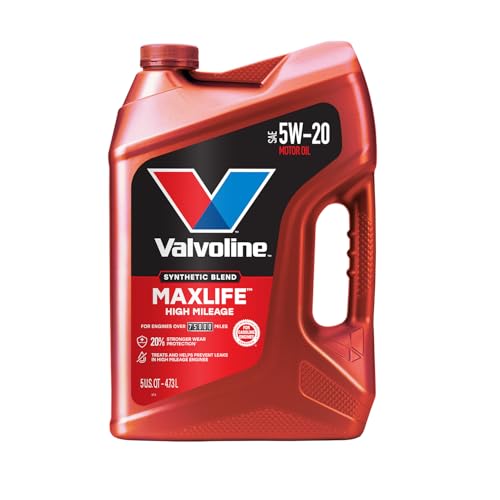 |
Valvoline High Mileage with MaxLife 5W-20 Best High Mileage Synthetic blend with seal conditioners, formulated for engines over 75,000 miles |
9.1 | 🛒 Check Price |
 |
Royal Purple High Performance 5W-20 Best for Performance Full synthetic with Synerlec additive technology, API SP licensed |
9.0 | 🛒 Check Price |
 |
Amazon Basics Full Synthetic 5W-20 Best Value Full synthetic, API SP / GF-6 licensed, rated up to 20,000 miles |
8.6 | 🛒 Check Price |
 |
Quaker State Full Synthetic 5W-20 Best Everyday Synthetic Full synthetic, API SP / GF-6 licensed, formulated for extreme conditions |
8.4 | 🛒 Check Price |
1. Mobil 1 Extended Performance Full Synthetic 5W-20: Best Overall
Mobil 1 Extended Performance is our top 5W-20 because it does the two things people actually buy synthetic oil for: it protects hard and it lasts. The full synthetic base resists thermal breakdown, so the oil stays in grade deep into a long drain interval instead of thinning out and leaving metal exposed. On cold winter mornings it pours and circulates quickly, which is exactly what the 5W winter rating is supposed to deliver, and the additive package does a clean job of keeping sludge and varnish off internal surfaces.
The honest weakness is that you pay for capability you may not use. If you change your oil every 3,000 to 5,000 miles out of habit, a standard synthetic will protect your engine just as well and you won’t get full value from the extended-life chemistry. This oil earns its keep when you genuinely run longer intervals and follow your car’s oil-life monitor, where its staying power separates it from cheaper full synthetics.
- Advanced full synthetic base with a long-life additive system
- Strong protection against sludge and high-temperature deposits
- Maintains viscosity and film strength over extended drain intervals
Pros: Excellent wear protection and cold-start flow; Genuinely supports very long change intervals; Widely available and meets current API SP / GF-6 specs
Cons: Premium positioning means it isn’t the value option for short intervals
2. Castrol EDGE Full Synthetic 5W-20: Best for Wear Protection
Castrol EDGE in 5W-20 is built around the idea of keeping a protective film intact when the oil is squeezed hardest, which is where many cheaper oils momentarily lose their grip and let metal touch metal. In stop-and-go traffic, towing, or spirited driving, that film strength translates into quieter operation and reassuring protection on the parts that wear first, like the cam lobes and bearings. It also handles heat well, so it doesn’t thin out and lose pressure when the engine is working hard in summer.
Where it gives a little ground is consumption and interval length. A handful of engines tend to sip a bit more EDGE between top-ups, so it’s worth checking your dipstick if you run longer intervals, and Castrol doesn’t position this oil for the same headline mileage as a dedicated extended-life product. For drivers who prioritize maximum protection under load over absolute longest drains, it’s an easy recommendation.
- Fluid Titanium additive helps reduce film breakdown under pressure
- Strong performance under high-load and high-rpm driving
- Holds viscosity well across a wide temperature range
Pros: Outstanding film strength under load; Good cold-flow and high-temperature stability; Trusted name with consistent quality
Cons: Some engines may consume slightly more between changes; Not marketed for the longest extended intervals
3. Pennzoil Platinum Full Synthetic 5W-20: Best for Clean Engines
Pennzoil Platinum stands out for how clean it keeps an engine. Its PurePlus base, made from natural gas rather than refined crude, starts life with very few impurities, and the additive package is tuned to keep pistons and rings free of carbon buildup. On a high-mileage engine that has accumulated some deposits, a few intervals on this oil can measurably reduce gunk, and that cleanliness helps rings seal properly, which protects both compression and fuel economy.
The catch is that this strength is partly invisible. If your engine is already well maintained and clean inside, you won’t see a dramatic before-and-after, and on paper its protection numbers sit right alongside the other top full synthetics rather than leaping ahead. It’s the pick for owners who care most about long-term internal cleanliness, especially on direct-injection engines prone to deposits.
- PurePlus base oil made from natural gas for high purity
- Excellent at keeping pistons clean and reducing deposits
- Strong fuel-economy and low-temperature performance
Pros: Exceptional engine cleanliness over time; Very pure base oil with few impurities; Good cold-start protection
Cons: Cleanliness edge is hard to notice on an already clean engine
4. Valvoline High Mileage with MaxLife 5W-20: Best High Mileage
Once a 5W-20 engine crosses 75,000 to 100,000 miles, the problems change: seals harden, the engine starts weeping a little oil, and consumption creeps up. Valvoline MaxLife High Mileage is built for exactly that stage. Its seal conditioners gently swell and soften aging rubber to slow leaks at the front and rear main and the valve covers, while extra anti-wear additives and detergents protect surfaces that already have some wear and keep deposits from making things worse.
It’s important to be clear about what it’s, a synthetic blend rather than a full synthetic, so it won’t match the absolute longest drain intervals of the premium oils above. That’s a fair trade for an older car, where dumping a fresh load of oil more often is cheaper than chasing a leak. If your 5W-20 engine has miles on it and is starting to drip or burn, this is the first thing to try.
- Seal conditioners help soften and swell aging gaskets to reduce leaks
- Extra detergents and anti-wear additives for worn engines
- Helps control oil burn-off in older motors
Pros: Targets oil leaks and consumption on older engines; Good detergency for high-mileage cleanliness; Strong value for what it offers
Cons: Synthetic blend, not full synthetic; Not the longest drain interval
5. Royal Purple High Performance 5W-20: Best for Performance
Royal Purple has a loyal following among performance-minded owners, and its 5W-20 leans into that reputation. The Synerlec additive technology forms a film that bonds to metal surfaces and resists being scraped away, which helps when an engine sees heat, high rpm, or boost. Several users report quieter valvetrains and slightly better compression after switching, which points to that film doing its job sealing rings and cushioning moving parts.
The honest limitation is that you’re paying for headroom most commuters will never reach. On a stock car driven gently, a mainstream full synthetic protects just as well day to day, and the gap only opens up when you push the engine hard or run it hot. For enthusiasts, tuners, or anyone who tows and wants extra margin, it’s a genuinely strong oil that justifies its place.
- Synerlec additive bonds to metal for tenacious film protection
- Strong resistance to high heat and oxidation
- Compatible with ethanol fuels and emissions systems
Pros: Tough protective film that clings under load; Excellent high-temperature stability; Can improve compression on some engines
Cons: Premium positioning for everyday use; Benefits are most noticeable under harder driving
6. Amazon Basics Full Synthetic 5W-20: Best Value
The Amazon Basics full synthetic 5W-20 is the smart pick for drivers who change their own oil on a regular schedule and don’t want to overpay for marketing. It’s a real full synthetic licensed to the current API SP and GF-6 standards, which means it has cleared the same industry wear, deposit, and fuel-economy tests as the name brands. For routine 5,000 to 7,500 mile intervals it protects a modern 5W-20 engine without any drama.
What you give up is the long, proven track record and the slightly more sophisticated additive chemistry of the established players, so this isn’t the oil we would pick to push toward a 15,000 mile interval. Used as intended, on a sensible schedule, it does everything a daily driver needs and stretches your maintenance budget further than almost anything else here.
- Genuine full synthetic that meets current API SP specs
- Solid cold-start flow and wear protection
- Strong everyday value for routine maintenance
Pros: True full synthetic that meets the right specs; Excellent value for regular oil changes; Widely stocked and convenient to reorder
Cons: Lacks the proven long-interval track record of premium brands; Additive package is competent rather than standout
7. Quaker State Full Synthetic 5W-20: Best Everyday Synthetic
Quaker State Full Synthetic is a no-fuss everyday 5W-20 that quietly does its job. It’s a fully licensed full synthetic, so it clears the same API SP and GF-6 hurdles as the more expensive oils, and it’s formulated to hold up in both extreme heat and cold starts, which covers the conditions most North American drivers actually face. For someone who wants a reliable synthetic for normal change intervals and doesn’t want to overthink it, this is a safe, sensible choice.
Its weakness is simply that it doesn’t lead in any single category. It isn’t the cleanest, not the longest-lasting, and not the toughest under load, just solidly competent across the board. That makes it a fine default for a daily commuter, but if you have a specific need like high mileage or very long intervals, one of the more specialized oils above will serve you better.
- Full synthetic protection against engine wear and friction
- Good performance in extreme hot and cold conditions
- Meets current API SP and GF-6 industry standards
Pros: Dependable full synthetic protection; Handles temperature extremes well; Easy to find and good everyday value
Cons: Doesn’t stand out against the category leaders; Modest additive package compared to premium oils
Frequently Asked Questions
Can I use 5W-30 instead of 5W-20 in my engine?
It’s best to stick with what your owner’s manual specifies. 5W-20 and 5W-30 share the same 5W cold-start rating, but the 30 grade is thicker at operating temperature. Engines designed for 5W-20 have tight tolerances and oil pumps tuned for that thinner oil, so running 5W-30 can slightly reduce fuel economy and increase load on the pump. A one-time use in a pinch usually won’t cause damage, but for regular use, follow the manufacturer’s grade. Some manuals list 5W-30 as an acceptable alternative in very hot climates, so check yours before switching.
How often should I change 5W-20 full synthetic oil?
For most modern engines running a quality full synthetic 5W-20, intervals of 7,500 to 10,000 miles are common, and some premium extended-life oils are rated for even longer. The best guide is your car’s oil-life monitor or the severe-versus-normal service schedule in your manual. If you do a lot of short trips, idling, towing, or dusty driving, that counts as severe service and you should change more often. Synthetic blends and high-mileage oils generally do better on shorter intervals around 5,000 to 7,500 miles.
Is full synthetic 5W-20 worth it over a conventional oil?
For most drivers, yes. Full synthetic 5W-20 flows better on cold starts, resists thermal breakdown, keeps the engine cleaner, and holds its grade longer, which means better protection and the ability to run longer intervals. Because you can safely stretch the time between changes, the higher per-bottle outlay often evens out over the life of the engine. Conventional or blend oils still work fine if you change them on a shorter schedule, but on a turbocharged, direct-injection, or high-mileage engine, full synthetic is the safer long-term choice.
Which cars commonly require 5W-20 oil?
5W-20 is specified by many Ford, Honda, Acura, Mazda, and Hyundai or Kia models, along with a broad selection of other late-model four-cylinder and V6 engines, especially those built for fuel efficiency. Ford and Honda in particular have used 5W-20 across many of their engines for two decades. Always confirm by checking your owner’s manual or the oil-cap label, since the same model can call for a different grade depending on the engine and model year.
Will switching to a high-mileage 5W-20 stop my engine from leaking oil?
It can help slow minor leaks, but it isn’t a guaranteed fix. High-mileage 5W-20 oils contain seal conditioners that soften and gently swell aging rubber gaskets and seals, which often reduces small weeps and seepage on engines past 75,000 to 100,000 miles. It won’t repair a cracked seal, a failed gasket, or a major leak, those need mechanical attention. Think of high-mileage oil as maintenance that buys time and reduces minor consumption, not as a substitute for an actual repair when the leak is significant.
Our Verdict
For most drivers, Mobil 1 Extended Performance Full Synthetic 5W-20 is the best overall choice thanks to its outstanding wear protection, fast cold-start flow, and genuine ability to support long drain intervals. Our runner up is Castrol EDGE 5W-20, which leads on film strength under load and is the one to reach for if you tow, push the engine hard, or simply want maximum protection at the points that wear first. If your car has higher mileage, Valvoline MaxLife High Mileage remains the smartest pick to slow leaks and control consumption. Whatever you choose, always match the grade in your owner’s manual and change on a sensible schedule.

