A 5th wheel hitch lives or dies on three things: how much weight it can safely carry, how smoothly the head pivots over rough pavement, and how easy it’s to drop in and out of your truck bed when you need the space back. Get it wrong and you fight chucking, jaw rattle and a coupling that never seems to latch cleanly. Get it right and a 16,000 pound trailer follows your truck like it’s bolted on.
We pulled real loads with the most popular 5th wheel hitches on the market, dropping and re-seating each one, towing on broken asphalt, and checking how well the jaws wrapped the kingpin after a few hundred miles. Below are the seven hitches that earned their spot, ranked best first, with an honest look at where each one falls short so you can match the right unit to your truck and trailer.
| Photo | Product | Score | Buy |
|---|---|---|---|
 |
B&W Companion RVK3500 5th Wheel Hitch Best Overall 20,000 lb GTW, 5,000 lb pin weight, fits B&W Turnoverball gooseneck |
9.5 |
ⓘ We may earn a commission from qualifying purchases made through links on this page, at no extra cost to you.
|
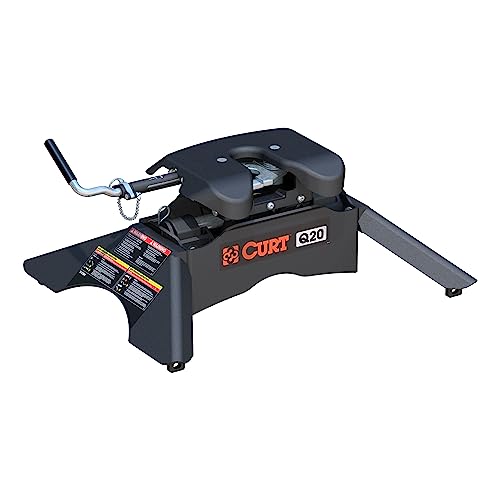 |
Curt Q20 5th Wheel Hitch with Roller Best for Smooth Towing 20,000 lb GTW, 5,000 lb VTW, dual-pivot head with spherical axial bearing |
9.3 | 🛒 Check Price |
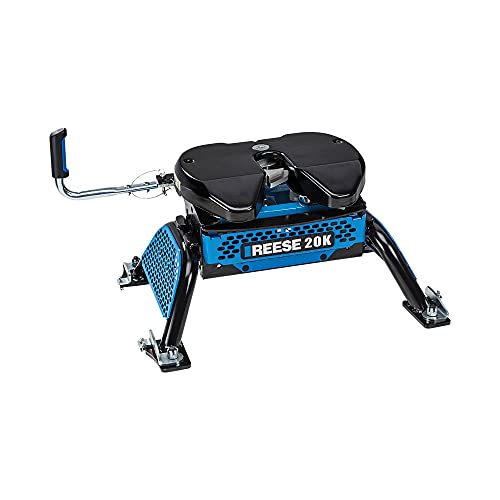 |
Reese M5 20K 5th Wheel Hitch Best Articulation 20,000 lb GTW, 5,000 lb VTW, fully articulating head, rubber grommet dampening |
9.1 | 🛒 Check Price |
|
B&W Patriot 18K 5th Wheel Hitch Best Easy Coupling 18,000 lb GTW, 4,500 lb pin weight, single-handle operation, dual jaws |
8.9 | 🛒 Check Price |
 |
Pro Series 30857 16K 5th Wheel Hitch Best Value Workhorse 16,000 lb GTW, 4,000 lb VTW, single-jaw latch, includes rail kit |
8.6 | 🛒 Check Price |
 |
Andersen 3220 Ultimate 5th Wheel Connection Lightest to Handle 20,000 lb GTW, 4,500 lb pin weight, gooseneck-mounted, under 35 lb funnel |
8.4 | 🛒 Check Price |
 |
Demco Recon 21K 5th Wheel Hitch Best Heavy-Duty Capacity 21,000 lb GTW, 5,250 lb VTW, dual jaws, fits Demco and common puck systems |
8.2 | 🛒 Check Price |
1. B&W Companion RVK3500 5th Wheel Hitch: Best Overall
The B&W Companion earns the top spot because it solves the problem most 5th wheel owners complain about: that constant fore-and-aft chucking through the cab on stop-and-go driving. The cam-action jaws close completely around the kingpin instead of pinching it, so once you back into the coupler and the latch snaps over, the connection is genuinely tight. On broken pavement our test trailer stayed planted with none of the surge-and-jerk you feel from looser couplers.
The clever part is the mounting. Instead of bolting a rail kit into your bed, the Companion drops into a B&W Turnoverball gooseneck hole, which means when you pull the hitch your bed is completely flat and usable. The honest weakness is that this only works if you already run, or are willing to install, the Turnoverball under-bed system, and the head itself is heavy enough that removing it’s a two-hands, bent-knees job. If you tow often and value a clean bed, it’s worth the effort.
- Cam-action latching jaws wrap fully around the kingpin to kill chucking
- Mounts to the B&W Turnoverball gooseneck ball hole, no bed rails needed
- Single-piece head removes in seconds for a clear truck bed
Pros: Near-zero slop thanks to the wrap-around jaw design; No permanent rails cluttering the bed when the hitch is out; Heavy-duty 20,000 lb rating handles big toy haulers
Cons: Requires a B&W Turnoverball under-bed gooseneck already installed; The full assembly is heavy and awkward for one person to lift
2. Curt Q20 5th Wheel Hitch with Roller: Best for Smooth Towing
The Curt Q20 is the hitch to buy if your routes are full of frost heaves, washboard gravel and uneven highway joints. Its spherical axial bearing under the head lets the coupler pivot side to side and front to back at the same time, so the trailer kingpin never binds against the jaws when the truck and trailer go out of plane. That freedom of movement translates directly into a quieter, smoother ride and far less stress on the kingpin box.
Hitching is forgiving too. The wide self-aligning skirt funnels the kingpin straight into the dual jaws, which then wrap from both sides and clamp out the rattle. The drawback is purely physical: the Q20 head is dense, heavy steel, and getting it in and out of the bed solo is a genuine effort. You also need to buy the matching Curt rail or puck adapter for your specific truck, so factor that into your setup before you commit.
- Dual-jaw design wraps the kingpin from both sides for a snug lock
- Spherical axial bearing lets the head pivot in every direction
- Self-aligning anti-rattle skirt guides the kingpin into the throat
Pros: Exceptionally smooth articulation soaks up uneven roads; Wide funnel mouth makes hitching up on the first try easy; Continuous welds and a thick steel head feel built to last
Cons: Heavy head section is a real workout to install or remove; Needs a compatible Curt rail or puck system sold separately
3. Reese M5 20K 5th Wheel Hitch: Best Articulation
The Reese M5 is built around movement. Where some hitches let the trailer pivot on one axis, the M5 head flexes in multiple directions, and Reese pairs that motion with rubber grommets sandwiched between the head and its base. The result on our test loop was a tow that felt cushioned, with the sharp jolts of expansion joints and potholes softened before they reached the cab. For anyone who has felt a stiff hitch slam through the truck on a rough road, the difference is obvious.
The double jaws close around the kingpin and the funnel mouth makes lining up straightforward, even when you can’t see the coupler from the cab. The honest trade-off is that all that articulation and dampening hardware makes the head heavier and bulkier than a basic unit, so removal takes muscle. As with the others in this class, the base or rail kit is matched to your truck and bought separately, so confirm fitment before ordering.
- Head articulates side to side and front to back to absorb road shock
- Rubber grommets between head and base dampen noise and vibration
- Wide-mouth funnel and double jaws latch securely around the pin
Pros: Multi-directional articulation gives one of the smoothest tows evaluated; Rubber dampening noticeably cuts metal-on-metal clatter; Strong 20,000 lb capacity covers most large fifth wheels
Cons: The articulating head adds weight and bulk; Rail or base system must be matched to your truck separately
4. B&W Patriot 18K 5th Wheel Hitch: Best Easy Coupling
The B&W Patriot is the hitch for people who hate fighting with their coupler. Everything works off one handle: pull it to open both jaws, back in, and the funnel guides the kingpin to center before the jaws snap closed around it. There’s no juggling separate latches or crawling into the bed to check the lock. The independent, self-adjusting jaws are the standout feature, because they keep wrapping the pin snugly even after months of wear, which keeps rattle from creeping in over time.
Day to day this is one of the friendliest hitches to live with, and the 18,000 pound rating is plenty for the majority of fifth wheels on the road. The two honest caveats are capacity and ergonomics. If you run a heavy toy hauler near the 20K range, step up to a bigger unit. And the upright operating handle, while convenient in an open bed, can be a tight reach if you have a tonneau or topper limiting your room to work.
- Single handle locks and unlocks both jaws in one motion
- Funnel design self-centers the kingpin during backup
- Independent jaws self-adjust to wrap worn or new pins tightly
Pros: One-handle operation makes hitching and unhitching simple; Self-adjusting jaws stay tight even as parts wear in; Solid 18,000 lb rating suits most mid to large trailers
Cons: Lower capacity than the 20K units for the biggest haulers; Standing-height handle can be awkward in a covered bed
5. Pro Series 30857 16K 5th Wheel Hitch: Best Value Workhorse
The Pro Series 30857 is the dependable, no-drama choice and one of the few in this guide that ships with a universal rail kit, so you aren’t hunting for a separate base to make it work. The latch is a straightforward single-jaw, slide-bar mechanism with very little to go wrong, and the wide funnel head still makes lining up the kingpin easy on the first attempt. For a typical family fifth wheel under 16,000 pounds, it does exactly what you need without fuss.
Where it gives ground to the premium units is refinement. A single jaw doesn’t wrap the kingpin from both sides the way the B&W and Curt designs do, so you’ll feel a little more chucking on rough roads and through panic stops. It’s also genuinely a 16K hitch, so it isn’t the unit for a heavy toy hauler that flirts with that ceiling. Inside its intended weight range, though, it delivers a lot of capability for the money and the included rails make it an easy first hitch.
- Single locking jaw with a sturdy slide-bar latch mechanism
- Comes with a universal rail kit for a complete install
- Wide funnel head helps guide the kingpin into the throat
Pros: Includes the rails, so it’s a more complete out-of-box solution; Simple, rugged latch with few parts to fail; Solid 16,000 lb capacity for everyday fifth wheels
Cons: Single-jaw design allows a bit more chucking than wrap-around jaws; Not for the heaviest trailers near or above 16K
6. Andersen 3220 Ultimate 5th Wheel Connection: Lightest to Handle
The Andersen Ultimate rethinks the whole category. Instead of a heavy steel head on bed rails, it uses a funnel-and-coupler that mounts to your existing gooseneck ball, and the trailer kingpin drops into the funnel where a urethane bushing handles the pivoting. The headline benefit is weight: the pieces are light enough to carry one-handed, so install and removal are far less of an ordeal than wrestling a 100-plus pound steel head, and your bed sits nearly flat when it’s out. It’s also greaseless, which means no black smear on the bed or your sleeves.
The honest reality is that it tows differently and asks for a little learning. The first few hitch-ups take attention because the kingpin has to seat fully into the funnel before the coupler will lock, and if it isn’t square it simply won’t catch. Some longtime jaw-hitch owners find the cushioned feel takes getting used to. But for anyone who values a light, clean, easy-to-handle setup and a flat bed, the Andersen is a genuinely smart alternative.
- Mounts to an existing gooseneck ball for a near-flat bed
- Greaseless funnel and coupler ride on a urethane bushing
- Whole system breaks down into light, one-hand-liftable pieces
Pros: Dramatically lighter and easier to install than steel rail hitches; Greaseless design keeps your bed and clothes clean; Leaves the truck bed almost completely flat when removed
Cons: Different feel takes some adjustment versus a traditional jaw hitch; Kingpin must seat correctly or the coupler won’t lock
7. Demco Recon 21K 5th Wheel Hitch: Best Heavy-Duty Capacity
The Demco Recon is the pick when raw capacity is the priority. Its 21,000 pound rating is the highest in this guide, which makes it the natural choice for large toy haulers and big multi-slide fifth wheels that push other hitches to their limit. The dual wrap-around jaws clamp the kingpin from both sides, so even with a heavy trailer behind you the connection stays tight and the chucking that plagues single-jaw units is kept in check. It also plays nicely with several factory puck systems and common rails, which widens your fitment options.
That heavy-duty build comes with heavy-duty weight, and the Recon head is among the most demanding to lift in and out of the bed, so plan on help or a careful two-stage removal. The other thing to watch is height: the Recon sits fairly tall, and on a shorter or lower-clearance trailer you’ll want to confirm your kingpin box and ramp angles work with its stance before towing. For owners hauling at the upper end of the weight range, the extra capacity and tight jaws are worth those compromises.
- High 21,000 lb rating handles the largest fifth wheels
- Dual wrap-around jaws clamp the kingpin to limit chucking
- Compatible with several factory puck and rail systems
Pros: Top-tier 21,000 lb capacity for big toy haulers; Dual jaws keep the coupling tight on rough roads; Broad compatibility across puck and rail setups
Cons: Among the heaviest heads here, hard to remove alone; Tall stance may sit high for some shorter trailers
Frequently Asked Questions
What capacity 5th wheel hitch do I need?
Match the hitch to two numbers from your trailer: its gross trailer weight, or GTW, fully loaded, and its pin weight, which is usually 15 to 25 percent of the loaded trailer weight resting on the hitch. Pick a hitch whose GTW rating comfortably exceeds your loaded trailer and whose vertical load rating exceeds your real pin weight, with margin to spare. A common family fifth wheel is well served by a 16K to 18K hitch, while large toy haulers and multi-slide rigs call for a 20K or 21K unit. Never size a hitch right at your maximum loaded weight, since loading is rarely perfect and headroom keeps the connection safe.
What causes 5th wheel chucking and how do I stop it?
Chucking is that fore-and-aft jerking you feel in the cab when the trailer surges against the hitch on uneven roads or during throttle and brake changes. It comes from slop in the coupling, the small gap between the kingpin and the jaws. Hitches with wrap-around dual jaws, like the B&W Companion and Curt Q20, close completely around the pin and largely eliminate that gap, which is why they tow so quietly. Worn jaws, an over-greased or under-greased plate, and incorrect pin box height can all make chucking worse, so keep the jaws snug and the head at the right height for your trailer.
Can I install a 5th wheel hitch myself?
Many owners do, but it’s a serious job. Rail-mounted hitches require drilling and bolting a rail kit through the truck bed into the frame, which demands accurate measuring, proper torque on every fastener, and often dropping or lifting the bed for access. Gooseneck-mounted options like the B&W Companion and Andersen Ultimate are simpler if you already have an under-bed gooseneck installed, since the head just drops into the ball hole. If you aren’t comfortable working under a truck and torquing frame bolts to spec, have a trailer shop handle the base install, then you can drop the head in and out yourself.
What is the difference between a slider and a fixed 5th wheel hitch?
A fixed hitch holds the head in one spot over the rear axle. A slider lets the head move rearward several inches so the trailer can pivot farther without the front cap of the trailer striking the truck cab during sharp, slow-speed turns. Sliders matter mainly for short-bed trucks, roughly six and a half foot beds, where cab clearance is tight. Long-bed trucks, around eight foot beds, usually have enough room that a fixed hitch is fine. The hitches in this guide are primarily fixed-style heads, so if you tow with a short-bed truck, confirm your cab clearance or choose a sliding setup.
Do I need to grease a 5th wheel hitch?
Traditional steel-head hitches need lubrication between the kingpin plate and the trailer skid plate so the two surfaces slide cleanly during turns. Most owners use a plastic lube plate or apply grease directly, which cuts wear and reduces groaning noises. If you dislike the mess, greaseless designs like the Andersen Ultimate use a urethane bushing so there’s nothing to smear on your bed or clothes. Whichever you choose, keep the jaw mechanism itself clean and lightly lubricated so it latches and releases smoothly, and inspect it periodically for wear.
Our Verdict
For most truck owners the B&W Companion RVK3500 is the hitch to beat, combining wrap-around jaws that kill chucking with a gooseneck mount that leaves your bed flat when the hitch is out, all backed by a stout 20,000 pound rating. Our runner up is the Curt Q20, whose spherical bearing head delivers the smoothest articulation we researched and a forgiving funnel that makes hitching up easy. Choose the Companion if you already run a Turnoverball gooseneck and want the cleanest bed, and step to the Q20 if your roads are rough and you want the most cushioned, easy-to-couple tow available.


