A 4 channel amplifier is the most flexible amp you can put in a car. It gives you enough channels to drive a full set of front and rear door speakers cleanly, or you can bridge two of those channels down to a single subwoofer and still power your highs. That versatility is exactly why most first upgrades and most show builds start here. The hard part is that the market is crowded with inflated power claims, so the rated wattage on the box rarely tells you how the amp actually behaves once it’s wired into a real system.
We focused on what matters in daily use: honest RMS output at the impedances people actually run, low noise floor, sensible gain and crossover controls, and build quality that survives the heat and vibration of a vehicle. Below are seven 4 channel amplifiers we trust, ranked best first, with the real weaknesses called out so you know what you’re getting before you wire it in.
| Photo | Product | Score | Buy |
|---|---|---|---|
 |
Rockford Fosgate P400X4 Punch Best Overall 4 x 50W RMS at 4 ohms, 4 x 100W RMS at 2 ohms, 2 x 200W bridged |
9.5 |
ⓘ We may earn a commission from qualifying purchases made through links on this page, at no extra cost to you.
|
 |
JL Audio XD400/4v2 Best Sound Quality 4 x 75W RMS at 4 ohms, 4 x 100W RMS at 2 ohms, NexD Class D |
9.3 | 🛒 Check Price |
 |
Alpine MRV-F300 Best Compact Class D 4 x 50W RMS at 4 ohms, 4 x 75W RMS at 2 ohms, 2 x 150W bridged |
9.1 | 🛒 Check Price |
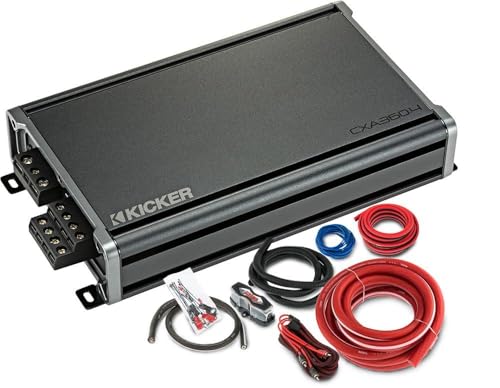 |
Kicker 46CXA3604T CX Series Best for a Bridged Sub 4 x 90W RMS at 4 ohms, 4 x 90W RMS at 2 ohms, 2 x 180W bridged |
8.9 | 🛒 Check Price |
 |
Pioneer GM-A6704 Best Value Allrounder 4 x 100W RMS at 4 ohms, 4 x 130W RMS at 2 ohms, 2 x 260W bridged |
8.7 | 🛒 Check Price |
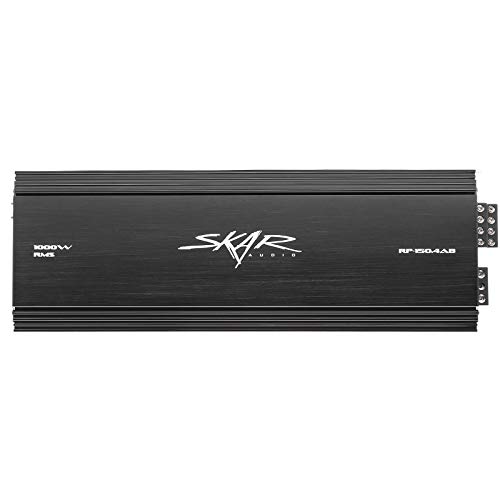 |
Skar Audio RP-150.4AB Most Power Per Channel 4 x 150W RMS at 2 ohms, 4 x 90W RMS at 4 ohms, 2 x 300W bridged |
8.5 | 🛒 Check Price |
 |
BOSS Audio Systems R1004 Best Entry Level 4 x 100W max per channel, 4 ohm stable, MOSFET power supply |
8.1 | 🛒 Check Price |
1. Rockford Fosgate P400X4 Punch: Best Overall
The Punch P400X4 is the amp we keep coming back to because it does the boring things perfectly. Rockford Fosgate rates it at 50 watts RMS per channel into 4 ohms and 100 watts into 2 ohms, and unlike a lot of competitors those numbers hold up on a meter instead of evaporating once the bass hits. Bridge two channels and you get 200 watts for a sub while the other pair still runs your front stage, which is the classic four channel use case done right.
The Punch EQ and built in crossovers give you enough tuning to dial out harshness without a separate processor, and the cast heatsink handles long drives without shutting down. The honest weakness is heat. This is a Class AB design, so it draws more current and runs warmer than the Class D amps below it, and tucking it inside a sealed kick panel with no airflow is asking for thermal protection to kick in. Give it room to breathe and it rewards you with easy, grain free power.
- Punch EQ with onboard bass boost and selectable high and low pass crossovers
- Cast aluminum heatsink with top mounted controls for tight install spaces
- MEHSA3 thermal management and Class AB output for a clean, controlled sound
Pros: Rated power is conservative and the amp hits it under load; Excellent build quality and a noise floor that stays quiet at high gain; Flexible crossovers make a full front, rear, and bridged sub setup easy
Cons: Runs warmer than newer Class D amps and needs a little airflow; Top mounted controls are great until the amp is hidden behind a panel
2. JL Audio XD400/4v2: Best Sound Quality
JL Audio earned its reputation by making Class D amps that don’t sound like old Class D amps, and the XD400/4v2 is the proof. It delivers a genuine 75 watts RMS per channel at 4 ohms in a chassis you can hide almost anywhere, and the NexD switching design keeps it cool enough to mount in tight, poorly ventilated spots that would cook a Class AB amp. If you care about a crisp, detailed front stage more than raw volume, this is the one.
The differential balanced inputs are the quiet hero here. They scrub out the alternator whine and ground noise that plague budget installs, so the amp stays dead silent even at high gain. The catch is the setup experience. The gain and crossover controls are tiny and recessed, and getting them precise really wants a small screwdriver and patience. Once tuned, though, the imaging and clarity punch well above what the modest size suggests.
- Compact NexD Class D chassis that runs cool and saves install space
- Full range Class D with surprisingly clean, detailed high frequency output
- Differential balanced inputs reject engine noise and alternator whine
Pros: Outstanding clarity and detail for a Class D amplifier; Tiny footprint fits behind seats and under trim with ease; Very low noise floor thanks to balanced inputs
Cons: Controls are small and fiddly to set without a screwdriver; Premium build means it’s harder on the value scale than rivals
3. Alpine MRV-F300: Best Compact Class D
The MRV-F300 is Alpine’s answer to anyone who wants a real four channel upgrade without giving up trunk or under seat space. It’s genuinely tiny, runs cool thanks to its Class D output, and sips current compared to older designs, so it slots neatly into a stock electrical system without forcing a big wire upgrade. For powering an aftermarket set of component and coaxial speakers, it’s a clean, no drama choice.
Output sits at 50 watts RMS per channel into 4 ohms, with 150 watts available bridged, which is plenty for a mild sub but not the amp to lean on if you want chest thumping low end. There’s no bass boost and the controls are deliberately minimal, so tuners who like to fine tune every parameter may feel boxed in. As a quiet, efficient, set and forget amp for a full speaker stage, though, it’s hard to fault.
- Ultra compact Class D design that mounts almost anywhere in the cabin
- Variable high and low pass crossovers on every channel pair
- Efficient power draw that’s easy on smaller electrical systems
Pros: Very small and light, ideal for tight modern interiors; Cool running and efficient, simple to wire on a stock alternator; Clean, balanced output that pairs well with factory style speakers
Cons: Less bridged power than bigger amps for a demanding subwoofer; Basic onboard controls with no bass boost
4. Kicker 46CXA3604T CX Series: Best for a Bridged Sub
Kicker built the CXA360.4 for people who want one amp to run loud doors and a healthy subwoofer at the same time. The headline is that it makes 90 watts RMS per channel whether you load it at 4 ohms or 2 ohms, so you don’t lose much when you wire speakers in parallel. Bridge a pair and you get 180 watts for a sub, which gives a single 10 or 12 inch driver real authority while the remaining channels handle the highs.
The CX series sound is punchy and forward, which suits bass heavy music well, and the FIT2 tuning plus adjustable crossovers let you blend the sub into the front stage cleanly. The honest drawback is heat under sustained abuse. There’s no fan, so if you hold it near full output on a hot day the chassis warms up and can throttle back. For normal spirited listening it stays comfortable, and the power on tap is excellent for the size.
- Class D output rated at 90 watts per channel into 4 or 2 ohms
- KnobLink remote bass control compatibility for on the fly adjustment
- FIT2 EQ optimization and adjustable 12 dB crossovers
Pros: Strong, consistent power into both 4 and 2 ohm loads; Plenty of bridged output for a serious door and sub combo; Compact chassis with a clean, punchy character
Cons: Fan free design can get warm when pushed hard for long periods; Remote bass knob is sold separately
5. Pioneer GM-A6704: Best Value Allrounder
The GM-A6704 is the amp we point first time buyers to when they want maximum bang for the install. Pioneer rates it at 100 watts RMS per channel into 4 ohms with 260 watts available bridged, and even allowing for some optimism in those numbers, it puts out plenty to wake up a full set of door speakers or to bridge into a modest sub. The onboard bass boost, variable crossovers, and bass remote support give you real control without spending extra on a processor.
The trade off is physical. This is a traditional Class AB amplifier, so it’s larger and warmer than the slim Class D units higher on this list, and it wants a mounting spot with some airflow. Like most amps in this class, the actual measured output sits a notch under the headline peak rating, so treat the RMS figures as your real budget. For a dependable, feature rich four channel amp that drives almost any common speaker setup, it remains one of the easiest recommendations around.
- High output Class AB design with strong RMS ratings across all channels
- Variable low and high pass filters plus bass boost on board
- Wired bass remote ready for in dash level control
Pros: A lot of usable power for the channels on offer; Generous tuning controls including bass boost; Reliable, widely supported brand with easy parts availability
Cons: Class AB chassis is larger and runs warmer than Class D rivals; Real world output is a bit below the printed peak figures
6. Skar Audio RP-150.4AB: Most Power Per Channel
If your priority is raw watts per channel, the Skar RP-150.4AB makes a strong case. It’s a full range Class AB amp rated at 150 watts RMS per channel into 2 ohms and 90 watts into 4 ohms, with 300 watts available bridged. That’s enough to drive power hungry component sets hard or to run a stout subwoofer off a bridged pair while the rest of the system keeps up. The gain, crossover, and bass boost controls are all there for serious tuning.
All that output has a cost in current draw. To get the full rated power without the amp starving, you really want upgraded power and ground wiring and a strong electrical system, and the chassis is on the larger side so plan your mounting space. It isn’t the most refined sounding amp here, but for enthusiasts who want loud, energetic output and the headroom to drive difficult loads, it delivers a lot of muscle for what it’s.
- Full range Class AB amp rated up to 150 watts per channel at 2 ohms
- Variable gain, bass boost, and high and low pass crossovers
- Heavy duty heatsink and high current power supply for hard use
Pros: Big channel power for driving demanding aftermarket speakers; Strong bridged output for a high excursion sub; Aggressive build aimed at enthusiasts who push their systems
Cons: Draws significant current and may want a bigger ground and power wire; Larger footprint that eats into install space
7. BOSS Audio Systems R1004: Best Entry Level
The BOSS R1004 exists for the buyer who just wants a clean, easy step up from a factory head unit without a complicated install. It’s a straightforward four channel amp with a variable low pass crossover and gain control, a compact lightweight body, and enough output to make tired stock speakers sound alive again. For a first system or a simple mild upgrade, it gets the job done with minimal fuss.
You do need to read the spec sheet honestly. The power is quoted in peak watts, so the real continuous RMS output is well below the big number on the box, and the noise floor is higher than the premium amps above, which can mean a faint hiss if you crank the gain. Set the gain conservatively and pair it with efficient speakers and it performs better than its modest place on this list suggests. It’s the entry point, not the endgame, and it’s fine at that job.
- Simple, affordable four channel amp for a first time speaker upgrade
- Variable low pass crossover and gain controls on board
- MOSFET power supply with a compact, lightweight chassis
Pros: Very easy on the budget for a basic four speaker setup; Small and light, simple to mount and wire; Enough output to noticeably wake up factory speakers
Cons: Rated in peak watts, so real RMS output is modest; Limited crossover options and a higher noise floor than premium amps
Frequently Asked Questions
Can I run a subwoofer off a 4 channel amplifier?
Yes, and it’s one of the main reasons people choose a 4 channel amp. You bridge two of the four channels together into a single, more powerful output for the subwoofer, then use the remaining two channels for your front speakers. Bridging combines the power of both channels, so a pair rated at 100 watts each can deliver roughly 200 to 300 watts to a sub depending on the amp. Just confirm the amp is bridgeable, set the bridged channels to low pass, and match the sub’s impedance to what the amp supports when bridged, which is usually 4 ohms.
How many watts do I really need from a 4 channel amp?
Match the amp’s RMS rating per channel to the RMS power handling of your speakers, not the peak numbers on either box. For most aftermarket coaxial and component speakers, 50 to 100 watts RMS per channel is the sweet spot and gives clean, distortion free volume. More headroom is helpful because it lets the amp drive the speakers without clipping, and clipping is what actually blows speakers. Ignore the giant peak wattage figures on the front of the box and shop by the RMS specification instead.
What is the difference between Class AB and Class D 4 channel amps?
Class AB amps are the traditional design and are often praised for a smooth, natural sound, but they run warmer and are physically larger because they waste more energy as heat. Class D amps are far more efficient, so they run cooler, draw less current, and come in much smaller chassis that fit behind seats and under trim. Older Class D had a reputation for grainy highs, but modern full range Class D amps like the better units on this list sound clean and detailed, so for most car installs the space and heat advantages make Class D the easy pick.
Do I need to upgrade my wiring for a 4 channel amplifier?
Often yes, at least for the power and ground cables. The amp needs a dedicated power wire run from the battery with an inline fuse near the battery, a solid ground to bare metal, and a remote turn on wire from the head unit. The wire gauge should match the amp’s total current draw, and higher output amps want thicker cable so they don’t starve under load. Most installers use an amp wiring kit sized to the amp’s fuse rating. Good clean grounding is also the single biggest factor in keeping the system free of engine whine and noise.
Will a 4 channel amp work with my factory head unit?
Yes, in nearly every case. If your factory radio has RCA preamp outputs you can connect directly, which is the cleanest option. If it doesn’t, you use a line output converter that taps the speaker wires and creates a signal the amp can accept, and many amps now include high level speaker inputs so you can skip the converter entirely. Either way you can add a proper four channel amp to a stock head unit, which is a popular way to dramatically improve sound without replacing the dash.
Our Verdict
For most people the Rockford Fosgate P400X4 Punch is the amp to buy. Its rated power is honest, the noise floor stays quiet, the crossovers make a full front, rear, and bridged sub system easy to dial in, and the build quality is built to last in a hot, vibrating car. If you care more about a crisp, detailed front stage and a tiny chassis that hides anywhere, the JL Audio XD400/4v2 is the runner up and our pick for sound quality. Choose the Rockford for honest all round power, choose the JL for refinement and a cool running compact install, and either one will serve a four speaker or speaker plus sub setup beautifully.


