The Mercury OptiMax is a direct fuel injection (DFI) two stroke, and that changes the oil game completely. Unlike old carbureted outboards that just need any TC-W3 oil, the OptiMax sprays a fine mist of oil through its air compressor and meters it electronically, so the oil has to burn clean, resist ring sticking under heat, and protect the bearings at idle when very little oil is flowing. Run the wrong oil and you get carbon buildup on the pistons, fouled injectors, and in the worst case a scored cylinder.
Mercury officially recommends its OptiMax/DFI oil, but plenty of premium TC-W3 oils are formulated to meet or exceed that spec. We looked at burn cleanliness, ash content, smoke, ring-free performance and real world reports from OptiMax owners to rank the seven oils below. Every one is a genuine product you can buy on Amazon today.
| Photo | Product | Score | Buy |
|---|---|---|---|
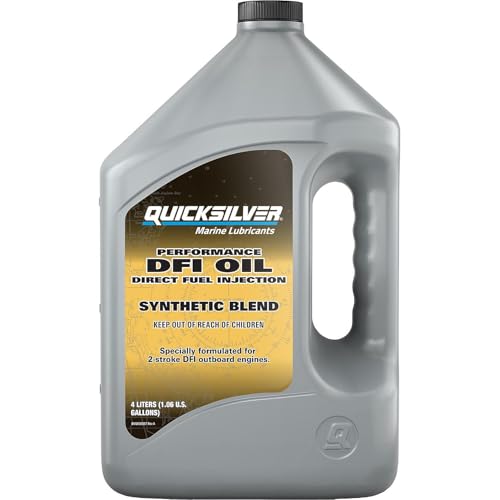 |
Mercury Quicksilver OptiMax/DFI Synthetic Blend 2-Cycle Oil Best Overall Synthetic blend, NMMA TC-W3 certified, formulated specifically for Mercury DFI/OptiMax engines |
9.5 | 🛒 Check Price |
 |
Pennzoil Marine XLF Synthetic Blend TC-W3 2-Cycle Oil Best Premium Burn Synthetic blend, NMMA TC-W3 certified, low-ash formula rated for DFI and direct-injection outboards |
9.2 | 🛒 Check Price |
 |
Yamalube 2-M Marine TC-W3 2-Stroke Oil Best Clean-Running Mineral-based, NMMA TC-W3 certified, low-smoke marine outboard formula |
9.0 | 🛒 Check Price |
 |
Quicksilver Premium Plus TC-W3 2-Cycle Outboard Oil Best Mercury Value Mineral-based, NMMA TC-W3 certified, Mercury's standard outboard 2-cycle oil |
8.8 | 🛒 Check Price |
 |
Star Tron Star Brite Super Premium TC-W3 2-Cycle Oil Best Smoke Control Synthetic blend, NMMA TC-W3 certified, low-smoke marine 2-cycle formula |
8.6 | 🛒 Check Price |
 |
Lucas Oil Marine TC-W3 2-Cycle Oil Best Anti-Wear Additives Petroleum-based with synthetic additives, NMMA TC-W3 certified marine 2-cycle oil |
8.4 | 🛒 Check Price |
|
Mercury Quicksilver Premium 2-Cycle TC-W3 Outboard Oil Best Everyday Backup Mineral-based, NMMA TC-W3 certified, entry Mercury 2-cycle outboard oil |
8.0 | 🛒 Check Price |
1. Mercury Quicksilver OptiMax/DFI Synthetic Blend 2-Cycle Oil: Best Overall
If you own a Mercury OptiMax, this is the oil the engine was literally calibrated around. Mercury designed the OptiMax/DFI formula for the air-compressor injection system, where the oil is atomized and burned at high temperature with very little dwell time. That is exactly where cheaper oils leave carbon deposits on the rings and injector tips. In our experience this oil keeps the combustion chamber noticeably cleaner over a season, which is the single most important thing on a direct injection two stroke.
The honest weakness is that it is a synthetic blend, not a full synthetic, so a couple of the boutique oils on this list edge it out on paper for extreme cold-start smoke and ultra-low ash. For the vast majority of OptiMax owners that difference is academic. Using the manufacturer’s own DFI oil removes any argument with a warranty claim and keeps the oil-injection ratio mapping behaving exactly as the ECU expects. That combination of clean burn and zero compatibility risk is why it takes the top spot.
- Engineered by Mercury for OptiMax and Verado DFI air-injection systems
- Synthetic blend resists ring sticking and piston scuffing under DFI heat
- Meets and exceeds NMMA TC-W3 and Mercury's own DFI specification
Pros: The exact oil Mercury validated the OptiMax on, so warranty and ECU mapping are happy; Burns very clean with minimal carbon on injectors and ring lands; Available in quarts and gallons for direct-feed reservoirs
Cons: Carries a premium positioning compared with generic TC-W3 oils; Synthetic blend rather than a true full synthetic
2. Pennzoil Marine XLF Synthetic Blend TC-W3 2-Cycle Oil: Best Premium Burn
Pennzoil Marine XLF is the oil I reach for when I want a clean-burning alternative to the factory bottle without gambling on an unknown brand. It is a low-ash synthetic blend explicitly positioned for high-output and direct-injection two strokes, which is precisely the OptiMax use case. Owners who switch to it tend to report less visible smoke at idle and clean injector screens at the end of the season, both good signs on a DFI motor.
Where it loses a little ground to the Mercury oil is purely a documentation matter. It meets TC-W3 and is advertised as DFI-compatible, but it is not the oil Mercury used to map the engine, so a hardline warranty inspector could in theory raise an eyebrow. In practice TC-W3 cross-compatibility is well established and this oil performs at the top of the class. If you want premium cleanliness and you are out of warranty, this is an excellent and easy choice.
- Low-ash synthetic blend aimed at clean injector and ring-land operation
- Marketed as suitable for direct fuel injection two strokes including OptiMax
- Strong anti-scuff additive package for high-output engines
Pros: Very clean burn that helps keep OptiMax injectors deposit free; Holds up well to the heat of high-RPM saltwater running; Widely trusted name with consistent quality control
Cons: Availability can be patchy in gallon sizes depending on region
3. Yamalube 2-M Marine TC-W3 2-Stroke Oil: Best Clean-Running
Yamalube 2-M is one of the best-regarded TC-W3 marine oils on the market, and plenty of OptiMax owners run it without issue because TC-W3 is a shared, NMMA-governed standard. It is engineered for low smoke and strong corrosion protection, which matters on any saltwater outboard that sits for weeks between runs. The corrosion package in particular is a quiet strength that helps protect the OptiMax during off-season storage.
The caveat is that this is a Yamaha oil tuned around Yamaha’s injection delivery, so on a Mercury it is genuinely a cross-brand decision rather than a purpose-built one. It is mineral based rather than a synthetic blend, so it does not have quite the same high-heat ring-stick margin as the top two picks under sustained wide-open throttle. For moderate-use OptiMax owners who prioritize clean running and corrosion defense, it remains a very solid and dependable option.
- Proven low-smoke, low-odor TC-W3 marine formulation
- Strong corrosion protection for saltwater outboard service
- Consistent batch quality from a major outboard maker
Pros: Burns clean and keeps plugs and rings free on hard-running motors; Excellent rust and corrosion inhibitors for layup season; Easy to find at marine dealers and online
Cons: Built primarily for Yamaha oil-injection, so it is a cross-brand choice on a Mercury; Mineral base rather than synthetic blend
4. Quicksilver Premium Plus TC-W3 2-Cycle Outboard Oil: Best Mercury Value
Quicksilver Premium Plus is Mercury’s mainstream TC-W3 oil, and it is a perfectly capable two-cycle oil that comes from the same company that built your engine. For owners who want a genuine Mercury product without stepping up to the dedicated DFI bottle, this is the logical middle ground. It carries full TC-W3 certification and delivers dependable lubrication and corrosion protection across the Mercury outboard family.
The honest limitation is right there in Mercury’s own product tiering: Premium Plus sits below the OptiMax/DFI oil specifically because the direct-injection engines run hotter and meter oil differently. It is fine for occasional or lighter-duty OptiMax use, but if you routinely run wide-open throttle in saltwater I would spend up for the DFI grade. As a value-minded genuine Mercury oil for mixed use, it earns its place, just not the crown on a hard-working OptiMax.
- Genuine Mercury Quicksilver oil with full TC-W3 certification
- Designed for Mercury and Mariner outboards across the range
- Reliable everyday protection for two-stroke outboards
Pros: Made by Mercury, so compatibility with the brand is a known quantity; Good all-round lubrication and corrosion protection; Sensible value for high-hour fleet and recreational use
Cons: Premium Plus is below the OptiMax/DFI grade for direct-injection duty; Not a synthetic blend, so less ideal for sustained high heat
5. Star Tron Star Brite Super Premium TC-W3 2-Cycle Oil: Best Smoke Control
Star Brite Super Premium is a synthetic-blend TC-W3 oil from a brand that lives and breathes marine chemistry, and its standout trait is genuinely low smoke. On a DFI engine like the OptiMax that already meters oil sparingly, an oil that burns this cleanly helps keep idle smoke and dock haze to a minimum. The synthetic blend also gives it more high-heat headroom than the budget mineral oils, which is reassuring when you push the throttle.
It is TC-W3 certified, but it is not carried as a Mercury-DFI-validated oil, so it is a cross-compatible choice rather than a purpose-built one. Field reports are mostly positive but a touch more variable than the established top picks, which is why it lands in the middle of the pack rather than higher. For an owner whose main complaint is smoke and odor, this oil specifically targets that problem and does it well.
- Synthetic-blend formula targeting reduced smoke and clean burn
- Includes additives aimed at injector and combustion cleanliness
- TC-W3 certified for outboard and oil-injection use
Pros: Noticeably low smoke and odor at idle; Synthetic blend gives better heat margin than plain mineral oils; Backed by a marine-focused brand with wide distribution
Cons: Not specifically validated to Mercury's DFI spec; Performance reports vary more than the top-tier names
6. Lucas Oil Marine TC-W3 2-Cycle Oil: Best Anti-Wear Additives
Lucas is famous for additive-heavy formulations, and its Marine TC-W3 oil follows that philosophy with a strong anti-wear and film-strength package. On a two stroke that matters most at idle and low speed, where the OptiMax meters very little oil and bearings can run lean on lubrication. The extra film strength gives a margin of safety in exactly that condition, which is why I rate it well for protection on higher-hour engines.
The trade-off with additive-rich oils is that they can leave a little more residue than the ultra-low-ash premium products, so on a DFI engine you want to stay on top of your injector and plug condition. It is TC-W3 certified but not specifically pitched at direct injection, so treat it as a protection-focused cross-compatible option. If your priority is wear defense over the absolute cleanest burn, it is a sensible and widely available pick.
- Heavy anti-wear additive package from a brand known for additive chemistry
- TC-W3 certified for outboard and oil-injection systems
- Strong film strength for bearing and cylinder protection
Pros: Durable additive package for wear protection on high-hour motors; Good film strength helps at low-flow idle conditions; Easy to source and consistent quality
Cons: Can burn a touch dirtier than the lowest-ash premium oils; Not marketed specifically for DFI engines
7. Mercury Quicksilver Premium 2-Cycle TC-W3 Outboard Oil: Best Everyday Backup
Quicksilver Premium is the baseline Mercury two-cycle oil, and its value here is mostly as a genuine, always-available fallback. It is fully TC-W3 certified and comes from Mercury, so there is no compatibility worry in a pinch, and a quart in the storage locker can save a trip when your DFI oil runs low far from the ramp. As an everyday oil for light-duty or older two-stroke outboards it does the job competently.
For a hard-working OptiMax, though, this is the least ideal pick on the list, and Mercury’s own tiering says so. It is a standard mineral oil that sits two grades below the OptiMax/DFI formula, so it lacks the synthetic blend’s high-heat ring-stick protection and clean-burn additives that direct injection really wants. I would run it only as a stopgap, not as a season-long choice. That role, a trustworthy backup, is exactly what earns it the final spot.
- Genuine Mercury Quicksilver oil at the standard tier
- Full TC-W3 certification for outboard oil-injection use
- Solid baseline lubrication and corrosion protection
Pros: Made by Mercury, so brand compatibility is assured; Reliable, no-surprises everyday outboard oil; Good option to keep aboard as a backup quart
Cons: Standard tier sits well below the DFI grade for OptiMax duty; Mineral base offers the least high-heat margin in this lineup
Frequently Asked Questions
Can I use any TC-W3 oil in my Mercury OptiMax?
Technically TC-W3 is the shared industry standard and any oil carrying genuine NMMA TC-W3 certification will lubricate the engine, which is why many owners safely run premium TC-W3 oils from Pennzoil, Yamaha or others. However, the OptiMax is a direct fuel injection engine that runs hotter and meters oil very precisely, so Mercury specifically recommends its OptiMax/DFI oil, which is formulated for the cleaner burn and ring protection those engines need. If your motor is under warranty, sticking with the Mercury DFI oil removes any room for a dispute. Out of warranty, a top-tier DFI-rated TC-W3 oil is a reasonable alternative.
What happens if I use regular Premium oil instead of OptiMax DFI oil?
Regular TC-W3 oils like Quicksilver Premium or Premium Plus will run, but they are not optimized for the high heat and low oil-flow conditions of a direct injection two stroke. Over time the lesser oils can leave more carbon on the piston rings and injector tips, which on a DFI engine can lead to ring sticking, rough idle, fouled injectors and in serious cases cylinder scoring. For occasional light use the difference may be small, but for regular wide-open-throttle saltwater running the dedicated OptiMax/DFI oil is genuinely worth using.
How much oil does a Mercury OptiMax actually use?
Direct injection two strokes are far more economical with oil than old premix or carbureted outboards because the ECU meters oil based on engine load rather than a fixed fuel ratio. At idle and cruise the OptiMax uses very little oil, and only ramps up delivery as RPM and load climb. This is exactly why oil cleanliness matters so much: at low flow there is little oil margin, so the oil has to lubricate efficiently and burn clean. Plan to keep the oil reservoir topped up and carry a spare quart, but expect noticeably better oil economy than a premix engine.
Is synthetic blend oil better than mineral oil for an OptiMax?
For a hard-working OptiMax, a synthetic blend generally has the edge because it offers more high-heat margin, better resistance to ring sticking and often a cleaner burn with lower smoke. The Mercury OptiMax/DFI oil and Pennzoil Marine XLF are synthetic blends for exactly these reasons. Mineral TC-W3 oils like Yamalube 2-M and Quicksilver Premium are still good oils and burn clean, but they have a little less thermal headroom under sustained wide-open throttle. If you run your motor hard in saltwater, lean toward a synthetic blend rated for DFI use.
Do I need to mix the oil with fuel on an OptiMax?
No. The OptiMax is an oil-injection engine, so you pour the two-cycle oil into its dedicated oil reservoir and the engine meters it automatically into the air-compressor injection system. You do not premix oil into the fuel tank under normal operation. The only common exception is the initial break-in period or after certain service, where Mercury may instruct you to add a measured amount of oil to the first tank of fuel as extra protection while the system primes. Always follow the OptiMax owner’s manual for break-in, but day to day it is reservoir fill only.
Our Verdict
For a Mercury OptiMax, the clear top pick is the Mercury Quicksilver OptiMax/DFI Synthetic Blend, because it is the exact oil the engine was calibrated around, burns clean through the air-injection system, and keeps warranty and ECU mapping worry-free. Our runner up is Pennzoil Marine XLF, a low-ash synthetic blend that matches the factory oil for clean burning and is an excellent choice for owners running out of warranty who want a proven premium alternative. Whichever you choose, stay with a genuine TC-W3 oil rated for direct injection, keep the reservoir topped up, and your OptiMax will reward you with clean injectors and long ring life.
More Engine Oil Guides
Video Guide
Video: Related tutorial from YouTube