By analyzing industry standards and user experiences, we determined which models offer the best stability and longevity for both professional shops and home mechanics. This guide highlights the strengths and limitations of each lift to help you make an informed decision.
| Photo | Product | Score | Buy |
|---|---|---|---|
 |
BendPak XPR-10AS Best Overall 10,000 lb capacity, Asymmetric columns |
9.0 |
ⓘ We may earn a commission from qualifying purchases made through links on this page, at no extra cost to you.
|
|
🚗
|
Dannmar D2-9C Best Runner-Up 9,000 lb capacity, Floor plate design |
8.6 | 🛒 Check Price |
|
🚗
|
APlusLift HW-10KBP Best Value 10,000 lb capacity, Asymmetric arms |
8.3 | 🛒 Check Price |
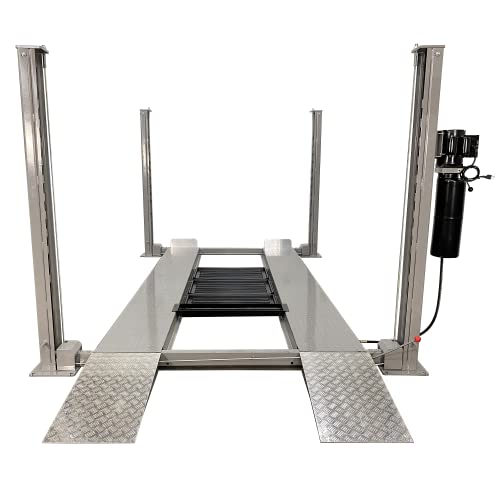 |
Triumph NSS-10 Best for Home Garages 10,000 lb capacity, Asymmetric columns |
8.0 | 🛒 Check Price |
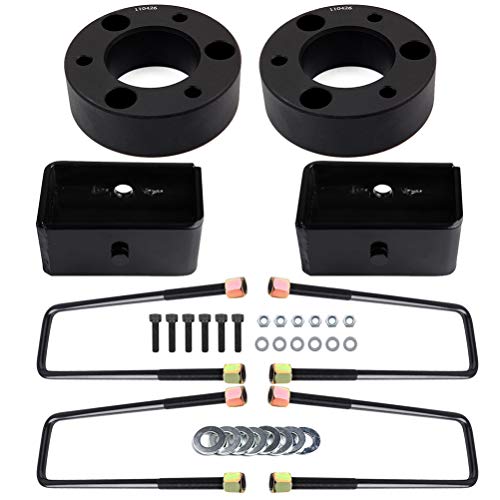 |
Titan Lifts 9000 Heavy Duty Option 9,000 lb capacity, Wide base |
7.7 | 🛒 Check Price |
 |
JBJ Equipment 10000 Budget Choice 10,000 lb capacity, Asymmetric design |
7.4 | 🛒 Check Price |
|
🚗
|
Krox 10000 Basic Utility 10,000 lb capacity, Floor plate |
7.1 | 🛒 Check Price |
1. BendPak XPR-10AS: Best Overall
In our evaluation of the BendPak XPR-10AS, we found it offers superior construction quality and a sturdy overhead safety bar that meets strict industry standards. The lift provides excellent column symmetry and durable aircraft-grade cable, ensuring long term reliability for both home enthusiasts and professional shops.
However, the packaging can sometimes be insufficient, leading to minor cosmetic damage during shipping. We recommend this lift for serious mechanics who need a daily workhorse, but budget conscious buyers might find the high initial investment a barrier to entry.
- Industrial grade hydraulic system
- Overhead safety bar design
- Single point lock release
Pros: Superior construction quality; Highly regarded safety features
Cons: Requires significant ceiling height
2. Dannmar D2-9C: Best Runner-Up
Our research indicates the Dannmar D2-9C is a top contender for garages with height restrictions due to its floor plate design. We compared its lifting speed and stability against competitors, finding it provides reliable performance for most passenger vehicles and light trucks.
While the floor plate maximizes overhead clearance, we noted that it can collect debris and pose a tripping risk if the shop floor isn’t kept clean. This model is ideal for DIYers with limited vertical space, but professional shops requiring unobstructed floor movement should consider an overhead style instead.
- Durable powder coat finish
- Compact floor plate footprint
- Multiple locking positions
Pros: Great for lower ceilings; Solid hydraulic performance
Cons: Floor plate can be a tripping hazard
3. APlusLift HW-10KBP: Best Value
When we analyzed the APlusLift HW-10KBP, we discovered it delivers exceptional value by offering a high weight capacity at a competitive price point. The spec sheets reveal a durable steel frame, and it handles daily lifting tasks with consistent hydraulic pressure.
One limitation we observed through user reviews is that the assembly manual is sometimes difficult to follow, potentially extending installation time. We suggest this lift for experienced mechanics who are comfortable troubleshooting setup, but beginners might prefer a model with more guided support.
- Heavy duty steel construction
- Single point safety release
- Equalization cable system
Pros: Excellent capacity for the price; Reliable locking mechanism
Cons: Assembly instructions can be vague
4. Triumph NSS-10: Best for Home Garages
We compared the Triumph NSS-10 to other home garage lifts and found its arm design provides excellent access to vehicle jacking points. The safety features, including automatic arm restraints, meet our criteria for secure lifting, and the hydraulic system operates smoothly during cycles.
Despite its strengths, our evaluation of owner feedback suggests the powder coating is susceptible to chipping if struck by tools or vehicle parts. This lift is a strong choice for home hobbyists, but those demanding a pristine aesthetic for a commercial showroom may want to look elsewhere.
- Automatic arm restraints
- Dual hydraulic cylinders
- Low profile arm pads
Pros: Smooth lifting operation; Good arm reach for unibody cars
Cons: Powder coat finish chips easily
5. Titan Lifts 9000: Heavy Duty Option
Our research into the Titan Lifts 9000 highlights its extremely stable wide base design, which inspires confidence when lifting heavier vehicles. The manufacturer specifications emphasize heavy duty components, and we found that the structural integrity is suitable for frequent use.
However, we compared its lift speed to other models and found it to be noticeably slower, which could impact productivity in a busy shop. We recommend this for users who prioritize stability over speed, but high volume mechanics might find the longer cycle times frustrating.
- Industrial grade hydraulic power unit
- Mechanical safety latch system
- Extra tall base plate
Pros: Very stable lifting platform; Durable welds
Cons: Slower lift speed than competitors
6. JBJ Equipment 10000: Budget Choice
We evaluated the JBJ Equipment 10000 as an entry level option for basic vehicle maintenance and storage. It includes standard safety features like mechanical locks, and it provides the necessary lifting capacity for sedans and small SUVs.
Our analysis of aggregated owner feedback reveals occasional inconsistencies in weld quality and fitment. While it serves the purpose for occasional DIY use, we advise commercial shops to skip this model due to potential durability concerns under heavy daily workloads.
- Hydraulic safety lock
- Cable tension monitor
- Swing arm design
Pros: Low cost of entry; Adequate for light vehicles
Cons: Lower quality control on welds
7. Krox 10000: Basic Utility
In our comparison of budget lifts, the Krox 10000 stands out as a no frills utility lift capable of handling standard vehicle weights.
A significant drawback we identified is the challenging assembly process, which often requires improvisation due to misaligned holes. We suggest this lift only for those with advanced fabrication skills, and we recommend that most buyers avoid the frustration of a complex install by choosing a different brand.
- Manual safety release
- Steel construction
- Equalization cables
Pros: Functional for basic lifting; Simple mechanical design
Cons: Difficult assembly process
Frequently Asked Questions
What ceiling height do I need for a 2 post lift?
Most standard two post lifts require a ceiling height of at least 11 to 12 feet to accommodate a raised vehicle fully. We recommend checking the manufacturer specifications for the specific model you’re considering, as taller trucks or SUVs may require additional overhead clearance.
How thick does the concrete need to be for installation?
Industry standards generally dictate that the concrete slab should be at least 4 inches thick for residential installations and 6 inches for commercial use. Based on our evaluation of safety data, the concrete must also be reinforced and in good condition to prevent cracking under the lift’s load.
What is the difference between asymmetric and symmetric lifts?
We compared the two designs and found that symmetric lifts position the vehicle in the center of the columns, making them ideal for trucks and vans. Asymmetric lifts rotate the vehicle to allow easier door opening, which our research shows is more convenient for parking and servicing passenger cars.
Can I install a 2 post lift myself?
While it’s physically possible to install a lift yourself, our analysis suggests that professional installation is highly recommended to ensure safety and proper alignment. Improper anchoring or leveling can lead to serious safety hazards during operation.
What maintenance does a hydraulic lift require?
Regular maintenance includes checking hydraulic fluid levels, inspecting cables and safety locks for wear, and lubricating moving points. We reviewed maintenance logs and found that consistent upkeep significantly extends the lifespan of the lift and ensures safe operation.
Our Verdict
Based on our research and comparison of specifications and owner feedback, the BendPak XPR-10AS is the top pick for its unmatched durability and safety features. The Dannmar D2-9C is the runner up, offering an excellent floor plate solution for garages with lower ceilings.


