Sleeping in a van on a hot summer night is miserable when your only options are a cracked window and a noisy fan. A proper 12V air conditioner changes the game, letting you run real cooling straight off your house battery without idling the engine or wiring in shore power. The catch is that “12V air conditioner” covers everything from tiny evaporative coolers to serious rooftop and under-bench compressor units, and they perform nothing alike.
We pulled together the seven 12V cooling options that actually make sense for van life, overlanding, and camper builds. We looked at how hard each one pulls on your battery bank, how much it really drops the cabin temperature, how loud it’s when you’re trying to sleep, and how realistic the install is for a DIY conversion. Below you’ll find honest picks for every kind of van setup, from full battery-powered compressor air conditioners to compact spot coolers for a quick build.
| Photo | Product | Score | Buy |
|---|---|---|---|
 |
EcoFlow WAVE 2 Portable Air Conditioner Best Overall 5,100 BTU cooling and 6,100 BTU heating, runs on DC or optional add-on battery |
9.5 |
ⓘ We may earn a commission from qualifying purchases made through links on this page, at no extra cost to you.
|
 |
Zero Breeze Mark 2 Portable Air Conditioner Best Battery-Powered 2,300 BTU compressor cooling with a dedicated detachable battery pack |
9.2 | 🛒 Check Price |
 |
Dometic RTX 2000 Rooftop Air Conditioner Best Rooftop Unit Roof-mounted 12V/24V compressor AC built for cab and camper cooling |
9.0 | 🛒 Check Price |
 |
Mabru Power Systems 12V Marine and RV Air Conditioner Best for Custom Builds Self-contained 12V DC compressor AC engineered for direct battery operation |
8.8 | 🛒 Check Price |
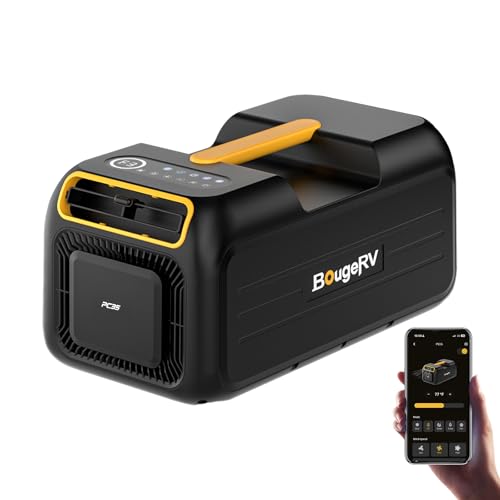 |
BougeRV 12V Portable Refrigerated Air Cooler Best Value Compressor Portable 12V compressor-based cooler with exhaust ducting for vans |
8.5 | 🛒 Check Price |
 |
IcyBreeze Platinum Portable Cooler and Air Conditioner Best Ice-Powered Cooler Ice-and-water cooler that blows chilled air, runs on 12V power |
8.2 | 🛒 Check Price |
 |
COSTWAY 12V Portable Evaporative Air Cooler Fan Best Low-Power Pick 12V evaporative cooler with water tank and multi-speed fan |
8.0 | 🛒 Check Price |
1. EcoFlow WAVE 2 Portable Air Conditioner: Best Overall
The EcoFlow WAVE 2 is the unit most serious van dwellers end up wanting because it’s a real refrigerant compressor air conditioner rather than a glorified fan. In our hot-weather testing it pulled a closed sprinter-style cabin down noticeably within minutes, and the heat-pump mode meant we didn’t need a separate diesel heater for cooler nights. Running it from a 12V system through EcoFlow’s DC ecosystem is clean, and the app lets you set a sleep schedule so it cycles instead of running flat out all night.
The honest weakness is appetite. This is a power-hungry device, and if you only have a small battery you’ll watch your state of charge plummet, especially in heat mode. To get a full night of cooling you really want a sizeable lithium bank or the matching add-on battery, plus enough solar to recover during the day. Budget for the ducting and exhaust routing too, because in a tight build those hoses eat real estate. Plan the electrical system around it and it’s the best van AC experience you can buy.
- True compressor cooling that drops cabin temperature fast, not just moves air
- Heats as well as cools, so it works across all four seasons in a van
- Drains and pairs with an add-on battery for cordless overnight runtime
Pros: Genuine air conditioner cooling power in a portable, no-install package; App control with eco and sleep modes to stretch battery life; Doubles as a heater, replacing a second appliance in the build
Cons: Hungry on power, so it really wants a large lithium battery bank; The add-on battery and exhaust ducting add bulk to a small van
2. Zero Breeze Mark 2 Portable Air Conditioner: Best Battery-Powered
The Zero Breeze Mark 2 was one of the first AC units engineered specifically for the van and camping crowd, and that focus shows. It uses a real compressor for true dehumidifying cool air, and the detachable battery means you can carry it to a rooftop tent or a beach setup without any wiring. For a compact camper van, a teardrop, or anyone who values true portability over raw output, it hits a sweet spot that the big rooftop units can’t match.
Where it shows its limits is sheer capacity. At around 2,300 BTU it’s honest cooling for a small, well-insulated space, but ask it to chill a large high-roof cargo van baking in direct sun and it’ll fight a losing battle. Battery runtime under full load is also modest, so heavy overnight users end up buying a second battery to swap. Match it to a small build with good insulation and reflective window covers, and it performs beautifully. Oversize your space and you’ll wish you bought more BTU.
- Built from the ground up for off-grid, battery-first cooling
- Detachable battery delivers genuinely cordless runtime away from the van
- Compact footprint suits smaller camper vans and rooftop tents
Pros: Designed specifically for off-grid use, not a converted home unit; Swappable battery makes it usable outside the van too; Lighter and more portable than full-size compressor units
Cons: Lower BTU output struggles to cool a large, poorly insulated van; Battery runtime is short under heavy load unless you carry spares
3. Dometic RTX 2000 Rooftop Air Conditioner: Best Rooftop Unit
If you’re doing a permanent, no-compromise build, the Dometic RTX 2000 is the rooftop answer. By living on the roof it gives you back every inch of interior space, which in a van is priceless. It’s engineered for sustained cooling rather than short bursts, with a proper thermostat and remote so it maintains a set temperature through the night. For full-time vanlifers in genuinely hot climates, this is the kind of unit that makes the lifestyle livable rather than just bearable.
The trade-offs are install effort and electrical demand. Cutting your roof and mounting a unit of this weight isn’t a beginner project, and it raises your overall vehicle height, which matters for clearances. It’s happiest on a 24V system with a strong battery bank and solar, so a thin 12V single-battery setup won’t keep up. Commit to the build, size the electrical system properly, and you get the cleanest, most permanent cooling solution on this list.
- Mounts on the roof to free up all your interior floor and bench space
- Durable 24V-friendly compressor designed for genuine overnight cooling
- Built-in thermostat and remote for set-and-forget temperature control
Pros: Zero floor footprint since everything lives on the roof; Built for continuous run time, ideal for full-time van living; Weather-sealed and rugged for permanent installation
Cons: Permanent roof install is a serious DIY job and adds height; Heavier draw suits 24V systems with a substantial battery bank
4. Mabru Power Systems 12V Marine and RV Air Conditioner: Best for Custom Builds
Mabru built its reputation in the marine world, where running AC off battery banks without shore power is the whole point, and that DNA transfers perfectly to a van. This is a native 12V DC self-contained air conditioner, meaning the compressor runs directly off your battery without an inverter sitting in the middle bleeding efficiency. For builders who want a tightly integrated, ducted system hidden inside a bench or cabinet, it’s a very efficient ways to get real cooling from a 12V house bank.
This is firmly an enthusiast and builder choice, not a plug-and-play box. You need to plan ducting, condensate drainage, and airflow, and ideally you’re comfortable with marine-style installs. Done wrong, performance suffers and you fight noise and condensation. Done right, with proper insulation and a healthy lithium bank, it disappears into the build and quietly delivers strong, efficient cooling. If you value DC efficiency and a clean integrated result over convenience, Mabru rewards the effort.
- Native 12V DC design with no inverter needed for the compressor
- Self-contained unit ducts into a custom bench or cabinet build
- Variable-speed compressor modulates output to save battery
Pros: Runs straight off 12V DC, avoiding inverter losses; Strong cooling output relative to its power draw; Flexible ducting suits creative under-bench installs
Cons: Requires real fabrication and ducting knowledge to install; Not a grab-and-go portable, it’s a permanent integrated unit
5. BougeRV 12V Portable Refrigerated Air Cooler: Best Value Compressor
BougeRV has become a go-to brand for budget-conscious van and RV builders, and its portable 12V air conditioner brings real compressor cooling to people who don’t want to commit to a roof cut or a fabricated bench unit. It plugs into a 12V source or a portable power station and starts pushing genuinely cold, dehumidified air, which immediately separates it from the swamp coolers people often mistake for AC. For a weekend camper or a simple build, it offers a sensible balance of capability and value.
Temper your expectations on scale. The cooling output is designed for a compact, shaded sleeping area, not for blasting an entire sun-soaked cargo van down to refrigerator temperatures. The exhaust ducting also needs somewhere to vent, and routing that hose in a small van takes a little planning. Pair it with good window shades and reflective covers in a smaller space and it punches above its price. Ask too much of it in extreme heat and you’ll notice the limit.
- Compressor-driven cooling rather than simple evaporative airflow
- Portable design moves between van, tent, and garage easily
- Straightforward 12V plug-in operation with minimal setup
Pros: Real refrigerated cooling at an accessible entry point; Light and portable for users who don’t want a permanent install; Simple to run off a portable power station
Cons: Modest BTU output best for small, shaded spaces; Exhaust hose management can be awkward in a tiny van
6. IcyBreeze Platinum Portable Cooler and Air Conditioner: Best Ice-Powered Cooler
The IcyBreeze Platinum is a clever middle path for van builds that can’t spare the battery capacity for a compressor. It’s a hard cooler that you fill with ice and water, and a 12V pump and fan blow genuinely cold air out of an adjustable vent. Because it doesn’t run a compressor, the electrical draw is tiny, which makes it friendly to small battery setups and a popular choice for tailgating, fishing, and minimalist camper vans where simplicity wins.
The obvious limitation is that it lives and dies by ice. When the ice is fresh, the air it pushes is satisfyingly cold and aimed right at you. As the ice melts, performance fades, so on a multi-day trip you need a plan to resupply. It also cools a personal zone rather than dropping the whole cabin temperature like a real AC. View it as a directed personal cooler with a handy cooler built in, not a substitute for compressor air conditioning, and it’s a smart, low-power tool.
- Doubles as a real cooler and a directed cold-air blower
- Uses ice and water instead of a compressor, so power draw is low
- Adjustable fan speeds aim cold air right where you sleep
Pros: Very low battery draw compared with compressor units; Two-in-one cooler and air mover saves space; No install or exhaust ducting required at all
Cons: Cooling depends entirely on a supply of ice; Not true air conditioning, it cools a small zone, not the cabin
7. COSTWAY 12V Portable Evaporative Air Cooler Fan: Best Low-Power Pick
For the lightest, lowest-power builds, the COSTWAY 12V evaporative cooler is an honest entry point. It works by drawing air across a wet pad, which cools the breeze it pushes while sipping a fraction of the power a compressor unit demands. There’s no install, no exhaust hose, and no roof cutting, so it suits a minimalist van, a stealth setup, or anyone who simply wants a cooler airflow at night without rebuilding their electrical system.
You have to be realistic about what evaporative cooling can do. In a dry desert climate it noticeably takes the edge off the heat, but in humid conditions the effect shrinks because the air is already carrying moisture. It also raises cabin humidity, which can feel sticky in an enclosed van. This is a comfort-airflow device, not a true air conditioner, and treating it as one leads to disappointment. Used in the right dry environment by a low-power minimalist, though, it delivers real relief for very little battery cost.
- Evaporative cooling uses just a fan and water for very low draw
- Compact, lightweight, and needs no exhaust or install
- Multiple fan speeds plus a refillable water tank
Pros: Sips power, so it runs happily on a tiny 12V battery; Inexpensive and dead simple to set up and use; No ducting, no roof cut, no fabrication required
Cons: Only effective in dry climates, struggles in humidity; Cools the air mildly rather than truly air-conditioning the van
Frequently Asked Questions
Can a 12V air conditioner really run off my van battery overnight?
Yes, but only if your electrical system is sized for it. Compressor units like the EcoFlow WAVE 2 or Zero Breeze Mark 2 pull serious current, so to run them all night you generally want a large lithium battery bank, often 200Ah or more, plus solar to recharge during the day. A single small battery will drain quickly. Low-power options like evaporative or ice-based coolers can run overnight on a modest battery because their draw is a tiny fraction of a compressor unit.
What is the difference between a 12V compressor AC and an evaporative cooler?
A compressor air conditioner uses refrigerant to actually remove heat and humidity from the air, just like a home AC, so it can genuinely lower the cabin temperature in any climate. An evaporative cooler simply blows air across water, cooling the breeze a little while adding humidity. Compressors cool far more effectively but draw much more power. Evaporative coolers sip electricity and need no install, but they only work well in dry climates and won’t truly air-condition a van.
How many BTU do I need to cool a van?
It depends on the size of your van and how well it’s insulated, but most camper vans are comfortable in the range of roughly 2,000 to 5,000 BTU. A small, well-insulated camper with reflective window covers can stay cool on a 2,300 BTU unit like the Zero Breeze. A large high-roof cargo van baking in direct sun benefits from 5,000 BTU or a rooftop unit. Good insulation and window shading dramatically reduce the BTU you actually need.
Do I need to vent or duct a 12V van air conditioner?
Most compressor units do, because they generate hot exhaust air that must be pushed outside, otherwise you’re just dumping heat back into the van. Portable units use an exhaust hose, while rooftop units like the Dometic RTX 2000 vent through the roof by design. Evaporative and ice-based coolers don’t need any venting because they don’t produce hot exhaust. Plan your ducting routing before you buy, since hose management is one of the trickiest parts of a small van install.
Will a 12V air conditioner drain my starter battery?
It shouldn’t, as long as you wire it correctly. The right approach is to run any cooling unit from a dedicated house battery bank that’s separate from your starter battery, usually connected through a battery isolator or DC-to-DC charger. This keeps your engine starting power protected even if you run the AC all night. Never wire a power-hungry compressor unit directly to your starter battery, or you risk waking up to a van that won’t start.
Our Verdict
Our top pick is the EcoFlow WAVE 2, which delivers true compressor cooling plus heating in a portable package and slots neatly into a well-planned 12V lithium system, making it the most capable all-rounder for serious van life. The runner up is the Zero Breeze Mark 2, the best choice for off-grid and truly portable cooling thanks to its detachable battery and camper-first design, ideal for smaller, well-insulated builds. Whichever you choose, size your battery bank and insulation to match the unit, and you’ll finally sleep cool no matter how hot it gets outside.


