Upgrading to LED headlight bulbs is a popular modification for drivers seeking improved visibility and a modern aesthetic for their vehicles. However, the legality of these upgrades is complex and governed by strict federal safety standards designed to ensure all drivers remain safe on the road.
Before purchasing a new set of bulbs, it’s crucial to understand the regulations set by the Department of Transportation (DOT) and how they apply to aftermarket modifications. This guide explains the rules surrounding color, brightness, and proper housing to ensure your vehicle remains compliant with US laws.
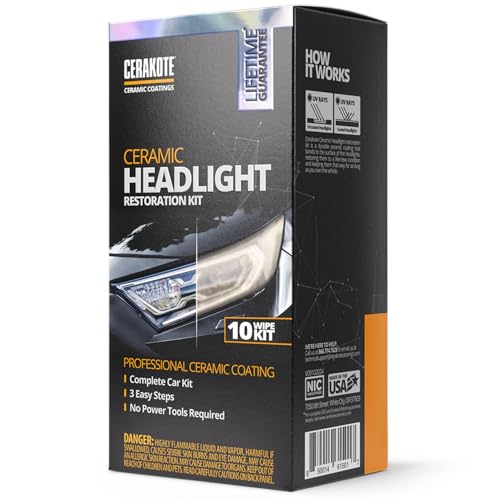
Cerakote Ceramic Headlight Restoration Kit
Federal Motor Vehicle Safety Standards
In the United States, headlight legality is primarily determined by the Federal Motor Vehicle Safety Standards (FMVSS). Specifically, FMVSS Standard No. 108 governs lamps, reflective devices, and associated equipment. This standard establishes requirements for new motor vehicles and replacement parts to ensure adequate visibility without causing excessive glare to other drivers.
- The National Highway Traffic Safety Administration (NHTSA) enforces these standards.
- Headlights must meet specific photometric standards regarding intensity and beam pattern.
- Any lighting device or bulb must be certified as compliant before it can be legally sold or installed on a motor vehicle.
The Legality of Retrofitting LED Bulbs
A common area of confusion is whether replacing a halogen bulb with an LED bulb in a factory housing is legal. According to NHTSA interpretations, it’s generally illegal to replace a halogen bulb with an LED bulb if the headlamp assembly wasn’t originally designed for LEDs. This is because the reflector and lens optics are calibrated for the specific light source position of a halogen filament.
- LEDs emit light from multiple points or a different chip location, which scrambles the beam pattern.
- This often results in glare for oncoming traffic or an uneven beam that fails to light the road properly.
- To be legal, the entire headlamp assembly must be replaced with one that’s DOT-certified for LED use.
Color and Temperature Regulations
Federal law restricts the color of headlights to specific ranges to maximize visibility and minimize distraction. Standard headlights must emit white or yellow light. While many drivers prefer the cool blue look of high-intensity discharge (HID) or certain LED bulbs, strictly blue lights are typically reserved for emergency vehicles.
- The Society of Automotive Engineers (SAE) and DOT define white light broadly, but extremely blue tints can result in a citation.
- Bulbs with a color temperature above 6000K often appear blue and are likely to be illegal in many jurisdictions.
- Any color other than white or yellow, such as red or green, is strictly prohibited for forward-facing headlights.
Brightness and Glare Requirements
While brighter lights seem safer, they can be hazardous if they blind other drivers. FMVSS 108 sets maximum and minimum lumen limits for headlights. The primary concern isn’t just how bright the bulb is, but how the light is distributed by the lens.
- SAE standards test for Glare and Illuminance to ensure the light is directed at the road, not the eyes of other motorists.
- Aftermarket LED bulbs often exceed the lumen output of the halogen bulbs they replace, creating illegal glare levels.
- Proper headlight aiming is also a legal requirement and must be checked after any modification.
State and Local Enforcement
While federal standards (FMVSS) apply to the manufacture and sale of vehicles and parts, state and local laws enforce what is actually allowed on the road. States have their own vehicle codes that often mirror federal regulations but can include stricter provisions.
- Police officers can issue citations for equipment violations if headlights produce excessive glare or illegal colors.
- Some states require annual vehicle inspections where non-compliant lighting will cause a failure.
- Drivers should check their specific state Department of Motor Vehicles (DMV) resources for local nuances regarding aftermarket lighting.
Frequently Asked Questions
Can I put LED bulbs in my stock halogen headlight housing?
Generally, no. Under NHTSA interpretations, replacing a halogen bulb with an LED bulb in a housing not designed for LEDs violates FMVSS 108 because it alters the intended beam pattern and creates glare.
Are 8000K or 10000K LED bulbs legal?
No, bulbs with a color temperature of 8000K or 10000K emit a distinct blue light. Federal regulations require headlights to be white or yellow. Blue lights are typically reserved for emergency vehicles and are illegal for standard passenger cars.
What does DOT approved mean for headlights?
DOT approved means the headlight assembly or bulb meets the Federal Motor Vehicle Safety Standards set by the Department of Transportation. It signifies that the product has undergone the necessary testing for safety and compliance.
Why do aftermarket LED blind other drivers?
Aftermarket LEDs often blind drivers because the LED chips are positioned differently than a halogen filament. This mismatch causes the light to reflect off the wrong parts of the housing, scattering light upwards and into the eyes of oncoming traffic.
Do LED headlights need to be DOT stamped?
Yes, to be street legal, the lens of the headlight assembly must bear the DOT stamp. While the bulb itself may not always have a visible stamp, the complete lighting unit must be certified for use on public roads.
The Bottom Line
Ensuring your vehicle’s headlights are legal is about more than just avoiding a ticket. It’s about maintaining safety for everyone on the road by adhering to standards set by the NHTSA, DOT, and SAE. While LED technology offers superior performance, it must be implemented correctly through certified assemblies rather than simple bulb swaps in incompatible housings. Always look for DOT markings and verify color temperatures to stay compliant.


